Why is precise particle size classification using standard sieves necessary for ceramic water filters? Control Porosity
Updated 4 months ago
Precise particle size classification is the technical foundation of filter performance. Using standard sieves to screen clay and organic additives ensures that raw materials fall within a strictly defined grain size range. This control is necessary to dictate the final ceramic’s porosity, mechanical strength, and its ability to effectively remove pathogens while maintaining a functional water flow rate.
By regulating the particle size distribution of both the ceramic base and the sacrificial pore-formers, manufacturers can transform a raw mixture into a predictable engineering material. This precision ensures that the resulting internal pore structure is uniform, repeatable, and structurally sound.
Defining the Internal Architecture of the Filter
The Impact of Sacrificial Pore-Formers
Organic additives like sawdust or rice husks act as sacrificial templates that burn away during sintering. The particle size of these agents directly dictates the micropore size in the finished filter. If particles are too large, the pores may allow bacteria to pass through; if they are too small, the water flow rate becomes unacceptably slow.
Achieving Uniform Pore Distribution
Standard sieves (such as 250 μm, 595 μm, and 1190 μm) allow for the strict removal of oversized and undersized particles. This uniformity prevents the formation of "large-channel" defects that would compromise microbial retention capacity. A consistent distribution ensures that every square centimeter of the filter performs identically.
Balancing Flow Rate and Filtration
The precise grading of powders allows for the fine-tuning of hydraulic conductivity. By selecting specific particle ranges, such as those between 180μm and 355μm, engineers can optimize the balance between water flux and the time the water spends in contact with the ceramic surface.
Enhancing Structural Integrity and Production Reliability
Optimizing Green Body Density
When powders have a uniform grain size, they pack more tightly during the pressing and molding stages. This results in a "green body" (unfired ceramic) with consistent density throughout. Higher packing efficiency reduces the likelihood of internal defects and improves the structural reliability of the final product.
Managing Sintering Shrinkage
Ceramics naturally shrink when fired, but inconsistent particle sizes cause non-uniform shrinkage. This leads to internal stresses, warping, or cracking during the sintering process. Using sieved powders ensures that shrinkage is predictable, maintaining the filter's intended dimensions and geometric integrity.
Improving Material Flowability
Granulating dried ceramic mixtures through standard sieves improves the flowability of the powder. This is critical for filling molds evenly during industrial production. Improved flow prevents density variations that can lead to weak spots or "soft" areas in the fired ceramic core.
Understanding the Trade-offs and Pitfalls
The Risk of Sieve Blindness
Using high-precision meshes, such as 63-micron or 250-μm screens, carries the risk of "blinding," where particles clog the sieve openings. This can lead to inaccurate grading and a false sense of consistency. Regular maintenance and the use of vibratory sieve shakers are necessary to maintain accuracy.
Material Waste vs. Precision
Strict classification often results in a significant amount of "overs" and "unders" that may be discarded. While narrower particle ranges—like +60 to -325 mesh—produce a superior filter, they increase the cost of production per unit. Finding the widest possible range that still meets safety standards is the primary economic challenge in filter manufacturing.
How to Apply This to Your Project
Making the Right Choice for Your Goal
- If your primary focus is pathogen removal: Use finer sieves to strictly limit the maximum particle size of pore-formers, ensuring no pores exceed the size of target bacteria.
- If your primary focus is high flow rate: Select a coarser, uniform particle size range for organic additives to create larger, interconnected channels that facilitate faster water transit.
- If your primary focus is structural durability: Focus on the sieving of the clay powder itself to ensure maximum packing density and minimal cracking during the firing process.
- If your primary focus is production consistency: Implement a multi-stage sieving process to remove both "fines" that clog the filter and "overs" that create structural weak points.
Precise particle classification is the essential bridge between raw earth materials and a reliable life-saving technology.
Summary Table:
| Key Factor | Role of Precision Sieving | Performance Impact |
|---|---|---|
| Pore-Formers | Defines sacrificial template size | Precisely controls pathogen removal & flow rate |
| Clay Grading | Optimizes powder packing density | Enhances structural integrity & reduces cracking |
| Uniformity | Eliminates large-channel defects | Ensures consistent filtration across the surface |
| Flowability | Standardizes grain distribution | Improves mold filling and production reliability |
Precision Equipment for Superior Ceramic Engineering
Achieving the perfect balance between hydraulic conductivity and microbial retention requires rigorous control over your raw materials. [Brand Name] provides complete laboratory sample preparation solutions for material science, specializing in the high-performance powder processing and compaction equipment needed for advanced ceramic manufacturing.
Our extensive range includes:
- Classification & Analysis: High-precision vibratory and air-jet sieve shakers with a full range of test sieves to eliminate "large-channel" defects.
- Powder Processing: Advanced planetary ball mills, jet mills, and mixers to achieve the ideal grain size distribution.
- Compaction Excellence: A full spectrum of hydraulic presses, including Cold/Warm Isostatic Presses (CIP/WIP) and vacuum hot presses, to ensure maximum green body density and structural reliability.
Enhance your filtration performance and production consistency today.
Contact our specialists for a tailored solution!
References
- Alemayehu Solomon, Belay Brehane Tesfamariam. Optimization of preparation parameters of ceramic pot water filters for potential application of microbial and fluoride removal from groundwater. DOI: 10.1016/j.heliyon.2023.e13261
Mentioned Products
- Stainless Steel Rotary Vibrating Sieve High Precision Circular Vibratory Separator Industrial Powder Grading Machine Multi Layer Sifting Equipment
- High Frequency Cabinet Type Three-Dimensional Rotary Vibrating Sieve Shaker for Dry Sieving and Particle Classification
- Three Dimensional Rotary Vibrating Sieve
- Laboratory Air Jet Sieving Machine for Fine Powder Particle Size Analysis and Deagglomeration
- Stainless Steel Laboratory Vibratory Test Sieve Shaker
People Also Ask
- What is the significance of high-precision vibratory sieve machines for SMA? Optimize Aggregate Gradation & Durability
- What is the role of a laboratory-grade high-precision sieve in CPC-PCL? Ensure uniform powder distribution and stability.
- Why is high-precision sieving equipment necessary for aviation-grade composites? Optimize Fiber Strength & Consistency
- What is the function of high-precision vibratory sieve shakers in the analysis of brown rice particle size distribution?
- Why is a high-precision vibratory sieve shaker necessary for wood-polystyrene particles? Maximize composite strength.

Tech Team · PowderPreparation
Last updated on Jun 03, 2026
Related Products
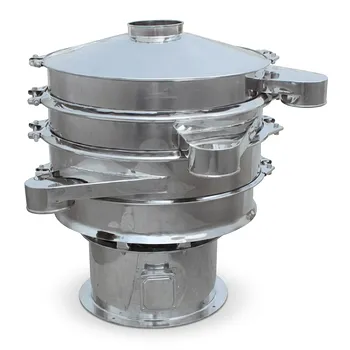
Stainless Steel Rotary Vibrating Sieve High Precision Circular Vibratory Separator Industrial Powder Grading Machine Multi Layer Sifting Equipment
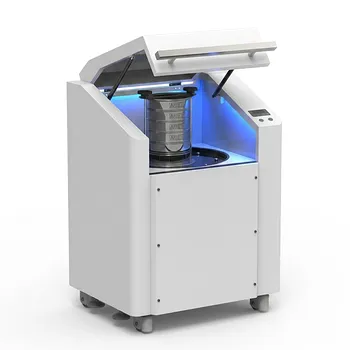
High Frequency Cabinet Type Three-Dimensional Rotary Vibrating Sieve Shaker for Dry Sieving and Particle Classification
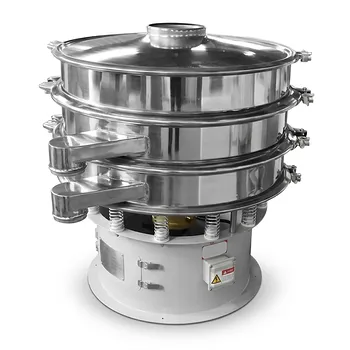
Three Dimensional Rotary Vibrating Sieve
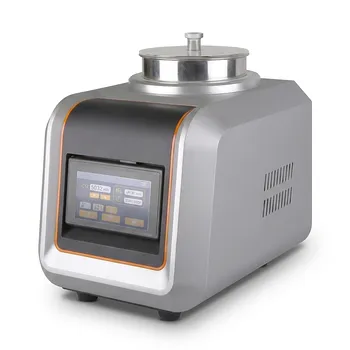
Laboratory Air Jet Sieving Machine for Fine Powder Particle Size Analysis and Deagglomeration
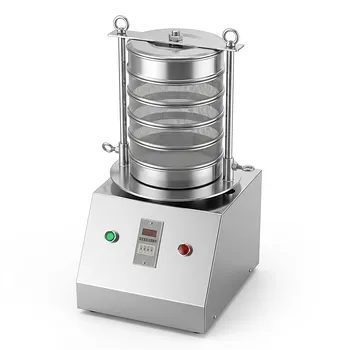
Stainless Steel Laboratory Vibratory Test Sieve Shaker
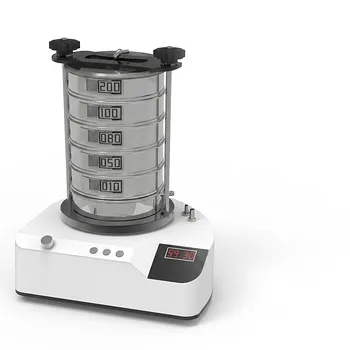
Heavy Duty Dry Three Dimensional Vibratory Sieve Shaker for Particle Separation
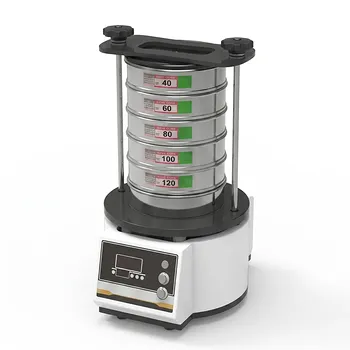
Dry Three Dimensional Vibratory Sieve Shaker
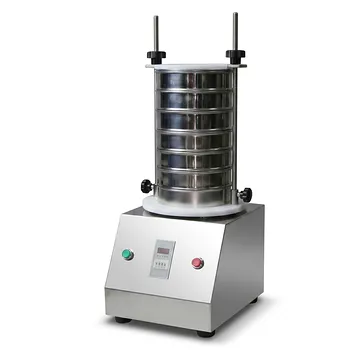
Small Laboratory Vibratory Sieve Shaker for Powder Gradation and Particle Size Analysis
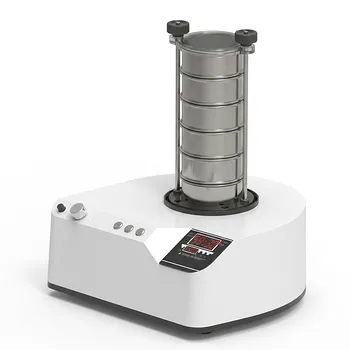
三维电磁微量振动筛分仪
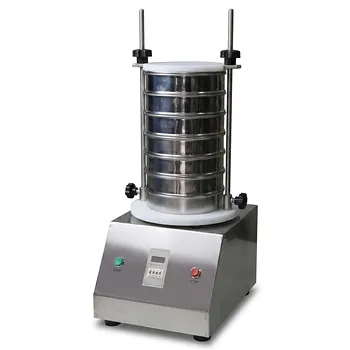
Laboratory Vibratory Test Sieve Shaker for Precision Particle Size Analysis and Powder Grading
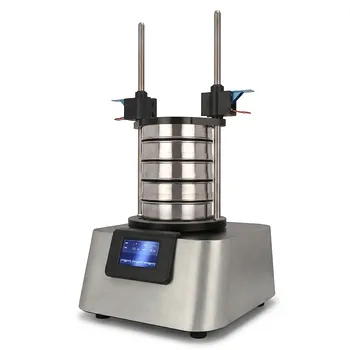
Vibratory Sieve Shaker Electromagnetic 3D Motion Powder Particle Size Analyzer for Dry and Wet Sieving
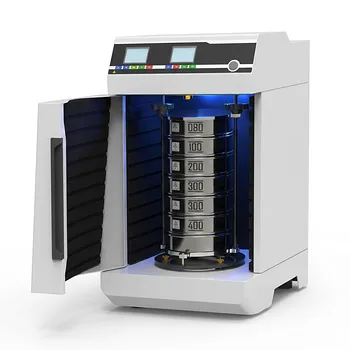
Laboratory Dry and Wet Three Dimensional Vibratory Sieve Shaker for Particle Analysis
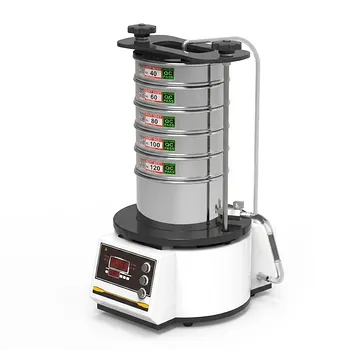
High Frequency Wet Three-Dimensional Vibrating Sieve Shaker for Dry and Wet Particle Size Analysis
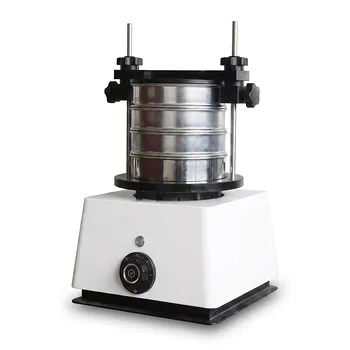
Small Laboratory Vibrating Sieve Shaker for Precise Particle Size Analysis
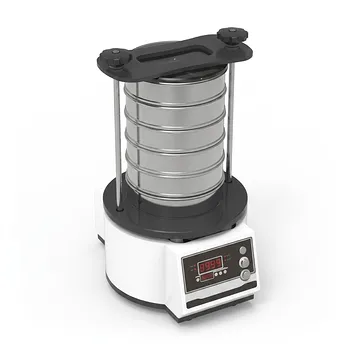
Tapping Oscillating Sieve Shaker for Dry and Wet Particle Size Analysis