Why use specialized compaction tools for shear test samples? Ensure uniform density and eliminate experimental randomness
Updated 3 months ago
The necessity of specialized compaction tools lies in the precision they offer over the sample’s initial physical state. Using these tools allows researchers to strictly control the initial dry density and porosity of material particles, such as mudstone or soil mixtures. This standardization ensures that experimental results are a product of the variables being tested rather than inconsistencies in how the sample was loaded.
Specialized compaction tools eliminate experimental randomness by ensuring every test specimen begins with an identical physical state. This level of control is essential for making scientifically valid comparisons across different test groups and ensuring the reliability of data regarding material performance.
The Role of Precision in Sample Preparation
Controlling Dry Density and Porosity
Specialized tools allow for the processing of particles in systematic layers. This layered approach ensures that the initial dry density is uniform throughout the entire specimen.
By precisely managing the volume and mass of the material during pressing, researchers can achieve a specific porosity. This is critical because even minor fluctuations in pore space can drastically alter the shear strength and mechanical behavior of the sample.
Eliminating Loading Randomness
Manual or non-specialized loading methods introduce human error and "randomness" into the experimental setup. Specialized pressing tools provide a repeatable, mechanical process that removes these variables from the equation.
When the loading phase is standardized, the internal structure of the sample becomes predictable. This allows the researcher to move from qualitative observations to quantitative, replicable data.
Establishing Scientific Comparability
Standardizing Across Experimental Groups
In any scientific study, the initial state of the samples must be highly comparable. If one sample is packed more tightly than another, the results of a shear test will be skewed by the preparation rather than the material properties.
Standardized compaction equipment, such as Proctor molds, ensures that all specimens—regardless of the variables being tested—start from a consistent baseline. This makes it possible to isolate the effects of specific additives or conditions.
Validating the Impact of Specific Variables
When researching factors like surface roughness or lime dosage, the researcher must be certain that the observed data points relate directly to those factors. Specialized tools ensure that the physical foundation of the sample is not a hidden variable.
For instance, in expansion performance tests, using specialized tools ensures that differences in expansion are due to chemical dosages rather than differences in how the soil was remolded. This precision is what makes the research results reliable and defensible.
Understanding the Trade-offs and Pitfalls
The Risk of Over-Compaction
While achieving high density is often a goal, using specialized tools incorrectly can lead to crushing individual particles. This alters the grain size distribution of the material and can create a sample that no longer represents the original field conditions.
Equipment Sensitivity and Calibration
Specialized tools require rigorous calibration to maintain their accuracy. If a compaction tool is not calibrated correctly, it may produce consistent samples that are consistently wrong, leading to a systematic error throughout the entire dataset.
Complexity and Time Requirements
Using specialized pressing tools is significantly more time-consuming than simple manual loading. Researchers must balance the need for extreme precision with the practical constraints of the project timeline and the number of samples required for a statistically significant study.
How to Apply This to Your Project
Ensuring Data Integrity in Laboratory Testing
To achieve the most accurate results, your choice of compaction tool should align with the specific mechanical properties you are investigating.
- If your primary focus is mechanical shear strength: Use specialized tools to process samples in layers to ensure uniform dry density and eliminate internal structural voids.
- If your primary focus is expansion or chemical performance: Utilize standard laboratory compactors and Proctor molds to determine the optimum moisture content before molding specimens.
- If your primary focus is the impact of surface texture: Ensure the compaction tool provides a flat, standardized interface to prevent the loading process from interfering with surface roughness measurements.
By utilizing specialized compaction tools, you transform a sensitive manual process into a controlled scientific procedure that guarantees the validity of your experimental findings.
Summary Table:
| Aspect | Why Specialized Tools are Necessary |
|---|---|
| Density Control | Ensures uniform initial dry density and porosity across all specimens. |
| Error Reduction | Eliminates manual loading randomness and human error for higher repeatability. |
| Data Integrity | Standardizes the baseline, allowing researchers to isolate specific test variables. |
| Sample Quality | Enables layered processing to maintain a predictable internal material structure. |
| Risk Management | Prevents over-compaction while maintaining calibrated precision for defensible results. |
Elevate Your Material Testing Precision
Don't let inconsistent sample preparation compromise your research data. Our Brand provides complete laboratory sample preparation solutions for material science, specializing in advanced powder processing and compaction equipment.
From a full spectrum of hydraulic presses—including Cold/Warm Isostatic Presses (CIP/WIP), standard lab presses, and vacuum hot presses—to precision mills and grinders, we offer the tools you need to ensure uniform density and scientific comparability.
Ready to standardize your testing workflow? Contact us today to discuss how our specialized compaction solutions can enhance your laboratory's accuracy and efficiency.
References
- Yue Liang, Kui Wang. Influential Mechanisms of Roughness on the Cyclic Shearing Behavior of the Interfaces Between Crushed Mudstone and Steel-Cased Rock-Socketed Piles. DOI: 10.3390/buildings15010141
Mentioned Products
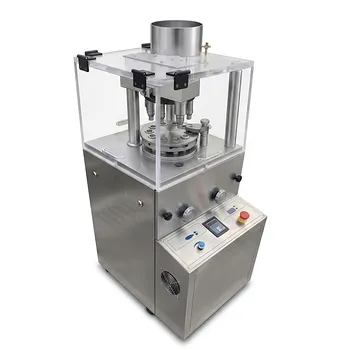
- Enhanced 9 Punch Rotary Tablet Press for Powder Compaction
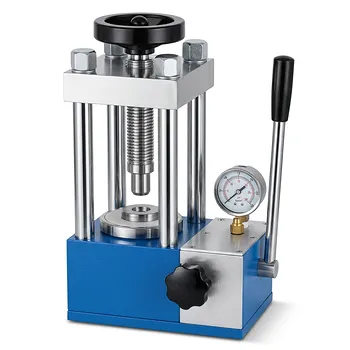
- Manual Tablet Press with Dual Scale Pressure Gauge for Pharmaceutical Food Chemical Laboratory Sample Preparation
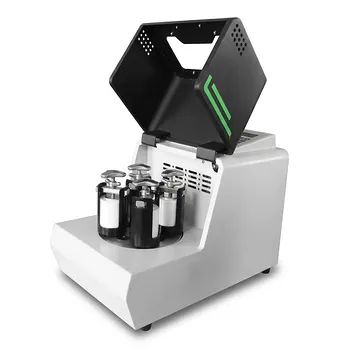
- Miniature Planetary Ball Mill with Vacuum Grinding and High Efficiency for Laboratory Sample Preparation
- Heavy Duty Dry Three Dimensional Vibratory Sieve Shaker for Particle Separation
- Laboratory Benchtop Jaw Crusher for Hard Brittle Materials Primary Size Reduction and Sample Preparation
People Also Ask
- What is the purpose of adding lubricants like zinc stearate during Al-Al2O3 powder pressing? Achieve Superior Density
- Why is a laboratory hydraulic press required for FT-IR KBr pellets? Achieve Precise Sample Clarity for ZrC–SiC Analysis
- What role does a high-strength stainless steel mold kit play in the uniaxial die compaction process? Ensuring Precision
- Why is a laboratory hydraulic press required to compress oyster shell powder before XRF analysis? Improve Data Accuracy.
- Why is vacuum sealing and flexible packaging necessary for Aluminum Titanate powders during CIP? Ensure Peak Density

Tech Team · PowderPreparation
Last updated on Jun 03, 2026
Related Products
Enhanced 9 Punch Rotary Tablet Press for Powder Compaction
Manual Tablet Press with Dual Scale Pressure Gauge for Pharmaceutical Food Chemical Laboratory Sample Preparation
Miniature Planetary Ball Mill with Vacuum Grinding and High Efficiency for Laboratory Sample Preparation
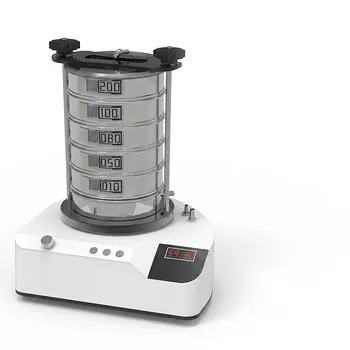
Heavy Duty Dry Three Dimensional Vibratory Sieve Shaker for Particle Separation
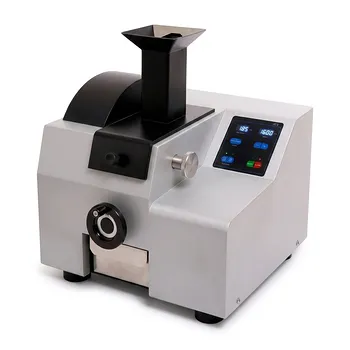
Laboratory Benchtop Jaw Crusher for Hard Brittle Materials Primary Size Reduction and Sample Preparation
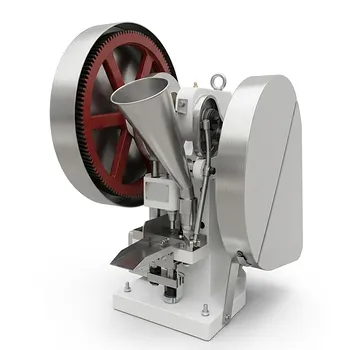
6-Ton Small Single-Punch Tablet Press — Laboratory Powder & Granule Tableting Equipment / Tablet Forming Machine
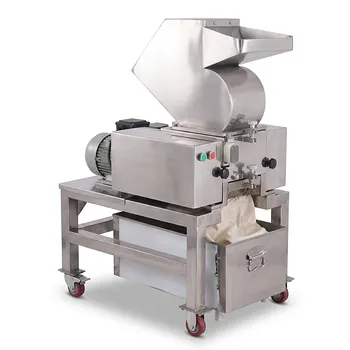
Stainless Steel Coarse Crusher for Pharmaceutical Food and Plastic Material Processing
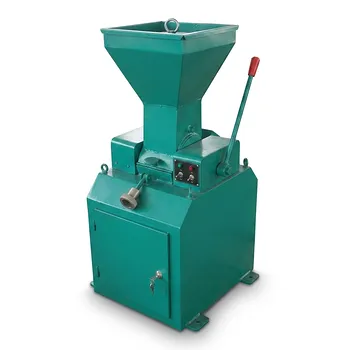
Laboratory Sealed Hammer Crusher for Coal and Mineral Sample Preparation
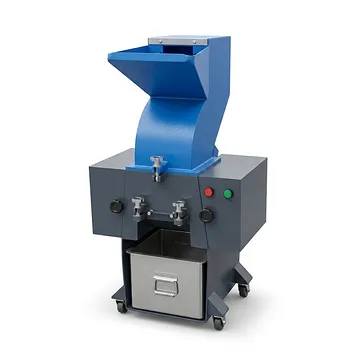
Heavy-Duty Crusher for Laboratory and Industrial Material Size Reduction
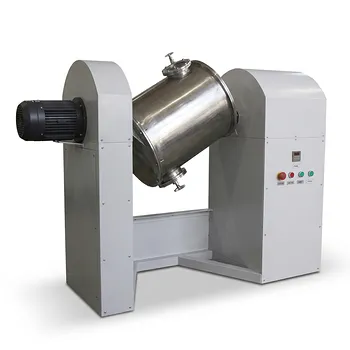
Inclined Mixer for Homogeneous Powder Blending and Grinding
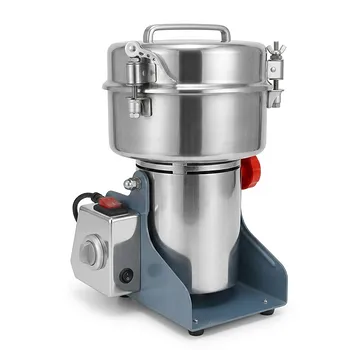
Small High-Speed Grinder for Efficient Laboratory Sample Preparation