Why Use Vibratory Sieve Shakers for Coal Classification? Ensure Precise & Reliable Sample Preparation
Updated 5 months ago
Precise particle size control is the foundation of reliable coal analysis. Utilizing a vibratory sieve shaker with standard test sieves ensures high consistency in grain size across all coal samples, which is critical for eliminating kinetic differences during processing. This standardization allows researchers to conduct comparable analyses of chemical yields and physical properties under identical experimental conditions.
Standardized vibratory sieving ensures uniform grain size distribution, allowing researchers to isolate chemical variables from physical ones and ensuring that experimental results are both reproducible and scientifically valid.
The Necessity of Particle Size Consistency
Eliminating Kinetic Interference
Particle size directly dictates the reaction surface area available during chemical processes like oxidation or alkaline extraction. By using a vibratory shaker to enforce a strict size range, you eliminate variations in reaction kinetics that would otherwise skew data on humic acid yields or leaching rates.
Enhancing Experimental Comparability
Reliable research requires that samples from different coal sources be tested under identical conditions. Standardized sieving ensures that the only variable being measured is the coal’s inherent properties, rather than discrepancies in how the material was crushed or sorted.
Ensuring Uniform Material Behavior
Consistency in grain size is vital for specialized tests, such as assessing slagging tendencies or thermal treatment effects. When particles are uniform, their physical changes during heating become predictable, allowing for an accurate assessment of how coal type—rather than size—influences thermal stability.
The Advantages of Mechanical Vibration
High-Frequency Stratification
A vibratory shaker employs high-frequency mechanical amplitude to cause coal particles to jump and rotate across the sieve surface. This motion ensures that every particle has multiple opportunities to present its smallest dimension to the sieve aperture, leading to more accurate separation than manual methods.
Minimizing Human Error and False Readings
Manual sieving is prone to inconsistency in force and duration, which can lead to false particle size readings or material entanglement. Mechanical shakers provide a constant vibration frequency and preset durations, ensuring that the classification process is both objective and repeatable.
Optimized Particle Flow
The rhythmic movement provided by the shaker helps particles stratify effectively through a stack of sieves. This stratification prevents smaller particles from being trapped by larger ones, ensuring that each size fraction—from 0.2mm to 20mm—is cleanly isolated for downstream quantitative analysis.
Understanding the Trade-offs
The Risk of Particle Degradation
Extended vibration periods can cause attrition, where coal particles rub against each other and break down into smaller fragments than originally intended. This can lead to a "fines" bias in your data, where the sample appears smaller than it was at the start of the test.
Sieve Blinding and Maintenance
Standard test sieves are precision instruments that can suffer from blinding, where near-sized particles become wedged in the mesh. Without regular cleaning and calibration, blinded sieves reduce the effective open area, leading to incomplete separation and inaccurate mass percentage calculations.
Dimensional Limitations
Sieves classify particles based on their cross-sectional diameter, but coal particles are often irregular or elongated. While a vibratory shaker is the industry standard, it may not fully account for the aspect ratio of certain coal types, which can influence how those particles behave in fluid-flow environments like flotation cells.
How to Apply This to Your Project
Making the Right Choice for Your Goal
- If your primary focus is Chemical Yield Analysis: Use the shaker to strictly isolate narrow size fractions to ensure that kinetic rates are purely a function of the coal's chemical composition.
- If your primary focus is Flotation Efficiency: Prioritize precise classification of ground powder (e.g., 0.5mm to 0.2mm) to accurately calculate kinetic constants and combustible recovery rates.
- If your primary focus is Industrial Scalability: Use standard test sieves to determine the optimal reaction particle size, balancing high iron leaching or sulfur reduction against the energy costs of grinding.
By integrating standardized vibratory sieving into your preparation workflow, you transform raw coal samples into high-precision technical data sets.
Summary Table:
| Feature | Benefit to Coal Analysis | Critical Consideration |
|---|---|---|
| High-Frequency Vibration | Ensures accurate stratification and repeatable separation. | Monitor for potential particle attrition. |
| Standard Test Sieves | Provides consistent grain size for chemical comparability. | Requires regular cleaning to avoid blinding. |
| Mechanical Control | Eliminates manual error and provides objective readings. | Preset durations ensure cross-sample validity. |
| Kinetic Control | Minimizes surface area variations to stabilize reaction rates. | Essential for yield and leaching studies. |
Optimize Your Coal Analysis with Precision Equipment
Achieving scientifically valid results starts with superior sample preparation. We provide complete laboratory sample preparation solutions for material science, specializing in high-performance powder processing and compaction equipment.
From vibratory and air-jet sieve shakers with precision test sieves to our extensive lines of jaw crushers, planetary ball mills, and jet mills, we offer the tools you need for accurate particle size control. We also manufacture a full spectrum of hydraulic presses, including Cold/Warm Isostatic Presses (CIP/WIP), XRF pellet presses, and vacuum hot presses, ensuring your samples are prepared to the highest standards.
Ready to enhance your lab's efficiency and data accuracy? Contact our experts today to discuss your specific coal processing requirements and discover how our specialized equipment can streamline your research workflow.
References
- Muhammad Asif. Comparative Study on Extraction of Humic Acid from Pakistani Coal Samples by Oxidizing the Samples with Hydrogen Peroxide. DOI: 10.17509/ajse.v2i1.35521
Mentioned Products
- Stainless Steel Laboratory Vibratory Test Sieve Shaker
- Laboratory Vibratory Test Sieve Shaker for Precision Particle Size Analysis and Powder Grading
- Vibratory Sieve Shaker Electromagnetic 3D Motion Powder Particle Size Analyzer for Dry and Wet Sieving
- Small Laboratory Vibrating Sieve Shaker for Precise Particle Size Analysis
- Small Laboratory Vibratory Sieve Shaker for Powder Gradation and Particle Size Analysis
People Also Ask
- What function does a laboratory vibratory sieve shaker serve in the production process of metakaolin? Optimize Reactivity
- Why is a precision laboratory vibratory sieve shaker necessary for particle size control? Optimize Biomass Carbonization
- What is the function of a laboratory vibratory sieve shaker? Enhance Coal Particle Size Distribution (PSD) Analysis
- What role do laboratory vibratory sieve shakers and test sieves play before the molding of Nb-Cu composite powders?
- What is the primary function of a laboratory vibratory sieve shaker in the evaluation of sand liquefaction potential?

Tech Team · PowderPreparation
Last updated on May 14, 2026
Related Products
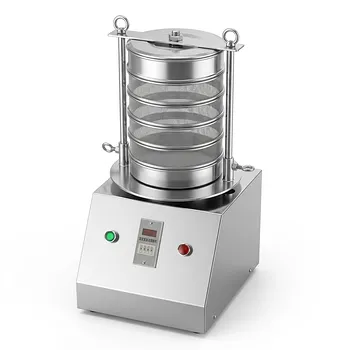
Stainless Steel Laboratory Vibratory Test Sieve Shaker

Laboratory Vibratory Test Sieve Shaker for Precision Particle Size Analysis and Powder Grading

Vibratory Sieve Shaker Electromagnetic 3D Motion Powder Particle Size Analyzer for Dry and Wet Sieving

Small Laboratory Vibrating Sieve Shaker for Precise Particle Size Analysis

Small Laboratory Vibratory Sieve Shaker for Powder Gradation and Particle Size Analysis

Dry Three Dimensional Vibratory Sieve Shaker
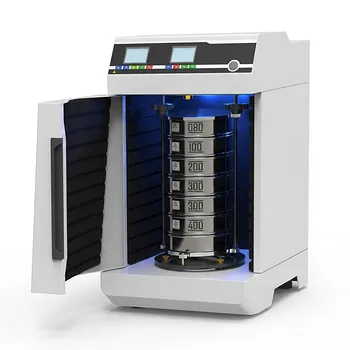
Laboratory Dry and Wet Three Dimensional Vibratory Sieve Shaker for Particle Analysis

Heavy Duty Dry Three Dimensional Vibratory Sieve Shaker for Particle Separation
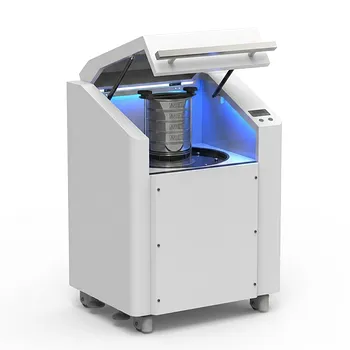
High Frequency Cabinet Type Three-Dimensional Rotary Vibrating Sieve Shaker for Dry Sieving and Particle Classification
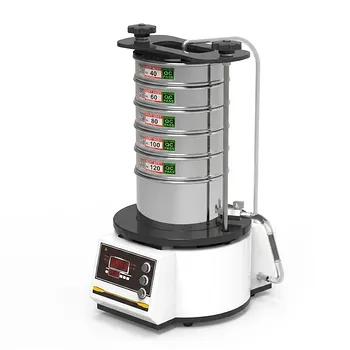
High Frequency Wet Three-Dimensional Vibrating Sieve Shaker for Dry and Wet Particle Size Analysis

三维电磁微量振动筛分仪

Tapping Oscillating Sieve Shaker for Dry and Wet Particle Size Analysis
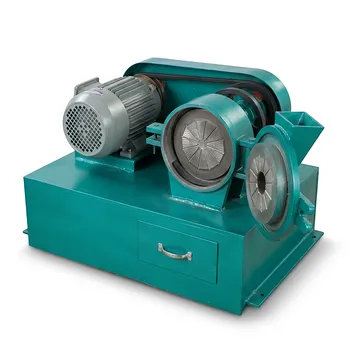
Laboratory Disc Pulverizer for Coal Coke Ore and Medium Hard Materials Sample Preparation
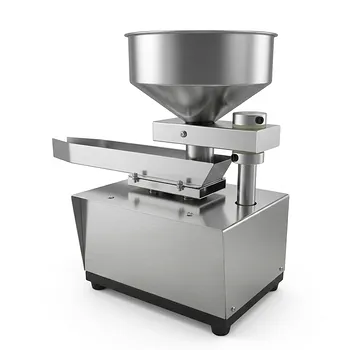
Automatic Vibrating Powder Feeder for Laboratory Material Processing Precision Vibratory Hopper Feeder for Granular and Powder Material Handling Industrial Grade Vibrating Tray Feeder for Consistent Material Sample Preparation

Stainless Steel Rotary Vibrating Sieve High Precision Circular Vibratory Separator Industrial Powder Grading Machine Multi Layer Sifting Equipment
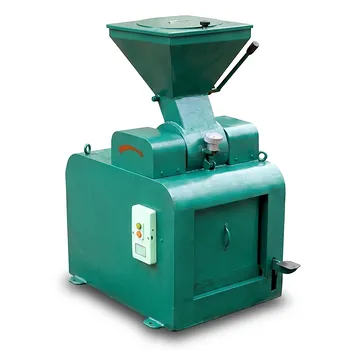
Laboratory Sealed Hammer Crushers for Coal Sample Preparation and Medium Strength Material Crushing
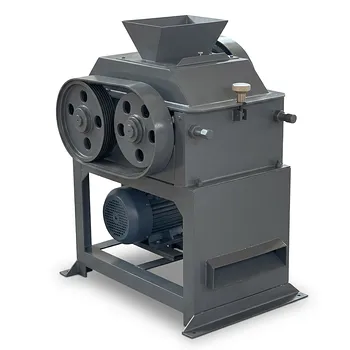
Sealed Laboratory Double Roll Crusher for Coal, Mineral, Ore Sample Preparation
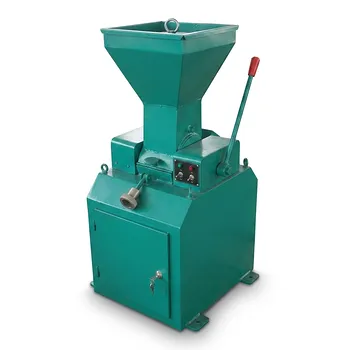
Laboratory Sealed Hammer Crusher for Coal and Mineral Sample Preparation
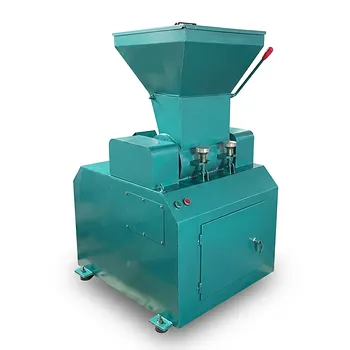
Sealed Hammer Crusher for Laboratory Coal Sample Preparation Adjustable Output Size