Why is it necessary to use a standard test sieve for powder processing when preparing alumina granules for pressing? Guide
Updated 4 months ago
Standard test sieves are the primary tool for eliminating large-scale agglomerates and standardizing the particle size distribution of alumina powder. This process ensures that the powder possesses the necessary flowability and packing density to fill pressing molds uniformly. Without this screening, the resulting ceramic "green body" will suffer from density gradients, leading to macroscopic defects and structural failure during sintering.
The core necessity of sieving lies in converting irregular, clumped alumina into a homogenous feedstock. By controlling particle size at the micron level, manufacturers ensure that every part of the ceramic mold is filled with an equal mass of material, preventing the internal stresses that cause cracking in finished products.
Eliminating Agglomerates and Impurities
Removing Secondary Agglomerates
Alumina composite powders naturally form secondary agglomerates or loose blocks during the drying stage. Standard test sieves, typically ranging from 60-mesh to specific apertures like 250 µm, are used to break down these clusters. This ensures that the powder remains a collection of individual granules rather than large, unpredictable clumps.
Filtering Foreign Impurities
The sieving process acts as a final quality gate to remove unground impurities or contaminants introduced during ball-milling. Using a high-precision sieve allows technicians to separate the desired alumina slag from oversized particles that haven't reached the required fineness. This is critical for meeting industry standards and ensuring the purity of the final ceramic.
Standardizing Initial Particle Size
In complex mixtures, such as alumina-zirconia or aluminum titanate, sieving unifies the initial particle size of the granules. This standardization prevents component segregation, where different materials separate based on size during the mixing process. A uniform size ensures that the chemical composition remains consistent throughout the entire powder batch.
Optimizing Material Flow and Packing
Enhancing Powder Flowability
For dry pressing to be effective, the powder must flow like a liquid to fill every corner of the mold. Controlled particle size distribution minimizes internal friction between granules, allowing for a stable and rapid flow. This efficiency is vital for high-volume production environments where mold-filling speed impacts the bottom line.
Increasing Packing Density
Standardized granules settle more efficiently, leading to a higher packing density within the mold. When particles are of a consistent, pre-determined size, they fill the interstitial gaps more effectively. This creates a dense, "green" part that requires less compression force to reach its target shape.
Ensuring Uniform Mold Filling
If a powder contains varying sizes or large clumps, it will fill the mold unevenly, creating "voids" or low-density pockets. A sieved powder ensures uniform mold filling, which is the prerequisite for a homogenous density distribution. This uniformity is what allows the ceramic to maintain its shape without warping during the high temperatures of the kiln.
Understanding the Trade-offs
The Risk of Sieve Blinding
While sieving is essential, fine alumina particles can often clog the mesh, a phenomenon known as blinding. This reduces the effective aperture size and slows down production. To combat this, technicians must use high-precision sieves and occasionally employ mechanical agitation or ultrasonic cleaners to maintain throughput.
Manual vs. Mechanical De-agglomeration
Manual sieving can be used for small batches to break up loose clumps, but it lacks the repeatability of mechanical sieving. For industrial applications, relying on manual methods can lead to inconsistent particle size distributions across different batches. Automated sieving systems are preferred to ensure the "R008 residue" indicators remain within strict tolerances.
Mechanical Wear and Mesh Distortion
Over time, the abrasive nature of alumina can wear down the wires of a standard test sieve. Mesh distortion can allow oversized particles to pass through, compromising the integrity of the pressing process. Regular calibration and replacement of sieves are necessary costs to ensure long-term product quality.
How to Apply This to Your Project
Recommendations for Powder Preparation
- If your primary focus is maximizing green body density: Use a high-precision 250 µm or 300 µm sieve to ensure the tightest possible particle size distribution for optimal packing.
- If your primary focus is preventing structural cracks during sintering: Prioritize the removal of all secondary agglomerates through a 60-mesh or 65-mesh sieve to eliminate high-stress density gradients.
- If your primary focus is industrial grinding efficiency: Regularly measure the R008 sieve residue to quantitatively analyze the proportion of oversized particles and optimize your milling parameters.
By integrating standard test sieves into your pre-pressing workflow, you transform an unpredictable raw material into a high-performance powder ready for precision engineering.
Summary Table:
| Key Function | Benefit to Powder | Impact on Final Ceramic |
|---|---|---|
| Agglomerate Removal | Eliminates loose blocks/clusters | Prevents internal stresses and cracking |
| Size Standardization | Ensures uniform particle distribution | Guarantees homogenous density & no warping |
| Impurity Filtering | Removes contaminants/unground slag | Ensures high purity and material integrity |
| Flow Optimization | Reduces internal friction | Enables rapid, uniform mold filling |
Optimize Your Material Preparation with Professional Solutions
Achieving the perfect ceramic "green body" requires precision at every stage. At [Brand Name], we provide complete laboratory sample preparation solutions tailored for material science. Our expertise in powder processing and compaction ensures your alumina granules meet the highest standards of flowability and density.
Our extensive product line includes:
- Sieving & Particle Analysis: Vibratory and air-jet sieve shakers with high-precision test sieves to eliminate blinding and distortion.
- Advanced Milling: Planetary ball mills, jet mills, and cryogenic grinders for superior fineness.
- Precision Pressing: Cold/Warm Isostatic Presses (CIP/WIP), vacuum hot presses, and standard lab hydraulic presses for uniform compaction.
- Mixing Solutions: Powder and defoaming mixers for consistent component distribution.
Ready to enhance your lab's efficiency and product quality? Contact our technical experts today to find the perfect equipment for your specific application!
References
- Maja Kokunešoski, Aleksandra Šaponjić. The effect of acrylate on the properties and machinability of alumina ceramics. DOI: 10.2298/sos2301103k
Mentioned Products
- Stainless Steel Laboratory Vibratory Test Sieve Shaker
- Laboratory Vibratory Test Sieve Shaker for Precision Particle Size Analysis and Powder Grading
- Small Laboratory Vibrating Sieve Shaker for Precise Particle Size Analysis
- 三维电磁微量振动筛分仪
- Small Laboratory Vibratory Sieve Shaker for Powder Gradation and Particle Size Analysis
People Also Ask
- What function does a laboratory vibratory sieve shaker serve in the production process of metakaolin? Optimize Reactivity
- Why is a precision laboratory vibratory sieve shaker necessary for particle size control? Optimize Biomass Carbonization
- What is the function of a laboratory vibratory sieve shaker? Enhance Coal Particle Size Distribution (PSD) Analysis
- What role do laboratory vibratory sieve shakers and test sieves play before the molding of Nb-Cu composite powders?
- What is the primary function of a laboratory vibratory sieve shaker in the evaluation of sand liquefaction potential?

Tech Team · PowderPreparation
Last updated on Jun 03, 2026
Related Products
Stainless Steel Laboratory Vibratory Test Sieve Shaker
Laboratory Vibratory Test Sieve Shaker for Precision Particle Size Analysis and Powder Grading
Small Laboratory Vibrating Sieve Shaker for Precise Particle Size Analysis
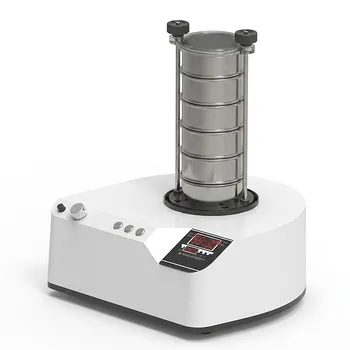
三维电磁微量振动筛分仪
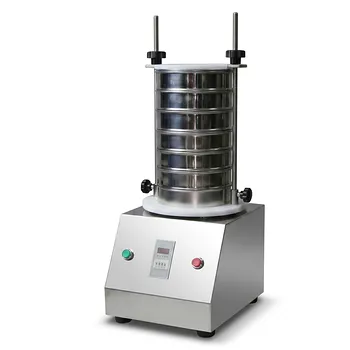
Small Laboratory Vibratory Sieve Shaker for Powder Gradation and Particle Size Analysis
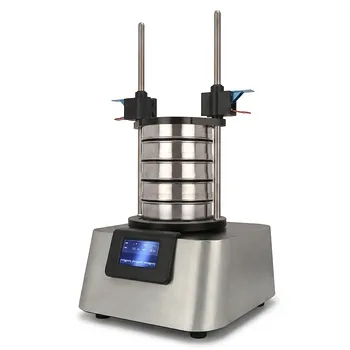
Vibratory Sieve Shaker Electromagnetic 3D Motion Powder Particle Size Analyzer for Dry and Wet Sieving
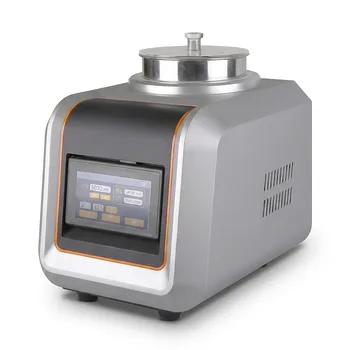
Laboratory Air Jet Sieving Machine for Fine Powder Particle Size Analysis and Deagglomeration
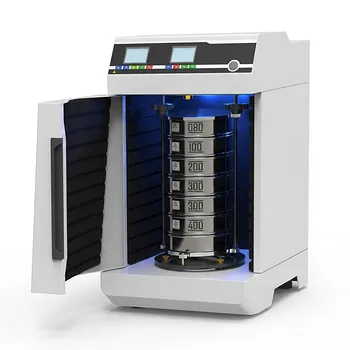
Laboratory Dry and Wet Three Dimensional Vibratory Sieve Shaker for Particle Analysis
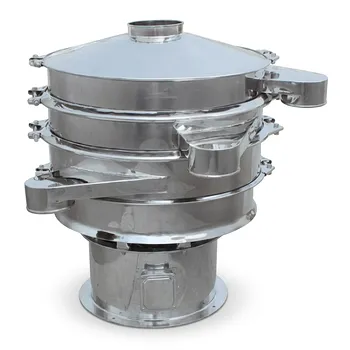
Stainless Steel Rotary Vibrating Sieve High Precision Circular Vibratory Separator Industrial Powder Grading Machine Multi Layer Sifting Equipment
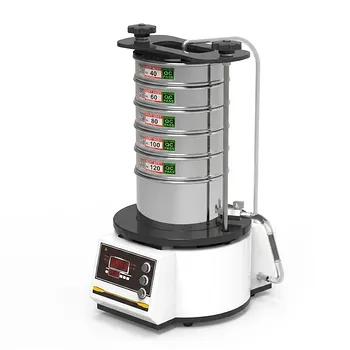
High Frequency Wet Three-Dimensional Vibrating Sieve Shaker for Dry and Wet Particle Size Analysis
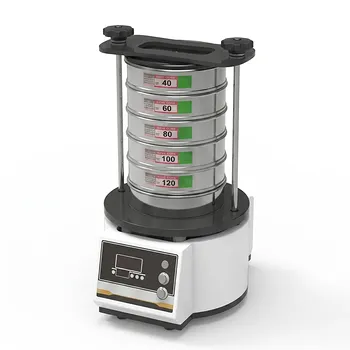
Dry Three Dimensional Vibratory Sieve Shaker
Tapping Oscillating Sieve Shaker for Dry and Wet Particle Size Analysis
Heavy Duty Dry Three Dimensional Vibratory Sieve Shaker for Particle Separation
Three Dimensional Rotary Vibrating Sieve
High Frequency Cabinet Type Three-Dimensional Rotary Vibrating Sieve Shaker for Dry Sieving and Particle Classification