What is the primary function of a laboratory vibratory sieve shaker in the evaluation of sand liquefaction potential?
Updated 5 months ago
The primary function of a laboratory vibratory sieve shaker in evaluating sand liquefaction potential is to determine the grain size distribution of a soil sample. By performing mechanized sieving, the equipment allows for the precise acquisition of mass distribution across various particle size ranges. This data is essential for calculating critical physical indicators, such as the uniformity coefficient ($C_u$) and average grain size, which reveal whether the sand's composition falls within the specific ranges known to be susceptible to liquefaction.
Core Takeaway: A vibratory sieve shaker provides the quantitative data necessary to classify soil grading; because poorly graded or uniform sands are highly prone to losing strength during seismic events, this analysis is the foundational step in predicting liquefaction risk.
Quantifying Liquefaction Susceptibility
Determining Grain Size Distribution
The vibratory sieve shaker uses high-frequency vibrations to drive sand through a stack of standardized test sieves. This process physically separates the bulk sample into discrete size fractions, typically ranging from 0.074mm to 8mm for geotechnical soil studies.
The resulting data allows engineers to plot a grain size distribution curve. This curve is the primary tool used to visualize the range of particle sizes present in the soil.
Calculating Critical Physical Indicators
Liquefaction potential is heavily influenced by the uniformity coefficient ($C_u$) and the coefficient of curvature ($C_c$). These values are derived directly from the mass distribution data captured during the sieving process.
A low $C_u$ value indicates a "uniformly graded" or "poorly graded" sand. These soils lack a variety of particle sizes to fill voids, making them significantly more unstable under cyclic loading, such as an earthquake.
Soil Classification and the USCS
The sieve analysis allows researchers to accurately classify beach or river sand according to the Unified Soil Classification System (USCS). Identifying a sample as "poorly graded sand" or "silty sand" is a prerequisite for more advanced anti-liquefaction testing.
By knowing the precise percentage of fines (particles passing through the 0.074mm sieve), engineers can predict how the soil will behave when saturated. Higher concentrations of certain size fractions can either exacerbate or mitigate the risk of sudden strength loss.
Understanding the Trade-offs and Limitations
Dry vs. Wet Sieving Requirements
While the laboratory vibratory sieve shaker is highly efficient for dry sieving, natural sand samples with high clay or silt content may require wet sieving. Dry sieving alone can sometimes fail to separate fine particles that adhere to larger grains, potentially skewing the $C_u$ calculation.
Physical vs. Mechanical Potential
It is important to remember that sieve analysis only identifies the inherent susceptibility based on grain geometry. It does not account for external factors like the current state of soil compaction (relative density) or the specific intensity of the seismic force.
Sieve Blinding and Maintenance
Inconsistent vibration or overloaded sieves can lead to sieve blinding, where particles become lodged in the mesh. This creates inaccuracies in the mass distribution data, which can lead to an incorrect assessment of the sand’s engineering properties.
How to Apply This to Your Project
Recommendations for Geotechnical Evaluation
- If your primary focus is seismic risk assessment: Prioritize the calculation of the uniformity coefficient ($C_u$) to identify if the sand is poorly graded and thus highly liquefiable.
- If your primary focus is soil stabilization (e.g., EICP treatment): Use the sieve shaker to determine the effective particle size and median particle size to ensure the chemical treatment can permeate the soil matrix effectively.
- If your primary focus is construction aggregate quality: Use the shaker to calculate the Fineness Modulus, ensuring the sand meets the specific grading requirements for concrete durability and interfacial bonding.
Accurate grain size analysis via vibratory sieving is the indispensable first step in transforming raw soil data into a reliable prediction of ground stability.
Summary Table:
| Key Analysis Step | Indicator/Output | Importance in Liquefaction Assessment |
|---|---|---|
| Sieve Analysis | Grain Size Distribution Curve | Visualizes the range of particle sizes within the soil sample. |
| Grading Calculation | Uniformity Coefficient ($C_u$) | Identifies poorly graded sands which are highly prone to liquefaction. |
| Soil Classification | USCS Category (e.g., SP, SM) | Determines the baseline susceptibility for further seismic testing. |
| Fines Quantification | % Passing 0.074mm Sieve | Predicts behavior under saturated conditions and cyclic loading. |
Optimize Your Geotechnical Analysis with Precision Equipment
Accurate grain size distribution is the foundation of reliable seismic risk assessment. At our company, we provide complete laboratory sample preparation solutions for material science, specializing in high-performance vibratory and air-jet sieve shakers to ensure your soil classification is flawless.
Our expertise extends across the entire powder processing workflow. We offer:
- Size Reduction: Jaw/roll crushers and a variety of mills (planetary ball, jet, and cryogenic grinders).
- Classification & Mixing: Precision test sieves, powder mixers, and defoaming mixers.
- Compaction & Pressing: A full spectrum of hydraulic presses, including Cold/Warm Isostatic Presses (CIP/WIP), vacuum hot presses, and XRF pellet presses.
Ready to enhance your lab's testing accuracy and efficiency? Contact our experts today to find the perfect equipment solution for your material processing needs.
References
- Fuji Asema. Measurement of sand grain distribution to gauge liquefaction risks at six key coastal west sumateran sites. DOI: 10.1051/e3sconf/202015602012
Mentioned Products
- Laboratory Dry and Wet Three Dimensional Vibratory Sieve Shaker for Particle Analysis
- Stainless Steel Laboratory Vibratory Test Sieve Shaker
- Small Laboratory Vibratory Sieve Shaker for Powder Gradation and Particle Size Analysis
- Vibratory Sieve Shaker Electromagnetic 3D Motion Powder Particle Size Analyzer for Dry and Wet Sieving
- Laboratory Vibratory Test Sieve Shaker for Precision Particle Size Analysis and Powder Grading
People Also Ask
- What is the role of laboratory vibratory sieve shakers in waste PUR foam recycling? Optimize Particle Size and Density
- What role do laboratory vibratory sieve shakers and test sieves play before the molding of Nb-Cu composite powders?
- What function does a laboratory vibratory sieve shaker serve in the production process of metakaolin? Optimize Reactivity
- Why is a precision laboratory vibratory sieve shaker necessary for particle size control? Optimize Biomass Carbonization
- What is the function of a laboratory vibratory sieve shaker? Enhance Coal Particle Size Distribution (PSD) Analysis

Tech Team · PowderPreparation
Last updated on May 14, 2026
Related Products
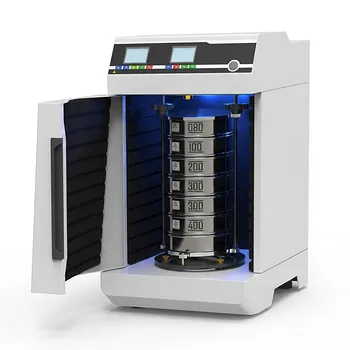
Laboratory Dry and Wet Three Dimensional Vibratory Sieve Shaker for Particle Analysis
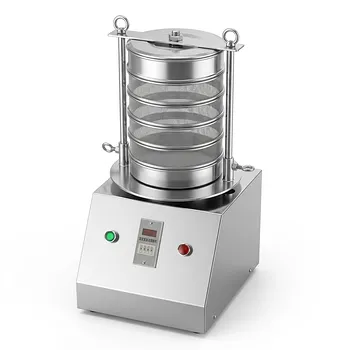
Stainless Steel Laboratory Vibratory Test Sieve Shaker
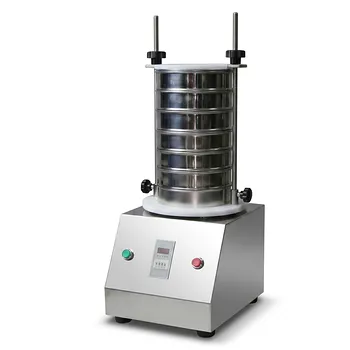
Small Laboratory Vibratory Sieve Shaker for Powder Gradation and Particle Size Analysis
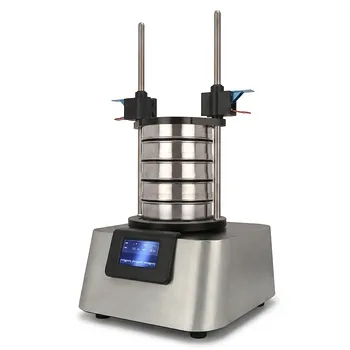
Vibratory Sieve Shaker Electromagnetic 3D Motion Powder Particle Size Analyzer for Dry and Wet Sieving
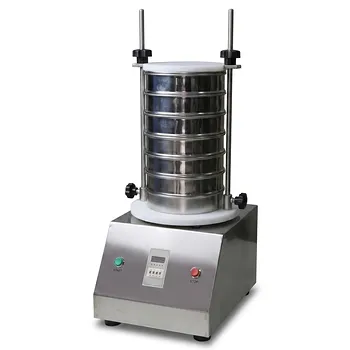
Laboratory Vibratory Test Sieve Shaker for Precision Particle Size Analysis and Powder Grading
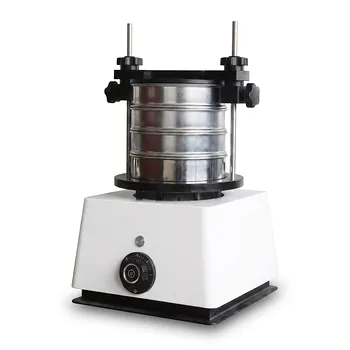
Small Laboratory Vibrating Sieve Shaker for Precise Particle Size Analysis
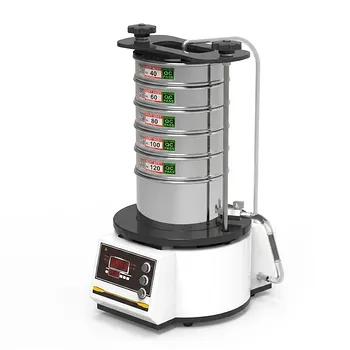
High Frequency Wet Three-Dimensional Vibrating Sieve Shaker for Dry and Wet Particle Size Analysis
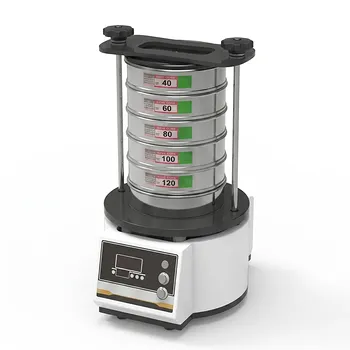
Dry Three Dimensional Vibratory Sieve Shaker
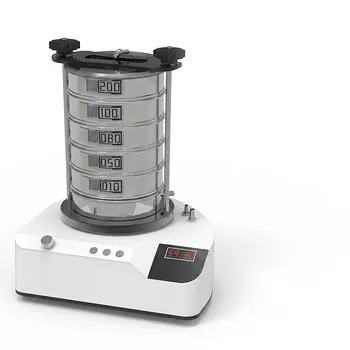
Heavy Duty Dry Three Dimensional Vibratory Sieve Shaker for Particle Separation
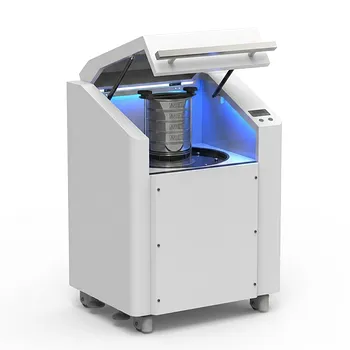
High Frequency Cabinet Type Three-Dimensional Rotary Vibrating Sieve Shaker for Dry Sieving and Particle Classification
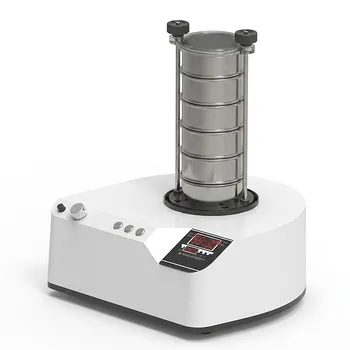
三维电磁微量振动筛分仪
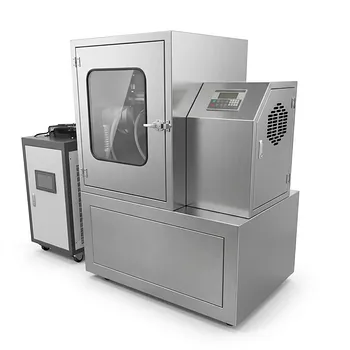
Vibratory Superfine Grinder for Ultra Fine Laboratory Powder Milling
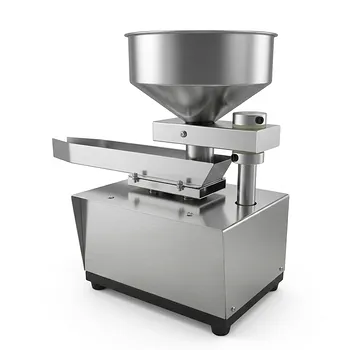
Automatic Vibrating Powder Feeder for Laboratory Material Processing Precision Vibratory Hopper Feeder for Granular and Powder Material Handling Industrial Grade Vibrating Tray Feeder for Consistent Material Sample Preparation
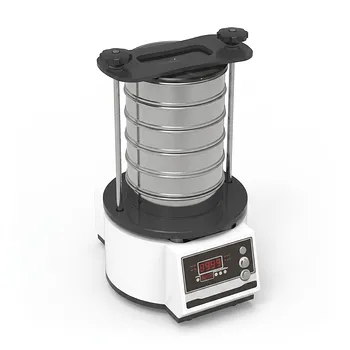
Tapping Oscillating Sieve Shaker for Dry and Wet Particle Size Analysis
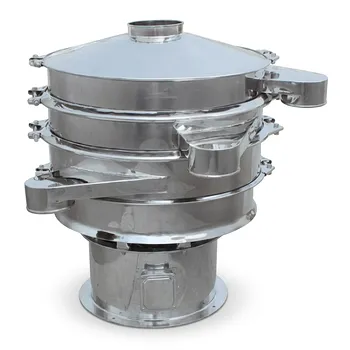
Stainless Steel Rotary Vibrating Sieve High Precision Circular Vibratory Separator Industrial Powder Grading Machine Multi Layer Sifting Equipment
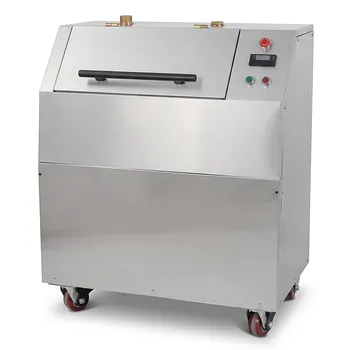
Vibratory Disc Mill for Rapid Fine Grinding and High Throughput Sample Preparation of Hard and Brittle Materials
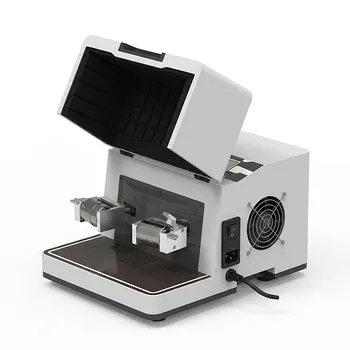
High Energy Hybrid Vibratory Ball Mill for Grinding Mixing and Cell Disruption
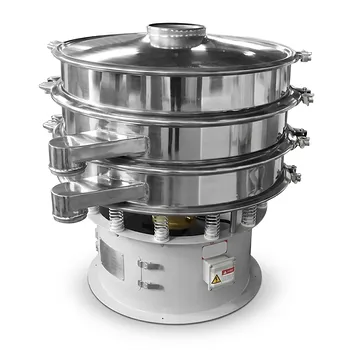
Three Dimensional Rotary Vibrating Sieve
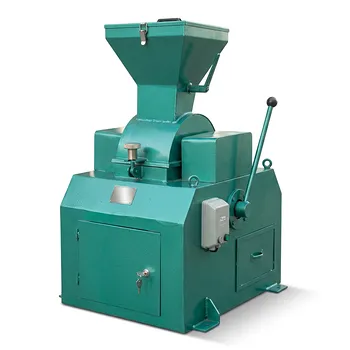
Laboratory Sealed Hammer Blade Crusher Divider for High Hardness Sample Preparation