What is the primary purpose of using a planetary ball mill during the powder mixing stage of lightweight brick production?
Updated 4 months ago
The primary purpose of using a planetary ball mill in lightweight brick production is to achieve micron-scale homogenization of diverse raw materials through high-intensity impact and shear forces. This process ensures that components with vastly different densities and particle sizes—such as clay, cement kiln dust, and sewage sludge—are distributed uniformly throughout the mixture. By refining these materials, the mill facilitates robust solid-phase reactions during the sintering stage, which directly increases the structural integrity and strength of the final brick.
The planetary ball mill transforms raw powders into a highly reactive, homogeneous precursor by utilizing high-energy mechanical forces. This foundational step is critical for ensuring chemical uniformity and optimizing the sintering process in the production of high-performance lightweight bricks.
Achieving Microscopic Homogeneity
Overcoming Material Heterogeneity
Lightweight bricks often incorporate recycled waste materials like sewage sludge and kiln dust, which differ significantly in density from traditional clay. The planetary ball mill uses high-speed rotation and revolution to generate centrifugal forces that prevent these materials from segregating.
The Role of Impact and Shear Forces
Unlike standard mixers, the planetary motion creates intense, high-frequency impact and shear. This energy breaks down stubborn agglomerates and forces disparate particles into a singular, uniform matrix.
Eliminating Experimental and Production Errors
By ensuring a micron-level distribution of components like silicon dioxide and aluminum oxide, the mill eliminates inconsistencies found in natural raw materials. This creates a standardized "starting point" that ensures every brick produced has predictable physical properties.
Increasing Chemical Reactivity for Sintering
Particle Refinement to the Micron Scale
The mill grinds coarse raw materials into ultra-fine, micron-scale powders. This process dramatically increases the specific surface area of the particles, making them far more reactive than their coarse counterparts.
Promoting Solid-Phase Reactions
Smaller particles significantly shorten the diffusion paths between different chemical components. This proximity allows solid-phase reactions to occur more efficiently during the high-temperature sintering process, leading to a denser mineral structure.
Enhancing Geopolymerization Potential
In bricks that utilize alkaline activators, high-energy milling increases the chemical activity of aluminosilicate precursors. This ensures a more complete reaction with the activator solution, resulting in a stronger binder system within the brick body.
Understanding the Trade-offs
Energy Intensity and Operational Costs
High-energy ball milling is significantly more energy-intensive than traditional stirring or paddle mixing. Producers must balance the need for extreme refinement with the increased electrical costs and processing time required for planetary milling.
Equipment Wear and Media Contamination
The intense mechanical forces that refine the powder also cause gradual wear on the milling jars and grinding balls. This can lead to minor contamination of the brick mixture with materials from the grinding media, such as alumina or zirconia.
Heat Generation
The friction generated during high-speed milling can cause the temperature of the raw materials to rise. If the mixture contains moisture or heat-sensitive organic wastes, this temperature increase must be managed to prevent premature reactions or off-gassing.
How to Apply This to Your Production Process
Effective use of a planetary ball mill requires aligning your milling parameters with your specific material goals.
- If your primary focus is maximizing structural strength: Utilize higher rotation speeds (e.g., 300-400 rpm) to achieve the finest possible particle distribution and promote superior solid-phase bonding.
- If your primary focus is integrating high volumes of waste: Use the mill to ensure complete encapsulation of waste particles within the clay matrix, preventing localized weak points in the finished brick.
- If your primary focus is reducing sintering energy: Focus on achieving sub-micron refinement to increase the chemical driving force, which can allow for lower firing temperatures or shorter kiln times.
Mastering the high-energy mixing stage allows you to turn inconsistent waste streams into high-strength, predictable construction materials.
Summary Table:
| Key Feature | Benefit for Lightweight Brick Production |
|---|---|
| Micron-Scale Homogenization | Ensures uniform distribution of disparate materials like clay and waste sludge. |
| High-Energy Impact/Shear | Breaks down tough agglomerates to create a singular, consistent material matrix. |
| Increased Surface Area | Refines particles to the micron scale, dramatically boosting chemical reactivity. |
| Enhanced Sintering | Promotes efficient solid-phase reactions for superior structural integrity and strength. |
Optimize Your Material Consistency with Expert Sample Preparation
Precision in the mixing and grinding stage is the foundation of high-performance material science. At our core, we provide complete laboratory sample preparation solutions designed to transform raw powders into high-strength, predictable materials.
Whether you are integrating recycled waste into construction materials or developing advanced ceramics, our equipment ensures your precursors meet the highest standards of homogeneity. Our extensive product line includes:
- Advanced Milling: High-energy planetary ball mills, jet mills, and liquid nitrogen cryogenic grinders for ultra-fine refinement.
- Powder Processing: Precision powder mixers and defoaming mixers for air-free, uniform blends.
- Compaction Excellence: A full spectrum of hydraulic presses, including Cold/Warm Isostatic Presses (CIP/WIP), vacuum hot presses, and standard lab presses.
- Sizing & Analysis: Vibratory and air-jet sieve shakers for accurate particle size distribution.
Don't let inconsistent mixing compromise your research or production quality. Contact our technical specialists today to find the perfect equipment configuration for your specific material goals!
References
- H. H. M. Darweesh. Light-weight bricks from clay combined with cement kiln dust and sludge wastes. DOI: 10.33545/26648776.2021.v3.i1a.36
Mentioned Products
- Vertical Semi Circular Planetary Ball Mill for Laboratory Precision Grinding
- High Energy Planetary Ball Mill for Nano Scale Grinding and Mechanical Alloying
- Heavy Duty Horizontal Planetary Ball Mill for Efficient Industrial Grinding and Sample Preparation
- Vertical Production Planetary Ball Mill for High Throughput Powder Processing
- 360° Rotating Omnidirectional Laboratory Planetary Ball Mill for Homogeneous Ultra-Fine Grinding and Mixing
People Also Ask
- What role does a planetary ball mill play in the synthesis of Li6PS5Cl (LPSCl)? Unlock High Ionic Conductivity
- Why is a planetary ball mill essential for SiBCN-rGO wet-spinning? Achieve Superior Dispersion and Spinnability
- Why is an intermittent grinding process required for perovskites in a planetary ball mill? Ensure Stability & Purity
- Why is a planetary ball mill required for PET micronization? Ensure Accurate Chemical Analysis of Reprocessed PET
- How does mechanized planetary ball milling compare to manual agate grinding? Optimize sulfide standard material precision.

Tech Team · PowderPreparation
Last updated on Jun 03, 2026
Related Products
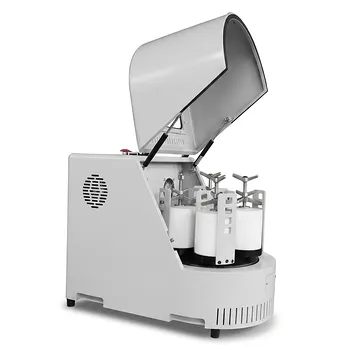
Vertical Semi Circular Planetary Ball Mill for Laboratory Precision Grinding

High Energy Planetary Ball Mill for Nano Scale Grinding and Mechanical Alloying

Heavy Duty Horizontal Planetary Ball Mill for Efficient Industrial Grinding and Sample Preparation

Vertical Production Planetary Ball Mill for High Throughput Powder Processing

360° Rotating Omnidirectional Laboratory Planetary Ball Mill for Homogeneous Ultra-Fine Grinding and Mixing

Vertical Square Planetary Ball Mill for Laboratory Sample Preparation and Nanoscale Grinding

Miniature Planetary Ball Mill with Vacuum Grinding and High Efficiency for Laboratory Sample Preparation

High Energy Omnidirectional Planetary Ball Mill 16L

High Energy Laboratory Planetary Ball Mill for Nano Grinding and Material Science Sample Preparation
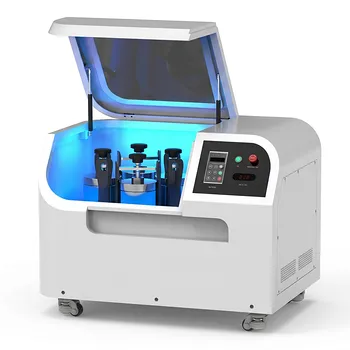
Planetary Ball Mill 12L
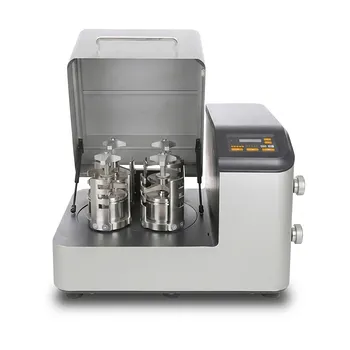
High Energy Planetary Ball Mill for Nano Scale Grinding and Colloidal Mixing in Material Science Research
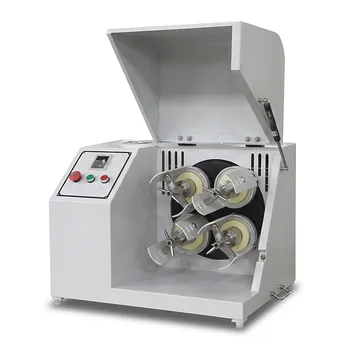
Horizontal Light Duty Planetary Ball Mill for Laboratory Sample Preparation
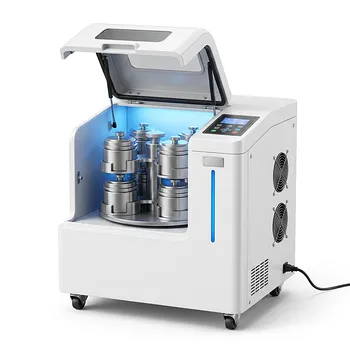
High Energy Omnidirectional Planetary Ball Mill 20L
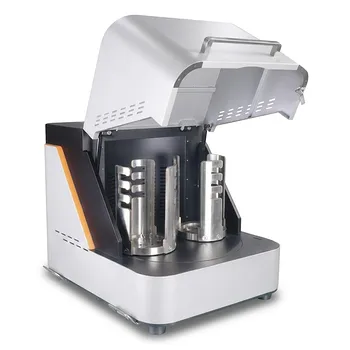
High Energy Laboratory Planetary Ball Mill for Nano Grinding and Colloidal Mixing of Hard and Brittle Materials

8L Planetary Ball Mill for Laboratory Grinding and Sample Preparation
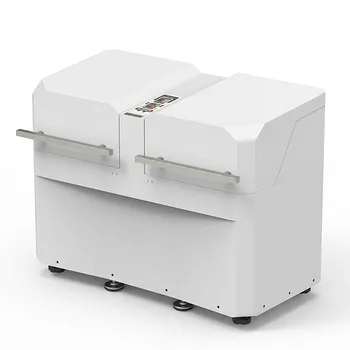
Dual Station Planetary Ball Mill 24L

Multi-Platform Nanoscale High-Energy Vibratory Ball Mill

Nano High Energy Vibratory Ball Mill for Laboratory Sample Preparation
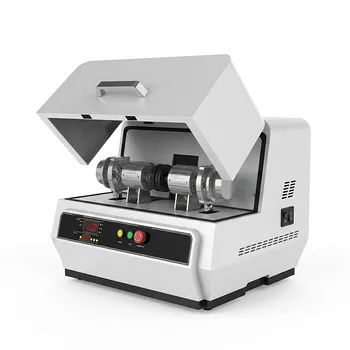
Dual Jar High Energy Vibratory Ball Mill