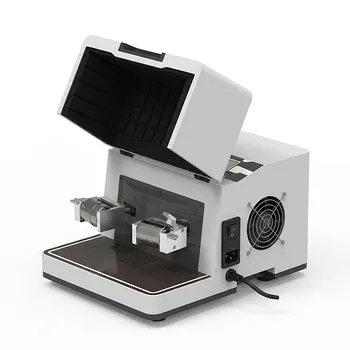
What is the role of a planetary ball mill in the preparation of bioactive glass (BG) powders? Precision Refinement
Updated 3 months ago
Particle refinement and chemical homogenization are the primary roles of a planetary ball mill in the preparation of bioactive glass (BG) powders. This high-energy equipment uses impact and shear forces to reduce coarse glass fragments into fine, uniform powders at the micron or nanometer scale.
The planetary ball mill transforms bulk glass into highly reactive, uniform powders through high-frequency impact and attrition. This refinement is critical for controlling ion release rates and ensuring the structural integrity of advanced biomaterials used in 3D printing and clinical implants.
Mechanisms of Powder Refinement
High-Energy Impact and Attrition
The mill operates by rotating grinding jars in a planetary motion, which generates complex centrifugal forces. Inside the jars, high-hardness grinding balls collide with glass fragments, delivering the kinetic energy required for deep mechanical crushing.
Rapid Size Reduction
Glass fragments, often starting at the millimeter or 50–250 micrometer scale, are rapidly reduced to the micron or nanometer scale. This intensive process typically achieves the desired fineness within a 30- to 60-minute window of high-speed rotation.
Dry and Wet Grinding Versatility
The equipment can perform both dry and wet grinding of the various components, such as silica, sodium oxide, and calcium oxide. This flexibility allows researchers to tailor the environment to the specific chemical stability and final application of the bioactive glass.
Improving Chemical and Biological Performance
Enhancing Specific Surface Area
By pulverizing glass into finer particles, the mill significantly increases the specific surface area of the powder. A higher surface area allows for a faster rate of ion release, which directly enhances the biological activity and "bio-interactivity" of the material in wound or bone environments.
Achieving Homogeneous Mixing
The mill ensures a thorough, microscopic mixing of the multiple oxides that constitute the glass. This chemical uniformity is a prerequisite for maintaining consistent performance in subsequent manufacturing steps, such as formulating layered composite materials or dental posts.
Promoting Biomimetic Mineralization
The refined particle size is essential for creating micro-nano hierarchical structures. These structures are necessary for biomimetic mineralization, which improves the material's ability to integrate with natural bone and can even enhance solar radiation reflection in specific applications.
Optimizing Manufacturing Processes
Supporting 3D Printing and Lithography
Fine powders significantly reduce the sedimentation rate when the bioactive glass is mixed into photocurable resins. This ensures the precision required for high-resolution lithography and maintains a consistent scaffold microstructure during 3D printing.
Controlling Sintering and Crystallization
Refined powders allow for better management of crystallization kinetics during the sintering process. By regulating the particle size distribution, manufacturers can ensure a uniform final crystal size, typically keeping it below 1 micron for optimal mechanical strength.
Improving Matrix Integration
Small, uniform particles exhibit better interfacial bonding strength when integrated into polymer matrices, such as hydrogels or acrylates. This leads to a more stable composite material with improved dispersion uniformity.
Understanding the Trade-offs
Media Wear and Contamination
The use of high-hardness grinding balls can lead to media wear, where microscopic fragments of the balls contaminate the bioactive glass powder. This can alter the purity of the glass and potentially impact its biocompatibility if the grinding media is not carefully selected.
Heat Generation and Crystallization
Prolonged, high-energy grinding generates significant thermal energy within the grinding jars. For certain glass compositions, this heat may trigger premature crystallization or phase changes, which can reduce the intended bioactivity of the final powder.
Particle Agglomeration
Grinding beyond the optimal timeframe can lead to agglomeration, where extremely fine particles begin to fuse together due to high surface energy. This results in an effectively larger particle size and poor dispersion, negating the benefits of the milling process.
Making the Right Choice for Your Goal
- If your primary focus is high-resolution 3D printing: Utilize the mill to achieve a median particle size in the low micron range to minimize sedimentation in resins.
- If your primary focus is rapid biological healing: Prioritize increasing the specific surface area through longer milling times to maximize ion release and bioactivity.
- If your primary focus is structural glass-ceramics: Use the mill to regulate packing density and crystallization kinetics to ensure a uniform crystal size during sintering.
- If your primary focus is chemical purity: Select high-purity, wear-resistant grinding media and implement cooling breaks to prevent contamination and thermal degradation.
By precisely controlling the milling parameters, you can engineer bioactive glass powders that meet the exact mechanical and biological requirements of your specific medical application.
Summary Table:
| Key Role | Impact on Bioactive Glass (BG) | Benefit for Final Application |
|---|---|---|
| Particle Refinement | Reduces size to micron/nanometer scale | Faster ion release & enhanced biological healing |
| Chemical Homogenization | Ensures microscopic mixing of oxides | Consistent performance in dental & bone implants |
| Increased Surface Area | Creates micro-nano hierarchical structures | Improved biomimetic mineralization & interactivity |
| Sedimentation Control | Maintains fine powder suspension in resins | High-resolution 3D printing & lithography precision |
| Sintering Management | Regulates crystallization kinetics | Superior mechanical strength & uniform crystal size |
Elevate Your Material Science Research with Precision Equipment
Achieving the perfect particle size and chemical homogeneity is critical for high-performance bioactive glass and advanced biomaterials. At [Brand Name], we provide complete laboratory sample preparation solutions specializing in powder processing and compaction.
Our extensive lines include high-energy planetary ball mills, jet mills, and liquid nitrogen cryogenic grinders for superior refinement, alongside specialized powder and defoaming mixers for uniform blending. To ensure structural integrity, we manufacture a full spectrum of hydraulic presses, including Cold/Warm Isostatic Presses (CIP/WIP), vacuum hot presses, and XRF pellet presses.
Whether you are optimizing 3D printing resins or developing clinical implants, our specialized equipment delivers the reliability and precision your research demands. Contact us today to find your solution!
References
- Jixiang SHI, Yufang Zhu. Preparation and Characterization of Bioactive Glass-Manganese Dioxide Composite Scaffolds. DOI: 10.15541/jim20210264
Mentioned Products
- Vertical Semi Circular Planetary Ball Mill for Laboratory Precision Grinding
- High Energy Planetary Ball Mill for Nano Scale Grinding and Mechanical Alloying
- Heavy Duty Horizontal Planetary Ball Mill for Efficient Industrial Grinding and Sample Preparation
- Vertical Production Planetary Ball Mill for High Throughput Powder Processing
- 360° Rotating Omnidirectional Laboratory Planetary Ball Mill for Homogeneous Ultra-Fine Grinding and Mixing
People Also Ask
- Why is a planetary ball mill essential for SiBCN-rGO wet-spinning? Achieve Superior Dispersion and Spinnability
- What role does a planetary ball mill play in the synthesis of Li6PS5Cl (LPSCl)? Unlock High Ionic Conductivity
- Why is a planetary ball mill required for PET micronization? Ensure Accurate Chemical Analysis of Reprocessed PET
- How does mechanized planetary ball milling compare to manual agate grinding? Optimize sulfide standard material precision.
- Why is a planetary ball mill required during the synthesis of sodium zeolite from coal gangue? Achieve High Reactivity

Tech Team · PowderPreparation
Last updated on Jun 03, 2026
Related Products
Vertical Semi Circular Planetary Ball Mill for Laboratory Precision Grinding

High Energy Planetary Ball Mill for Nano Scale Grinding and Mechanical Alloying

Heavy Duty Horizontal Planetary Ball Mill for Efficient Industrial Grinding and Sample Preparation

Vertical Production Planetary Ball Mill for High Throughput Powder Processing

360° Rotating Omnidirectional Laboratory Planetary Ball Mill for Homogeneous Ultra-Fine Grinding and Mixing

Vertical Square Planetary Ball Mill for Laboratory Sample Preparation and Nanoscale Grinding

Miniature Planetary Ball Mill with Vacuum Grinding and High Efficiency for Laboratory Sample Preparation

High Energy Omnidirectional Planetary Ball Mill 16L

High Energy Laboratory Planetary Ball Mill for Nano Grinding and Material Science Sample Preparation
Planetary Ball Mill 12L
High Energy Planetary Ball Mill for Nano Scale Grinding and Colloidal Mixing in Material Science Research
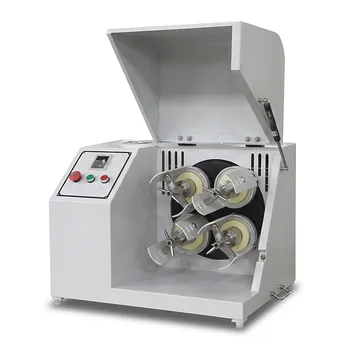
Horizontal Light Duty Planetary Ball Mill for Laboratory Sample Preparation
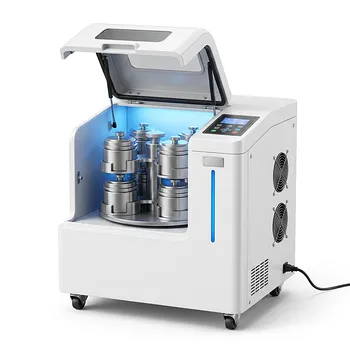
High Energy Omnidirectional Planetary Ball Mill 20L
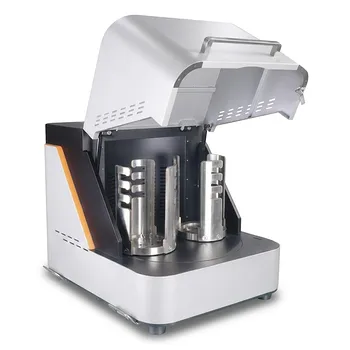
High Energy Laboratory Planetary Ball Mill for Nano Grinding and Colloidal Mixing of Hard and Brittle Materials

8L Planetary Ball Mill for Laboratory Grinding and Sample Preparation
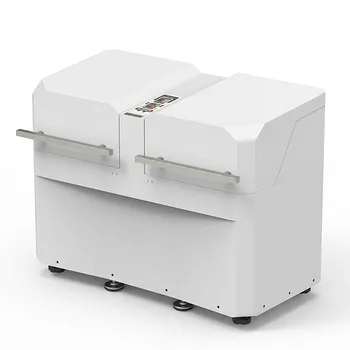
Dual Station Planetary Ball Mill 24L
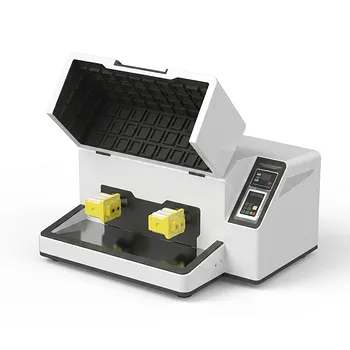
Multi-Platform Nanoscale High-Energy Vibratory Ball Mill
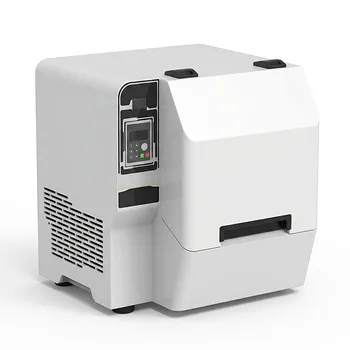
Nano High Energy Vibratory Ball Mill for Laboratory Sample Preparation
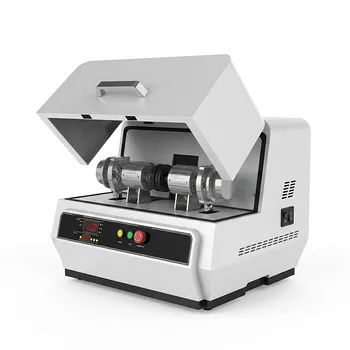
Dual Jar High Energy Vibratory Ball Mill