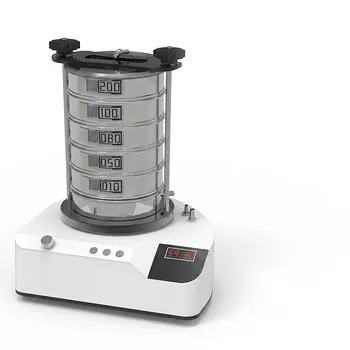
Why sieve organic additives to 5 mm for laterite composites? Optimize Strength and Insulation
Updated 4 months ago
The requirement to crush and sieve organic additives through a 5 mm mesh is driven by the need for matrix compatibility and structural homogeneity. By refining peanut shells to this specific size, you ensure that the reinforcement phase is uniformly dispersed throughout the laterite, preventing internal voids and structural weak points. This precise grading allows the final composite to achieve a lower thermal conductivity without sacrificing the mechanical strength required for construction.
Grading organic additives to a 5 mm threshold transforms raw agricultural byproducts into a viable engineering reinforcement. This process ensures the material remains cohesive and predictable by balancing the insulation benefits of the additive with the structural requirements of the laterite matrix.
Achieving Matrix Compatibility
Ensuring Uniform Dispersion
For a composite material to perform reliably, the reinforcement phase (peanut shells) must be spread evenly throughout the binder phase (laterite). Using a 5 mm mesh ensures that the particles are small enough to be integrated into the soil mixture during the homogenization process.
If the particles are too large, they tend to cluster or "clump," leading to an inconsistent mixture. This non-uniformity creates areas of localized weakness that can lead to premature failure under load.
Optimizing the Interfacial Bond
The strength of a laterite composite depends on the bond between the soil and the additive. Particles sieved to 5 mm provide a high surface-area-to-volume ratio, which improves the mechanical interlocking between the peanut shells and the laterite matrix.
When particles are appropriately sized, the laterite can fully encapsulate each organic fragment. This encapsulation is vital for preventing the "pull-out" effect, where additives detach from the matrix under stress.
Enhancing Thermal and Mechanical Performance
Reducing Thermal Conductivity
One of the primary reasons for adding organic materials like peanut shells is to improve the thermal insulation of the composite. The 5 mm grading ensures that the porous nature of the shells is distributed evenly, creating a consistent barrier against heat transfer.
By maintaining a uniform particle size, you avoid creating "thermal bridges"—dense areas of laterite that allow heat to pass through easily. This results in a material that is significantly more energy-efficient for building applications.
Preventing Structural Defects
Oversized fibers or shell fragments act as stress concentrators within the composite. If a fragment is significantly larger than the surrounding soil grains, it can create "cleavage planes" where cracks are likely to initiate and propagate.
Sieving acts as a critical quality control step to remove these structural defects. By limiting the maximum particle size to 5 mm, you ensure that the reinforcement supports the matrix rather than compromising its integrity.
Navigating the Trade-offs
Balancing Particle Size and Strength
While smaller particles generally lead to better dispersion, over-crushing organic materials can sometimes reduce their effectiveness as a reinforcement. If the shells are ground into a fine dust, they may lose the fibrous qualities that provide tensile strength to the laterite block.
The 5 mm standard is selected as a "sweet spot." It is fine enough to ensure matrix compatibility but coarse enough to retain the physical properties of the organic matter.
Processing Costs vs. Material Quality
Crushing and sieving require additional labor and equipment, which can increase the cost of production. However, skipping this step often leads to a high rejection rate of finished blocks due to cracking or crumbling.
The investment in pretreatment is offset by the increased durability and lifespan of the material. Furthermore, as noted in supplementary technical contexts, sieving also serves to protect downstream equipment from damage caused by large stones or debris often found in raw soil.
How to Apply This to Your Project
Making the Right Choice for Your Goal
- If your primary focus is maximum thermal insulation: Ensure the 5 mm sieved shells are thoroughly dried before mixing to maximize the air-trapping potential of the organic pores.
- If your primary focus is load-bearing structural strength: Prioritize a strict 5 mm sieve limit to eliminate oversized fragments that could act as failure points under heavy compression.
- If your primary focus is cost-effective production: Use a mechanized crusher for the peanut shells to ensure consistent sizing while minimizing the manual labor required for the refinement process.
Properly refined organic additives turn common laterite into a high-performance, sustainable building material that meets modern engineering standards.
Summary Table:
| Key Aspect | 5 mm Sieve Benefit | Structural & Thermal Impact |
|---|---|---|
| Dispersion | Prevents additive clumping | Ensures matrix homogeneity and consistency |
| Interfacial Bond | High surface-area-to-volume ratio | Improves mechanical interlocking with laterite |
| Thermal Barrier | Even distribution of organic pores | Eliminates thermal bridges for better insulation |
| Quality Control | Removes oversized stress concentrators | Prevents crack initiation and structural failure |
Elevate Your Composite Research with Precision Equipment
Achieving the perfect 5 mm grading and a homogeneous mix is critical for high-performance laterite composites. At [Company Name], we provide complete laboratory sample preparation solutions specifically designed for material science and powder processing.
To ensure your organic additives and laterite matrices meet engineering standards, we offer a specialized range of equipment:
- Refinement: High-efficiency crushers (jaw/roll) and liquid nitrogen cryogenic grinders for tough organic matter.
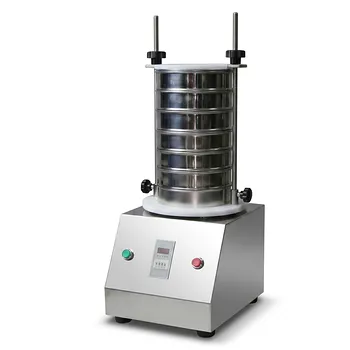
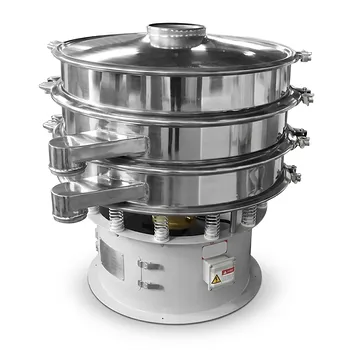
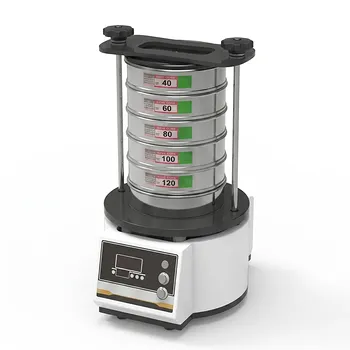
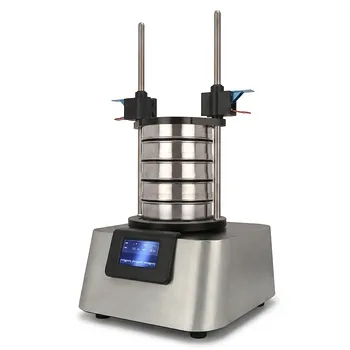
- Sieving & Grading: Vibratory and air-jet sieve shakers with precision meshes to guarantee a strict 5 mm threshold.
- Homogenization: Advanced planetary ball mills and powder mixers for uniform phase dispersion.
- Compaction: A full spectrum of hydraulic presses, including Cold/Warm Isostatic Presses (CIP/WIP), vacuum hot presses, and standard lab presses for final block production.
Don't let inconsistent particle sizes compromise your material's integrity. Contact our technical experts today to discover how our specialized equipment can enhance your lab's efficiency and research outcomes!
References
- Biram Dieng Amadou Warore, Alphousseyni Ghabo and Ibra Bop. THERMAL CHARACTERIZATION OF A GEOCONCRETE COMPOSITE: LATERITE WITH ADDITION OF PEANUT SHELL. DOI: 10.5281/zenodo.6032728
Mentioned Products
- Stainless Steel Rotary Vibrating Sieve High Precision Circular Vibratory Separator Industrial Powder Grading Machine Multi Layer Sifting Equipment
- Laboratory Air Jet Sieving Machine for Fine Powder Particle Size Analysis and Deagglomeration
- 三维电磁微量振动筛分仪
- Small Laboratory Vibratory Sieve Shaker for Powder Gradation and Particle Size Analysis
- Three Dimensional Rotary Vibrating Sieve
People Also Ask
- What is the significance of high-precision vibratory sieve machines for SMA? Optimize Aggregate Gradation & Durability
- What is the role of a laboratory-grade high-precision sieve in CPC-PCL? Ensure uniform powder distribution and stability.
- Why is high-precision sieving equipment necessary for aviation-grade composites? Optimize Fiber Strength & Consistency
- What is the function of high-precision vibratory sieve shakers in the analysis of brown rice particle size distribution?
- Why is a high-precision vibratory sieve shaker necessary for wood-polystyrene particles? Maximize composite strength.

Tech Team · PowderPreparation
Last updated on Jun 03, 2026
Related Products
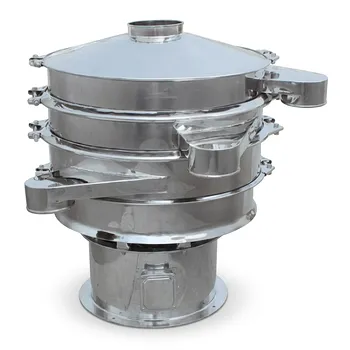
Stainless Steel Rotary Vibrating Sieve High Precision Circular Vibratory Separator Industrial Powder Grading Machine Multi Layer Sifting Equipment
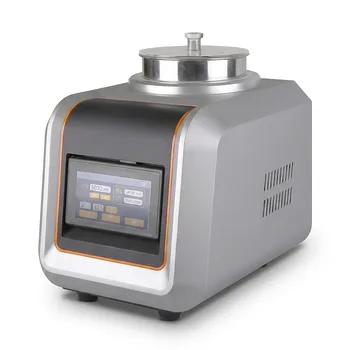
Laboratory Air Jet Sieving Machine for Fine Powder Particle Size Analysis and Deagglomeration
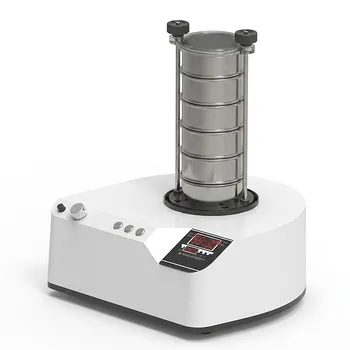
三维电磁微量振动筛分仪
Small Laboratory Vibratory Sieve Shaker for Powder Gradation and Particle Size Analysis
Three Dimensional Rotary Vibrating Sieve
Dry Three Dimensional Vibratory Sieve Shaker
Vibratory Sieve Shaker Electromagnetic 3D Motion Powder Particle Size Analyzer for Dry and Wet Sieving
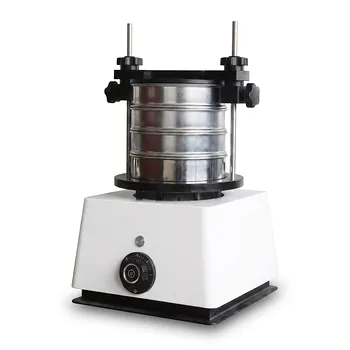
Small Laboratory Vibrating Sieve Shaker for Precise Particle Size Analysis
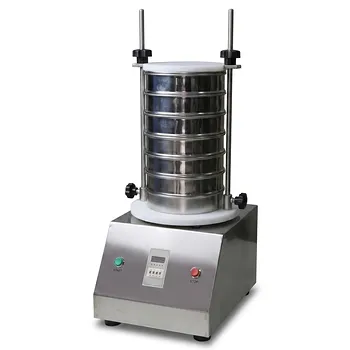
Laboratory Vibratory Test Sieve Shaker for Precision Particle Size Analysis and Powder Grading