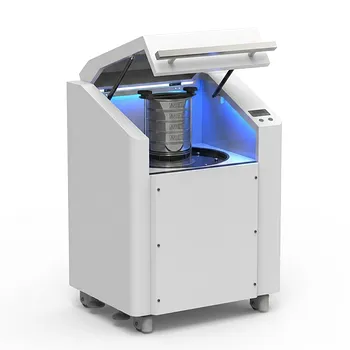
Why are precision stainless steel sieves required for classification after the microplastic grinding process? Ensure Sample Accuracy.
Updated 4 months ago
Precision stainless steel sieves provide the mechanical precision required to transform raw ground polymers into standardized research materials by isolating specific particle size fractions. This classification process is essential because it allows researchers to obtain microplastics within strictly defined ranges—such as 1 millimeter down to 100 micrometers—ensuring that the physical properties of the sample are consistent for experimental use. Without this step, the resulting powder would be too polydisperse to yield repeatable data in toxicological or environmental studies.
The central takeaway is that particle size is the primary variable governing microplastic behavior; precision sieving isolates specific size fractions to ensure that chemical adsorption rates, biological ingestion risks, and experimental dosages remain controlled and reproducible.
The Link Between Particle Size and Toxicological Impact
Controlling Surface Area for Chemical Adsorption
The specific surface area of a microplastic particle increases significantly as its size decreases. Precision sieving is required to isolate smaller particles because their high surface-area-to-volume ratio directly influences their capacity to adsorb organic pollutants, such as pesticides and heavy metals.
Standardizing Biological Ingestion Risks
Different organisms interact with microplastics based on their size relative to the organism's feeding apparatus. By using precision stainless steel sieves, researchers can ensure they are testing particles that are biologically relevant to the specific species under study, from zooplankton to larger aquatic life.
Establishing Accurate Dose Control
In toxicological experiments, the "dose" is often calculated based on particle count or total surface area. A controlled particle size distribution (PSD), achieved through multi-level screening, allows for a standardized basis for accurate dose control and the validation of analytical methods.
Ensuring Scientific Reproducibility and Data Integrity
Facilitating Consistent Analytical Characterization
High-precision sieves ensure that particle sizes remain highly consistent for subsequent microscopic imaging and spectroscopic analysis. This uniformity is a fundamental prerequisite for the reproducibility of polydisperse system sedimentation studies and standardized assessments of fine particles.
Removing Oversized Fragments and Agglomerates
The grinding process, particularly cryogenic grinding, often leaves behind oversized particles or undissolved agglomerates. Precision sieves act as a cutoff mechanism, mechanically filtering out these outliers to ensure the final material has a representative median diameter (Dx50).
Enabling Effective Sample Purification
Beyond size classification, these sieves facilitate the rinsing and purification of intercepted materials. They allow digested organic residues and liquids to pass through while intercepting target microplastics, serving as a critical tool for solid-liquid separation following sample digestion.
Understanding Technical Limitations and Trade-offs
The Challenge of Sieve Blinding
When dealing with ultra-fine microplastics, particles can become wedged in the mesh openings, a phenomenon known as blinding. This reduces sieving efficiency and can lead to inaccurate classification if the sieves are not properly maintained or cleaned using ultrasonic baths.
Material Loss and Static Charges
During dry sieving of ground polymers, static electricity can cause fine particles to adhere to the stainless steel frame or mesh. This can result in the loss of the smallest, most toxicologically relevant fractions, potentially biasing the final sample distribution.
Durability vs. Precision
While stainless steel is highly durable and resistant to corrosion, the high-precision mesh (especially at apertures like 5 µm or 10 µm) is delicate. Over-aggressive cleaning or high-energy mechanical shaking can deform the mesh, compromising the accuracy of the size cutoff.
How to Apply This to Your Research Goals
Selecting the right sieving protocol depends on the specific requirements of your downstream analysis and the nature of the polymer being studied.
- If your primary focus is environmental pollutant transport: Use multi-level precision sieves to isolate the smallest possible fractions (sub-100 µm) to maximize and standardize the surface area available for chemical adsorption.
- If your primary focus is standardized toxicity testing: Prioritize achieving a tight median diameter (Dx50) by removing both oversized fragments and excessively fine "dust" to ensure a consistent biological response across test groups.
- If your primary focus is method validation for field samples: Utilize sieves with apertures matching standard environmental mesh sizes (e.g., 300 µm) to ensure your laboratory-ground reference materials remain comparable to particles found in the ocean or soil.
By implementing a rigorous classification step using precision stainless steel sieves, you ensure that your microplastic research is built on a foundation of physical accuracy and experimental repeatability.
Summary Table:
| Key Function | Impact on Research | Technical Challenge |
|---|---|---|
| Size Fraction Isolation | Ensures reproducible toxicological dosages | Sieve blinding with ultra-fine particles |
| Surface Area Control | Standardizes pollutant adsorption rates | Static electricity causing material loss |
| Agglomerate Removal | Eliminates outliers for consistent Dx50 values | Risk of mesh deformation during cleaning |
| Sample Purification | Facilitates rinsing and solid-liquid separation | Fragility of high-precision micro-meshes |
Elevate Your Research with Precision Sample Preparation
Achieving repeatable data in microplastic and material science studies starts with superior sample preparation. At [Company Name], we specialize in providing complete laboratory solutions designed for precision and durability.
Our extensive product range supports your entire workflow:
- Size Reduction: Cryogenic grinders, planetary ball mills, and jet mills for ultra-fine grinding.
- Classification: High-precision vibratory and air-jet sieve shakers equipped with a full range of stainless steel test sieves and meshes.
- Material Compaction: A full spectrum of hydraulic presses, including Cold/Warm Isostatic Presses (CIP/WIP), XRF pellet presses, and vacuum hot presses.
- Mixing: High-efficiency powder and defoaming mixers for uniform sample preparation.
Whether you are isolating specific microplastic fractions for toxicological impact or preparing powders for advanced materials research, our equipment ensures maximum accuracy and experimental integrity.
Ready to optimize your laboratory workflow? Contact our experts today to find the perfect solution!
References
- Urška Šunta, Mojca Bavcon Kralj. Insights into Microplastics: from Physical and Chemical Characterisation to its Potential as a Vector.. DOI: 10.55295/psl.2022.d13
Mentioned Products
- Stainless Steel Rotary Vibrating Sieve High Precision Circular Vibratory Separator Industrial Powder Grading Machine Multi Layer Sifting Equipment
- Laboratory Vibratory Test Sieve Shaker for Precision Particle Size Analysis and Powder Grading
- Small Laboratory Vibrating Sieve Shaker for Precise Particle Size Analysis
- Small High-Speed Laboratory Grinder for Powder Processing
- Three Dimensional Rotary Vibrating Sieve
People Also Ask
- What is the significance of high-precision vibratory sieve machines for SMA? Optimize Aggregate Gradation & Durability
- What is the role of a laboratory-grade high-precision sieve in CPC-PCL? Ensure uniform powder distribution and stability.
- Why is high-precision sieving equipment necessary for aviation-grade composites? Optimize Fiber Strength & Consistency
- What is the function of high-precision vibratory sieve shakers in the analysis of brown rice particle size distribution?
- Why is a high-precision vibratory sieve shaker necessary for wood-polystyrene particles? Maximize composite strength.

Tech Team · PowderPreparation
Last updated on Jun 03, 2026
Related Products

Stainless Steel Rotary Vibrating Sieve High Precision Circular Vibratory Separator Industrial Powder Grading Machine Multi Layer Sifting Equipment

Laboratory Vibratory Test Sieve Shaker for Precision Particle Size Analysis and Powder Grading

Small Laboratory Vibrating Sieve Shaker for Precise Particle Size Analysis
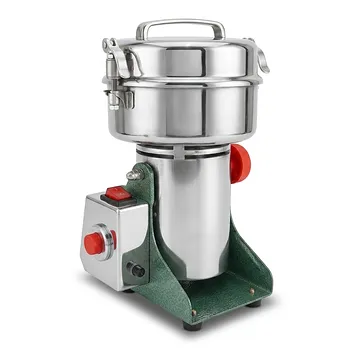
Small High-Speed Laboratory Grinder for Powder Processing

Three Dimensional Rotary Vibrating Sieve
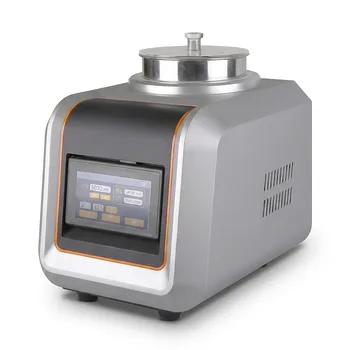
Laboratory Air Jet Sieving Machine for Fine Powder Particle Size Analysis and Deagglomeration

Heavy Duty Dry Three Dimensional Vibratory Sieve Shaker for Particle Separation