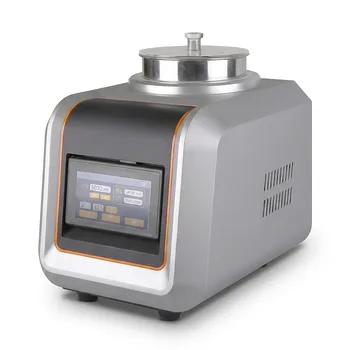
Role of High-Precision Vibratory Sieve Shakers in Additive Manufacturing: PSD Accuracy & DEM Simulation Data
Updated 5 months ago
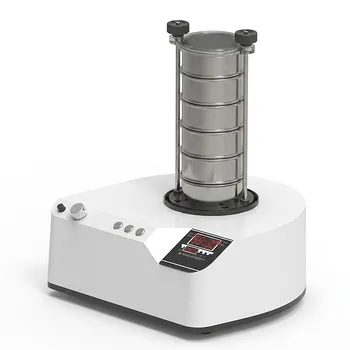
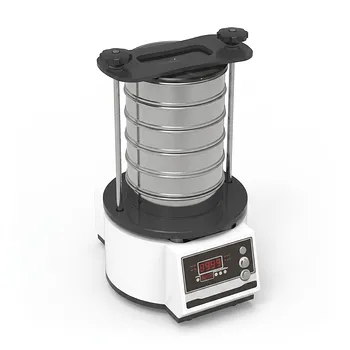
The high-precision vibratory sieve shaker is the foundational tool for quantifying the particle size distribution (PSD) of additive manufacturing powders. It utilizes controlled, multi-stage frequency vibrations to drive powder through a vertical stack of woven wire test sieves with specific apertures. This process allows engineers to calculate the mass percentage of various size fractions, providing the essential data required for both quality control and predictive digital simulations.
Core Takeaway: By providing a standardized method for classifying powder by mass, high-precision vibratory sieving ensures material consistency and delivers the empirical data necessary for accurate Discrete Element Method (DEM) simulations.
The Mechanics of High-Precision PSD Determination
Multi-Stage Frequency Vibration
Unlike standard shakers, high-precision units use multi-stage frequency vibrations to induce high-frequency motion in the sieve stack. This mechanical energy ensures that particles are continuously reoriented, allowing them to pass through the mesh apertures efficiently without blinding the screen.
Graduated Separation by Mass Percentage
The equipment organizes powder into distinct size ranges by utilizing a series of sieves with decreasing aperture sizes. After a controlled duration—typically 5 to 10 minutes or until the sample mass on each sieve reaches a constant state—the mass percentage of each fraction is calculated to define the powder’s profile.
Precision Grading of Particle Widths
The shaker accurately determines the width of individual particles based on their ability to pass through specific mesh openings. This grading is vital for identifying the d10, d50, and d90 values, which represent the intercepts for 10%, 50%, and 90% of the cumulative mass.
Bridging Physical Samples and Digital Simulations
Providing Data for DEM Modeling
The primary role of this data in a modern workflow is to serve as the input for Discrete Element Method (DEM) simulations. Accurate PSD parameters ensure that the digital twin of the powder bed reflects the physical reality of the material's behavior during the printing process.
Validating Particle Distribution Authenticity
By feeding empirical sieving data into simulation models, engineers can predict how powders will flow and pack. This ensures the authenticity of particle distribution within the simulation, reducing the need for costly physical trial-and-error during process development.
Consistency Across Batch Productions
High-precision sieving serves as a critical quality control step to monitor for particle breakage or agglomeration. Whether caused by mixing processes or the shear forces within equipment, detecting these changes ensures that the raw material entering the printer remains within specification.
Impact on Final Part Quality and Performance
Removal of Coarse Particles and Agglomerates
High-precision shakers are often used with fine meshes (e.g., 106μm) to scalp oversized particles or clusters from the feedstock. This prevents surface defects such as pinholes or grain protrusions, which are critical for achieving high-quality surface finishes in the final cured part.
Optimization of Molding and Flow
For functional materials, the PSD directly influences dispersion stability and packing density. A consistent particle size ensures uniform electronic transport characteristics and optimizes the molding performance of the powder during the layer-recoating phase.
Scientific Reliability of Material Data
Using standardized vibration conditions eliminates inaccuracies caused by non-uniform particle distribution. This provides a scientifically reliable foundation for researchers to classify powders and predict their performance in various additive manufacturing modalities.
Understanding the Trade-offs
Sensitivity to Particle Morphology
While excellent for determining width, vibratory sieving can be sensitive to particle shape. Elongated or needle-like particles may eventually pass through a mesh if given enough time, potentially skewing the distribution results compared to spherical particles.
Limits of Fine Mesh Sieving
As mesh sizes become extremely fine (below 45μm), electrostatic forces and particle adhesion can impede the sieving process. In these instances, traditional dry vibratory sieving may require additional aids or specialized equipment to maintain accuracy.
Time vs. Throughput
Achieving a "constant mass" state on each sieve ensures accuracy but requires a dedicated time investment for every sample. This makes the process slower than automated optical methods, though it remains the benchmark for physical mass-based classification.
How to Apply This to Your Project
Recommendations for PSD Implementation
- If your primary focus is Simulation Accuracy: Prioritize obtaining a full gradient of mass percentages to provide high-fidelity inputs for your DEM models.
- If your primary focus is Surface Finish Quality: Use the shaker primarily as a "scalping" tool with a specific fine-mesh limit to remove all agglomerates and oversized particles.
- If your primary focus is Material Consistency: Establish a standardized sieving protocol (duration and amplitude) to detect particle breakage after powder recycling or mixing.
- If your primary focus is Regulatory Compliance: Ensure all test sieves are calibrated woven wire cloth to meet international standards for traceable particle size analysis.
By mastering the use of high-precision vibratory sieving, you ensure that your additive manufacturing process is built on a foundation of verifiable, physical material data.
Summary Table:
| Key Feature | Role in PSD Determination | Impact on Additive Manufacturing |
|---|---|---|
| Multi-Stage Vibration | Prevents mesh blinding and ensures efficient particle passage | Precise grading of d10, d50, and d90 values |
| Mass Fractioning | Provides empirical data on powder size distribution by weight | Essential input for accurate DEM digital simulations |
| Fine Mesh Scalping | Filters out oversized particles and agglomerates | Prevents surface defects like pinholes and protrusions |
| Standardized Motion | Eliminates variables caused by manual or inconsistent shaking | Guarantees material consistency across production batches |
Elevate Your Material Research with [Brand Name]
Achieve uncompromising precision in your additive manufacturing workflow. [Brand Name] provides complete laboratory sample preparation solutions for material science, specializing in advanced powder processing and compaction equipment.
From high-precision vibratory and air-jet sieve shakers with traceable test sieves to high-efficiency planetary ball mills, jet mills, and crushers, we give you total control over your particle size distribution. Need to transition from powder to solid? We manufacture a full spectrum of hydraulic presses, including Cold/Warm Isostatic Presses (CIP/WIP), vacuum hot presses, and XRF pellet presses designed for superior density and performance.
Ready to optimize your powder quality and simulation accuracy? Contact our experts today to find the perfect solution for your lab!
References
- Simon Girnth, Klaus Dröder. Dimensionless quantities in discrete element method: powder model parameterization for additive manufacturing. DOI: 10.1007/s40964-023-00543-3
Mentioned Products
- High Frequency Wet Three-Dimensional Vibrating Sieve Shaker for Dry and Wet Particle Size Analysis
- High Frequency Cabinet Type Three-Dimensional Rotary Vibrating Sieve Shaker for Dry Sieving and Particle Classification
- Vibratory Sieve Shaker Electromagnetic 3D Motion Powder Particle Size Analyzer for Dry and Wet Sieving
- Laboratory Vibratory Test Sieve Shaker for Precision Particle Size Analysis and Powder Grading
- Heavy Duty Dry Three Dimensional Vibratory Sieve Shaker for Particle Separation
People Also Ask
- Why are vibrating sieve shakers used with standard test sieves? Ensure Precise Grading for Recycled Aggregates
- What is the function of high-frequency vibratory sieve shakers in AMC powders? Master Particle Grading & PSD Control
- How does a vibratory sieve shaker contribute to optimizing the performance of activated carbon? Enhance Adsorption Precision
- Why is it essential to use a vibrating sieve shaker for the final grading of dietary fiber products? Master Quality.
- What is the role of a high-frequency vibratory sieve shaker in Cold Mix asphalt design? Optimize RAP Gradation Accuracy

Tech Team · PowderPreparation
Last updated on May 14, 2026
Related Products
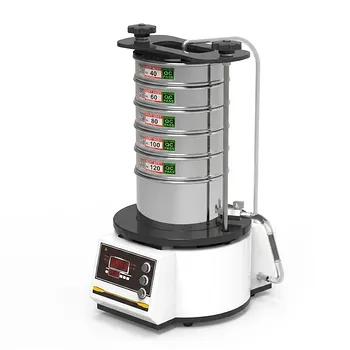
High Frequency Wet Three-Dimensional Vibrating Sieve Shaker for Dry and Wet Particle Size Analysis
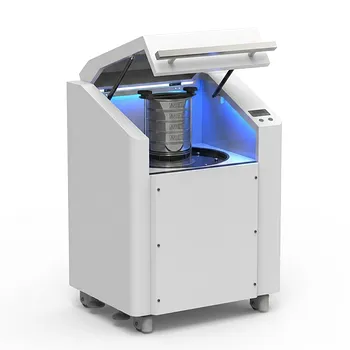
High Frequency Cabinet Type Three-Dimensional Rotary Vibrating Sieve Shaker for Dry Sieving and Particle Classification
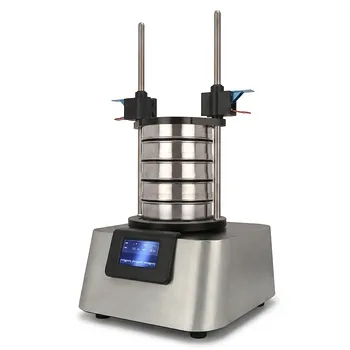
Vibratory Sieve Shaker Electromagnetic 3D Motion Powder Particle Size Analyzer for Dry and Wet Sieving

Laboratory Vibratory Test Sieve Shaker for Precision Particle Size Analysis and Powder Grading
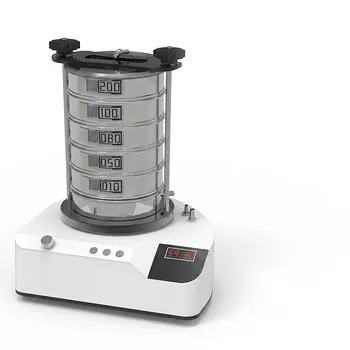
Heavy Duty Dry Three Dimensional Vibratory Sieve Shaker for Particle Separation

Small Laboratory Vibrating Sieve Shaker for Precise Particle Size Analysis
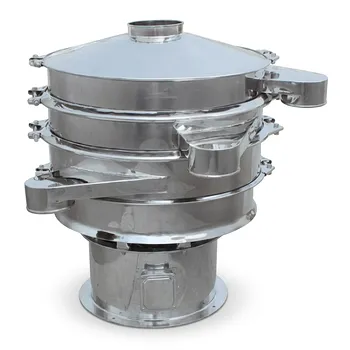
Stainless Steel Rotary Vibrating Sieve High Precision Circular Vibratory Separator Industrial Powder Grading Machine Multi Layer Sifting Equipment
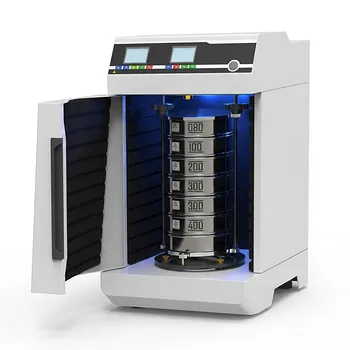
Laboratory Dry and Wet Three Dimensional Vibratory Sieve Shaker for Particle Analysis

Dry Three Dimensional Vibratory Sieve Shaker
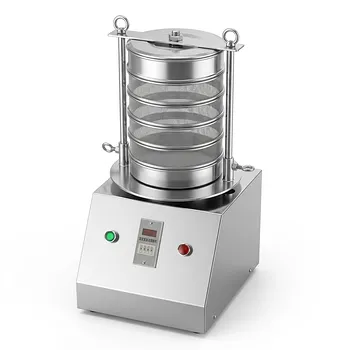
Stainless Steel Laboratory Vibratory Test Sieve Shaker

Small Laboratory Vibratory Sieve Shaker for Powder Gradation and Particle Size Analysis
三维电磁微量振动筛分仪
Tapping Oscillating Sieve Shaker for Dry and Wet Particle Size Analysis
Three Dimensional Rotary Vibrating Sieve
Automatic Vibrating Powder Feeder for Laboratory Material Processing Precision Vibratory Hopper Feeder for Granular and Powder Material Handling Industrial Grade Vibrating Tray Feeder for Consistent Material Sample Preparation
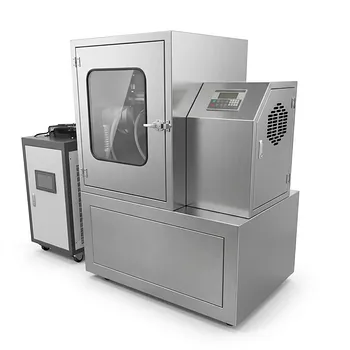
Vibratory Superfine Grinder for Ultra Fine Laboratory Powder Milling
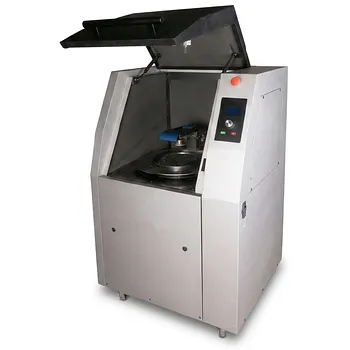
High Speed Vibratory Disc Mill for Spectral Analysis Sample Preparation and Rapid Powder Grinding
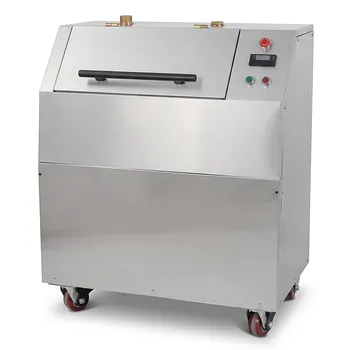
Vibratory Disc Mill for Rapid Fine Grinding and High Throughput Sample Preparation of Hard and Brittle Materials
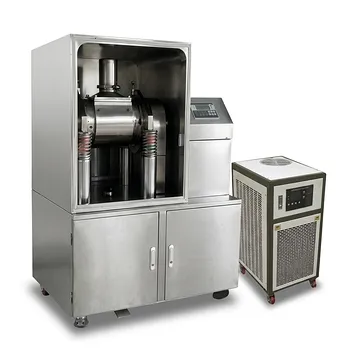
Small Vibrating Ultrafine Grinder for Traditional Chinese Medicine