Why control ball milling time for CNT-MgH2 composites? Optimize Hydrogen Storage Performance.
Updated 3 months ago
Controlling ball milling time is the decisive factor in preserving the catalytic architecture of Carbon Nanotubes (CNTs) within MgH2 composites. To maintain high performance, the milling duration must be long enough to disperse the CNTs and create reactive defects, but short enough to prevent the tubular structure from collapsing. If the process is too long, the CNTs degrade into amorphous carbon, stripping them of their ability to act as high-speed "hydrogen pumps."
The precision of ball milling determines whether CNTs function as structural catalysts or become inert fillers. Success relies on balancing the creation of surface defect sites for reactivity with the preservation of the tubular channels required for rapid hydrogen diffusion.
The Dual Role of CNTs in Magnesium Hydride
CNTs are not merely additives; they serve as sophisticated functional components that transform the storage kinetics of MgH2.
The "Hydrogen Pump" Mechanism
The tubular structure of a carbon nanotube acts as a high-speed highway for hydrogen atoms. These channels facilitate rapid diffusion through the composite, allowing the material to charge and discharge hydrogen much faster than bulk magnesium hydride.
Surface Dispersion and Reactivity
CNTs act as physical barriers that prevent MgH2 particles from sintering or agglomerating during the high-energy milling process. This maintains a high active surface area, which is essential for the chemical reactions involved in hydrogen storage.
The Impact of Milling Time on Microstructure
The duration of mechanical energy input directly dictates the final phase composition and morphology of the composite.
The Benefit of Short-Duration Milling
A controlled milling window—often around 30 minutes in high-energy environments—introduces a specific density of defect sites. These defects are "entry points" for hydrogen, significantly lowering the energy barrier for absorption without destroying the underlying tube.
The Risk of Excessive Milling
If the milling process continues too long, the high-energy impacts cause the tubular structure to fail. The nanotubes are ground down into amorphous carbon, a state that lacks the unique diffusion properties of the original tubes and leads to a loss of synergistic catalysis.
Nanocrystallization vs. Amorphization
Optimal milling achieves nanocrystallization, where the grain size of the MgH2 is reduced to the nano-level for better kinetics. However, over-milling can lead to a "deep amorphous state" or severe crystal structure damage, which has been shown to degrade the cycling stability of hydrogen storage systems.
Understanding the Trade-offs and Pitfalls
While it may seem that more milling leads to better mixing, there is a point of diminishing returns that can actively damage the material.
Particle Size vs. Agglomeration
In the early stages of milling, particle size drops rapidly from the micron level to the nano-level. However, extending the time beyond the optimal point can cause particles to undergo severe agglomeration and adhesion due to the high surface energy, actually reducing the effective specific surface area.
Thermal Management and Equipment Wear
Prolonged milling generates significant heat, which can lead to unwanted phase changes or solvent evaporation if using wet milling. Furthermore, excessive durations lead to over-wear of the milling media, potentially introducing impurities from the grinding jars and balls into the composite.
How to Apply This to Your Composite Preparation
To achieve the best results with MgH2-CNT composites, you must tailor your milling strategy to your specific performance requirements.
- If your primary focus is rapid hydrogen kinetics: Limit milling time to the minimum required to achieve dispersion (typically 30–60 minutes) to ensure the tubular "hydrogen pumps" remain intact.
- If your primary focus is maximum surface activation: Utilize short-duration, high-energy bursts combined with intermittent cooling to prevent the material from entering a detrimental amorphous state.
- If your primary focus is molecular-level homogenization: Use a lower-energy rotary ball mill for longer durations (up to 10 hours) in a liquid phase to break down CNT bundles without the destructive force of a planetary mill.
The goal of milling MgH2-CNT composites is to engineer a material that is activated by defects but supported by intact, high-speed diffusion channels.
Summary Table:
| Milling Duration | Structural Impact | Hydrogen Storage Effect |
|---|---|---|
| Short (<60 min) | Preserves CNT tubes; creates surface defects. | High-speed diffusion via "Hydrogen Pump" mechanism. |
| Optimal | Nanocrystallization of MgH2; uniform CNT dispersion. | Maximum active surface area and rapid kinetics. |
| Excessive | CNTs collapse into amorphous carbon; particle agglomeration. | Loss of catalytic synergy; degraded cycling stability. |
| Over-milling | Media wear and impurity introduction. | Reduced purity and thermal instability. |
Master Your Material Synthesis with High-Precision Equipment
Achieving the perfect balance in MgH2-CNT composite preparation requires absolute control over mechanical energy. We provide complete laboratory sample preparation solutions for material science, specializing in the powder processing and compaction equipment essential for advanced energy research.
Our extensive line includes high-energy planetary ball mills, jet mills, and liquid nitrogen cryogenic grinders designed to achieve nanocrystallization without destroying delicate catalytic structures. To complete your workflow, we manufacture a full spectrum of hydraulic presses, including Cold/Warm Isostatic Presses (CIP/WIP), vacuum hot presses, and XRF pellet presses for superior sample density.
Ready to elevate your hydrogen storage research? Contact our technical experts today to find the ideal equipment configuration for your lab!
References
- Atikah Kadri, Xiangdong Yao. Catalytically Enhanced Hydrogen Sorption in Mg-MgH2 by Coupling Vanadium-Based Catalyst and Carbon Nanotubes. DOI: 10.3390/ma8063491
Mentioned Products
- Heavy Duty Horizontal Planetary Ball Mill for Efficient Industrial Grinding and Sample Preparation
- Vertical Semi Circular Planetary Ball Mill for Laboratory Precision Grinding
- High Energy Planetary Ball Mill for Nano Scale Grinding and Mechanical Alloying
- Vertical Square Planetary Ball Mill for Laboratory Sample Preparation and Nanoscale Grinding
- Vertical Production Planetary Ball Mill for High Throughput Powder Processing
People Also Ask
- Why grind lime-pozzolan specimens for TG/DTA for 3 mins? Master sample prep for high-precision thermal analysis.
- What is the role of a planetary ball mill in the mechanical activation of ZTA powder? Boost Sintering Performance
- What is the function of a planetary ball mill in wollastonite ceramic prep? Achieve Molecular Homogenization & Reactivity
- How does a planetary ball mill contribute to the homogenization of trace elements? Achieve Sub-Micron Uniformity
- What is the function of a high-performance planetary ball mill in AMZ laminates? Master Ceramic Homogenization.

Tech Team · PowderPreparation
Last updated on Jun 03, 2026
Related Products
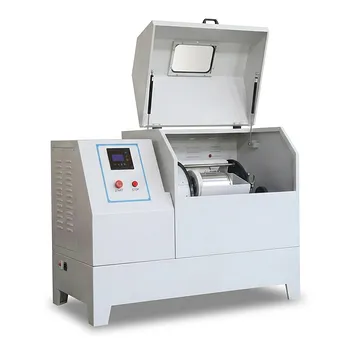
Heavy Duty Horizontal Planetary Ball Mill for Efficient Industrial Grinding and Sample Preparation
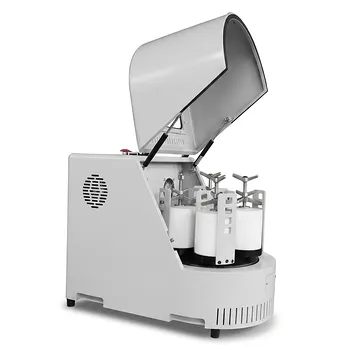
Vertical Semi Circular Planetary Ball Mill for Laboratory Precision Grinding
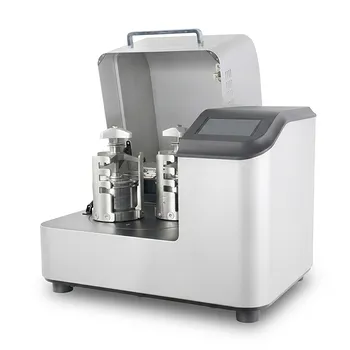
High Energy Planetary Ball Mill for Nano Scale Grinding and Mechanical Alloying
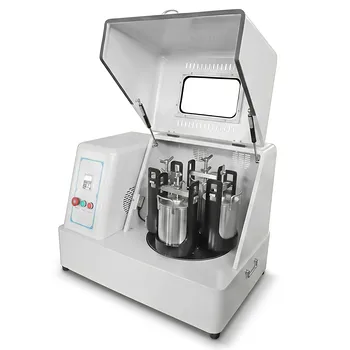
Vertical Square Planetary Ball Mill for Laboratory Sample Preparation and Nanoscale Grinding
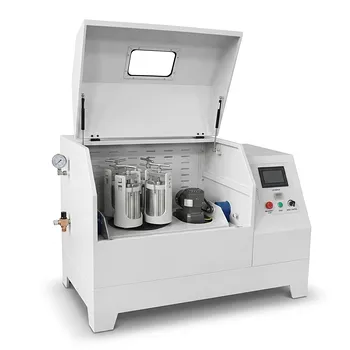
Vertical Production Planetary Ball Mill for High Throughput Powder Processing
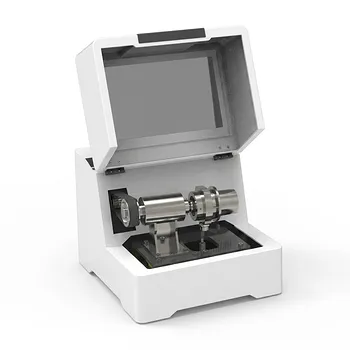
Single Tank High Energy Vibratory Ball Mill for Laboratory Grinding and Mixing
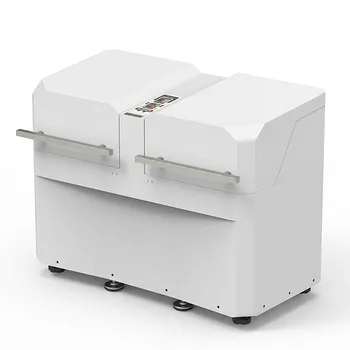
Dual Station Planetary Ball Mill 24L
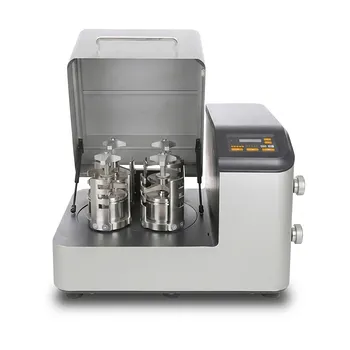
High Energy Planetary Ball Mill for Nano Scale Grinding and Colloidal Mixing in Material Science Research

High Energy Laboratory Planetary Ball Mill for Nano Grinding and Material Science Sample Preparation
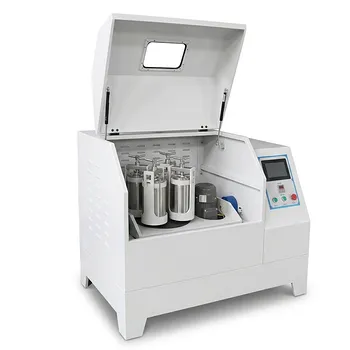
360° Rotating Omnidirectional Laboratory Planetary Ball Mill for Homogeneous Ultra-Fine Grinding and Mixing
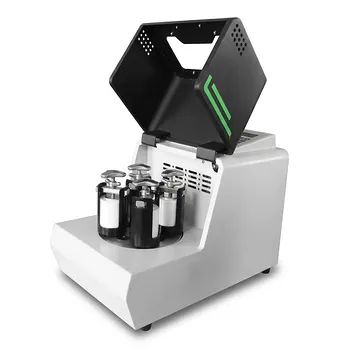
Miniature Planetary Ball Mill with Vacuum Grinding and High Efficiency for Laboratory Sample Preparation
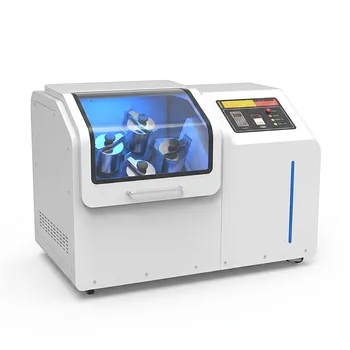
High Energy Omnidirectional Planetary Ball Mill 16L
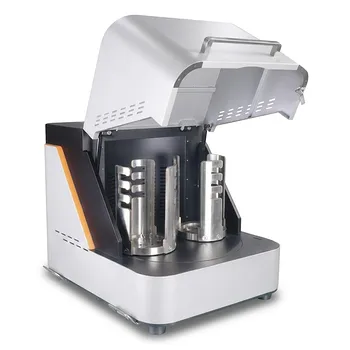
High Energy Laboratory Planetary Ball Mill for Nano Grinding and Colloidal Mixing of Hard and Brittle Materials

High Energy Hybrid Vibratory Ball Mill for Grinding Mixing and Cell Disruption
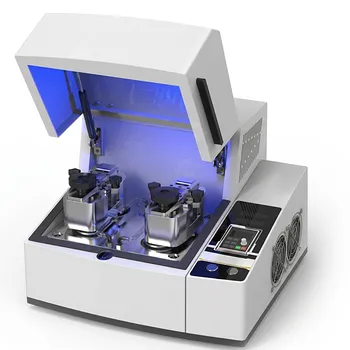
Laboratory Nano High Energy Ball Mill Ultrafine Grinding Mechanical Alloying

High Throughput Micro Ball Mill for Cryogenic Grinding and Laboratory Cell Disruption
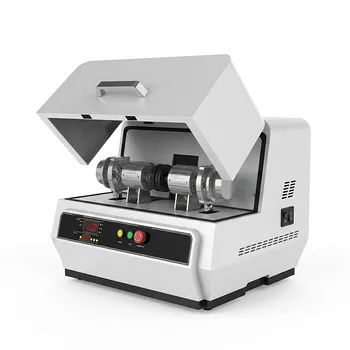
Dual Jar High Energy Vibratory Ball Mill

8L Planetary Ball Mill for Laboratory Grinding and Sample Preparation
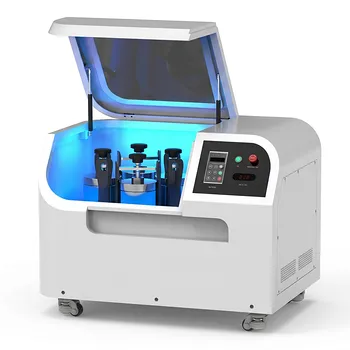
Planetary Ball Mill 12L