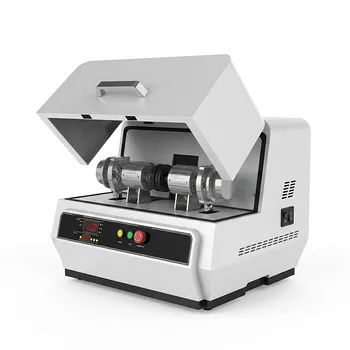
Why is grinding equipment, such as a ball mill, necessary in the tailings reprocessing workflow? Unlock Hidden Value
Updated 3 months ago
Grinding equipment, such as a ball mill, is the critical catalyst in tailings reprocessing because it facilitates mineral liberation. By breaking the tight physical bonds between minerals and waste rock, grinding releases valuable encapsulated minerals—like scheelite or chalcopyrite—that were left behind in historical tailings, making them accessible for modern recovery techniques.
Core Takeaway: Grinding equipment is necessary to transform "locked" minerals into liberated particles, increasing the specific surface area and ensuring the precise particle size distribution required for efficient chemical leaching and physical separation.
Breaking the Physical Bonds of "Locked" Particles
Achieving Complete Mineral Liberation
Historical tailings often contain valuable minerals trapped inside coarser waste particles. Grinding equipment provides the mechanical force needed to crush these particles, releasing the target minerals from their gangue matrices so they can be recovered.
Facilitating Efficient Subsequent Separation
Once minerals are liberated, they can be processed through flotation or magnetic separation. Without grinding, the physical conditions for separation do not exist, as the target minerals remain physically attached to waste material, leading to poor recovery rates and low-grade concentrates.
Reaching Micron-Sized Precision
In many reprocessing workflows, ore must be reduced to a specific micron-sized powder, such as 75 micrometers. This level of fineness is often necessary to ensure that internal impurities like phosphorus, sulfur, or silicon are exposed for removal.
Maximizing Surface Area for Chemical and Thermal Processing
Enhancing Leaching and Dissolution Rates
Grinding significantly increases the specific surface area of the material. This allows leaching agents and solvents to fully contact and dissolve minerals that were previously encapsulated, accelerating the chemical reaction and increasing the overall ore grade.
Ensuring Uniform Thermal Conductivity
In processes involving carbonization or activation, smaller particle sizes shorten the heat conduction paths. This ensures that heat penetrates rapidly and uniformly to the interior of the particles, leading to more consistent chemical transitions and higher-quality final products.
Promoting Uniform Dispersion in Manufacturing
For tailings being repurposed into composites or fillers, fine grinding ensures a uniform dispersion within polymer matrices. A consistent particle size distribution enhances the physical and thermal properties of the resulting materials, such as bricks or synthetic gels.
Understanding the Trade-offs and Pitfalls
The Risk of Over-Grinding (Slimes)
One of the most common pitfalls in grinding is over-grinding, which creates "slimes" or ultra-fine particles that are difficult to recover. These fines can interfere with flotation chemistry and cause significant losses in the recovery circuit.
Balancing Energy Consumption and Recovery
Grinding is often the most energy-intensive stage of the reprocessing workflow. Operators must find the "economic liberation point"—the specific particle size where mineral recovery is maximized without incurring prohibitive electricity and equipment wear costs.
Equipment Wear and Media Consumption
Ball mills and other grinding units require constant maintenance due to the high-impact environment. The cost of replacing grinding media and liners must be factored into the project's feasibility to ensure the reprocessing remains profitable.
How to Apply This to Your Project
Strategic grinding is the bridge between waste and profit. To select the right equipment and parameters, you must align your grinding strategy with your ultimate recovery goal.
- If your primary focus is Flotation Recovery: Target a specific liberation size (e.g., 200μm) to release target minerals from gangue matrices while minimizing the production of unrecoverable fines.
- If your primary focus is Chemical Leaching: Prioritize maximizing the specific surface area to ensure total contact between solvents and the ore, thereby increasing the dissolution rate of encapsulated minerals.
- If your primary focus is Construction Material Production: Focus on strict particle size control (e.g., smaller than 0.074 mm) to maintain material plasticity and prevent internal stress concentration in the finished product.
Properly calibrated grinding transforms historical waste into a refined feedstock, unlocking value that was previously inaccessible.
Summary Table:
| Feature | Benefit in Reprocessing | Key Application |
|---|---|---|
| Mineral Liberation | Breaks bonds between minerals & waste rock | Flotation & Magnetic Separation |
| Increased Surface Area | Accelerates chemical dissolution rates | Leaching & Hydrometallurgy |
| Size Uniformity | Ensures consistent micron-level powder | Construction Materials & Fillers |
| Precision Control | Prevents internal stress & improves quality | Composites & Material Science |
Transform Waste into Value with Precision Processing
Unlock the full potential of your materials with specialized laboratory solutions. We provide complete sample preparation systems for material science, specializing in high-performance powder processing and compaction equipment.
Our extensive product range is designed to meet the rigorous demands of mineral and material research:
- Advanced Grinding & Milling: Ball mills, planetary mills, jet mills, and liquid nitrogen cryogenic grinders for perfect liberation.
- Crushing & Sizing: Heavy-duty jaw/roll crushers and vibratory/air-jet sieve shakers for precise particle distribution.
- Mixing & Dispersion: High-efficiency powder mixers and defoaming mixers.
- Compaction Solutions: A full spectrum of hydraulic presses, including Cold/Warm Isostatic Presses (CIP/WIP), standard lab presses, and vacuum hot presses.
Whether you are optimizing mineral recovery or developing high-tech composites, we deliver the tools needed for superior results. Contact us today to find the perfect solution for your lab!
References
- Jane Mulenshi, Jan Rosenkranz. Characterization and Beneficiation Options for Tungsten Recovery from Yxsjöberg Historical Ore Tailings. DOI: 10.3390/pr7120895
Mentioned Products
- Heavy Duty Horizontal Planetary Ball Mill for Efficient Industrial Grinding and Sample Preparation
- Vertical Semi Circular Planetary Ball Mill for Laboratory Precision Grinding
- Vertical Square Planetary Ball Mill for Laboratory Sample Preparation and Nanoscale Grinding
- High Energy Planetary Ball Mill for Nano Scale Grinding and Mechanical Alloying
- Vertical Production Planetary Ball Mill for High Throughput Powder Processing
People Also Ask
- Why grind lime-pozzolan specimens for TG/DTA for 3 mins? Master sample prep for high-precision thermal analysis.
- What is the role of a planetary ball mill in the mechanical activation of ZTA powder? Boost Sintering Performance
- How does a planetary ball mill contribute to the homogenization of trace elements? Achieve Sub-Micron Uniformity
- What is the function of a planetary ball mill in wollastonite ceramic prep? Achieve Molecular Homogenization & Reactivity
- What is the primary function of a planetary ball mill in the treatment of Halloysite-Rich Soils? Boost Mineral Activity

Tech Team · PowderPreparation
Last updated on Jun 03, 2026
Related Products
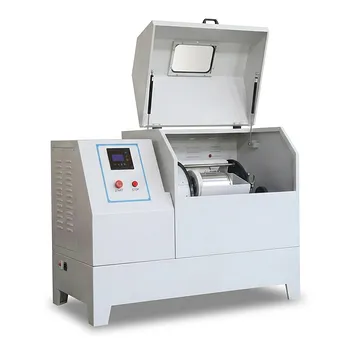
Heavy Duty Horizontal Planetary Ball Mill for Efficient Industrial Grinding and Sample Preparation
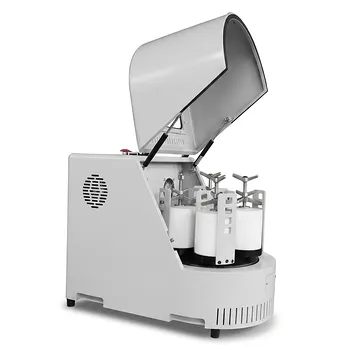
Vertical Semi Circular Planetary Ball Mill for Laboratory Precision Grinding
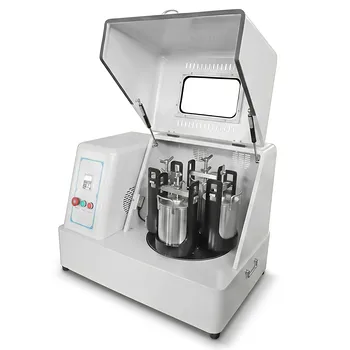
Vertical Square Planetary Ball Mill for Laboratory Sample Preparation and Nanoscale Grinding
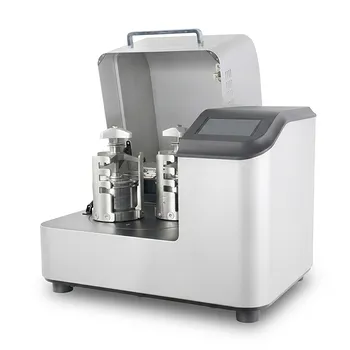
High Energy Planetary Ball Mill for Nano Scale Grinding and Mechanical Alloying
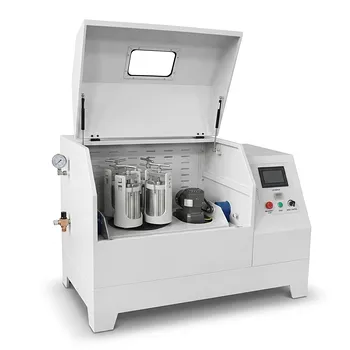
Vertical Production Planetary Ball Mill for High Throughput Powder Processing
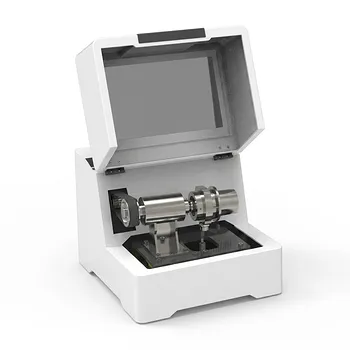
Single Tank High Energy Vibratory Ball Mill for Laboratory Grinding and Mixing
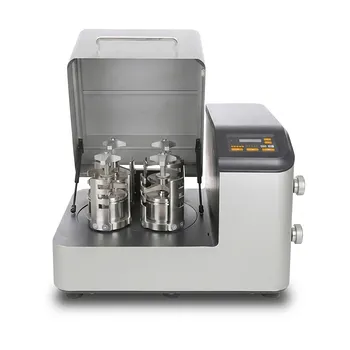
High Energy Planetary Ball Mill for Nano Scale Grinding and Colloidal Mixing in Material Science Research
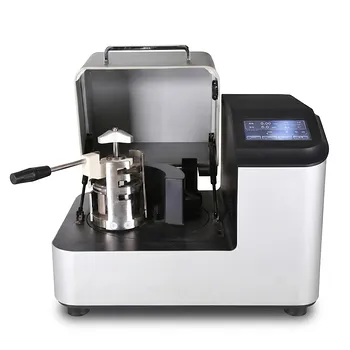
High Energy Laboratory Planetary Ball Mill for Nano Grinding and Material Science Sample Preparation
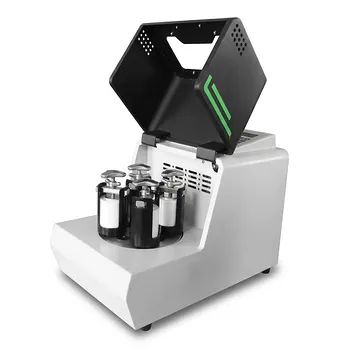
Miniature Planetary Ball Mill with Vacuum Grinding and High Efficiency for Laboratory Sample Preparation
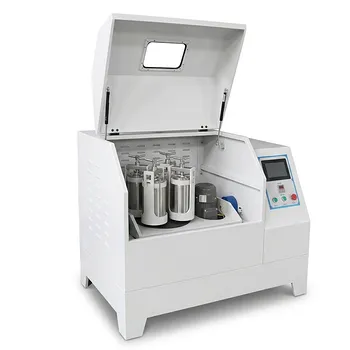
360° Rotating Omnidirectional Laboratory Planetary Ball Mill for Homogeneous Ultra-Fine Grinding and Mixing
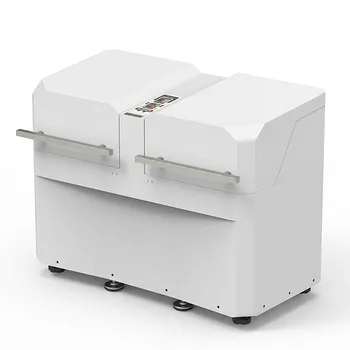
Dual Station Planetary Ball Mill 24L
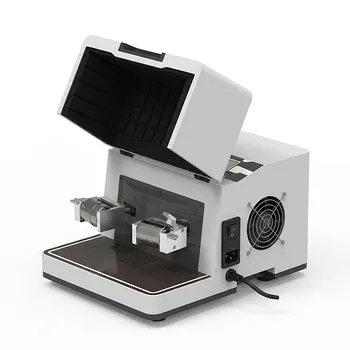
High Energy Hybrid Vibratory Ball Mill for Grinding Mixing and Cell Disruption
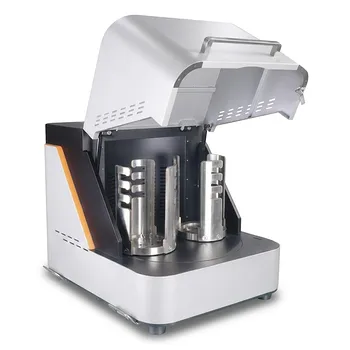
High Energy Laboratory Planetary Ball Mill for Nano Grinding and Colloidal Mixing of Hard and Brittle Materials
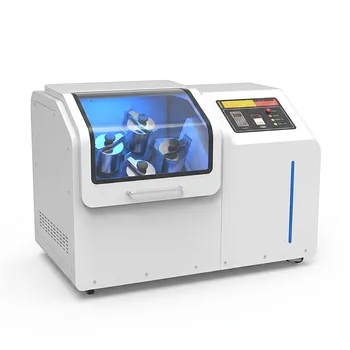
High Energy Omnidirectional Planetary Ball Mill 16L
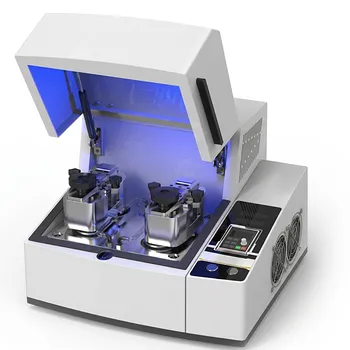
Laboratory Nano High Energy Ball Mill Ultrafine Grinding Mechanical Alloying
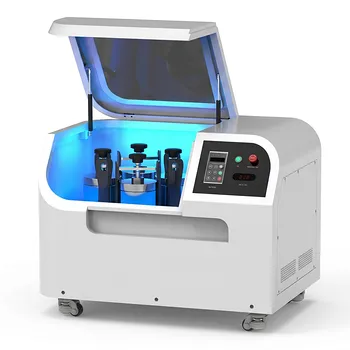
Planetary Ball Mill 12L
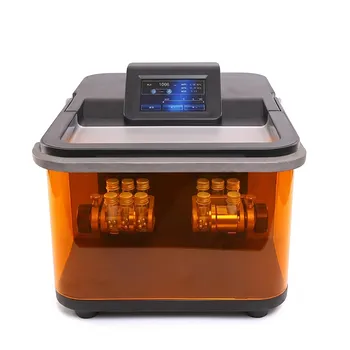
High Throughput Micro Ball Mill for Cryogenic Grinding and Laboratory Cell Disruption
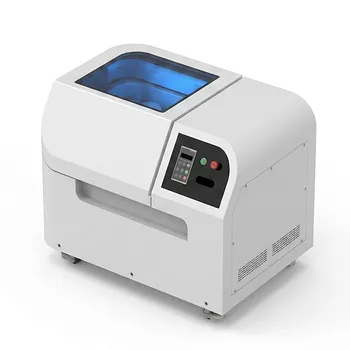
8L Planetary Ball Mill for Laboratory Grinding and Sample Preparation
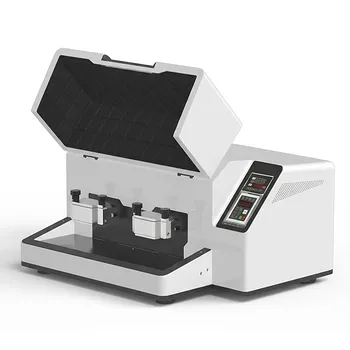
Nanoscale High-Energy Vibratory Ball Mill for Laboratory Sample Preparation, Mechanochemistry, and Mechanical Alloying