Why is an industrial hot press considered essential for B4C? Achieve 99%+ Density for High-Performance Armor
Updated 4 months ago
Industrial hot pressing is the primary method for densifying Boron Carbide (B4C) because the material’s strong covalent bonds and low self-diffusion coefficient make pressureless sintering ineffective. By simultaneously applying high temperatures and uniaxial mechanical pressure, a hot press overcomes the material's inherent resistance to bonding. This process forces particle rearrangement and accelerates diffusion, allowing the ceramic to reach the near-theoretical density required for high-performance ballistic armor.
Core Takeaway: An industrial hot press is essential because it provides the mechanical energy necessary to overcome the chemical stability of Boron Carbide. Without this simultaneous application of heat and pressure, the material cannot eliminate internal porosity or achieve the extreme hardness required for armor applications.
The Challenge of Covalent Bonding
Inherent Resistance to Sintering
Boron Carbide is characterized by exceptionally strong covalent bonding, which gives the material its legendary hardness. However, these same bonds result in a very low self-diffusion coefficient, meaning atoms do not move easily even at high temperatures.
Failure of Pressureless Methods
In standard sintering, heat alone is often insufficient to close the gaps between powder particles. Without external pressure, B4C requires excessive temperatures or large amounts of sintering aids, which can degrade the final ballistic properties of the ceramic.
How Hot Pressing Forces Densification
Simultaneous Thermal and Mechanical Energy
An industrial hot press applies uniaxial pressure (often reaching 80 MPa or higher) while maintaining temperatures between 1700°C and 2200°C. This dual-action approach provides the energy required to break the original chemical equilibrium at grain boundaries.
Particle Rearrangement and Plastic Flow
The mechanical load applied by the hot press physically forces powder particles to rearrange into a more compact structure. At elevated temperatures, this pressure induces plastic flow, allowing the material to deform and fill the voids between particles that would otherwise remain as pores.
Pore Elimination and Diffusion
By "squeezing" the material during the heating cycle, the hot press effectively eliminates residual internal pores. This accelerates grain boundary diffusion, leading to a ceramic block with near-theoretical density and a highly uniform microstructure.
The Link Between Density and Armor Performance
Achieving Maximum Hardness
The primary goal of using a hot press is to achieve a relative density of 99% or higher. Any remaining porosity acts as a structural weakness, significantly reducing the material's hardness and its ability to shatter incoming projectiles.
Microstructure and Grain Refinement
Hot pressing allows for complete densification at lower temperatures than pressureless sintering, which helps in refining grain size. A finer, more uniform grain structure improves the fracture toughness and structural integrity of the armor plate under extreme impact.
Understanding the Trade-offs
Geometry and Throughput Limitations
The most significant limitation of industrial hot pressing is that it is generally restricted to simple geometric shapes, such as flat plates or disks. Because the pressure is applied uniaxially, creating complex curved armor components is difficult and often requires secondary machining.
High Operational Costs
The equipment required for hot pressing is a major capital investment and involves high energy consumption. The process is also slower than batch sintering in a standard kiln, which can limit production throughput for high-volume armor requirements.
Tooling Wear and Tear
The graphite dies used in hot presses are subject to extreme stress and temperature, leading to rapid degradation. This adds to the consumable costs of the manufacturing process and requires precise maintenance to ensure consistent part quality.
Applying This Technology to Your Project
Making the Right Choice for Your Goal
- If your primary focus is Maximum Ballistic Protection: Utilize vacuum hot pressing to reach 99%+ theoretical density, as this is the only way to ensure the hardness levels required for Level IV armor.
- If your primary focus is Lightweight Personal Armor: Prioritize hot pressing to achieve high density-to-weight ratios, allowing for thinner plates that offer the same protection as thicker, less dense materials.
- If your primary focus is Complex Component Geometry: Consider Spark Plasma Sintering (SPS) or Hot Isostatic Pressing (HIP) as alternatives that can handle more intricate shapes while still providing the benefits of pressure-assisted densification.
The industrial hot press remains the gold standard for producing Boron Carbide because it is the only reliable way to transform a stubborn covalent powder into a fully dense, high-performance protective shield.
Summary Table:
| Feature | Challenge in B4C | Hot Press Solution | Impact on Armor |
|---|---|---|---|
| Bonding | Strong Covalent Bonds | High Heat + Uniaxial Pressure | Breaks chemical equilibrium |
| Diffusion | Low Self-Diffusion | Forced Particle Rearrangement | Eliminates internal porosity |
| Density | High Porosity (Standard) | Near-Theoretical Density (99%+) | Maximizes material hardness |
| Microstructure | Grain Growth | Controlled Sintering Temps | Refines grain for toughness |
| Geometry | Complex Shapes | Simple Plates/Disks | Uniform structural integrity |
Optimize Your Advanced Ceramic Production with Industry-Leading Equipment
Achieving the extreme density required for Level IV armor demands precision and power. We provide complete laboratory sample preparation solutions for material science, specializing in the powder processing and compaction equipment necessary for high-performance ceramics like Boron Carbide.
Our extensive product lines are designed to support every stage of your workflow:
- Powder Processing: High-efficiency crushers (jaw/roll), liquid nitrogen cryogenic grinders, and advanced mills (planetary ball, jet, sand/bead, disc, rotor).
- Classification & Mixing: Sieve shakers (vibratory/air-jet) and specialized powder/defoaming mixers.
- Advanced Compaction: A full spectrum of hydraulic presses, including Vacuum Hot Presses, Cold/Warm Isostatic Presses (CIP/WIP), and standard lab presses for XRF pellet preparation.
Whether you are refining grain size or aiming for 99%+ theoretical density, our equipment delivers the reliability and performance your project requires. Contact our experts today to find the perfect solution for your lab!
References
- James W. McCauley. Institutional and technical history of requirements‐based strategic armor ceramics basic research leading up to the multiscale material by design materials in extreme dynamic environments (MEDE) program. Part I. Brief history of institutional changes and relevant major research programs. DOI: 10.1002/ces2.10176
Mentioned Products
- 5 Ton Single Punch Tablet Press Laboratory Small Batch Production
- Heating Temperature Controlled High Energy Vibratory Ball Mill
- 6-Ton Small Single-Punch Tablet Press — Laboratory Powder & Granule Tableting Equipment / Tablet Forming Machine
- 6 Ton Variable Frequency Single Punch Tablet Press
- Laboratory Liquid Nitrogen Cryogenic Grinder Polymer Sample Preparation Pulverizer
People Also Ask
- What is the function of a laboratory press in assessing the hydrophobic performance of modified vermiculite fillers?
- What is the core function of a laboratory press in the forming of ceramic filter element green bodies? Maximize Density.
- What is the function of a laboratory press in Cr-Ti alloy evaluation? Quantify Fracture Stress & Strength
- Why is vacuum sealing and flexible packaging necessary for Aluminum Titanate powders during CIP? Ensure Peak Density
- Why is a laboratory hydraulic press required for FT-IR KBr pellets? Achieve Precise Sample Clarity for ZrC–SiC Analysis

Tech Team · PowderPreparation
Last updated on Jun 03, 2026
Related Products
5 Ton Single Punch Tablet Press Laboratory Small Batch Production
Heating Temperature Controlled High Energy Vibratory Ball Mill
6-Ton Small Single-Punch Tablet Press — Laboratory Powder & Granule Tableting Equipment / Tablet Forming Machine
6 Ton Variable Frequency Single Punch Tablet Press
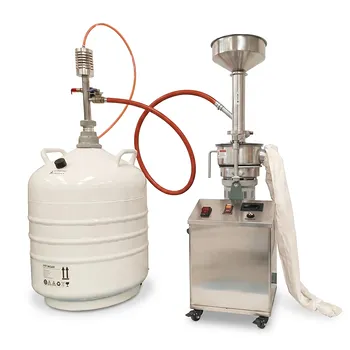
Laboratory Liquid Nitrogen Cryogenic Grinder Polymer Sample Preparation Pulverizer

Vertical Production Planetary Ball Mill for High Throughput Powder Processing
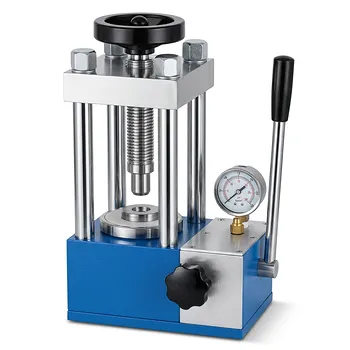
Manual Tablet Press with Dual Scale Pressure Gauge for Pharmaceutical Food Chemical Laboratory Sample Preparation
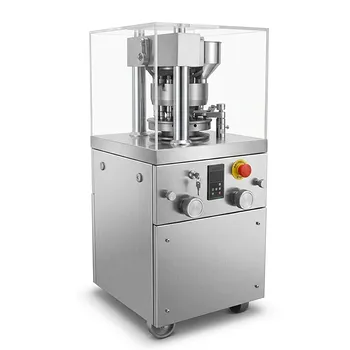
Ordinary Type Rotary Tablet Press for Pharmaceutical Chemical Food Electronic Industries
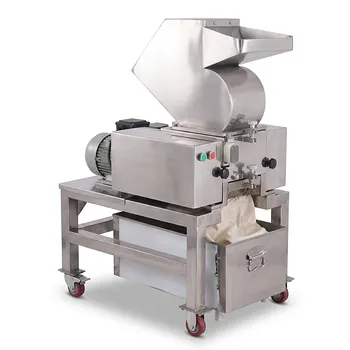
Stainless Steel Coarse Crusher for Pharmaceutical Food and Plastic Material Processing
Small Liquid Nitrogen Cryogenic Grinder for Plastic and Heat-Sensitive Material Sample Preparation
Small Liquid Nitrogen Cryogenic Grinder for Ultrafine Grinding of Heat-Sensitive Materials in Laboratories
Water Cooled Pulse Jet Ultrafine Grinder
Enhanced 9 Punch Rotary Tablet Press for Powder Compaction
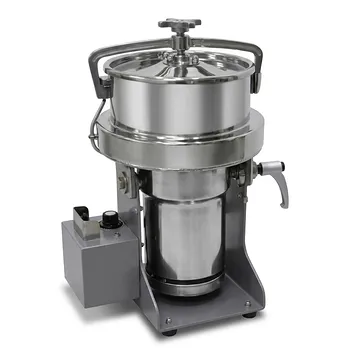
500g Capacity Water Cooled Low Temperature Grinder with Variable Speed and Safety Cover
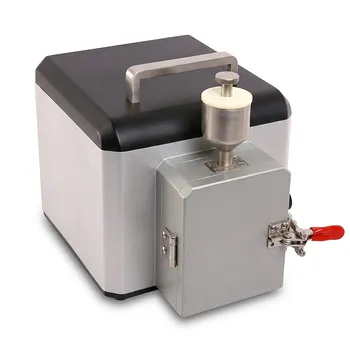
Portable Cutting Mill for Laboratory Sample Preparation and RoHS WEEE Compliance Testing

Low Temperature Laboratory Knife Mill Cryogenic Sample Grinder Material Science Powder Processing
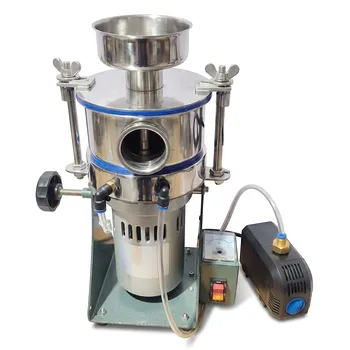
Water Cooled Airflow Ultra Fine Grinder for Low Temperature Material Processing
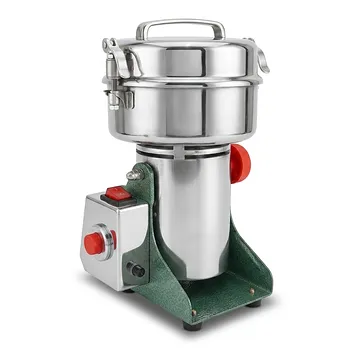
Small High-Speed Laboratory Grinder for Powder Processing
Versatile Industrial Crusher for Laboratory Crushing and Material Processing