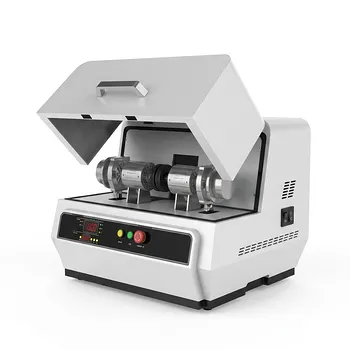
Why is secondary ball milling required for ZnAl2O4 with CTN? Optimize low-temperature ceramic densification.
Updated 4 months ago
Secondary ball milling is the essential mechanism for achieving molecular-level distribution of trace additives and breaking down hard agglomerates within the ceramic matrix. This process ensures that the CuO-TiO2-Nb2O5 (CTN) ternary composite is perfectly homogenized, allowing for the formation of a continuous nanoscale amorphous grain boundary film that triggers low-temperature densification.
Core Takeaway: Secondary ball milling transforms a simple mixture into a highly reactive, homogenous precursor by ensuring trace additives are distributed at the molecular level and refining particle size to maximize sintering activity.
Achieving Molecular-Level Homogeneity
The Role of Trace Additive Distribution
The CTN additive is typically introduced in trace amounts, making uniform dispersion through standard mixing nearly impossible. High-energy secondary ball milling utilizes intense stirring to force these additives into a molecular-level uniform distribution throughout the Zinc Aluminate (ZnAl2O4) powder.
Formation of the Amorphous Grain Boundary Film
Uniform distribution is a direct prerequisite for the development of a continuous nanoscale amorphous grain boundary film during sintering. This film acts as a high-diffusivity path, significantly lowering the required sintering temperature and enabling the material to achieve full densification at lower energy levels.
Physical Refinement and De-agglomeration
Breaking Hard Calcination Agglomerates
During the initial heating or calcination stages, ceramic powders naturally form hard, molten agglomerates. Secondary milling provides the mechanical energy necessary to break these clusters, returning the powder to a sub-micron or micrometer-level fineness.
Increasing Specific Surface Area and Energy
By refining the particle size, the process drastically increases the specific surface area and surface energy of the powder. Higher surface energy acts as a driving force for sintering, which improves the overall reactivity of the ZnAl2O4 matrix.
Optimizing Microstructural Consistency
Improving Green Body Density
A secondary mill optimizes the particle size distribution, which directly impacts the fluidity and granulation of the powder. This results in a more consistent "green body" during the molding stage, ensuring that the final ceramic has a high degree of microstructural integrity.
Enhancing Electrical and Insulation Properties
For modified ceramics, secondary milling ensures that elements like manganese dioxide or other modifiers are dispersed within the main crystalline phase. This uniform dispersion optimizes defect dipole behavior, which is critical for maintaining high insulation resistance and superior electrical performance.
Understanding the Trade-offs
Potential for Material Contamination
While high-energy milling is effective, extended milling times can introduce impurities from the grinding media (such as alumina or zirconia). These contaminants can alter the dielectric properties or the phase purity of the Zinc Aluminate if the milling duration and media choice are not strictly controlled.
Energy Consumption vs. Particle Refinement
There is a point of diminishing returns where additional milling time no longer significantly reduces particle size but continues to consume high levels of energy. Finding the optimal milling saturation point is necessary to balance manufacturing costs with the required material activity.
How to Apply This to Your Project
Recommendations Based on Production Goals
- If your primary focus is lowering sintering temperatures: Prioritize the high-energy molecular dispersion of CTN to ensure the formation of the liquid phase grain boundary film.
- If your primary focus is mechanical strength and density: Focus on the de-agglomeration phase of secondary milling to ensure a high-packing green density during the pressing stage.
- If your primary focus is electrical precision: Ensure the secondary milling duration is sufficient to homogenize all modifiers, preventing localized defects that could degrade insulation.
By meticulously controlling the secondary ball milling process, you transition from a basic ceramic mixture to an engineered material capable of high-performance, low-temperature densification.
Summary Table:
| Key Function | Impact on Ceramic Matrix | Final Benefit |
|---|---|---|
| Molecular Dispersion | Evenly distributes trace CTN additives | Enables formation of amorphous grain boundary films |
| De-agglomeration | Breaks hard calcination clusters | Increases specific surface area and sintering activity |
| Particle Refinement | Optimizes size distribution | Improves green body density and microstructural integrity |
| Modifier Homogenization | Disperses MnO2 and other modifiers | Enhances electrical insulation and dielectric properties |
Elevate Your Ceramic Research with Precision Engineering
Achieving molecular-level homogeneity in ZnAl2O4 ceramics requires more than just standard mixing—it demands professional-grade powder processing equipment. At [Your Brand Name], we provide complete laboratory sample preparation solutions tailored for material science researchers and industrial manufacturers.
Whether you are refining trace additives like CTN or seeking to eliminate hard agglomerates, our extensive line of equipment is designed to ensure maximum reactivity and densification:
- Advanced Milling Solutions: Optimize your secondary milling with our planetary ball mills, jet mills, and cryogenic grinders.
- Powder Preparation: From jaw and roll crushers to vibratory sieve shakers and high-performance powder mixers.
- Precision Compaction: Achieve superior green body density with our full spectrum of hydraulic presses, including Cold/Warm Isostatic Presses (CIP/WIP), XRF pellet presses, and vacuum hot presses.
Ready to optimize your material properties and streamline your workflow?
Contact our technical experts today to find the perfect equipment configuration for your specific powder processing and compaction needs!
References
- Yan YANG, Zhifu LIU. Low Temperature Sintering of ZnAl2O4 Ceramics with CuO-TiO2-Nb2O5 Composite Oxide Sintering Aid. DOI: 10.15541/jim20240517
Mentioned Products
- Heavy Duty Horizontal Planetary Ball Mill for Efficient Industrial Grinding and Sample Preparation
- Vertical Semi Circular Planetary Ball Mill for Laboratory Precision Grinding
- Vertical Square Planetary Ball Mill for Laboratory Sample Preparation and Nanoscale Grinding
- High Energy Planetary Ball Mill for Nano Scale Grinding and Mechanical Alloying
- Vertical Production Planetary Ball Mill for High Throughput Powder Processing
People Also Ask
- Why grind lime-pozzolan specimens for TG/DTA for 3 mins? Master sample prep for high-precision thermal analysis.
- What is the role of a planetary ball mill in the mechanical activation of ZTA powder? Boost Sintering Performance
- What is the function of a planetary ball mill in wollastonite ceramic prep? Achieve Molecular Homogenization & Reactivity
- How does a planetary ball mill contribute to the homogenization of trace elements? Achieve Sub-Micron Uniformity
- What is the function of a high-performance planetary ball mill in AMZ laminates? Master Ceramic Homogenization.

Tech Team · PowderPreparation
Last updated on Jun 03, 2026
Related Products
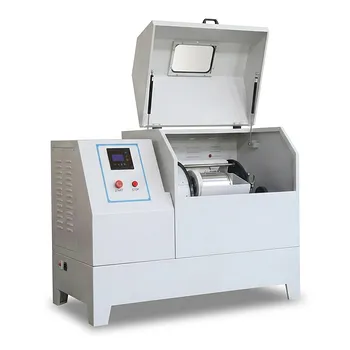
Heavy Duty Horizontal Planetary Ball Mill for Efficient Industrial Grinding and Sample Preparation
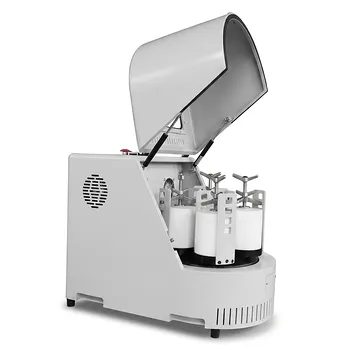
Vertical Semi Circular Planetary Ball Mill for Laboratory Precision Grinding
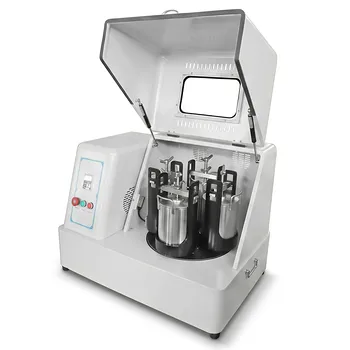
Vertical Square Planetary Ball Mill for Laboratory Sample Preparation and Nanoscale Grinding
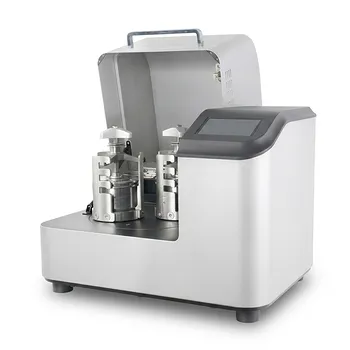
High Energy Planetary Ball Mill for Nano Scale Grinding and Mechanical Alloying
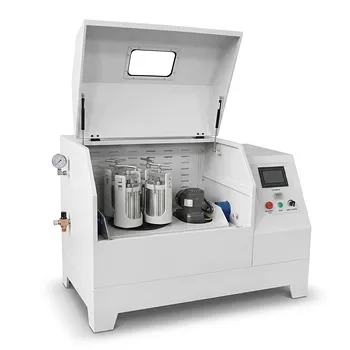
Vertical Production Planetary Ball Mill for High Throughput Powder Processing
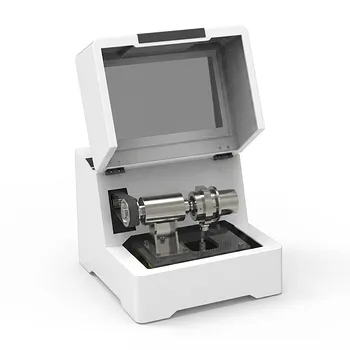
Single Tank High Energy Vibratory Ball Mill for Laboratory Grinding and Mixing
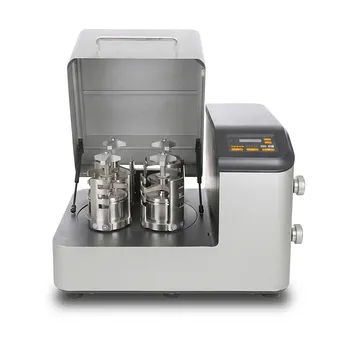
High Energy Planetary Ball Mill for Nano Scale Grinding and Colloidal Mixing in Material Science Research
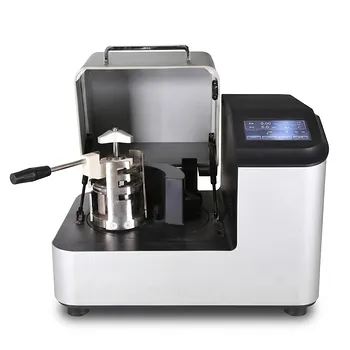
High Energy Laboratory Planetary Ball Mill for Nano Grinding and Material Science Sample Preparation

Miniature Planetary Ball Mill with Vacuum Grinding and High Efficiency for Laboratory Sample Preparation
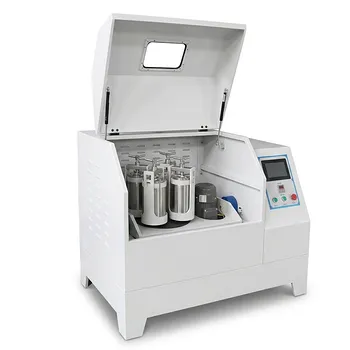
360° Rotating Omnidirectional Laboratory Planetary Ball Mill for Homogeneous Ultra-Fine Grinding and Mixing

High Energy Hybrid Vibratory Ball Mill for Grinding Mixing and Cell Disruption
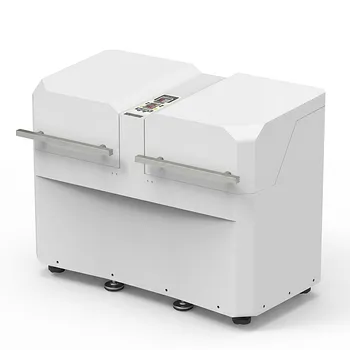
Dual Station Planetary Ball Mill 24L
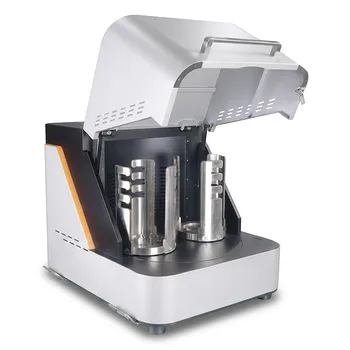
High Energy Laboratory Planetary Ball Mill for Nano Grinding and Colloidal Mixing of Hard and Brittle Materials
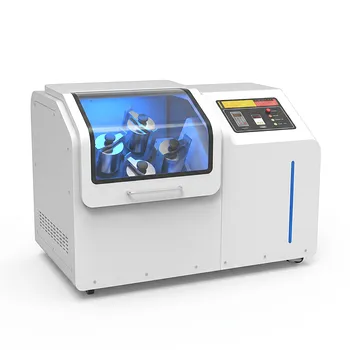
High Energy Omnidirectional Planetary Ball Mill 16L
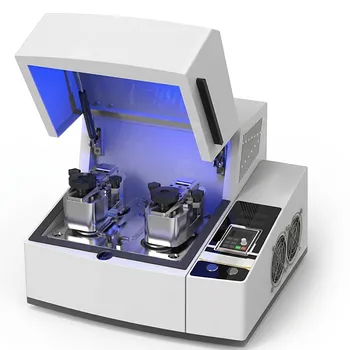
Laboratory Nano High Energy Ball Mill Ultrafine Grinding Mechanical Alloying
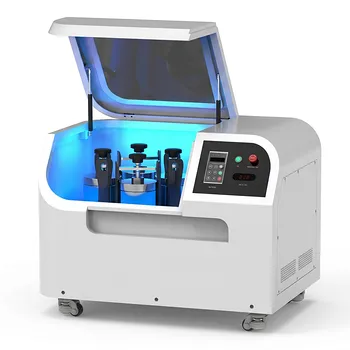
Planetary Ball Mill 12L

High Throughput Micro Ball Mill for Cryogenic Grinding and Laboratory Cell Disruption
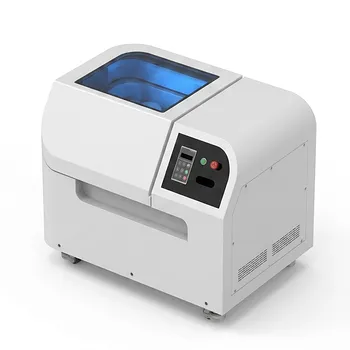
8L Planetary Ball Mill for Laboratory Grinding and Sample Preparation
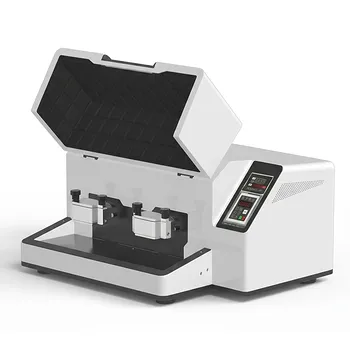
Nanoscale High-Energy Vibratory Ball Mill for Laboratory Sample Preparation, Mechanochemistry, and Mechanical Alloying