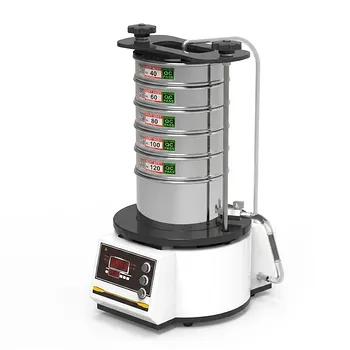
Why is a precision standard sieve required for ZTA-MnO powder? Ensure Homogeneity & Defect-Free Ceramic Materials
Updated 4 months ago
Precision sieving is the critical bridge between raw powder mixing and the creation of a defect-free final ceramic.
When preparing Zirconia Toughened Alumina (ZTA) mixed with Manganese Oxide (MnO), a precision standard sieve—typically with a 65 µm mesh—is required to eliminate secondary agglomerates that form during mixing and drying. This process ensures the MnO precursors are distributed with absolute uniformity throughout the ZTA matrix, which is vital for achieving a consistent microstructure and preventing structural weak points in the finished material.
Core Takeaway: Precision sieving transforms a clumped, non-uniform mixture into a homogenous "starting material" by controlling particle size distribution. This consistency is the only way to guarantee optimal powder flow, high packing density, and a ceramic body free of internal defects.
The Role of Sieving in Chemical Homogeneity
Eliminating Secondary Agglomerates
During the mixing of ZTA and MnO, individual particles often cling together to form secondary agglomerates or loose blocks. A precision sieve mechanically breaks down these clusters or removes them entirely from the mixture.
Ensuring Uniform MnO Distribution
Manganese Oxide acts as a critical additive that must be present at every point in the ceramic matrix to function correctly. By removing oversized clusters, the sieve ensures the active components are dispersed evenly, preventing "rich" or "lean" spots that could compromise the material's integrity.
Optimizing Physical Powder Characteristics
Controlling Particle Size Distribution
High-precision sieves allow researchers to strictly define the maximum particle size within the powder. This level of control ensures that the grain sizes remain consistent, which is a prerequisite for predictable behavior during the subsequent shaping and firing stages.
Enhancing Flowability and Packing Density
Powders with a uniform particle size flow more easily into molds during dry pressing or compression molding. This leads to a higher packing density, meaning the particles sit closer together with fewer air gaps before the ceramic is even fired.
Impact on Final Structural Integrity
Reducing Internal Defects
A ceramic "green body" (the unsintered shape) with non-uniform density will shrink unevenly during heating. By using a sieve to ensure a homogenous density distribution, you drastically reduce the risk of macroscopic defects, such as warping or internal cracking.
Improving Mechanical Reliability
The mechanical strength of ZTA is derived from its specific microstructure; if large clumps or pores are present due to poor powder preparation, the ceramic will fail prematurely under stress. Precision sieving ensures the porosity and flexural strength are both predictable and repeatable across different production batches.
Understanding the Trade-offs and Risks
Sieve Material and Contamination
While sieving is necessary, using standard metallic sieves can sometimes introduce trace amounts of metal wear into the high-purity ZTA powder. For the highest performance applications, the sieve material must be carefully selected to avoid compromising the chemical purity of the composite.
Processing Time vs. Precision
Finer mesh sizes (such as 63 µm or 65 µm) provide superior homogeneity but significantly increase the time required to process the powder. Over-processing or using a vibratory shaker too aggressively can also lead to sieve blinding, where particles clog the mesh and reduce the accuracy of the separation.
How to Apply This to Your Process
Selecting the right sieving strategy depends on the specific requirements of your final ceramic component and your manufacturing method.
- If your primary focus is Maximum Mechanical Strength: Utilize a precision 65 µm mesh to ensure the absolute removal of agglomerates, as even small clusters can act as fracture initiation sites.
- If your primary focus is High-Volume Production: Prioritize sieves that optimize powder flowability (such as 250 µm meshes) to ensure molds fill quickly and uniformly during high-speed pressing.
- If your primary focus is 3D Printing (Vat Photopolymerization): Use a precision vibratory sieve with a fine mesh (100 μm or less) to ensure every layer of powder spreads perfectly flat without clumping.
Ultimately, the precision sieve is not just a filter, but a fundamental tool for engineering the microscopic architecture of high-performance ZTA ceramics.
Summary Table:
| Key Benefit | Functional Role | Impact on Final Product |
|---|---|---|
| Agglomerate Removal | Eliminates secondary clusters/blocks | Prevents internal defects and structural weak points |
| Chemical Homogeneity | Ensures uniform MnO distribution | Guarantees consistent microstructure and properties |
| Particle Size Control | Restricts maximum grain size (e.g., 65 µm) | Leads to predictable firing and shrinkage behavior |
| Enhanced Flowability | Increases powder packing density | Improves mold filling and reduces air gaps (porosity) |
Elevate Your Material Preparation Standards
Achieving the perfect Zirconia Toughened Alumina (ZTA) composite requires more than just mixing—it demands precision at every stage. We provide complete laboratory sample preparation solutions tailored for advanced material science. Our expertise spans the entire powder processing workflow, ensuring your ceramics achieve maximum mechanical reliability.
Our specialized equipment lines include:
- Sieving & Analysis: High-precision vibratory and air-jet sieve shakers with a full range of test meshes for exact particle size control.
- Milling & Grinding: Planetary ball mills, jet mills, and cryogenic grinders to achieve ultra-fine powder precursors.
- Advanced Compaction: A full spectrum of hydraulic presses, including Cold/Warm Isostatic Presses (CIP/WIP), XRF pellet presses, and vacuum hot presses for high-density green bodies.
- Mixing Solutions: Specialized powder and defoaming mixers to ensure chemical homogeneity.
Whether you are focusing on high-strength components or 3D printing applications, our tools are designed to eliminate defects and optimize performance. Contact our technical team today to find the ideal equipment for your laboratory or production line.
References
- Т. О. Оболкина, В. С. Комлев. Adding MnO to Improve the Characteristics of Zirconia-Toughened Alumina Ceramic Parts Made Using the Digital Light Processing Method. DOI: 10.3390/min15010010
Mentioned Products
- Stainless Steel Rotary Vibrating Sieve High Precision Circular Vibratory Separator Industrial Powder Grading Machine Multi Layer Sifting Equipment
- Laboratory Vibratory Test Sieve Shaker for Precision Particle Size Analysis and Powder Grading
- Small Laboratory Vibrating Sieve Shaker for Precise Particle Size Analysis
- 三维电磁微量振动筛分仪
- High Frequency Cabinet Type Three-Dimensional Rotary Vibrating Sieve Shaker for Dry Sieving and Particle Classification
People Also Ask
- What is the significance of high-precision vibratory sieve machines for SMA? Optimize Aggregate Gradation & Durability
- What is the role of a laboratory-grade high-precision sieve in CPC-PCL? Ensure uniform powder distribution and stability.
- Why is high-precision sieving equipment necessary for aviation-grade composites? Optimize Fiber Strength & Consistency
- What is the function of high-precision vibratory sieve shakers in the analysis of brown rice particle size distribution?
- Why is a high-precision vibratory sieve shaker necessary for wood-polystyrene particles? Maximize composite strength.

Tech Team · PowderPreparation
Last updated on Jun 03, 2026
Related Products
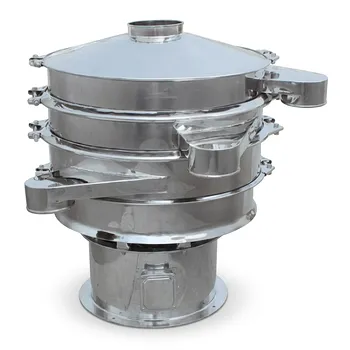
Stainless Steel Rotary Vibrating Sieve High Precision Circular Vibratory Separator Industrial Powder Grading Machine Multi Layer Sifting Equipment
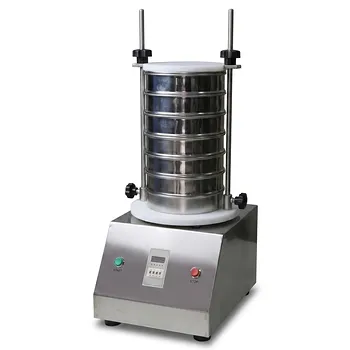
Laboratory Vibratory Test Sieve Shaker for Precision Particle Size Analysis and Powder Grading
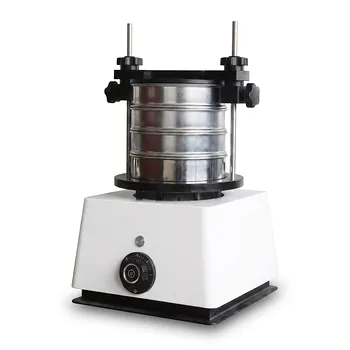
Small Laboratory Vibrating Sieve Shaker for Precise Particle Size Analysis
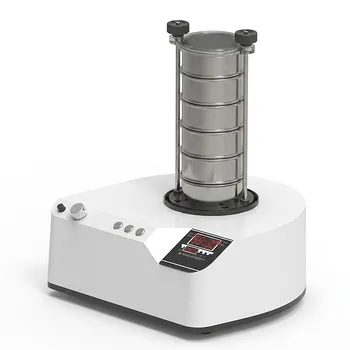
三维电磁微量振动筛分仪
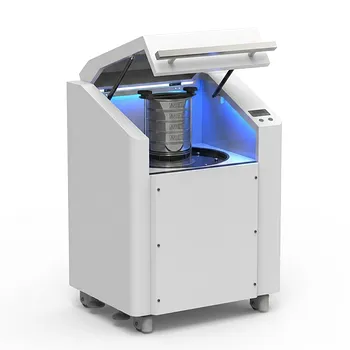
High Frequency Cabinet Type Three-Dimensional Rotary Vibrating Sieve Shaker for Dry Sieving and Particle Classification
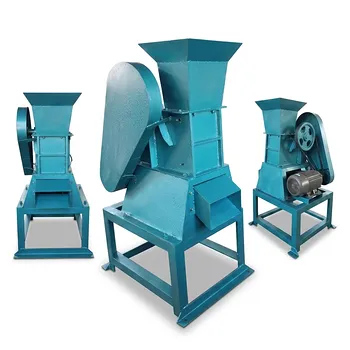
Custom Raised Height Laboratory Jaw Crusher for Precision Sample Preparation in Material Science
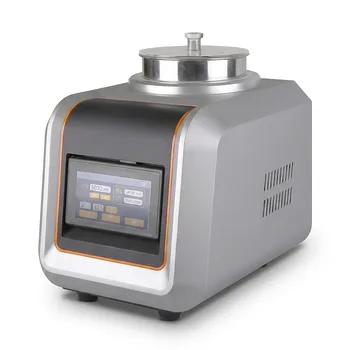
Laboratory Air Jet Sieving Machine for Fine Powder Particle Size Analysis and Deagglomeration
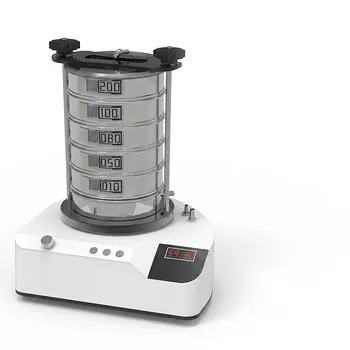
Heavy Duty Dry Three Dimensional Vibratory Sieve Shaker for Particle Separation
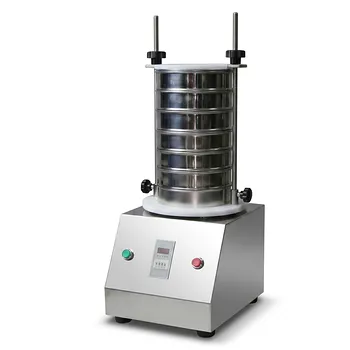
Small Laboratory Vibratory Sieve Shaker for Powder Gradation and Particle Size Analysis
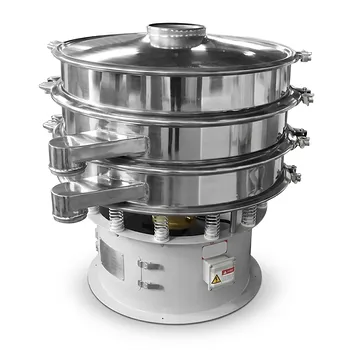
Three Dimensional Rotary Vibrating Sieve
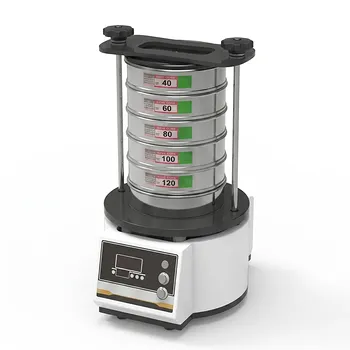
Dry Three Dimensional Vibratory Sieve Shaker
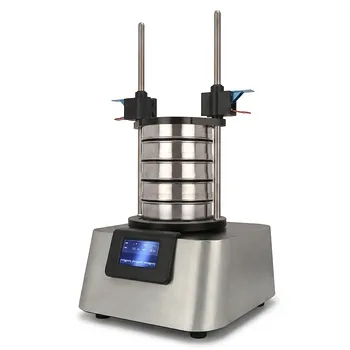
Vibratory Sieve Shaker Electromagnetic 3D Motion Powder Particle Size Analyzer for Dry and Wet Sieving
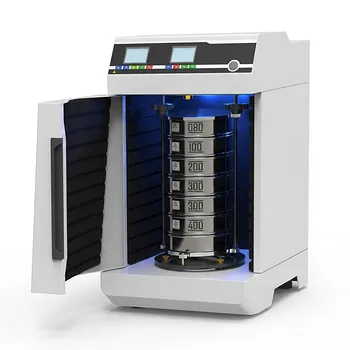
Laboratory Dry and Wet Three Dimensional Vibratory Sieve Shaker for Particle Analysis