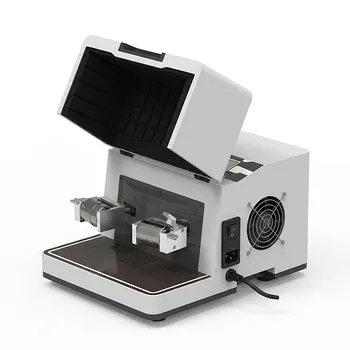
Why is a planetary ball mill used for the pretreatment of B2O3? Enhance Catalytic Yields via Mechanical Activation
Updated 5 months ago
Planetary ball milling is a critical pretreatment step used to mechanically activate boron trioxide ($B_2O_3$) through high-energy impact and shear forces. This process fundamentally alters the powder's microstructure, increasing its specific surface area and modifying its surface physicochemical state to drastically enhance catalytic activity. In specific applications, such as the synthesis of cyclic carbonates, this pretreatment can increase reaction yields from a baseline of 40% to as high as 95%.
The central takeaway is that planetary ball milling serves as a mechanical activation tool that transforms inert $B_2O_3$ into a highly reactive heterogeneous catalyst. By inducing lattice distortions and increasing surface energy, the mill creates the necessary microstructural conditions for efficient Lewis acid catalysis.
The Role of Mechanical Activation in $B_2O_3$ Pretreatment
Increasing Specific Surface Area
The primary physical effect of the planetary ball mill is the drastic reduction of particle size to sub-micron levels. This increase in surface-to-volume ratio ensures that more $B_2O_3$ molecules are exposed to the reactants, providing a higher density of active sites.
Modifying Surface Physicochemical States
Beyond simple grinding, high-energy milling induces lattice distortions and increases the overall surface energy of the powder. These complex changes modify the electronic environment of the boron atoms, making them more effective as metal-free Lewis acid sites.
Enhancing Solid-Phase Reactivity
The intense friction and impact generate localized energy that facilitates mechanical activation. This state allows the $B_2O_3$ to interact more aggressively with substrates, lowering the energy barriers for subsequent chemical transformations.
Impact on Catalytic Performance and Synthesis
Boosting Reaction Yields
The most significant evidence for this pretreatment is the dramatic improvement in catalytic yield. For example, in the synthesis of cyclic carbonates from propylene oxide, the microstructural modifications provided by the mill are essential for achieving near-complete conversion.
Creating Uniform Atomic Distribution
The planetary motion—defined by the revolution of the supporting disk and the counter-rotation of the grinding jars—ensures a highly uniform distribution of energy. This uniformity prevents local "hot spots" of inactivity and ensures that the entire batch of $B_2O_3$ reaches the desired activation state.
Inducing Surface Defects
Mechanical impact often creates surface defects and oxygen vacancies, which are critical for heterogeneous catalysis. These defects act as high-affinity binding sites for reactants, facilitating the adsorption and activation phases of the catalytic cycle.
Understanding the Trade-offs
Potential for Material Contamination
A significant risk in high-energy milling is impurities introduced from the grinding media (jars and balls). To maintain the purity of $B_2O_3$ catalysts, researchers must carefully select wear-resistant materials like zirconia or tungsten carbide.
Energy Consumption and Heat Management
The process is energy-intensive and generates substantial thermal energy within the grinding jars. Without proper cooling intervals or controlled milling speeds, the $B_2O_3$ may undergo unwanted phase changes or agglomeration due to excessive heat.
Sensitivity to Milling Parameters
The effectiveness of the pretreatment is highly dependent on the milling time and rotation speed. Insufficient milling fails to activate the material, while over-milling can lead to excessive particle agglomeration, which actually reduces the specific surface area.
Making the Right Choice for Your Goal
How to Apply This to Your Project
When integrating planetary ball milling into your catalyst preparation workflow, consider the specific requirements of your end reaction.
- If your primary focus is Maximum Catalytic Activity: Prioritize a longer milling duration (e.g., 2 hours) at high speeds to ensure deep microstructural modification and maximum Lewis acid site activation.
- If your primary focus is High Material Purity: Use high-purity grinding media and consider wet milling with an inert solvent like ethanol to reduce friction-induced wear on the equipment.
- If your primary focus is Scalable Production: Optimize the ball-to-powder ratio to achieve the desired particle size reduction in the shortest possible timeframe to minimize energy costs.
By strategically applying high-energy mechanical activation, you can unlock the latent catalytic potential of boron trioxide for complex heterogeneous reactions.
Summary Table:
| Feature | Effect of Planetary Ball Milling on B2O3 | Impact on Catalysis |
|---|---|---|
| Surface Area | Drastic reduction to sub-micron particle size | Higher density of exposed active sites |
| Microstructure | Induces lattice distortions and oxygen vacancies | Creates high-affinity binding sites |
| Surface Energy | Increases physicochemical reactivity | Lowers energy barriers for reactions |
| Yield Performance | Mechanical activation of Lewis acid sites | Boosts yields (e.g., from 40% to 95%) |
Optimize Your Catalyst Preparation with Precision Equipment
Achieving superior catalytic activity requires more than just mixing; it demands precise mechanical activation. [Our Company Name] provides complete laboratory sample preparation solutions for material science, specializing in high-performance powder processing and compaction equipment.
Whether you need to activate boron trioxide with our planetary ball mills, achieve sub-micron particles with jet or cryogenic grinders, or prepare dense samples using our Cold/Warm Isostatic Presses (CIP/WIP), we have the expertise to enhance your research outcomes. Our extensive line includes:
- Milling & Grinding: Planetary, jet, sand/bead, disc, and rotor mills.
- Crushing & Sieving: Jaw/roll crushers and vibratory/air-jet sieve shakers.
- Mixing: Powder and defoaming mixers for uniform atomic distribution.
- Pressing: Standard lab presses, XRF pellet presses, and vacuum hot presses.
Ready to elevate your material performance? Contact us today to find the perfect equipment for your lab!
References
- Aryane A. Marciniak, Michael North. Heterogeneous catalysts for cyclic carbonate synthesis from carbon dioxide and epoxides. DOI: 10.1016/j.cogsc.2020.100365
Mentioned Products
- Vertical Semi Circular Planetary Ball Mill for Laboratory Precision Grinding
- High Energy Planetary Ball Mill for Nano Scale Grinding and Mechanical Alloying
- Heavy Duty Horizontal Planetary Ball Mill for Efficient Industrial Grinding and Sample Preparation
- Vertical Production Planetary Ball Mill for High Throughput Powder Processing
- 360° Rotating Omnidirectional Laboratory Planetary Ball Mill for Homogeneous Ultra-Fine Grinding and Mixing
People Also Ask
- What role does a planetary ball mill play in the synthesis of Li6PS5Cl (LPSCl)? Unlock High Ionic Conductivity
- Why is a planetary ball mill essential for SiBCN-rGO wet-spinning? Achieve Superior Dispersion and Spinnability
- Why is an intermittent grinding process required for perovskites in a planetary ball mill? Ensure Stability & Purity
- Why is a planetary ball mill required for PET micronization? Ensure Accurate Chemical Analysis of Reprocessed PET
- How does mechanized planetary ball milling compare to manual agate grinding? Optimize sulfide standard material precision.

Tech Team · PowderPreparation
Last updated on May 14, 2026
Related Products
Vertical Semi Circular Planetary Ball Mill for Laboratory Precision Grinding
High Energy Planetary Ball Mill for Nano Scale Grinding and Mechanical Alloying
Heavy Duty Horizontal Planetary Ball Mill for Efficient Industrial Grinding and Sample Preparation
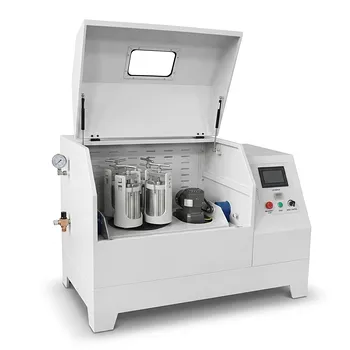
Vertical Production Planetary Ball Mill for High Throughput Powder Processing
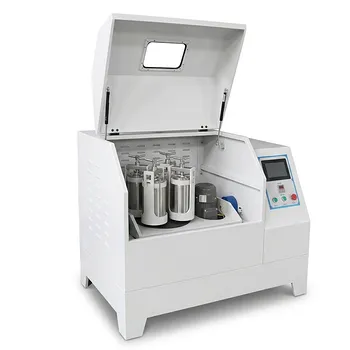
360° Rotating Omnidirectional Laboratory Planetary Ball Mill for Homogeneous Ultra-Fine Grinding and Mixing
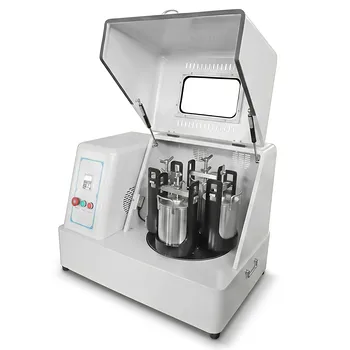
Vertical Square Planetary Ball Mill for Laboratory Sample Preparation and Nanoscale Grinding
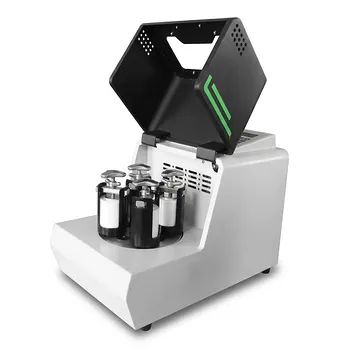
Miniature Planetary Ball Mill with Vacuum Grinding and High Efficiency for Laboratory Sample Preparation
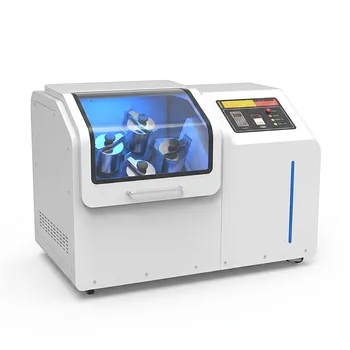
High Energy Omnidirectional Planetary Ball Mill 16L
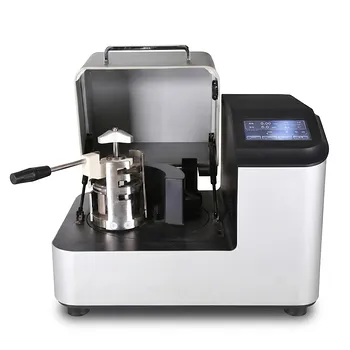
High Energy Laboratory Planetary Ball Mill for Nano Grinding and Material Science Sample Preparation
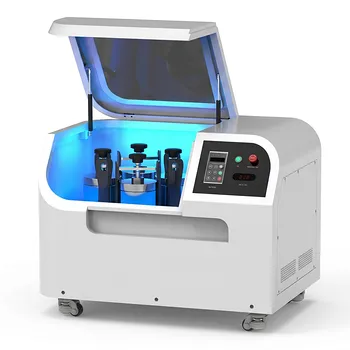
Planetary Ball Mill 12L
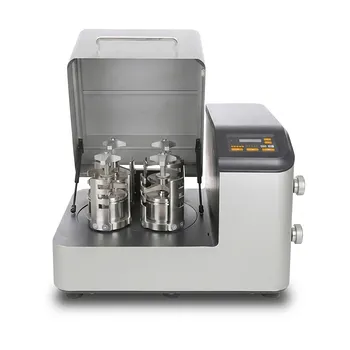
High Energy Planetary Ball Mill for Nano Scale Grinding and Colloidal Mixing in Material Science Research
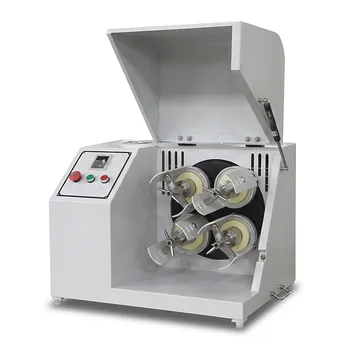
Horizontal Light Duty Planetary Ball Mill for Laboratory Sample Preparation
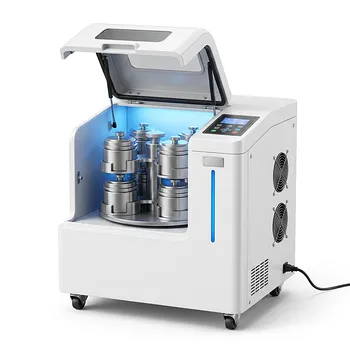
High Energy Omnidirectional Planetary Ball Mill 20L
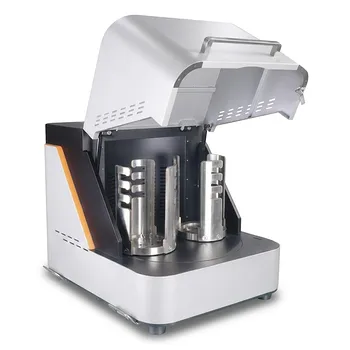
High Energy Laboratory Planetary Ball Mill for Nano Grinding and Colloidal Mixing of Hard and Brittle Materials

8L Planetary Ball Mill for Laboratory Grinding and Sample Preparation
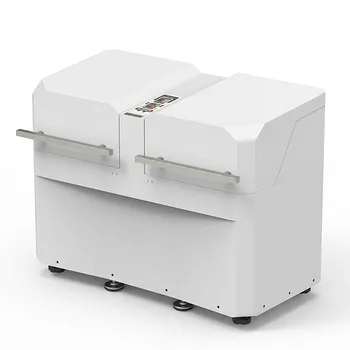
Dual Station Planetary Ball Mill 24L
Multi-Platform Nanoscale High-Energy Vibratory Ball Mill

Nano High Energy Vibratory Ball Mill for Laboratory Sample Preparation
Dual Jar High Energy Vibratory Ball Mill