Why is a planetary ball mill required for the preparation of AZ91D-Ni-GNPs composite powders? High-Energy Alloying Guide
Updated 4 months ago
The preparation of AZ91D-Ni-GNPs composite powders requires a planetary ball mill to facilitate high-energy mechanical alloying. This process utilizes intense impact and shear forces to refine the magnesium matrix grain size while simultaneously coating and mechanically bonding nickel (Ni) and graphene nanoplatelets (GNPs) onto the AZ91D surface. Without this high-energy environment, the constituents would fail to achieve the microscopic homogenization and interfacial bonding necessary for high-performance sintering.
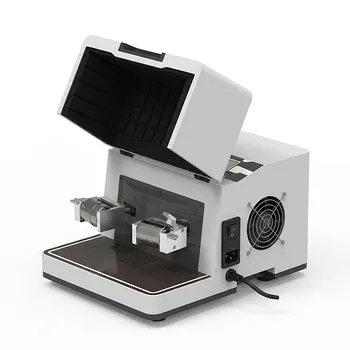
The planetary ball mill serves as the critical engine for mechanical alloying, ensuring that disparate materials like dense nickel and low-density GNPs are uniformly integrated into the magnesium matrix. By converting rotational energy into high-frequency physical impacts, it creates a reactive, refined powder ready for metallurgical processing.
Overcoming the Challenges of Material Incompatibility
High-Energy Mechanical Alloying
The planetary ball mill generates strong impact and shear forces through high-speed rotation and revolution. These forces drive the mechanical bonding of GNPs and nickel particles onto the surface of the magnesium matrix. This process is essential for establishing the interfacial bonding required during subsequent sintering phases.
Preventing Component Segregation
Significant density differences exist between the magnesium matrix, nickel particles, and graphene nanoplatelets. The high-frequency rotation of the mill prevents component segregation, ensuring that heavy nickel does not settle while light GNPs remain on the surface. This results in a uniform composition that is critical for stable material performance.
Breaking Down Agglomerations
Reinforcements like GNPs naturally tend to clump or agglomerate due to van der Waals forces. The high-energy mixing environment effectively breaks down these agglomerations at the microscopic level. This ensures that the reinforcements are dispersed individually throughout the AZ91D powder rather than forming structural weak points.
Enhancing Structural Integrity and Reactivity
Grain Refinement of the AZ91D Matrix
The repeated high-energy impacts cause significant plastic deformation in the metallic powder. This process refines the grain size of the magnesium matrix and induces dislocation generation. Finer grain structures typically lead to improved mechanical strength and more predictable behavior during the manufacturing process.
Increasing Surface Activity
Milling increases the contact area and surface activity between the nickel, GNPs, and the magnesium alloy. By reducing particle size and creating fresh metallic surfaces, the mill provides the kinetic conditions necessary for thermal diffusion. This increased reactivity is vital for achieving a strong metallurgical bond during the final compaction or sintering.
Microscopic Homogenization
Achieving a homogeneous mixture is more than just blending; it involves embedding the reinforcement particles into the matrix. The planetary ball mill ensures that the GNPs and nickel are not just mixed but are physically integrated into the matrix surface. This level of homogenization is the foundation for the consistency of the composite’s macroscopic properties.
Understanding the Trade-offs
Risk of Cold Welding and Over-milling
High-energy milling can sometimes lead to excessive cold welding, where the magnesium powder particles bond to each other or the milling tools. If the milling time is too long, it can also lead to the structural degradation of the graphene nanoplatelets. Precise control of milling parameters is required to balance dispersion with material integrity.
Potential for Contamination
The intense friction and impact within the mill can cause wear on the grinding balls and the vial walls. This introduces the risk of impurity contamination in the AZ91D-Ni-GNPs mixture. Selecting compatible grinding media, such as stainless steel or zirconia, is necessary to minimize the impact on the final composite's purity.
Strategies for Optimizing Composite Powder Preparation
Careful selection of milling parameters determines the final quality of your AZ91D-Ni-GNPs composite.
- If your primary focus is Maximum Strength: Prioritize longer milling durations at moderate speeds to maximize grain refinement and mechanical alloying of the Ni/GNPs into the matrix.
- If your primary focus is Graphene Integrity: Use shorter milling cycles with frequent pauses to prevent overheating and the mechanical shearing of the delicate graphene layers.
- If your primary focus is Compositional Uniformity: Optimize the ball-to-powder ratio and utilize high-speed rotation to ensure heavy nickel particles are fully dispersed without settling.
A correctly configured planetary ball milling process is the definitive factor in transforming a simple mixture into a high-performance, integrated composite powder.
Summary Table:
| Key Mill Function | Impact on AZ91D-Ni-GNPs Composite | Technical Benefit |
|---|---|---|
| High-Energy Impact | Mechanically bonds Ni and GNPs to the Mg surface | Superior interfacial bonding |
| Micro-Homogenization | Prevents density-based segregation of Ni and GNPs | Consistent material performance |
| Shear Force Delivery | Breaks down GNP agglomerations at the micro-level | Homogeneous reinforcement |
| Plastic Deformation | Refines grain size of the magnesium matrix | Enhanced structural strength |
| Surface Activation | Creates fresh metallic surfaces for thermal diffusion | Improved sintering kinetics |
Achieve Precision in Composite Preparation with Expert Laboratory Solutions
Creating high-performance AZ91D-Ni-GNPs composites requires the perfect balance of energy and control. At [Brand Name], we provide complete laboratory sample preparation solutions for material science, specializing in high-efficiency powder processing and compaction equipment.
Our extensive product line is designed to handle every stage of your material development:
- Advanced Milling: Planetary ball mills, jet mills, and cryogenic grinders for perfect homogenization and grain refinement.
- Sieving & Mixing: Sieve shakers, powder mixers, and defoaming mixers to ensure particle size consistency.
- Superior Compaction: A full spectrum of hydraulic presses, including Cold/Warm Isostatic Presses (CIP/WIP), vacuum hot presses, and XRF pellet presses for high-density sintering.
Don't let material segregation or poor bonding compromise your research results. Contact us today to discuss how our specialized equipment can optimize your laboratory workflow and deliver superior composite powders.
References
- Olugbenga Ogunbiyi, Michael O. Daramola. Empirical Prediction of Optimum Process Conditions of Spark Plasma-Sintered Magnesium Composite (AZ91D-Ni-GNPs) Using Response Surface Methodology (RSM) Approach. DOI: 10.1007/s13369-022-07012-z
Mentioned Products
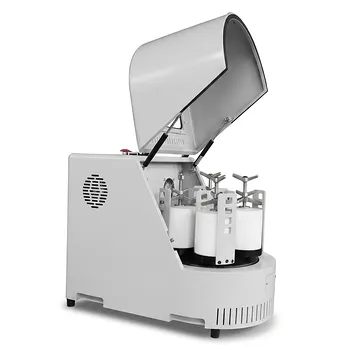
- Vertical Semi Circular Planetary Ball Mill for Laboratory Precision Grinding
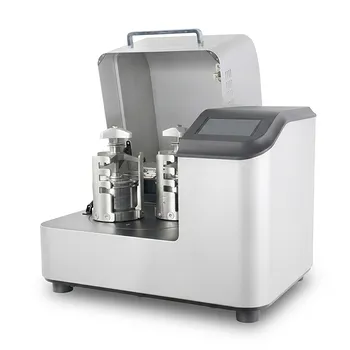
- High Energy Planetary Ball Mill for Nano Scale Grinding and Mechanical Alloying
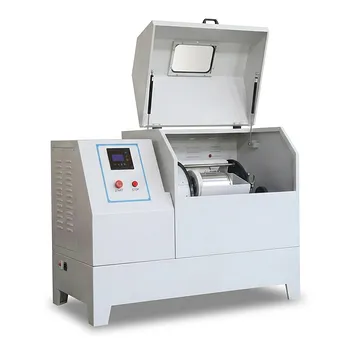
- Heavy Duty Horizontal Planetary Ball Mill for Efficient Industrial Grinding and Sample Preparation
- Vertical Production Planetary Ball Mill for High Throughput Powder Processing
- 360° Rotating Omnidirectional Laboratory Planetary Ball Mill for Homogeneous Ultra-Fine Grinding and Mixing
People Also Ask
- What role does a planetary ball mill play in the synthesis of Li6PS5Cl (LPSCl)? Unlock High Ionic Conductivity
- Why is a planetary ball mill essential for SiBCN-rGO wet-spinning? Achieve Superior Dispersion and Spinnability
- Why is an intermittent grinding process required for perovskites in a planetary ball mill? Ensure Stability & Purity
- Why is a planetary ball mill required for PET micronization? Ensure Accurate Chemical Analysis of Reprocessed PET
- How does mechanized planetary ball milling compare to manual agate grinding? Optimize sulfide standard material precision.

Tech Team · PowderPreparation
Last updated on Jun 03, 2026
Related Products
Vertical Semi Circular Planetary Ball Mill for Laboratory Precision Grinding
High Energy Planetary Ball Mill for Nano Scale Grinding and Mechanical Alloying
Heavy Duty Horizontal Planetary Ball Mill for Efficient Industrial Grinding and Sample Preparation

Vertical Production Planetary Ball Mill for High Throughput Powder Processing

360° Rotating Omnidirectional Laboratory Planetary Ball Mill for Homogeneous Ultra-Fine Grinding and Mixing

Vertical Square Planetary Ball Mill for Laboratory Sample Preparation and Nanoscale Grinding

Miniature Planetary Ball Mill with Vacuum Grinding and High Efficiency for Laboratory Sample Preparation

High Energy Omnidirectional Planetary Ball Mill 16L
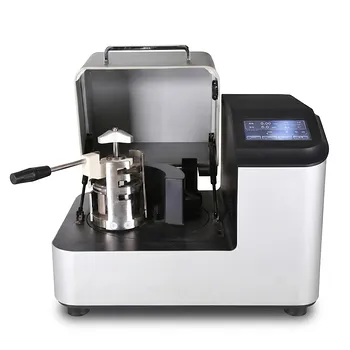
High Energy Laboratory Planetary Ball Mill for Nano Grinding and Material Science Sample Preparation
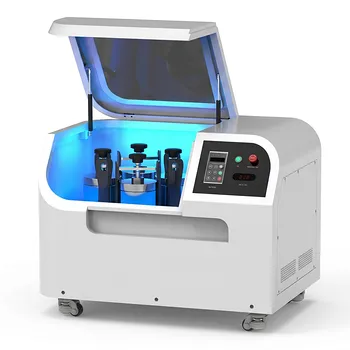
Planetary Ball Mill 12L
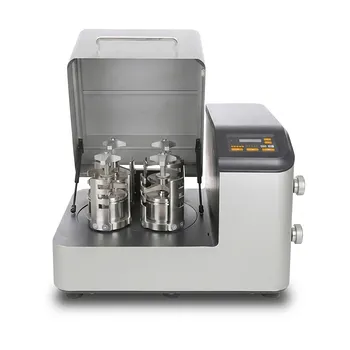
High Energy Planetary Ball Mill for Nano Scale Grinding and Colloidal Mixing in Material Science Research
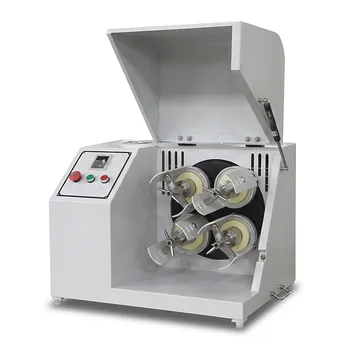
Horizontal Light Duty Planetary Ball Mill for Laboratory Sample Preparation
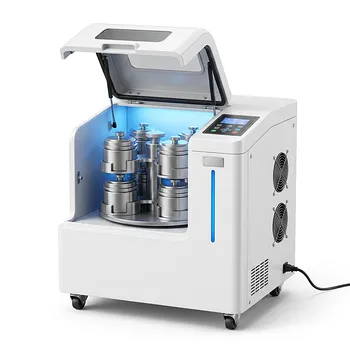
High Energy Omnidirectional Planetary Ball Mill 20L
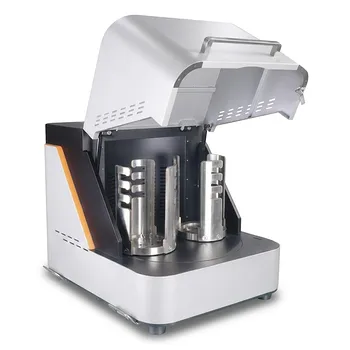
High Energy Laboratory Planetary Ball Mill for Nano Grinding and Colloidal Mixing of Hard and Brittle Materials

8L Planetary Ball Mill for Laboratory Grinding and Sample Preparation
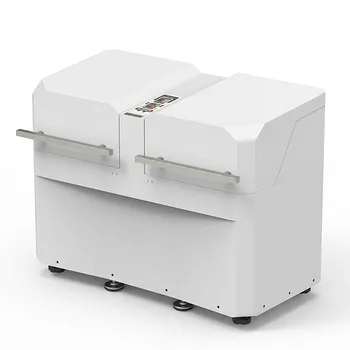
Dual Station Planetary Ball Mill 24L
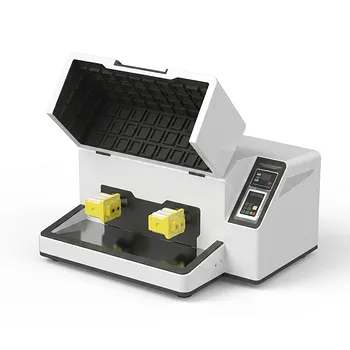
Multi-Platform Nanoscale High-Energy Vibratory Ball Mill

Nano High Energy Vibratory Ball Mill for Laboratory Sample Preparation
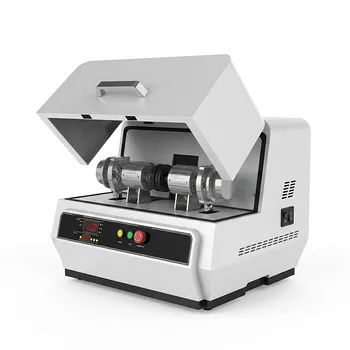
Dual Jar High Energy Vibratory Ball Mill