How does a planetary ball mill contribute to the mechanical activation of mine tailings? Transform Waste into Assets
Updated 4 months ago
Mechanical activation via planetary ball milling transforms inert mine tailings into reactive cementitious materials by fundamentally altering their physical and chemical structure. Through a combination of high-frequency impact and intense shear forces, these mills induce lattice distortion and amorphization in minerals. This process significantly increases the surface energy and reactivity of the tailings, allowing them to participate effectively in pozzolanic reactions within cement systems.
Core Takeaway: Planetary ball mills utilize high-energy mechanical stress to break down the crystalline framework of mine tailings, increasing their specific surface area and creating chemical defects. This transition from a stable, inert state to a high-energy, reactive state is essential for upcycling mining waste into functional industrial binders.
The Mechanics of High-Energy Milling
High-Frequency Impact and Shear Forces
The planetary ball mill operates through the counter-rotation of the sun wheel and the grinding jars, creating powerful centrifugal forces. These forces drive the grinding media into high-frequency, high-energy collisions with the mine tailings.
The resulting impact and shear forces are much more intense than those found in standard ball mills. This energy input is the primary driver for the deep physical and chemical modifications required for activation.
Particle Size Reduction and Surface Area
One of the most immediate effects of milling is the reduction of material particles to the micron level. This ultra-fine grinding dramatically increases the specific surface area of the powder.
An increased surface area provides more "active sites" where chemical reactions can occur. For example, similar processes in other minerals have shown surface area increases from 6.8 m²/g to over 23.5 m²/g, facilitating much faster reaction kinetics.
Molecular Level Mixing
Beyond simple grinding, the planetary motion ensures that the tailings and any additives are thoroughly mixed at a molecular level. This creates a highly uniform distribution of components.
This uniformity is critical for subsequent processes, such as sintering. It ensures that the resulting microstructure is consistent, which is vital for the structural integrity of the final product.
Structural and Chemical Transformations
Lattice Distortion and Amorphization
The mechanical stress applied by the mill is strong enough to forcibly disrupt the mineral lattice framework. This leads to lattice defects or a complete transition to an amorphous (non-crystalline) state.
By breaking the internal bonds of the minerals, the mill transforms the material into a less stable, higher-energy form. This state is far more susceptible to chemical attack and bonding than the original crystalline structure.
Enhanced Pozzolanic Reactivity
The primary goal of activation is to stimulate pozzolanic activity, which is the ability of a material to react with calcium hydroxide to form cementitious compounds. The planetary ball mill achieves this by increasing the amorphicity of the tailings.
This process can even exceed the activation limits of traditional thermal methods. It allows materials like high-silica tailings or clay to become highly reactive components in cement and concrete formulations.
Phase Transitions and Dehydroxylation
In specific materials, high-energy milling can drive phase transitions, such as moving from a dihydrate to an anhydrous state. It can also induce local dehydroxylation, which involves breaking O-H bonds within the mineral structure.
These deep chemical changes further increase the reactivity of the powder. The result is a material that no longer behaves like inert waste but functions as an active participant in chemical binders or adsorbents.
Understanding the Trade-offs
Energy Consumption and Scalability
While planetary ball mills are highly effective at the laboratory and pilot scales, they are significantly more energy-intensive than traditional grinding methods. The high energy required to achieve amorphization can lead to high operational costs.
Heat Generation and Material Sensitivity
The intense friction and impact within the jars generate substantial heat during the activation process. If not managed, this heat can cause unintended phase changes or the "re-agglomeration" of fine particles.
Wear and Contamination
The high-energy nature of the process causes significant wear on the grinding media and jar liners. This can introduce small amounts of contaminants (such as steel or ceramic particles) into the mine tailings, which may affect the final material properties.
How to Apply This to Your Project
When utilizing a planetary ball mill for the mechanical activation of mine tailings, your approach should vary based on the intended application of the final product.
- If your primary focus is Cement Substitution: Prioritize achieving maximum amorphization and lattice distortion to ensure high pozzolanic reactivity.
- If your primary focus is Waste Volume Reduction: Focus on achieving a specific particle size distribution that allows for high-density packing in composite materials.
- If your primary focus is Chemical Adsorption: Optimize the milling time to maximize specific surface area and the creation of effective active sites for ion exchange.
- If your primary focus is Cost Efficiency: Experiment with "grinding aids" or chemical additives that work synergistically with mechanical forces to reduce the total milling time required.
Properly calibrated mechanical activation turns a liability—mine tailings—into a high-value asset for sustainable construction.
Summary Table:
| Feature | Mechanical Activation Effect | Benefit for Mine Tailings |
|---|---|---|
| Energy Input | High-frequency impact & intense shear | Breaks crystalline lattice frameworks |
| Particle Size | Reduction to micron/sub-micron level | Dramatically increases specific surface area |
| Structure | Lattice distortion & amorphization | Converts inert minerals into reactive states |
| Chemical State | Dehydroxylation & phase transitions | Enhances pozzolanic reactivity for cement |
| Mixing | Molecular-level homogenization | Ensures consistent microstructure in final products |
Revolutionize Your Material Research with Expert Solutions
Turn industrial waste into high-performance binders with our complete laboratory sample preparation solutions. At [Your Brand Name], we specialize in the equipment necessary for advanced material science and powder processing.
Whether you are focusing on the mechanical activation of mine tailings or developing new composites, our extensive product line supports every stage of your workflow:
- Size Reduction: High-energy planetary ball mills, jet mills, and cryogenic grinders.
- Analysis: Vibratory and air-jet sieve shakers for precise particle distribution.
- Compaction & Synthesis: A full spectrum of hydraulic presses, including Cold/Warm Isostatic Presses (CIP/WIP), vacuum hot presses, and XRF pellet presses.
- Processing: Advanced powder and defoaming mixers for molecular-level uniformity.
Ready to enhance your lab's efficiency and achieve superior reactivity in your materials? Contact our technical experts today to find the perfect configuration for your specific application!
References
- Yipu Guo, Wengui Li. Advancing circular economy and construction sustainability: transforming mine tailings into high-value cementitious and alkali-activated concrete. DOI: 10.1038/s44296-025-00049-9
Mentioned Products
- Vertical Semi Circular Planetary Ball Mill for Laboratory Precision Grinding
- High Energy Planetary Ball Mill for Nano Scale Grinding and Mechanical Alloying
- Heavy Duty Horizontal Planetary Ball Mill for Efficient Industrial Grinding and Sample Preparation
- Vertical Production Planetary Ball Mill for High Throughput Powder Processing
- 360° Rotating Omnidirectional Laboratory Planetary Ball Mill for Homogeneous Ultra-Fine Grinding and Mixing
People Also Ask
- What role does a planetary ball mill play in the synthesis of Li6PS5Cl (LPSCl)? Unlock High Ionic Conductivity
- Why is a planetary ball mill essential for SiBCN-rGO wet-spinning? Achieve Superior Dispersion and Spinnability
- Why is an intermittent grinding process required for perovskites in a planetary ball mill? Ensure Stability & Purity
- Why is a planetary ball mill required for PET micronization? Ensure Accurate Chemical Analysis of Reprocessed PET
- How does mechanized planetary ball milling compare to manual agate grinding? Optimize sulfide standard material precision.

Tech Team · PowderPreparation
Last updated on Jun 03, 2026
Related Products
Vertical Semi Circular Planetary Ball Mill for Laboratory Precision Grinding

High Energy Planetary Ball Mill for Nano Scale Grinding and Mechanical Alloying
Heavy Duty Horizontal Planetary Ball Mill for Efficient Industrial Grinding and Sample Preparation

Vertical Production Planetary Ball Mill for High Throughput Powder Processing
360° Rotating Omnidirectional Laboratory Planetary Ball Mill for Homogeneous Ultra-Fine Grinding and Mixing

Vertical Square Planetary Ball Mill for Laboratory Sample Preparation and Nanoscale Grinding

Miniature Planetary Ball Mill with Vacuum Grinding and High Efficiency for Laboratory Sample Preparation

High Energy Omnidirectional Planetary Ball Mill 16L

High Energy Laboratory Planetary Ball Mill for Nano Grinding and Material Science Sample Preparation
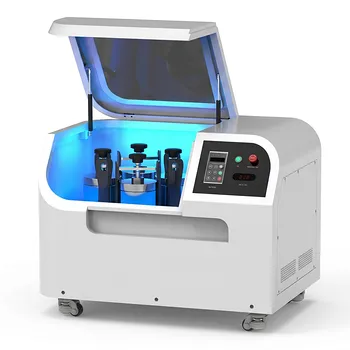
Planetary Ball Mill 12L
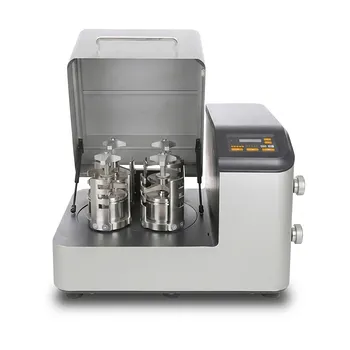
High Energy Planetary Ball Mill for Nano Scale Grinding and Colloidal Mixing in Material Science Research
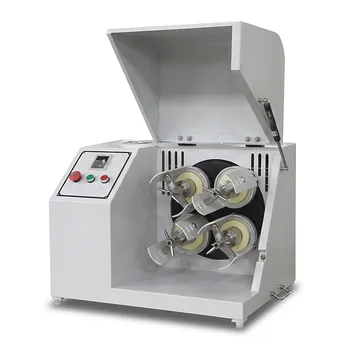
Horizontal Light Duty Planetary Ball Mill for Laboratory Sample Preparation

High Energy Omnidirectional Planetary Ball Mill 20L
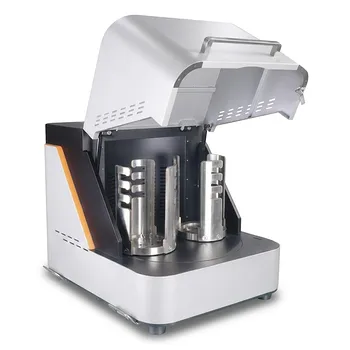
High Energy Laboratory Planetary Ball Mill for Nano Grinding and Colloidal Mixing of Hard and Brittle Materials
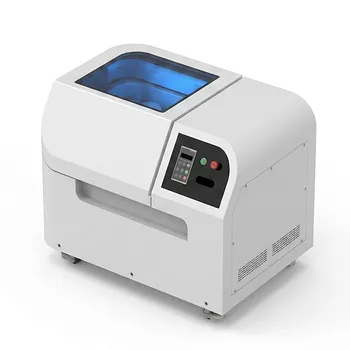
8L Planetary Ball Mill for Laboratory Grinding and Sample Preparation
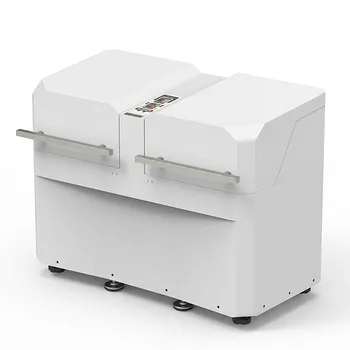
Dual Station Planetary Ball Mill 24L
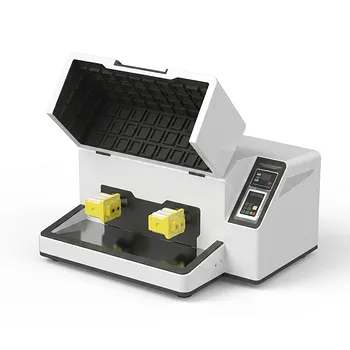
Multi-Platform Nanoscale High-Energy Vibratory Ball Mill
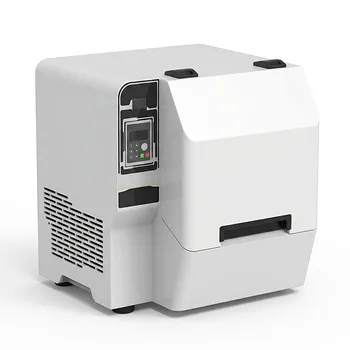
Nano High Energy Vibratory Ball Mill for Laboratory Sample Preparation
Dual Jar High Energy Vibratory Ball Mill