What role does a planetary ball mill play in one-step Li-S battery cathode prep? Key for In-Situ Synthesis
Updated 4 months ago
The planetary ball mill acts as a high-energy mechanochemical reactor that enables the simultaneous synthesis and integration of cathode components. In a one-step process, it induces chemical reactions between precursors (like phosphorus pentasulfide and lithium salts) to generate ionically conductive electrolytes in-situ while ensuring a molecular-level uniform distribution of sulfur and carbon. This eliminates the need for separate, multi-step synthesis and mixing stages, directly creating a functional composite.
The core role of the planetary ball mill is to convert mechanical energy into chemical potential, facilitating in-situ electrolyte formation and the construction of an optimized triple-phase boundary in a single processing step. This process is the key to simplifying the fabrication of all-solid-state batteries while maximizing active material utilization.
Driving In-Situ Mechanochemical Synthesis
Converting Mechanical Energy to Chemical Bonds
The primary function of the mill is to facilitate high-energy mechanochemical reactions that would otherwise require high-temperature thermal processing. By colliding grinding media at high frequencies, the mill breaks the crystal structures of precursors like phosphorus pentasulfide ($P_2S_5$) and lithium oxides.
Eliminating Multi-Step Fabrication
In traditional methods, solid electrolytes are synthesized separately and then blended with active materials. The planetary ball mill allows for the one-step generation of these ionically conductive materials directly within the cathode mixture.
Simplifying the Production Chain
This in-situ approach significantly reduces the complexity of battery fabrication. By combining synthesis and compounding into a single operation, the mill ensures that the electrolyte forms in the presence of the sulfur and carbon, leading to a more integrated composite.
Engineering the Triple-Phase Boundary
Creating Intimate Interfacial Contact
For a lithium-sulfur battery to function, the active sulfur must be in contact with both an ionic conductor (electrolyte) and an electronic conductor (carbon). The planetary ball mill utilizes high shear forces to create "tight contact" between these three distinct phases.
Establishing Transport Pathways
This process constructs a robust triple-phase boundary across the entire cathode. This network is essential for ensuring that lithium ions and electrons can reach every sulfur particle, which is naturally insulating.
Achieving Molecular-Level Uniformity
Unlike standard mixing, high-energy milling achieves molecular-level compounding. This level of dispersion prevents the agglomeration of sulfur, ensuring that the active material remains electrochemically accessible throughout the discharge cycle.
Particle Refinement and Kinetic Activation
Reducing Diffusion Distances
The mill reduces the particle size of raw materials from the micrometer level to the sub-micron or nanometer scale. By decreasing the size of lithium sulfide ($Li_2S$) or sulfur particles, the mill dramatically shortens the distance ions must travel.
Increasing Reactive Surface Area
Refinement increases the specific surface area available for electrochemical reactions. This higher contact area between the active material and the electrolyte reduces the reaction overpotential, allowing the battery to operate more efficiently.
Activating Insulating Materials
Sulfur and $Li_2S$ are inherently insulating, which usually leads to low material utilization. The high-frequency impacts of the ball mill "activate" these materials by embedding them within a conductive matrix, improving the overall utilization rate of the cathode.
Understanding the Trade-offs
Heat Generation and Material Degradation
The high energy required for mechanochemical reactions generates significant internal heat. If not managed through rest cycles or cooling, this heat can lead to the unwanted melting of sulfur or the degradation of temperature-sensitive sulfide electrolytes.
Risk of Media Contamination
The intense friction and collision of grinding balls (often zirconia or stainless steel) can lead to material wear. Small amounts of the grinding media can contaminate the cathode composite, potentially creating internal micro-shorts or impacting the long-term cycling stability of the battery.
Energy Consumption vs. Scalability
While effective for laboratory-scale synthesis, high-energy planetary milling is energy-intensive. Transitioning from small-batch planetary mills to large-scale industrial production requires balancing the necessary impact energy with the throughput requirements of commercial manufacturing.
Applying Milling Strategies to Your Project
Recommendations Based on Technical Goals
- If your primary focus is maximizing ionic conductivity: Prioritize longer milling durations at moderate speeds to ensure the complete mechanochemical conversion of precursors into the electrolyte phase.
- If your primary focus is high-rate performance: Use higher rotation speeds to achieve maximum particle refinement, which minimizes diffusion paths for faster ion transport.
- If your primary focus is material purity: Utilize jars and grinding media made of the same material as the electrolyte (where possible) or high-hardness agate to minimize metallic contamination.
The planetary ball mill is the foundational tool that transforms a simple mixture of precursors into a complex, electrochemically active cathode architecture through a single, high-energy processing step.
Summary Table:
| Core Function | Impact on Cathode Performance | Key Mechanism |
|---|---|---|
| Mechanochemical Synthesis | Enables in-situ electrolyte formation | Conversion of mechanical energy to chemical bonds |
| Interfacial Engineering | Constructs robust triple-phase boundaries | High shear forces creating intimate solid-solid contact |
| Particle Refinement | Reduces ion diffusion distances | Reduction of materials to sub-micron or nano-scale |
| Homogenization | Prevents sulfur agglomeration | Molecular-level compounding and uniform dispersion |
Optimize Your Material Research with Precision Powder Solutions
Achieving the perfect triple-phase boundary in all-solid-state batteries requires more than just mixing—it requires precision engineering. We provide complete laboratory sample preparation solutions tailored for material science and advanced energy storage research.
Our specialized equipment range includes:
- High-Energy Milling: Planetary ball mills, jet mills, and cryogenic grinders for superior mechanochemical synthesis.
- Advanced Compaction: A full spectrum of hydraulic presses, including Cold/Warm Isostatic Presses (CIP/WIP), vacuum hot presses, and XRF pellet presses for high-density sample fabrication.
- Processing Excellence: Powder mixers, defoaming mixers, and vibratory sieve shakers to ensure precise particle distribution.
Whether you are a researcher aiming for molecular-level uniformity or a manufacturer scaling up production, we deliver the reliability and expertise you need.
Contact our experts today to enhance your lab's efficiency!
References
- Hiroshi Nagata, Kunimitsu Kataoka. Affordable High-performance Sulfur Positive Composite Electrode for All-solid-state Li-S Batteries Prepared by One-step Mechanical Milling without Solid Electrolyte or Li<sub>2</sub>S. DOI: 10.5796/electrochemistry.25-00111
Mentioned Products
- Vertical Semi Circular Planetary Ball Mill for Laboratory Precision Grinding
- High Energy Planetary Ball Mill for Nano Scale Grinding and Mechanical Alloying
- Heavy Duty Horizontal Planetary Ball Mill for Efficient Industrial Grinding and Sample Preparation
- Vertical Production Planetary Ball Mill for High Throughput Powder Processing
- 360° Rotating Omnidirectional Laboratory Planetary Ball Mill for Homogeneous Ultra-Fine Grinding and Mixing
People Also Ask
- What role does a planetary ball mill play in the synthesis of Li6PS5Cl (LPSCl)? Unlock High Ionic Conductivity
- Why is a planetary ball mill essential for SiBCN-rGO wet-spinning? Achieve Superior Dispersion and Spinnability
- Why is an intermittent grinding process required for perovskites in a planetary ball mill? Ensure Stability & Purity
- Why is a planetary ball mill required for PET micronization? Ensure Accurate Chemical Analysis of Reprocessed PET
- How does mechanized planetary ball milling compare to manual agate grinding? Optimize sulfide standard material precision.

Tech Team · PowderPreparation
Last updated on Jun 03, 2026
Related Products
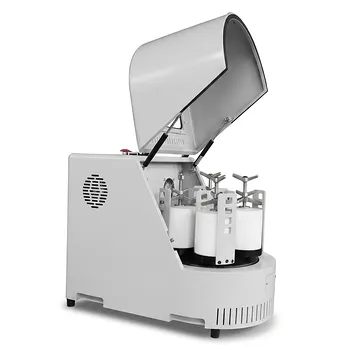
Vertical Semi Circular Planetary Ball Mill for Laboratory Precision Grinding

High Energy Planetary Ball Mill for Nano Scale Grinding and Mechanical Alloying
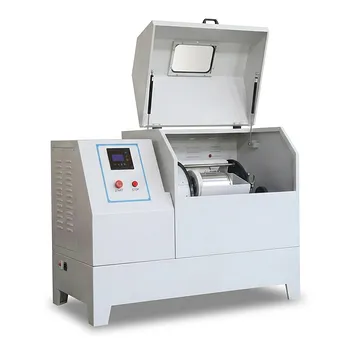
Heavy Duty Horizontal Planetary Ball Mill for Efficient Industrial Grinding and Sample Preparation

Vertical Production Planetary Ball Mill for High Throughput Powder Processing

360° Rotating Omnidirectional Laboratory Planetary Ball Mill for Homogeneous Ultra-Fine Grinding and Mixing

Vertical Square Planetary Ball Mill for Laboratory Sample Preparation and Nanoscale Grinding

Miniature Planetary Ball Mill with Vacuum Grinding and High Efficiency for Laboratory Sample Preparation

High Energy Omnidirectional Planetary Ball Mill 16L

High Energy Laboratory Planetary Ball Mill for Nano Grinding and Material Science Sample Preparation
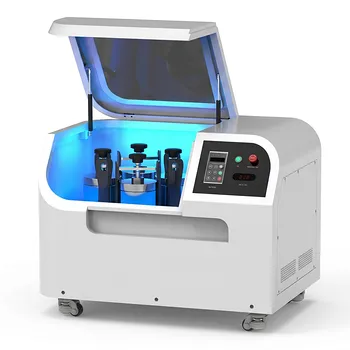
Planetary Ball Mill 12L
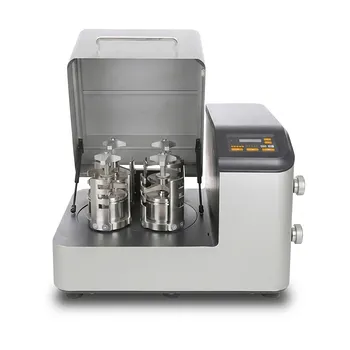
High Energy Planetary Ball Mill for Nano Scale Grinding and Colloidal Mixing in Material Science Research
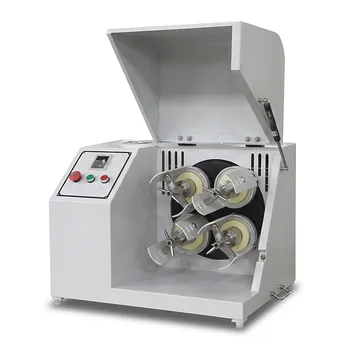
Horizontal Light Duty Planetary Ball Mill for Laboratory Sample Preparation
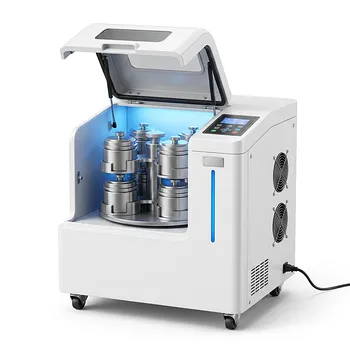
High Energy Omnidirectional Planetary Ball Mill 20L

High Energy Laboratory Planetary Ball Mill for Nano Grinding and Colloidal Mixing of Hard and Brittle Materials

8L Planetary Ball Mill for Laboratory Grinding and Sample Preparation

Dual Station Planetary Ball Mill 24L

Multi-Platform Nanoscale High-Energy Vibratory Ball Mill

Nano High Energy Vibratory Ball Mill for Laboratory Sample Preparation
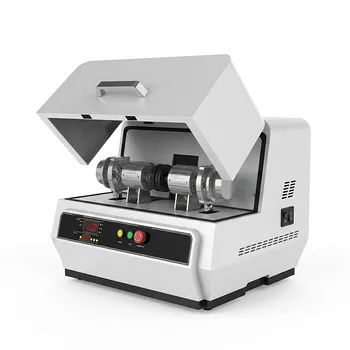
Dual Jar High Energy Vibratory Ball Mill