Why is an industrial-grade planetary ball mill used for precursor treatment? Optimize Cation Disorder in ZnSiP2 Anodes
Updated 5 months ago
The planetary ball mill is a critical tool for synthesizing cation-disordered anode materials because it uses high-energy mechanical force to nanostructure precursors and induce structural defects. By subjecting materials like $\text{ZnSiP}_2$ to intense impact and shear, the mill creates a cation-disordered state that lowers ion-hopping barriers and shortens diffusion paths. This process is essential for achieving the high-rate discharge and long cycle life required for next-generation battery performance.
High-energy planetary ball milling transforms precursors from simple mixtures into deeply compounded, nanostructured materials. By mechanically perturbing the crystal lattice, it creates a cation-disordered structure that optimizes the potential energy landscape for faster ion transport.
Mechanical Energy as a Catalyst for Structural Change
Inducing the Cation-Disordered State
The primary reason for using a planetary ball mill for $\text{ZnSiP}_2$ is its ability to induce cation disorder through sheer mechanical force. This disorder effectively perturbs the potential energy landscape of the material, making it easier for ions to move through the lattice.
By reducing the ion hopping barriers, the milling process directly translates to higher conductivity and better performance under high-rate discharge conditions. This structural transformation is difficult to achieve through conventional thermal processing alone.
Nanostructuring and Diffusion Paths
High-energy milling performs mechanical alloying, breaking down bulk materials into nanostructured powders. This reduction in particle size significantly shortens the ion diffusion paths within the anode material.
Shorter diffusion paths mean that ions can move in and out of the electrode more quickly during charging and discharging. This is a foundational requirement for batteries that need to support fast-charging capabilities.
Achieving Microscopic Uniformity and Reactivity
Deep Compounding with Conductive Additives
In the production of semiconductor active materials like $\text{ZnSiP}_2$, the mill is used for the deep compounding of the precursor with conductive additives like graphite. This ensures that every active particle is in intimate contact with a conductive pathway.
The high-frequency rotation generates powerful centrifugal and impact forces that overcome the natural immiscibility of different components. This leads to atomic-level uniform mixing that prevents the segregation of materials during subsequent processing.
Increasing Specific Surface Area
The milling process utilizes high-speed rotation (often exceeding 300 rpm) to micronize materials and disrupt their crystal structures. This physical enhancement drastically increases the specific surface area of the precursor powder.
An increased surface area enhances the reaction activity of the powder, which is vital for the efficiency of subsequent high-temperature solid-state synthesis. It lowers the reaction activation energy, ensuring a more complete transition to the desired single-phase structure.
Understanding the Trade-offs and Pitfalls
Material Contamination and Wear
The most significant trade-off in high-energy milling is the potential for media contamination. As the grinding balls impact the vial walls and the material, small amounts of the milling media (e.g., zirconia or stainless steel) can wear off and enter the precursor.
This contamination can introduce unwanted impurities that might degrade the electrochemical performance of the final anode. Selection of wear-resistant media and optimized milling times are required to mitigate this risk.
Thermal Management and Over-Milling
The intense mechanical energy generated during the process is partially converted into heat, which can lead to unintended phase changes or particle agglomeration. If the temperature is not controlled, the material may "cold weld" back into larger chunks, defeating the purpose of micronization.
Over-milling can also lead to excessive structural damage, potentially creating an amorphous state that is too unstable for long-term cycling. Finding the "sweet spot" between enough energy to induce disorder and too much energy that destroys the crystal lattice is a complex calibration.
Making the Right Choice for Your Project
Recommendations for Material Development
To maximize the benefits of planetary ball milling for cation-disordered materials, consider the following strategic approaches:
- If your primary focus is maximizing ion conductivity: Prioritize higher milling speeds and longer durations to ensure the most complete cation-disordered state and shortest diffusion paths.
- If your primary focus is material purity: Utilize specialized ceramic milling jars (zirconia or alumina) and implement "rest periods" during the milling cycle to minimize thermal wear and media shedding.
- If your primary focus is industrial scalability: Focus on optimizing the ball-to-powder weight ratio to maximize throughput while maintaining the narrow particle size distribution required for consistent slurry rheology.
The strategic use of a planetary ball mill is not merely about grinding; it is about precision engineering the atomic architecture of the material to unlock its full electrochemical potential.
Summary Table:
| Key Process | Mechanism of Action | Benefit for Anode Performance |
|---|---|---|
| High-Energy Impact | Induces cation-disordered state | Lowers ion-hopping barriers for faster transport |
| Mechanical Alloying | Breakdown to nanostructured powder | Shortens ion diffusion paths for high-rate discharge |
| Deep Compounding | Atomic-level uniform mixing | Ensures intimate contact with conductive additives |
| Micronization | Increased specific surface area | Lowers reaction activation energy for synthesis |
Elevate Your Material Research with Precision Processing Solutions
Unlock the full potential of next-generation battery materials like ZnSiP2 with our industry-leading laboratory equipment. We provide complete laboratory sample preparation solutions for material science, specializing in the high-energy powder processing and compaction required for cation-disordered structures.
Our extensive product lines are designed to meet the rigorous demands of battery research and industrial scaling:
- Advanced Milling: Planetary ball mills, jet mills, liquid nitrogen cryogenic grinders, and rotor mills for precise nanostructuring.
- Preparation & Sizing: Jaw/roll crushers and vibratory/air-jet sieve shakers for consistent precursor sizing.
- Mixing & Homogenization: Powder mixers and defoaming mixers for deep compounding of active materials.
- Advanced Compaction: A full spectrum of hydraulic presses, including Cold/Warm Isostatic Presses (CIP/WIP), vacuum hot presses, and XRF pellet presses.
Whether you are optimizing ion conductivity or ensuring material purity, our technical experts are ready to assist you in selecting the right tools for your specific workflow.
Ready to refine your precursor treatment? Contact us today to request a quote or technical consultation!
References
- Rekha R. Schnepf, Adele C. Tamboli. Utilizing Site Disorder in the Development of New Energy-Relevant Semiconductors. DOI: 10.1021/acsenergylett.0c00576
Mentioned Products
- Vertical Semi Circular Planetary Ball Mill for Laboratory Precision Grinding
- High Energy Planetary Ball Mill for Nano Scale Grinding and Mechanical Alloying
- Heavy Duty Horizontal Planetary Ball Mill for Efficient Industrial Grinding and Sample Preparation
- Vertical Production Planetary Ball Mill for High Throughput Powder Processing
- 360° Rotating Omnidirectional Laboratory Planetary Ball Mill for Homogeneous Ultra-Fine Grinding and Mixing
People Also Ask
- What role does a planetary ball mill play in the synthesis of Li6PS5Cl (LPSCl)? Unlock High Ionic Conductivity
- Why is a planetary ball mill essential for SiBCN-rGO wet-spinning? Achieve Superior Dispersion and Spinnability
- Why is an intermittent grinding process required for perovskites in a planetary ball mill? Ensure Stability & Purity
- Why is a planetary ball mill required for PET micronization? Ensure Accurate Chemical Analysis of Reprocessed PET
- How does mechanized planetary ball milling compare to manual agate grinding? Optimize sulfide standard material precision.

Tech Team · PowderPreparation
Last updated on May 14, 2026
Related Products
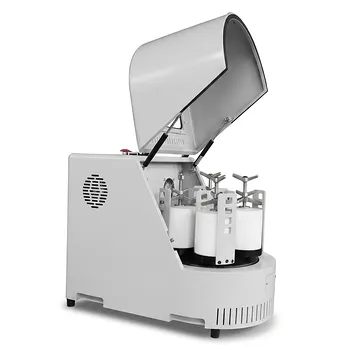
Vertical Semi Circular Planetary Ball Mill for Laboratory Precision Grinding

High Energy Planetary Ball Mill for Nano Scale Grinding and Mechanical Alloying
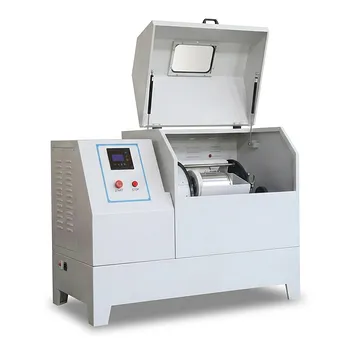
Heavy Duty Horizontal Planetary Ball Mill for Efficient Industrial Grinding and Sample Preparation

Vertical Production Planetary Ball Mill for High Throughput Powder Processing

360° Rotating Omnidirectional Laboratory Planetary Ball Mill for Homogeneous Ultra-Fine Grinding and Mixing
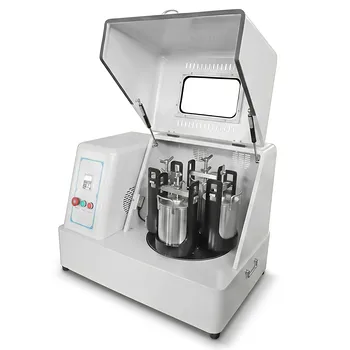
Vertical Square Planetary Ball Mill for Laboratory Sample Preparation and Nanoscale Grinding

Miniature Planetary Ball Mill with Vacuum Grinding and High Efficiency for Laboratory Sample Preparation
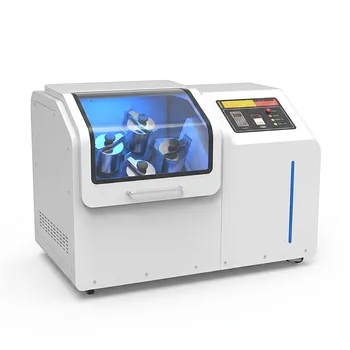
High Energy Omnidirectional Planetary Ball Mill 16L

High Energy Laboratory Planetary Ball Mill for Nano Grinding and Material Science Sample Preparation
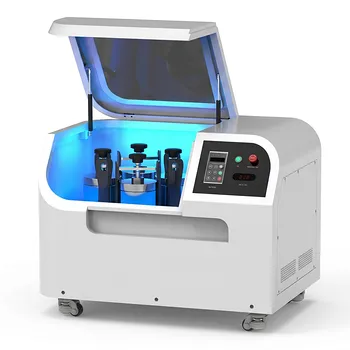
Planetary Ball Mill 12L
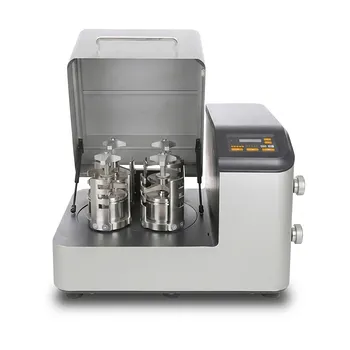
High Energy Planetary Ball Mill for Nano Scale Grinding and Colloidal Mixing in Material Science Research
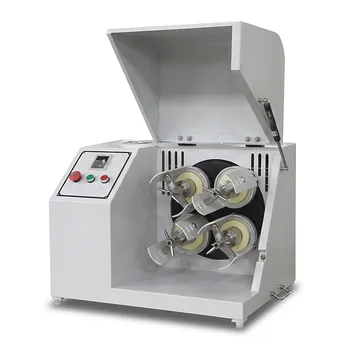
Horizontal Light Duty Planetary Ball Mill for Laboratory Sample Preparation
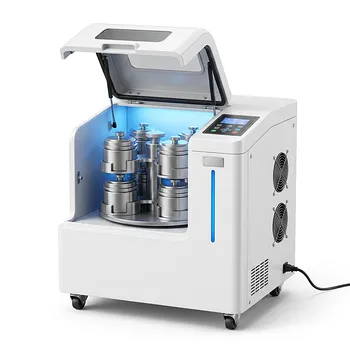
High Energy Omnidirectional Planetary Ball Mill 20L

High Energy Laboratory Planetary Ball Mill for Nano Grinding and Colloidal Mixing of Hard and Brittle Materials

8L Planetary Ball Mill for Laboratory Grinding and Sample Preparation

Dual Station Planetary Ball Mill 24L

Multi-Platform Nanoscale High-Energy Vibratory Ball Mill

Nano High Energy Vibratory Ball Mill for Laboratory Sample Preparation
Dual Jar High Energy Vibratory Ball Mill