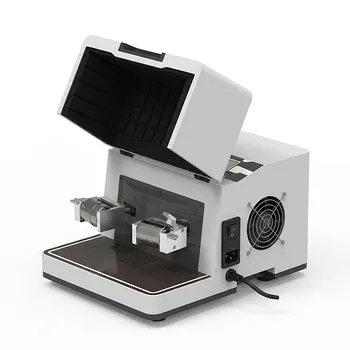
What is the function of a planetary ball mill in Cu-ODS? Essential for Mechanical Alloying & Nano-Oxide Dispersion
Updated 5 months ago
In the production of Oxide Dispersion Strengthened copper (Cu-ODS), the planetary ball mill functions as a high-energy mechanical alloying reactor. It utilizes intense collision, shear, and impact forces to refine copper and nano-scale yttria (Y₂O₃) powders, forcing a uniform dispersion of oxide particles throughout the metal matrix. This process is the critical foundation for achieving the material’s superior mechanical strength and high-temperature thermal stability.
The planetary ball mill transforms a simple powder mixture into a sophisticated composite by mechanically embedding nano-oxides into copper grains. This high-energy process ensures a level of homogenization and grain refinement that is impossible to achieve through conventional mixing methods.
The Mechanisms of Mechanical Alloying
Breaking Powder Agglomeration
Nano-scale oxide powders, such as yttria, have a high natural tendency to clump together. The planetary ball mill uses high-speed revolution and rotation to generate impact forces that shatter these clusters, ensuring the reinforcing phase is separated into individual particles before embedding.
Forced Mechanical Embedding
Unlike standard mixing, the high-energy environment "folds" the oxide particles into the copper matrix. This results in a metal-matrix composite where the oxides are trapped within the metal grains, creating the internal barriers necessary to impede dislocation movement and grain growth.
Intense Grain Refinement
The repetitive fracturing and cold-welding of the copper powder during milling leads to extreme grain refinement. This creates a fine-grained matrix structure that serves as the microstructural foundation for high-performance components during subsequent sintering.
Enhancing Material Reactivity
Surface Activation
The mechanical collisions during milling activate the surfaces of the powder particles. This increase in specific surface area and stored energy facilitates more rapid diffusion and promotes stronger metallurgical bonds during the later stages of brazing or laser cladding.
Solid Solution and Diffusion
In systems involving active elements like titanium or yttrium, the ball mill forces these elements into the matrix. This mechanical alloying (MA) stage is essential for inducing the solid solution effects required to stabilize the final oxide dispersion.
Understanding the Trade-offs
Contamination Risks
The high-energy nature of the process means that grinding balls and mill vials are subject to wear. This can introduce impurities (such as iron or chromium) into the copper matrix, which may negatively impact the electrical conductivity of the final Cu-ODS material.
Heat Management and Processing Time
Excessive milling speeds or durations can lead to significant heat buildup, potentially causing unwanted grain growth or oxidation of the copper itself. Finding the optimal balance between rotation speed and milling time is crucial to maintain the "nano" scale of the reinforcing phase.
Making the Right Choice for Your Goal
- If your primary focus is Maximum Mechanical Strength: Prioritize longer milling durations and higher speeds to ensure the finest possible grain refinement and the most uniform oxide distribution.
- If your primary focus is High Electrical Conductivity: Optimize the milling intensity to be just high enough for dispersion, thereby minimizing the risk of contamination from the grinding media.
- If your primary focus is Scalable Production: Utilize planetary ball mills with larger vial capacities and optimized rotation ratios to process larger batches while maintaining the high-energy impact necessary for mechanical alloying.
By precisely controlling the mechanical energy within a planetary ball mill, engineers can tailor the microstructure of Cu-ODS to meet the most demanding thermal and structural requirements.
Summary Table:
| Key Function | Primary Mechanism | Benefit to Cu-ODS |
|---|---|---|
| De-agglomeration | High-energy impact & shear | Breaks yttria clusters for uniform reinforcement |
| Mechanical Alloying | Repetitive cold-welding & fracturing | Forces nano-oxides into the copper grain matrix |
| Grain Refinement | Severe plastic deformation | Enhances high-temperature strength and stability |
| Surface Activation | Increased stored energy | Promotes faster diffusion and better bonding in sintering |
Elevate Your Material Research with Precision Sample Preparation
Achieving the perfect oxide dispersion requires high-energy efficiency and reliable performance. At our core, we provide complete laboratory sample preparation solutions for material science, specializing in high-performance powder processing and compaction equipment.
Whether you are refining Cu-ODS grains or developing new composites, our extensive product line supports your entire workflow:
- Advanced Milling: Planetary ball mills, jet mills, and cryogenic grinders for superior homogenization.
- Powder Processing: Sieve shakers, powder mixers, and defoaming mixers for precise particle control.
- Compaction & Sintering: A full spectrum of hydraulic presses, including Cold/Warm Isostatic Presses (CIP/WIP), hot presses, and vacuum hot presses.
Ready to optimize your mechanical alloying process? Contact us today to discuss your specific application and discover how our equipment can enhance your laboratory's efficiency and material performance.
References
- S.M.S. Aghamiri, T. Muroga. Microstructure development and high tensile properties of He/H2 milled oxide dispersion strengthened copper. DOI: 10.1016/j.jallcom.2018.12.298
Mentioned Products
- Vertical Semi Circular Planetary Ball Mill for Laboratory Precision Grinding
- High Energy Planetary Ball Mill for Nano Scale Grinding and Mechanical Alloying
- Heavy Duty Horizontal Planetary Ball Mill for Efficient Industrial Grinding and Sample Preparation
- Vertical Production Planetary Ball Mill for High Throughput Powder Processing
- 360° Rotating Omnidirectional Laboratory Planetary Ball Mill for Homogeneous Ultra-Fine Grinding and Mixing
People Also Ask
- What role does a planetary ball mill play in the synthesis of Li6PS5Cl (LPSCl)? Unlock High Ionic Conductivity
- Why is a planetary ball mill essential for SiBCN-rGO wet-spinning? Achieve Superior Dispersion and Spinnability
- Why is an intermittent grinding process required for perovskites in a planetary ball mill? Ensure Stability & Purity
- Why is a planetary ball mill required for PET micronization? Ensure Accurate Chemical Analysis of Reprocessed PET
- How does mechanized planetary ball milling compare to manual agate grinding? Optimize sulfide standard material precision.

Tech Team · PowderPreparation
Last updated on May 14, 2026
Related Products
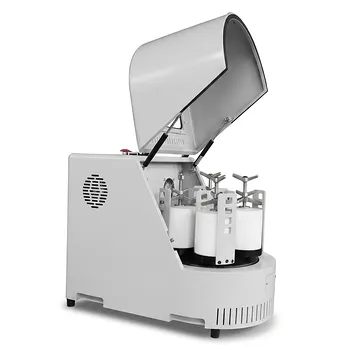
Vertical Semi Circular Planetary Ball Mill for Laboratory Precision Grinding

High Energy Planetary Ball Mill for Nano Scale Grinding and Mechanical Alloying

Heavy Duty Horizontal Planetary Ball Mill for Efficient Industrial Grinding and Sample Preparation

Vertical Production Planetary Ball Mill for High Throughput Powder Processing

360° Rotating Omnidirectional Laboratory Planetary Ball Mill for Homogeneous Ultra-Fine Grinding and Mixing

Vertical Square Planetary Ball Mill for Laboratory Sample Preparation and Nanoscale Grinding

Miniature Planetary Ball Mill with Vacuum Grinding and High Efficiency for Laboratory Sample Preparation

High Energy Omnidirectional Planetary Ball Mill 16L

High Energy Laboratory Planetary Ball Mill for Nano Grinding and Material Science Sample Preparation
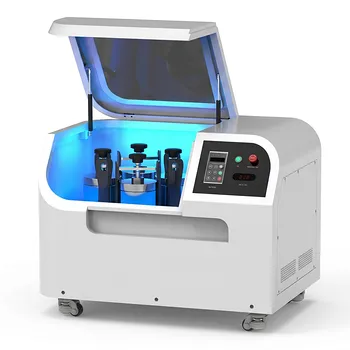
Planetary Ball Mill 12L
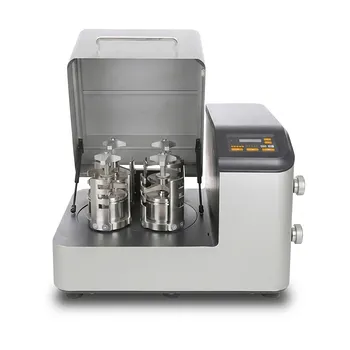
High Energy Planetary Ball Mill for Nano Scale Grinding and Colloidal Mixing in Material Science Research
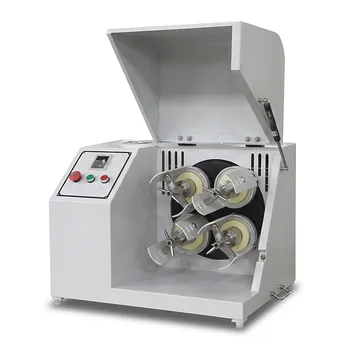
Horizontal Light Duty Planetary Ball Mill for Laboratory Sample Preparation

High Energy Omnidirectional Planetary Ball Mill 20L
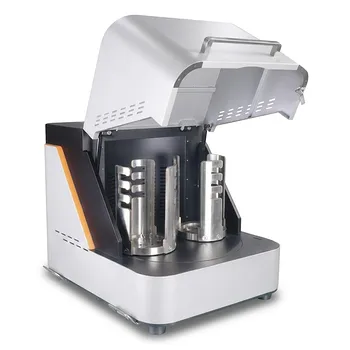
High Energy Laboratory Planetary Ball Mill for Nano Grinding and Colloidal Mixing of Hard and Brittle Materials
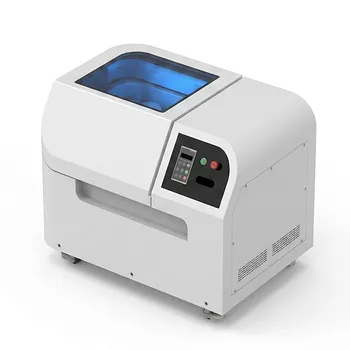
8L Planetary Ball Mill for Laboratory Grinding and Sample Preparation
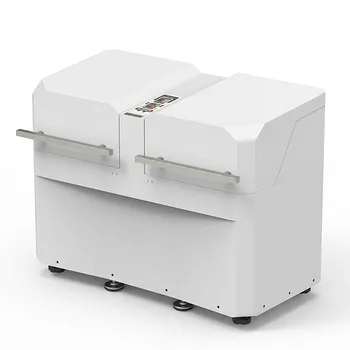
Dual Station Planetary Ball Mill 24L
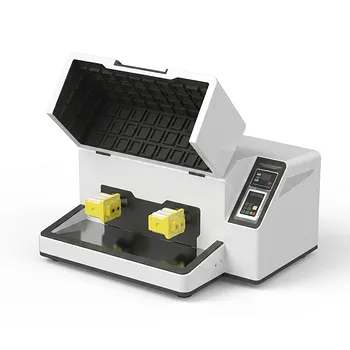
Multi-Platform Nanoscale High-Energy Vibratory Ball Mill

Nano High Energy Vibratory Ball Mill for Laboratory Sample Preparation
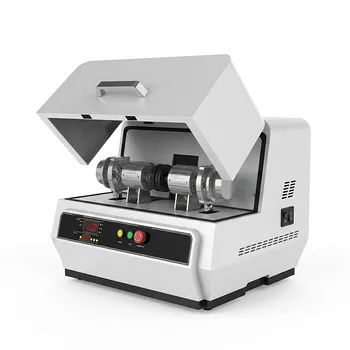
Dual Jar High Energy Vibratory Ball Mill