Why is a planetary ball mill necessary for processing Y and Hf modified HEA powders? Key for Mechanical Alloying
Updated 4 months ago
The planetary ball mill is the essential engine for mechanical alloying, providing the high-energy centrifugal, impact, and shear forces required to transform elemental Yttrium and Hafnium into a homogeneous solid solution. By subjecting raw powders to intense mechanical activation, this process overcomes the natural resistance of these diverse elements to mix, resulting in a refined, high-reactivity powder that ensures uniform densification during subsequent sintering or cladding.
Core Takeaway: A planetary ball mill is necessary because it facilitates atomic-level homogenization and mechanical activation of Y/Hf-modified alloys, significantly lowering the energy barriers for solid-state reactions and ensuring a uniform distribution of rare-earth elements.
The Mechanics of High-Energy Milling
Force Generation through Rotation
Planetary ball mills operate by rotating a sun wheel while grinding jars spin in the opposite direction. This "planetary" movement generates immense centrifugal forces that propel grinding media against the powder and jar walls. The resulting high-speed impacts and friction are the primary drivers for particle size reduction and elemental blending.
Atomic-Level Mechanical Alloying
Unlike simple mixing, high-energy milling breaks and reforms atomic bonds through repeated cold welding and fracturing. For alloys containing Yttrium (Y) and Hafnium (Hf), this ensures these elements are distributed uniformly at the atomic scale. This level of homogeneity is a critical foundation for creating a single-phase solid solution in high-entropy alloys (HEAs).
Enhancing Material Reactivity and Diffusion
Introduction of Lattice Defects
The intense crushing process introduces a high density of lattice defects and distortions into the metal crystals. These defects increase the internal energy of the raw materials, making the powder thermodynamically "active." This stored energy acts as a catalyst for chemical reactions that would otherwise remain dormant at lower temperatures.
Reducing Reaction Thresholds
High-energy mechanical activation allows solid-state reactions to initiate at significantly lower temperatures than conventional methods. By increasing the specific surface area and contact points between particles, the mill facilitates rapid diffusion. This is particularly vital for refractory or rare-earth elements that typically require extreme heat to integrate into an alloy matrix.
The Role of Yttrium and Hafnium Dispersion
Achieving Rare Earth Homogeneity
Yttrium and Hafnium are often added in small, precise amounts to improve high-temperature stability and oxidation resistance. The planetary ball mill ensures these rare earth oxides or elements reach a high state of dispersion within the base metal powder. Without this high-energy dispersion, the alloying elements would cluster, leading to structural weaknesses and inconsistent material properties.
Morphological Control for Processing
The milling process homogenizes the shape and size of particles that may have started with wildly different initial morphologies. This uniformity improves the "flowability" and filling characteristics of the powder during mold pressing or laser deposition. Consistent particle morphology leads to higher green compact density and superior microstructural homogenization after final sintering.
Understanding the Trade-offs
Risk of Contamination
The primary downside of high-energy milling is the potential for contamination from the grinding jars or media. Extended milling times increase the risk of introducing impurities like Iron or Carbon into the Y/Hf alloy. Engineers must carefully select media materials, such as tungsten carbide or zirconia, to match the purity requirements of the final application.
Energy Consumption and Heat Management
Planetary ball milling is an energy-intensive process that generates significant internal heat. Excessive heat can lead to premature oxidation or unwanted phase changes before the final manufacturing step. Implementing cooling cycles or milling in an inert gas atmosphere is often necessary to protect the integrity of reactive powders like Hafnium.
Applying This to Your Material Strategy
Choosing the Right Milling Parameters
- If your primary focus is Maximum Homogeneity: Use higher RPMs (e.g., 400+ rpm) and longer milling times to ensure Y and Hf are fully integrated into a body-centered cubic (bcc) or face-centered cubic (fcc) solid solution.
- If your primary focus is Powder Purity: Utilize shorter milling intervals with frequent cooling breaks and select grinding media that share the same chemistry as one of your primary alloy components.
- If your primary focus is Sintering Activity: Prioritize high-speed rotation to maximize lattice distortions and surface area, which will facilitate rapid densification during the final thermal treatment.
The planetary ball mill remains the definitive tool for bridging the gap between raw elemental powders and the high-performance, homogenized alloys required for advanced engineering.
Summary Table:
| Key Feature | Role in Y/Hf Alloy Processing | Impact on Final Material Performance |
|---|---|---|
| Mechanical Alloying | Forces atomic-level blending of refractory Y and Hf | Ensures a stable, single-phase solid solution |
| Lattice Distortion | Introduces high-density defects and internal energy | Lowers the temperature threshold for sintering |
| Rare Earth Dispersion | Prevents clustering/segregation of Y and Hf elements | Enhances high-temperature oxidation resistance |
| Morphological Control | Homogenizes particle size and shape distributions | Improves powder flowability and compact density |
| Energy Transfer | High-energy impact and shear for reactive milling | Facilitates rapid solid-state diffusion |
Elevate Your Material Research with Precision Powder Solutions
Achieving perfect atomic homogenization in high-entropy alloys requires the right high-energy milling technology. At [Company Name], we provide complete laboratory sample preparation solutions tailored for material science and advanced powder processing.
Whether you are working with refractory elements like Hafnium or rare earths like Yttrium, our specialized equipment ensures consistency and purity:
- Advanced Milling: Planetary ball mills, jet mills, and cryogenic grinders for ultra-fine particle reduction.
- Powder Processing: Sieve shakers, powder mixers, and defoaming mixers for optimal morphology.
- Compaction Excellence: A full spectrum of hydraulic presses, including Cold/Warm Isostatic Presses (CIP/WIP), hot presses, and vacuum hot presses for high-density sintering.
Ready to optimize your HEA fabrication process? Contact our technical experts today to find the ideal equipment configuration for your lab!
References
- Huaqing Yi, Wenjun Lu. Fabrication‐Driven Oxidation Pathways in Y/Hf‐Modified High‐Entropy Alloys: From Elemental Segregation to Oxide Homogeneity. DOI: 10.1002/rar2.70066
Mentioned Products
- Vertical Semi Circular Planetary Ball Mill for Laboratory Precision Grinding
- High Energy Planetary Ball Mill for Nano Scale Grinding and Mechanical Alloying
- Heavy Duty Horizontal Planetary Ball Mill for Efficient Industrial Grinding and Sample Preparation
- Vertical Production Planetary Ball Mill for High Throughput Powder Processing
- 360° Rotating Omnidirectional Laboratory Planetary Ball Mill for Homogeneous Ultra-Fine Grinding and Mixing
People Also Ask
- What role does a planetary ball mill play in the synthesis of Li6PS5Cl (LPSCl)? Unlock High Ionic Conductivity
- Why is a planetary ball mill essential for SiBCN-rGO wet-spinning? Achieve Superior Dispersion and Spinnability
- Why is an intermittent grinding process required for perovskites in a planetary ball mill? Ensure Stability & Purity
- Why is a planetary ball mill required for PET micronization? Ensure Accurate Chemical Analysis of Reprocessed PET
- How does mechanized planetary ball milling compare to manual agate grinding? Optimize sulfide standard material precision.

Tech Team · PowderPreparation
Last updated on Jun 03, 2026
Related Products
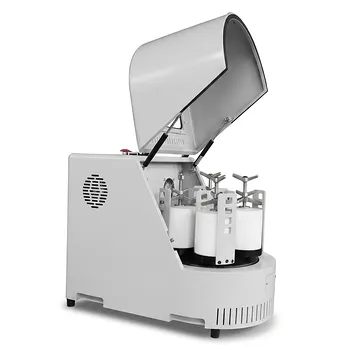
Vertical Semi Circular Planetary Ball Mill for Laboratory Precision Grinding

High Energy Planetary Ball Mill for Nano Scale Grinding and Mechanical Alloying

Heavy Duty Horizontal Planetary Ball Mill for Efficient Industrial Grinding and Sample Preparation

Vertical Production Planetary Ball Mill for High Throughput Powder Processing

360° Rotating Omnidirectional Laboratory Planetary Ball Mill for Homogeneous Ultra-Fine Grinding and Mixing

Vertical Square Planetary Ball Mill for Laboratory Sample Preparation and Nanoscale Grinding

Miniature Planetary Ball Mill with Vacuum Grinding and High Efficiency for Laboratory Sample Preparation

High Energy Omnidirectional Planetary Ball Mill 16L

High Energy Laboratory Planetary Ball Mill for Nano Grinding and Material Science Sample Preparation
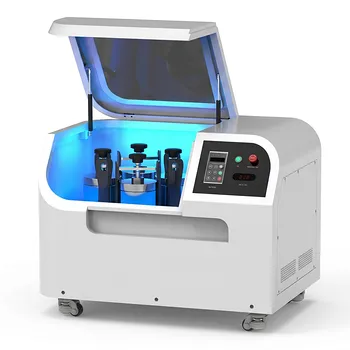
Planetary Ball Mill 12L
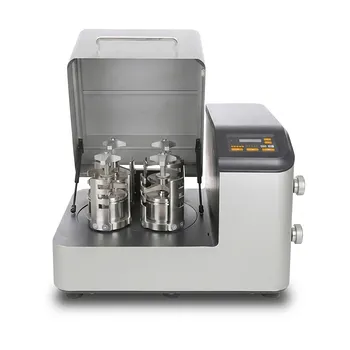
High Energy Planetary Ball Mill for Nano Scale Grinding and Colloidal Mixing in Material Science Research
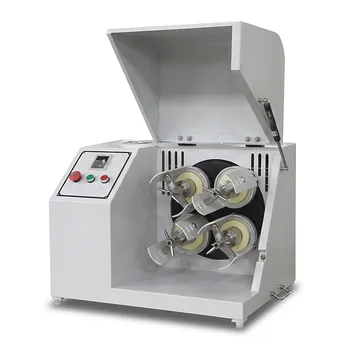
Horizontal Light Duty Planetary Ball Mill for Laboratory Sample Preparation
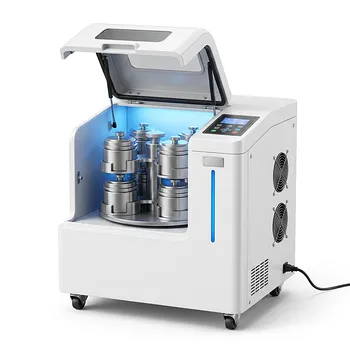
High Energy Omnidirectional Planetary Ball Mill 20L
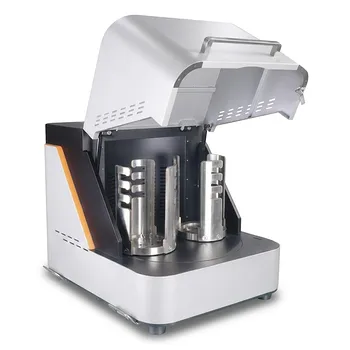
High Energy Laboratory Planetary Ball Mill for Nano Grinding and Colloidal Mixing of Hard and Brittle Materials

8L Planetary Ball Mill for Laboratory Grinding and Sample Preparation
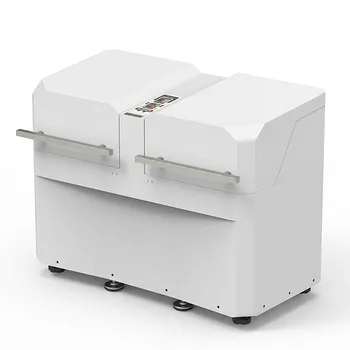
Dual Station Planetary Ball Mill 24L

Multi-Platform Nanoscale High-Energy Vibratory Ball Mill

Nano High Energy Vibratory Ball Mill for Laboratory Sample Preparation
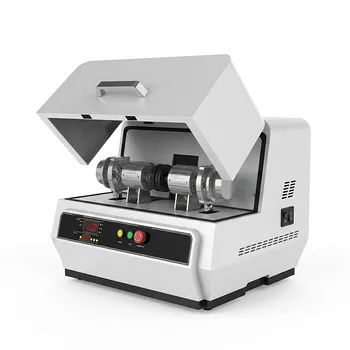
Dual Jar High Energy Vibratory Ball Mill