Why is a planetary ball mill necessary for FeCoNiMnCrx porous high-entropy alloys? Optimize Morphology and Density.
Updated 4 months ago
The use of a planetary ball mill is essential for FeCoNiMnCrx porous high-entropy alloys because it homogenizes the morphology of diverse metal powder particles through high-speed impact and friction. This process ensures better powder filling during the pressing stage and significantly improves the densification of the green compact, creating the necessary structural foundation for successful sintering.
A planetary ball mill acts as more than a simple mixer; it is a mechanical alloying tool that transforms inconsistent raw powders into a uniform, reactive, and densified medium. By manipulating particle shape and inducing atomic-level diffusion, it ensures the final porous alloy achieves chemical consistency and structural integrity.
Achieving Morphological Homogeneity and Density
Optimizing Particle Filling Performance
Raw elemental powders for FeCoNiMnCrx alloys often arrive with inconsistent shapes and sizes. The planetary ball mill uses high-speed rotation to force these particles into a homogenized morphology.
This uniformity allows the powder to flow and settle more effectively within a mold. Without this step, irregular particles create "bridging" effects that lead to large, unintended voids and structural weaknesses.
Improving Green Compact Densification
The mechanical energy from the mill increases the contact points between particles. This facilitates a much higher densification of the green compact during the pressing stage.
A well-densified compact is critical for porous alloys. It ensures that the remaining porosity is controlled and intentional, rather than the result of poor powder packing.
Facilitating Atomic-Level Mixing and Solid Solution
Mechanical Alloying and Element Diffusion
High-energy ball milling induces repeated extrusion, fracture, and cold welding of the metal powders. This intense physical interaction forces the diffusion of various metallic elements at the atomic level.
This process breaks down grain boundaries and allows the different elements to begin forming a solid solution. This is a prerequisite for producing the nanocrystalline structures often desired in high-performance high-entropy alloys.
Overcoming Melting Point Disparities
FeCoNiMnCrx alloys contain elements with varying melting points, which can lead to component segregation during traditional thermal processing. The planetary ball mill achieves uniform physical mixing in a solid state.
By ensuring the elements are perfectly distributed before heat is ever applied, the mill prevents the "clumping" of specific metals. This results in a final alloy with a highly consistent chemical composition across its entire structure.
Grain Refinement and Reactive Activity
The continuous impact of the milling media significantly reduces the powder particle size. This refinement increases the total surface area of the powder.
Smaller particles possess higher reactive activity, which lowers the energy barrier for subsequent thermal processes. This enhanced reactivity makes the sintering stage more efficient and predictable.
Understanding the Trade-offs
Risk of Material Contamination
The high-energy nature of planetary ball milling can lead to wear on the milling jars and balls. This wear can introduce impurities from the milling media (such as steel or zirconia) into the alloy powder.
Heat Generation and Oxidation
The friction and impact within the mill generate significant heat. If not managed with cooling cycles or inert gas environments, this can lead to the oxidation of sensitive elements like Manganese (Mn) or Chromium (Cr).
Processing Time and Energy
Achieving a true solid solution or nanocrystalline state requires long milling durations. This increases energy consumption and can become a bottleneck in high-volume production environments.
How to Apply This to Your Project
Making the Right Choice for Your Goal
- If your primary focus is maximizing structural density: Prioritize a ball-to-powder ratio that emphasizes high-speed impact to flatten and homogenize particle shapes.
- If your primary focus is chemical uniformity: Use longer milling durations at moderate speeds to ensure thorough atomic-level diffusion and prevent component segregation.
- If your primary focus is maintaining high purity: Select milling media made of the same material as your dominant alloy component or use high-hardness ceramic jars to minimize contamination.
- If your primary focus is controlled porosity: Carefully calibrate the milling time to refine particles without over-densifying them, allowing for predictable void spaces during sintering.
By leveraging the mechanical energy of a planetary ball mill, you transform a simple mixture of elements into a high-performance precursor capable of forming a stable and uniform porous high-entropy alloy.
Summary Table:
| Key Benefit | Mechanism | Impact on Final Alloy |
|---|---|---|
| Morphological Homogeneity | High-speed impact & friction | Improved powder filling and mold flow |
| Green Densification | Increased particle contact points | Reduced unintended voids; controlled porosity |
| Mechanical Alloying | Atomic-level element diffusion | Chemical consistency & solid solution formation |
| Grain Refinement | Continuous particle size reduction | Higher reactive activity and efficient sintering |
Optimize Your FeCoNiMnCrx Alloy Research with Precision Equipment
Achieving the perfect balance of porosity and structural integrity requires professional-grade sample preparation. Contact us today to discover how our end-to-end solutions can enhance your material science workflows.
As specialists in powder processing and compaction, we provide the tools necessary for every stage of alloy development:
- Advanced Milling & Mixing: High-energy planetary ball mills, jet mills, and defoaming mixers to ensure atomic-level homogeneity.
- Precision Compaction: A full spectrum of hydraulic presses, including Cold/Warm Isostatic Presses (CIP/WIP), vacuum hot presses, and standard lab presses for superior green compact densification.
- Sizing & Analysis: Vibratory sieve shakers and high-quality test sieves for precise particle size control.
Let our expertise in powder processing help you transform raw elements into high-performance materials. Reach out now for a tailored solution!
References
- Ying Wang, Ming Ma. Effect of Porosity on the Corrosion Behavior of FeCoNiMnCrx Porous High-Entropy Alloy in 3.5 Wt.% NaCl Solution. DOI: 10.3390/met15020210
Mentioned Products
- Vertical Semi Circular Planetary Ball Mill for Laboratory Precision Grinding
- High Energy Planetary Ball Mill for Nano Scale Grinding and Mechanical Alloying
- Heavy Duty Horizontal Planetary Ball Mill for Efficient Industrial Grinding and Sample Preparation
- Vertical Production Planetary Ball Mill for High Throughput Powder Processing
- 360° Rotating Omnidirectional Laboratory Planetary Ball Mill for Homogeneous Ultra-Fine Grinding and Mixing
People Also Ask
- What role does a planetary ball mill play in the synthesis of Li6PS5Cl (LPSCl)? Unlock High Ionic Conductivity
- Why is a planetary ball mill essential for SiBCN-rGO wet-spinning? Achieve Superior Dispersion and Spinnability
- Why is an intermittent grinding process required for perovskites in a planetary ball mill? Ensure Stability & Purity
- Why is a planetary ball mill required for PET micronization? Ensure Accurate Chemical Analysis of Reprocessed PET
- How does mechanized planetary ball milling compare to manual agate grinding? Optimize sulfide standard material precision.

Tech Team · PowderPreparation
Last updated on Jun 03, 2026
Related Products
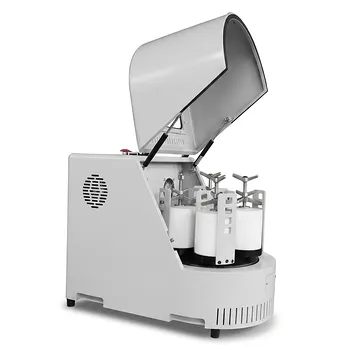
Vertical Semi Circular Planetary Ball Mill for Laboratory Precision Grinding
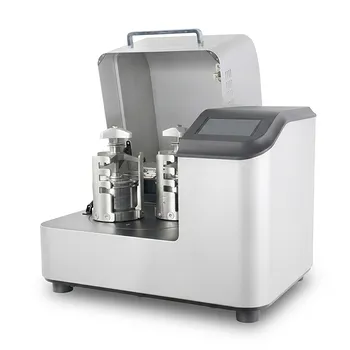
High Energy Planetary Ball Mill for Nano Scale Grinding and Mechanical Alloying
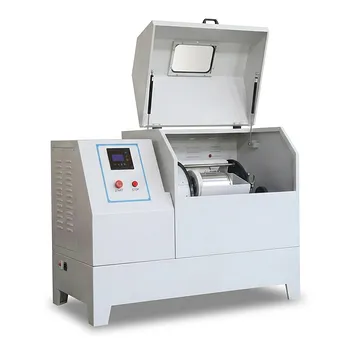
Heavy Duty Horizontal Planetary Ball Mill for Efficient Industrial Grinding and Sample Preparation
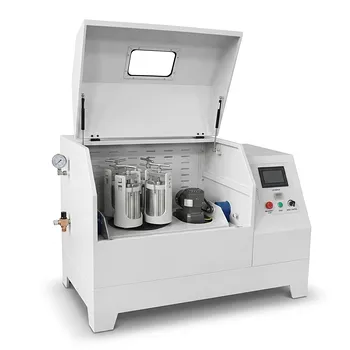
Vertical Production Planetary Ball Mill for High Throughput Powder Processing
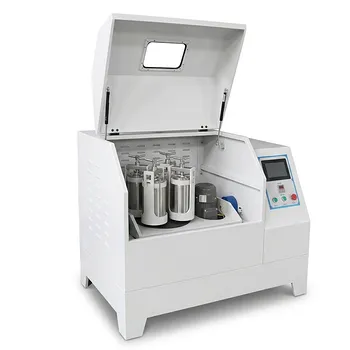
360° Rotating Omnidirectional Laboratory Planetary Ball Mill for Homogeneous Ultra-Fine Grinding and Mixing
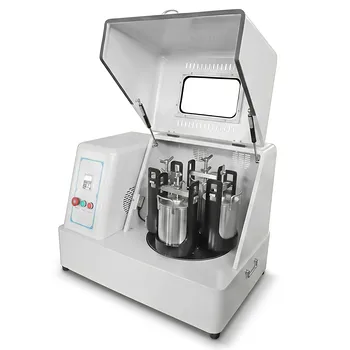
Vertical Square Planetary Ball Mill for Laboratory Sample Preparation and Nanoscale Grinding
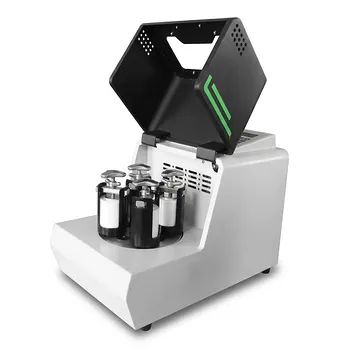
Miniature Planetary Ball Mill with Vacuum Grinding and High Efficiency for Laboratory Sample Preparation
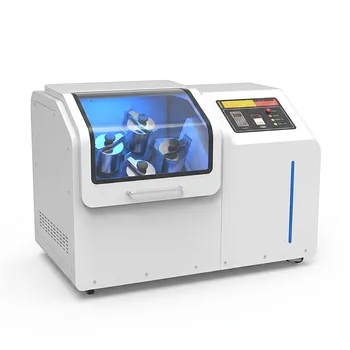
High Energy Omnidirectional Planetary Ball Mill 16L
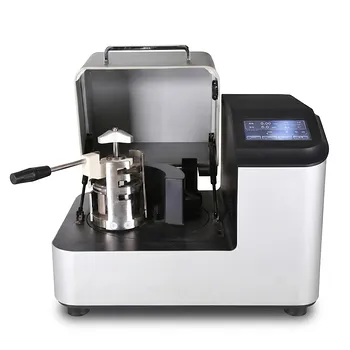
High Energy Laboratory Planetary Ball Mill for Nano Grinding and Material Science Sample Preparation
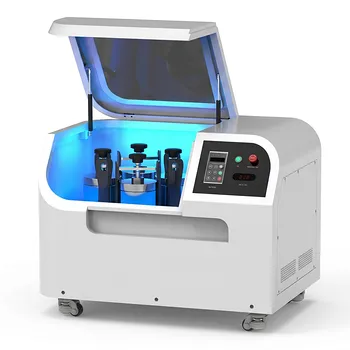
Planetary Ball Mill 12L
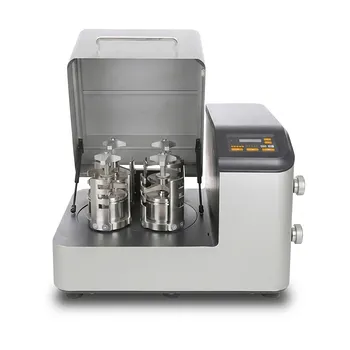
High Energy Planetary Ball Mill for Nano Scale Grinding and Colloidal Mixing in Material Science Research
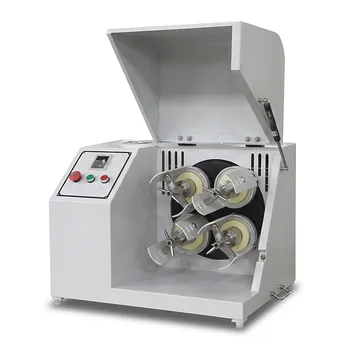
Horizontal Light Duty Planetary Ball Mill for Laboratory Sample Preparation
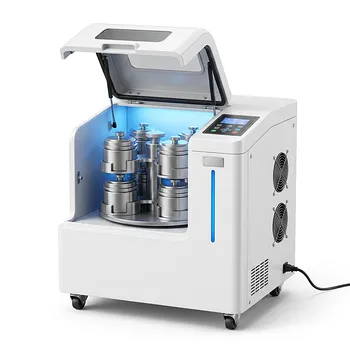
High Energy Omnidirectional Planetary Ball Mill 20L
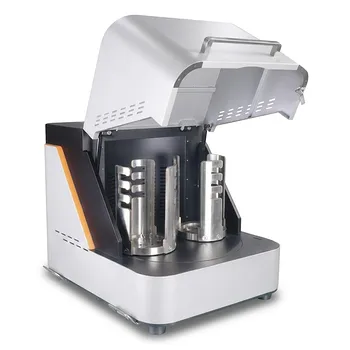
High Energy Laboratory Planetary Ball Mill for Nano Grinding and Colloidal Mixing of Hard and Brittle Materials

8L Planetary Ball Mill for Laboratory Grinding and Sample Preparation
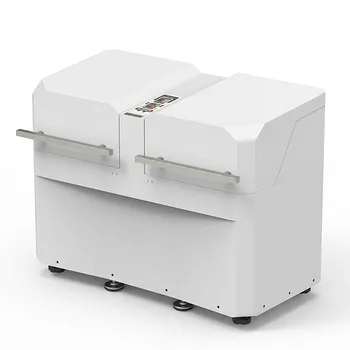
Dual Station Planetary Ball Mill 24L

Multi-Platform Nanoscale High-Energy Vibratory Ball Mill

Nano High Energy Vibratory Ball Mill for Laboratory Sample Preparation
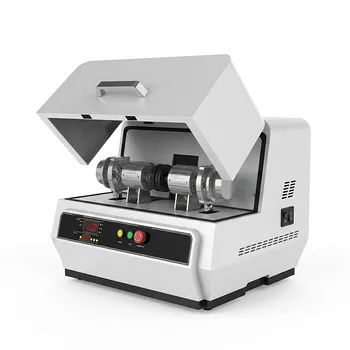
Dual Jar High Energy Vibratory Ball Mill