What role does a planetary ball mill play in the preparation of ultrafine abrasive particles? Powering Sub-Micron Synthesis
Updated 5 months ago
The planetary ball mill is the critical engine for sub-micron particle synthesis. It facilitates the transformation of coarse raw materials into ultrafine abrasives within the precise particle size range of 0.2 to 0.6 μm. By utilizing high-energy rotation to generate synergistic impact and shear forces, it ensures the consistent refinement necessary for high-precision sandblasting and advanced surface finishing.
A planetary ball mill serves as a high-energy processing hub that combines mechanical crushing, deep homogenization, and mechanochemical activation to produce high-quality, ultrafine abrasive powders.
Mechanisms of Particle Size Reduction
High-Energy Impact and Shear Forces
The primary role of the planetary ball mill is to convert rotational energy into mechanical work through high-speed centrifugal forces. Within the grinding jars, abrasive particles are subjected to intense collisions and friction, which effectively crush and grind larger diameters into the sub-micron range.
The Role of Hard Grinding Media
To achieve a target size of 0.2 to 0.6 μm, the mill is typically paired with specialized media like hard agate grinding balls. These balls provide the necessary hardness and wear resistance to refine abrasive materials without introducing excessive contamination into the final powder.
Cycles of Fracturing and Re-welding
During high-energy milling, particles undergo repeated cycles of flattening, fracturing, and re-welding. This continuous mechanical stress increases the dislocation density within the material, promoting grain refinement until a stable, ultrafine crystalline structure is reached.
Enhancing Material Characteristics
Deep Homogenization and De-agglomeration
Beyond simple size reduction, the planetary ball mill is essential for the deep homogenization of multi-component mixtures. The high-energy shear forces break down nano-agglomerates, ensuring that mineralizers or secondary additives are uniformly distributed at an atomic level.
Mechanochemical Activation
The intensive mechanical input induces lattice distortions and phase transformations within the abrasive particles. This mechanochemical activation increases the surface reactivity and fluidity of the powder, which is vital for subsequent processes like sintering or additive manufacturing.
Preparation for Precision Finishing
By producing particles with consistent sub-micron dimensions, the planetary ball mill establishes the physical foundation for sandblasting processes. This allows for the creation of nano-scale surface features that would be impossible to achieve with standard-grade abrasives.
Understanding the Trade-offs
Heat Generation and Thermal Management
High-energy milling generates significant frictional heat, which can lead to unwanted phase changes or material degradation if not managed. Operators must often balance milling intensity with cooling intervals to maintain the integrity of the abrasive powder.
Media Wear and Contamination
While agate balls are highly durable, the extreme forces within the mill inevitably lead to minor media wear. This can introduce trace impurities into the ultrafine powder, which may impact the performance of high-purity ceramic or electronic applications.
Energy Consumption and Processing Time
Achieving the 0.2 to 0.6 μm range requires extended milling durations and high power inputs. This makes the process more resource-intensive compared to standard grinding methods, necessitating a clear cost-benefit analysis for large-scale production.
How to Apply This to Your Project
Choosing the Right Milling Strategy
Selecting the appropriate milling parameters depends entirely on the desired characteristics of your final abrasive product.
- If your primary focus is extreme particle refinement: Prioritize high-speed rotation and high-density grinding media like agate to maximize impact forces.
- If your primary focus is chemical uniformity: Utilize wet milling processes to ensure deep homogenization and prevent the re-agglomeration of fine particles.
- If your primary focus is surface reactivity: Extend the milling duration to increase mechanochemical activation and lattice distortion within the powder.
The planetary ball mill remains the definitive tool for bridging the gap between bulk raw materials and the high-performance ultrafine abrasives required by modern industry.
Summary Table:
| Key Mechanism | Functional Role | Benefit for Abrasives |
|---|---|---|
| High-Energy Impact | Mechanical crushing & shear | Achieve 0.2 - 0.6 μm particle size |
| Deep Homogenization | De-agglomeration of particles | Atomic-level additive distribution |
| Mechanochemical Activation | Inducing lattice distortions | Enhanced surface reactivity & fluidity |
| Mechanical Stress | Repeated fracture & re-welding | Stable, refined crystalline structure |
Elevate your material science research with precision-engineered equipment. We provide complete laboratory sample preparation solutions specializing in high-performance powder processing and compaction.
Our extensive line includes planetary ball mills, jet mills, and cryogenic grinders designed for sub-micron particle synthesis, as well as a full spectrum of hydraulic presses—from Cold/Warm Isostatic Presses (CIP/WIP) to vacuum hot presses for advanced sintering. Whether you are refining ultrafine abrasives or preparing XRF pellets, our equipment ensures consistent results and superior material integrity.
Contact our technical team today to optimize your lab workflow!
References
- Marta Romero-Serrano, Javier Gil. Influence of alumina shot blasting induced roughness on bacterial adhesion to titanium. DOI: 10.1007/s00784-025-06580-2
Mentioned Products
- Vertical Semi Circular Planetary Ball Mill for Laboratory Precision Grinding
- High Energy Planetary Ball Mill for Nano Scale Grinding and Mechanical Alloying
- Heavy Duty Horizontal Planetary Ball Mill for Efficient Industrial Grinding and Sample Preparation
- Vertical Production Planetary Ball Mill for High Throughput Powder Processing
- 360° Rotating Omnidirectional Laboratory Planetary Ball Mill for Homogeneous Ultra-Fine Grinding and Mixing
People Also Ask
- What role does a planetary ball mill play in the synthesis of Li6PS5Cl (LPSCl)? Unlock High Ionic Conductivity
- Why is a planetary ball mill essential for SiBCN-rGO wet-spinning? Achieve Superior Dispersion and Spinnability
- Why is an intermittent grinding process required for perovskites in a planetary ball mill? Ensure Stability & Purity
- Why is a planetary ball mill required for PET micronization? Ensure Accurate Chemical Analysis of Reprocessed PET
- How does mechanized planetary ball milling compare to manual agate grinding? Optimize sulfide standard material precision.

Tech Team · PowderPreparation
Last updated on May 14, 2026
Related Products
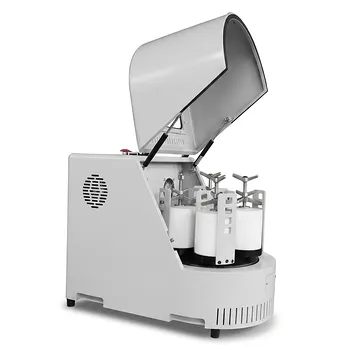
Vertical Semi Circular Planetary Ball Mill for Laboratory Precision Grinding
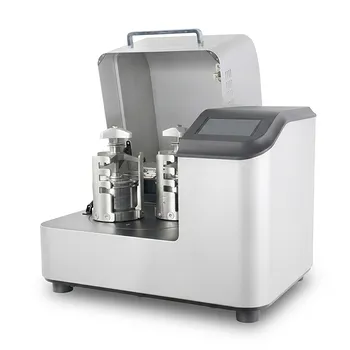
High Energy Planetary Ball Mill for Nano Scale Grinding and Mechanical Alloying
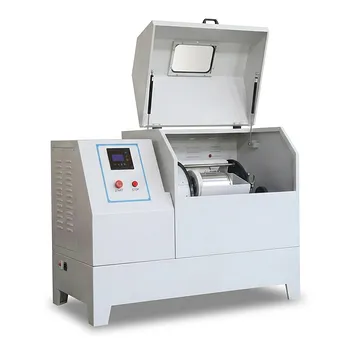
Heavy Duty Horizontal Planetary Ball Mill for Efficient Industrial Grinding and Sample Preparation
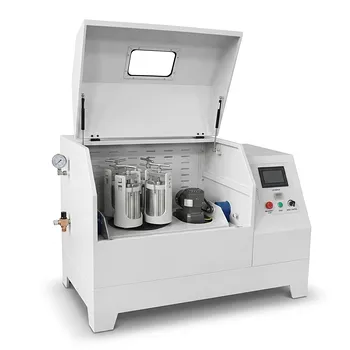
Vertical Production Planetary Ball Mill for High Throughput Powder Processing
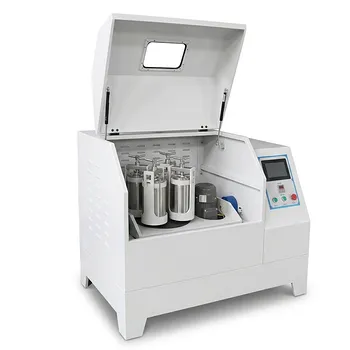
360° Rotating Omnidirectional Laboratory Planetary Ball Mill for Homogeneous Ultra-Fine Grinding and Mixing
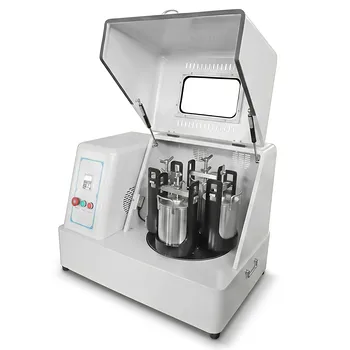
Vertical Square Planetary Ball Mill for Laboratory Sample Preparation and Nanoscale Grinding
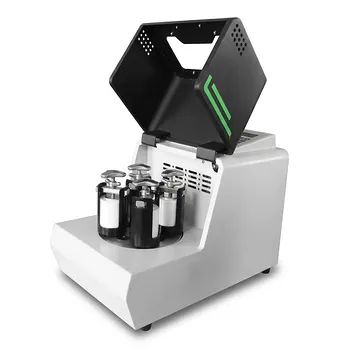
Miniature Planetary Ball Mill with Vacuum Grinding and High Efficiency for Laboratory Sample Preparation
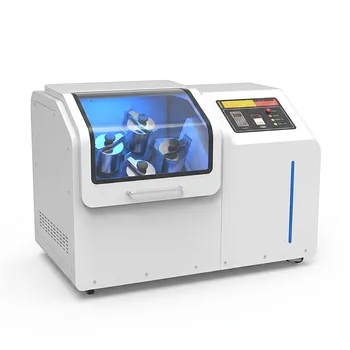
High Energy Omnidirectional Planetary Ball Mill 16L
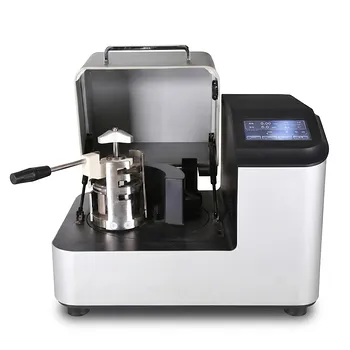
High Energy Laboratory Planetary Ball Mill for Nano Grinding and Material Science Sample Preparation
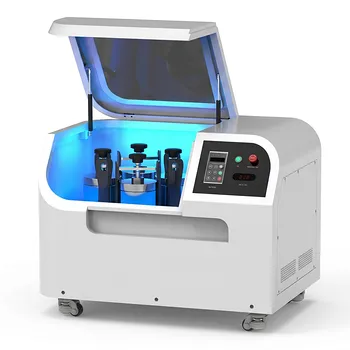
Planetary Ball Mill 12L
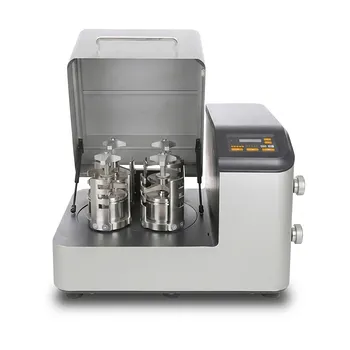
High Energy Planetary Ball Mill for Nano Scale Grinding and Colloidal Mixing in Material Science Research
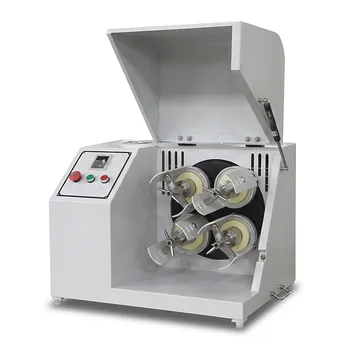
Horizontal Light Duty Planetary Ball Mill for Laboratory Sample Preparation
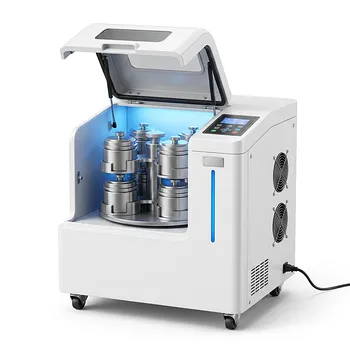
High Energy Omnidirectional Planetary Ball Mill 20L
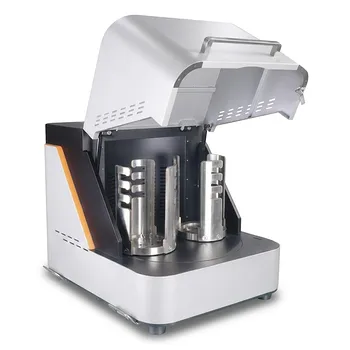
High Energy Laboratory Planetary Ball Mill for Nano Grinding and Colloidal Mixing of Hard and Brittle Materials

8L Planetary Ball Mill for Laboratory Grinding and Sample Preparation
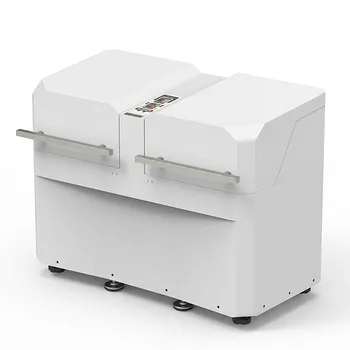
Dual Station Planetary Ball Mill 24L
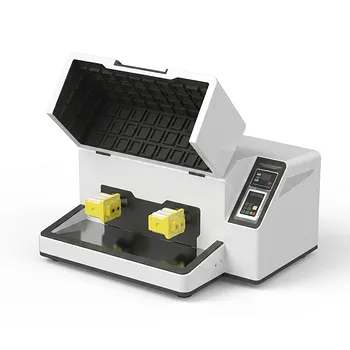
Multi-Platform Nanoscale High-Energy Vibratory Ball Mill

Nano High Energy Vibratory Ball Mill for Laboratory Sample Preparation
Dual Jar High Energy Vibratory Ball Mill