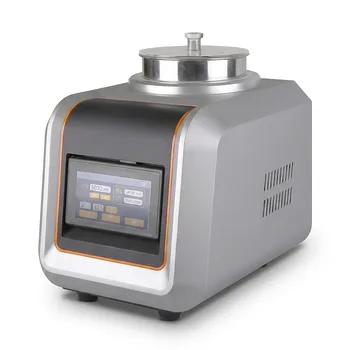
Why is a multi-stage vibratory sieve shaker used for processing pulverized Maguey fibers? Achieve Material Uniformity
Updated 5 months ago
The use of a multi-stage vibratory sieve shaker for Maguey fibers is primarily driven by the need for precise particle size classification to ensure uniform chemical reaction kinetics. By isolating specific fiber dimensions—typically ranging from 850 μm to 180 μm—processors can prevent the uneven removal of non-cellulosic components during extraction and ensure that treatments like alkali washing or bleaching penetrate every particle to a consistent depth.
Core Takeaway: Multi-stage vibratory sieving transforms heterogeneous pulverized fiber into a standardized raw material. This process is essential for ensuring predictable chemical behavior, optimizing mechanical reinforcement in composites, and eliminating manual errors in particle size distribution analysis.
Achieving Chemical and Kinetic Uniformity
Standardizing Reaction Depths
When processing Maguey fibers, the depth of chemical penetration is a direct function of particle size. Smaller particles react faster than larger ones, meaning a mixed-size batch will result in over-processed fines and under-processed cores in larger chunks.
Using a vibratory shaker ensures that all fibers in a batch share a similar surface-area-to-volume ratio. This uniformity allows for consistent alkali treatment and bleaching, preventing the incomplete reactions that often occur when oversized particles are present.
Preserving Cellulosic Integrity
Variations in particle size can lead to the uneven removal of non-cellulosic components, such as lignin and hemicellulose. If the particle size is not controlled, the aggressive chemicals required to penetrate large fibers may degrade the cellulose in smaller particles.
By classifying fibers into stages, processors can apply specific kinetic models to each size group. This precision preserves the structural integrity of the Maguey fibers, which is critical for their eventual use in high-performance applications.
Enhancing Material Performance and Testing
Optimizing Mechanical Reinforcement
In the production of bio-composites, the particle size distribution determines how well the fibers integrate with the polymer matrix. Uniformly graded fibers reduce internal stress concentrations that lead to premature material failure.
Consistent sizing, such as ensuring particles are below 0.25 mm, improves the stability of the composite's tensile strength. This makes the final product more reliable and easier to manufacture at scale.
Reliability in Analytical Research
For researchers, the sieve shaker is a tool for eliminating variables. It provides standardized experimental samples for surface modification analysis and specific surface area testing.
By quantifying the proportion of fibers within different size intervals (e.g., from 1000 μm to 75 μm), engineers can accurately calculate the fineness modulus. This data is vital for assessing milling efficiency and the "grinding fineness" of the mechanical process.
Understanding the Trade-offs
The Risk of Sieve Blinding
Natural fibers like Maguey are often irregular and "shaggy." During high-frequency vibration, these fibers can become wedged in the mesh openings, a phenomenon known as blinding, which reduces screening efficiency and accuracy.
Static Electricity and Agglomeration
Pulverized dry fibers are prone to generating static electricity. This causes fine particles to cling to larger ones or the sieve walls, potentially skewing the distribution data unless anti-static measures or wet-sieving techniques are employed.
Mechanical Degradation
Excessive shaking time can lead to attrition, where the fibers rub against each other and the mesh, further breaking down and creating "artificial fines." It is critical to balance the duration of the vibration to achieve separation without damaging the fiber structure.
Making the Right Choice for Your Goal
How to Apply This to Your Process
To maximize the utility of a vibratory sieve shaker, you must align the mesh stages with your specific end-use requirements.
- If your primary focus is Chemical Extraction: Utilize a narrow range of sieves (e.g., 180 μm to 250 μm) to ensure perfectly synchronized reaction kinetics and prevent cellulose degradation.
- If your primary focus is Composite Manufacturing: Focus on identifying and removing "oversized" particles (above 0.25 mm) to minimize internal stress and maximize the tensile strength of the finished material.
- If your primary focus is Process Optimization: Use a full stack of multi-stage sieves to calculate the fineness modulus and determine the energy efficiency of your milling equipment.
By mastering the classification of Maguey fibers, you ensure that the raw material's physical properties are as disciplined as the industrial processes they feed.
Summary Table:
| Application Focus | Key Benefit | Target Particle Size |
|---|---|---|
| Chemical Extraction | Ensures uniform reaction depth and preserves cellulose integrity | 180 μm – 250 μm |
| Composite Manufacturing | Minimizes internal stress and maximizes tensile strength | Below 0.25 mm |
| Process Optimization | Accurate fineness modulus calculation and milling efficiency analysis | 1000 μm – 75 μm |
Optimize Your Material Preparation with Precision Solutions
Precision is paramount in material science, especially when dealing with irregular natural fibers. We provide complete laboratory sample preparation solutions specialized for powder processing and compaction. Our extensive range includes high-performance vibratory and air-jet sieve shakers to ensure fiber uniformity, alongside planetary ball mills, cryogenic grinders, and a full spectrum of hydraulic presses (including CIP/WIP, XRF, and vacuum hot presses).
Whether you are optimizing Maguey fiber kinetics or developing advanced bio-composites, our equipment is designed to eliminate variables and guarantee reliable, standardized results.
Ready to enhance your lab's efficiency? Contact our experts today to find the perfect equipment for your specific application.
References
- Erwin C. Sumarago, Kendra Felizimarie Magsico. Production and Characterization of Nanocellulose from Maguey (Agave cantala) Fiber. DOI: 10.3390/polym16101312
Mentioned Products
- Vibratory Sieve Shaker Electromagnetic 3D Motion Powder Particle Size Analyzer for Dry and Wet Sieving
- Laboratory Dry and Wet Three Dimensional Vibratory Sieve Shaker for Particle Analysis
- High Frequency Cabinet Type Three-Dimensional Rotary Vibrating Sieve Shaker for Dry Sieving and Particle Classification
- Dry Three Dimensional Vibratory Sieve Shaker
- Heavy Duty Dry Three Dimensional Vibratory Sieve Shaker for Particle Separation
People Also Ask
- How does a vibratory sieve shaker contribute to optimizing the performance of activated carbon? Enhance Adsorption Precision
- Why is a laboratory vibratory sieve shaker necessary for processing magnesium-based borate precursor powders? Boost Activity
- Why use a vibratory sieve shaker to verify coarse aggregate grading in rubberized concrete? Ensure Structural Integrity
- What function do vibratory sieve shakers and standard test sieves serve in the preparation of adsorbents? Key Guide
- What role does a vibratory sieve shaker play in the particle size analysis of ground corn products? Enhance QC Precision

Tech Team · PowderPreparation
Last updated on May 14, 2026
Related Products
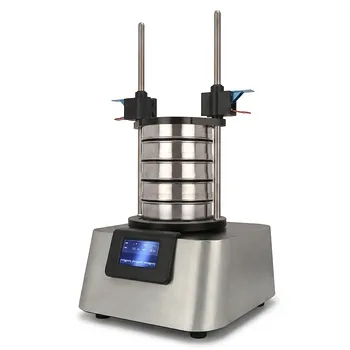
Vibratory Sieve Shaker Electromagnetic 3D Motion Powder Particle Size Analyzer for Dry and Wet Sieving

Laboratory Dry and Wet Three Dimensional Vibratory Sieve Shaker for Particle Analysis
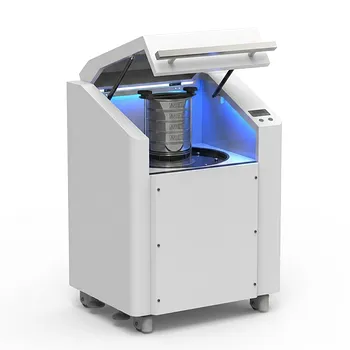
High Frequency Cabinet Type Three-Dimensional Rotary Vibrating Sieve Shaker for Dry Sieving and Particle Classification

Dry Three Dimensional Vibratory Sieve Shaker

Heavy Duty Dry Three Dimensional Vibratory Sieve Shaker for Particle Separation
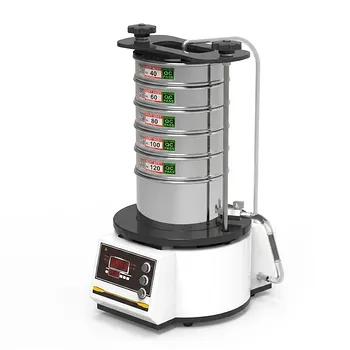
High Frequency Wet Three-Dimensional Vibrating Sieve Shaker for Dry and Wet Particle Size Analysis

三维电磁微量振动筛分仪

Small Laboratory Vibratory Sieve Shaker for Powder Gradation and Particle Size Analysis
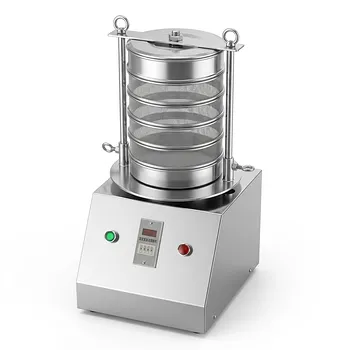
Stainless Steel Laboratory Vibratory Test Sieve Shaker

Laboratory Vibratory Test Sieve Shaker for Precision Particle Size Analysis and Powder Grading

Small Laboratory Vibrating Sieve Shaker for Precise Particle Size Analysis

Stainless Steel Rotary Vibrating Sieve High Precision Circular Vibratory Separator Industrial Powder Grading Machine Multi Layer Sifting Equipment

Three Dimensional Rotary Vibrating Sieve

Tapping Oscillating Sieve Shaker for Dry and Wet Particle Size Analysis
Automatic Vibrating Powder Feeder for Laboratory Material Processing Precision Vibratory Hopper Feeder for Granular and Powder Material Handling Industrial Grade Vibrating Tray Feeder for Consistent Material Sample Preparation
Small Vibrating Ultrafine Grinder for Traditional Chinese Medicine
Vibratory Superfine Grinder for Ultra Fine Laboratory Powder Milling
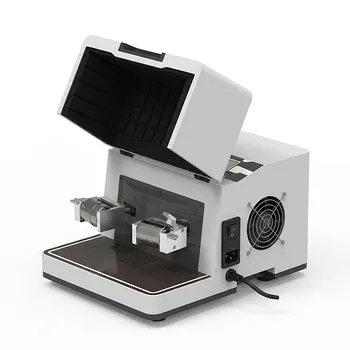
High Energy Hybrid Vibratory Ball Mill for Grinding Mixing and Cell Disruption
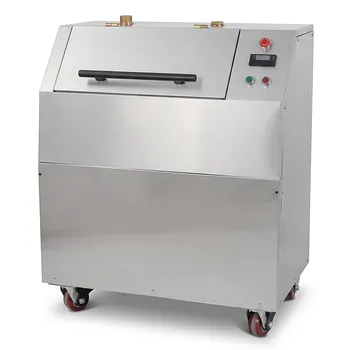
Vibratory Disc Mill for Rapid Fine Grinding and High Throughput Sample Preparation of Hard and Brittle Materials