What Role Do Polyurethane Bags Play in Copper CIP? Achieve Uniform Density & Purity
Updated 4 months ago
Custom-made polyurethane molding bags serve as the critical pressure-transmission interface and encapsulation barrier during the Cold Isostatic Pressing (CIP) of copper powder. These specialized tools act as flexible molds that convert multi-directional hydraulic pressure into a uniform compressive force, allowing for the creation of high-density "green bodies" with complex geometries and exceptional purity.
Core Takeaway: Polyurethane bags are essential for ensuring uniform density and chemical integrity in copper powder consolidation, acting simultaneously as a geometric template and a protective seal against hydraulic fluids.
The Dual Role of Polyurethane Molding Bags
Flexible Mold Functionality
Polyurethane bags are custom-engineered to define the final geometric profile of the copper compact. Because they are flexible rather than rigid, they allow the powder to be compressed from all directions simultaneously, which is impossible with traditional die-pressing.
Encapsulation and Protection
In the CIP process, the powder must be completely isolated from the liquid pressure medium (usually water or oil). The polyurethane bag acts as a powder encapsulation unit, creating a vacuum-tight seal that prevents liquid penetration and ensures the copper remains dry and uncontaminated.
Mechanics of Copper Powder Consolidation
Uniform Pressure Transmission
The high elasticity of polyurethane ensures that pressure from the liquid medium is applied evenly across every square millimeter of the powder’s surface. This "isostatic" application eliminates the internal friction and density gradients typically found in mechanical pressing.
Facilitating Particle Rearrangement
Under high pressure, the flexible walls of the bag allow copper particles to slide and rotate. This particle rearrangement leads to closer packing and tighter bonding, resulting in a green body with high structural integrity before it even reaches the sintering stage.
Maintaining Material Purity and Integrity
Preventing Chemical Contamination
High-purity copper is sensitive to impurities that can degrade its electrical and thermal conductivity. The chemical stability of polyurethane ensures that no polymers or additives leach into the copper powder, even when subjected to ultra-high pressure environments.
Resilience Under Ultra-High Pressure
Polyurethane is chosen for its ability to undergo significant deformation without tearing or losing its elastic memory. This structural resilience allows the bag to maintain its seal and shape-defining properties throughout the entire compression and decompression cycle.
Understanding the Trade-offs and Pitfalls
Dimensional Shrinkage Calculations
Because the mold is flexible, it shrinks along with the powder during consolidation. Engineers must accurately calculate the compression ratio of the specific copper powder to design a bag that is appropriately oversized, ensuring the final part meets dimensional tolerances.
Surface Finish and Wear
While polyurethane is durable, repeated cycles can lead to material fatigue or surface abrasions. If the internal surface of the bag becomes pitted, these imperfections will be transferred directly onto the surface of the copper compact, potentially requiring additional machining.
Selecting the Right Molding Strategy
Choosing the correct bag design depends entirely on your production volume and the complexity of the copper component you are manufacturing.
- If your primary focus is high-precision geometry: Invest in custom-machined internal mandrels used in conjunction with the polyurethane bag to maintain tight internal diameters.
- If your primary focus is maximum material purity: Ensure the polyurethane grade is specifically rated for chemical inertness to prevent any microscopic transfer of hydrocarbons to the copper.
- If your primary focus is high-volume throughput: Use thicker-walled polyurethane bags that offer higher tear resistance and a longer cycle life to reduce the cost per part.
By mastering the interface between the flexible mold and the powder, you ensure a consistent, high-quality copper compact ready for downstream thermal processing.
Summary Table:
| Feature | Role in Copper CIP Process | Impact on Final Green Body |
|---|---|---|
| High Elasticity | Uniform multi-directional pressure transmission | Eliminates density gradients and internal friction |
| Vacuum-Tight Seal | Encapsulation against hydraulic fluids | Prevents contamination; maintains chemical integrity |
| Chemical Stability | Inert barrier between powder and mold | Preserves electrical and thermal conductivity |
| Shape Flexibility | Defines complex geometric profiles | Enables near-net-shape production of complex parts |
| Structural Resilience | Maintains integrity under ultra-high pressure | Ensures consistent dimensions across multiple cycles |
Optimize Your Material Consolidation with Expert Solutions
Achieving perfection in copper powder consolidation requires the right synergy between high-performance molding materials and precision machinery. At [Your Brand Name], we provide complete laboratory sample preparation solutions tailored for material science research and industrial production.
Whether you are processing advanced metals or high-performance ceramics, our specialized equipment ensures repeatable, high-quality results. Our extensive product line includes:
- Isostatic Pressing: Cold/Warm Isostatic Presses (CIP/WIP) for uniform density.
- Hydraulic Presses: Standard lab presses, XRF pellet presses, and vacuum hot presses.
- Powder Processing: Planetary ball mills, jet mills, crushers (jaw/roll), and cryogenic grinders.
- Sieving & Mixing: Vibratory sieve shakers and high-efficiency powder/defoaming mixers.
Ready to enhance your lab's efficiency and product structural integrity? Contact our technical team today to find the ideal equipment for your powder processing and compaction needs.
References
- Leila Ladani, Terry C. Lowe. Manufacturing of High Conductivity, High Strength Pure Copper with Ultrafine Grain Structure. DOI: 10.3390/jmmp7040137
Mentioned Products
- 6 Ton Variable Frequency Single Punch Tablet Press
- 5 Ton Single Punch Tablet Press Laboratory Small Batch Production
- Manual Tablet Press with Dual Scale Pressure Gauge for Pharmaceutical Food Chemical Laboratory Sample Preparation
- 6-Ton Small Single-Punch Tablet Press — Laboratory Powder & Granule Tableting Equipment / Tablet Forming Machine
- Enhanced 9 Punch Rotary Tablet Press for Powder Compaction
People Also Ask
- Why is a laboratory hydraulic press required for FT-IR KBr pellets? Achieve Precise Sample Clarity for ZrC–SiC Analysis
- Why is vacuum sealing and flexible packaging necessary for Aluminum Titanate powders during CIP? Ensure Peak Density
- What are the advantages of using hardened steel molds and graphite spray for titanium powder? Ensure structural integrity
- Why is a laboratory hydraulic press required to compress oyster shell powder before XRF analysis? Improve Data Accuracy.
- What role does a high-strength stainless steel mold kit play in the uniaxial die compaction process? Ensuring Precision

Tech Team · PowderPreparation
Last updated on Jun 03, 2026
Related Products
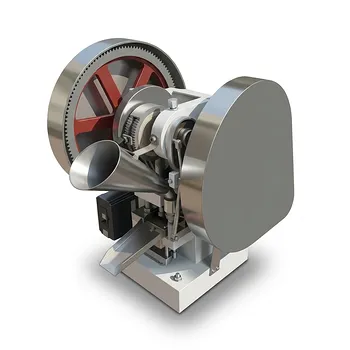
6 Ton Variable Frequency Single Punch Tablet Press
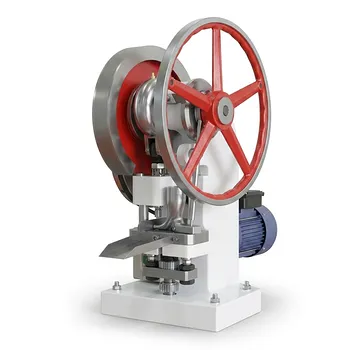
5 Ton Single Punch Tablet Press Laboratory Small Batch Production
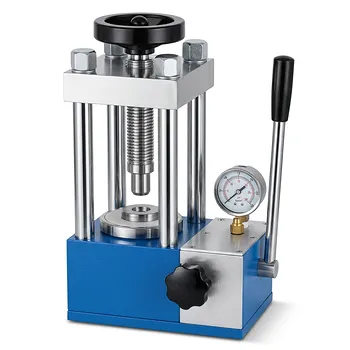
Manual Tablet Press with Dual Scale Pressure Gauge for Pharmaceutical Food Chemical Laboratory Sample Preparation
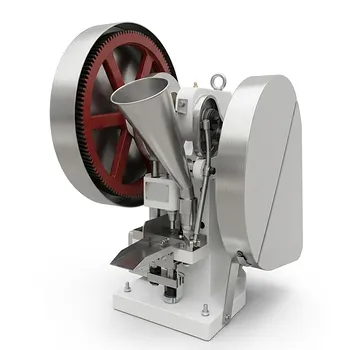
6-Ton Small Single-Punch Tablet Press — Laboratory Powder & Granule Tableting Equipment / Tablet Forming Machine
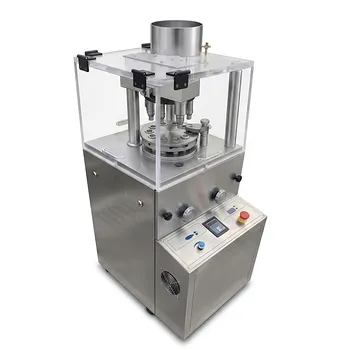
Enhanced 9 Punch Rotary Tablet Press for Powder Compaction
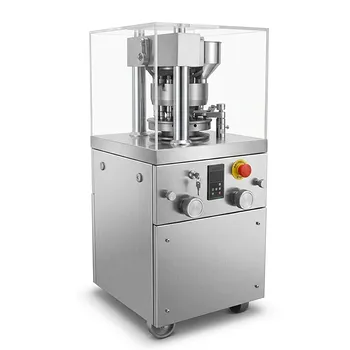
Ordinary Type Rotary Tablet Press for Pharmaceutical Chemical Food Electronic Industries
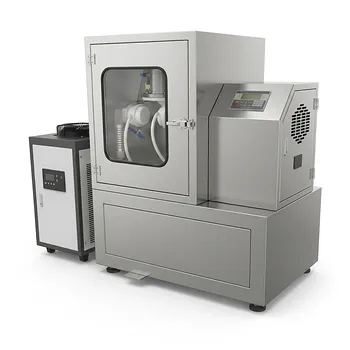
Vibratory Ultra-Low Temperature Ultrafine Grinder for Cryogenic Powder Processing
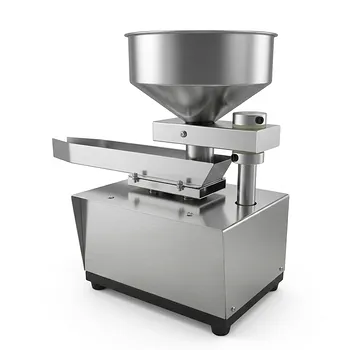
Automatic Vibrating Powder Feeder for Laboratory Material Processing Precision Vibratory Hopper Feeder for Granular and Powder Material Handling Industrial Grade Vibrating Tray Feeder for Consistent Material Sample Preparation
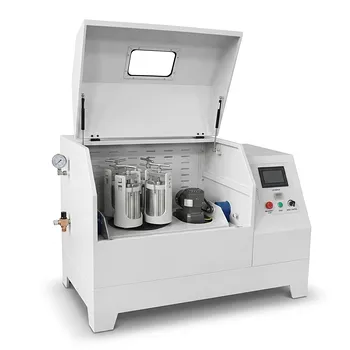
Vertical Production Planetary Ball Mill for High Throughput Powder Processing
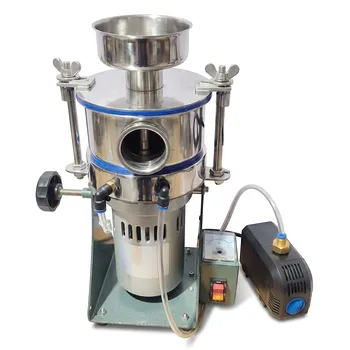
Water Cooled Airflow Ultra Fine Grinder for Low Temperature Material Processing
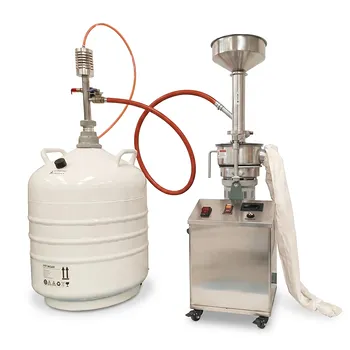
Laboratory Liquid Nitrogen Cryogenic Grinder Polymer Sample Preparation Pulverizer

Low Temperature Laboratory Knife Mill Cryogenic Sample Grinder Material Science Powder Processing
Small Liquid Nitrogen Cryogenic Grinder for Plastic and Heat-Sensitive Material Sample Preparation
Portable Cutting Mill for Laboratory Sample Preparation and RoHS WEEE Compliance Testing
Small Liquid Nitrogen Cryogenic Grinder for Ultrafine Grinding of Heat-Sensitive Materials in Laboratories
Heating Temperature Controlled High Energy Vibratory Ball Mill
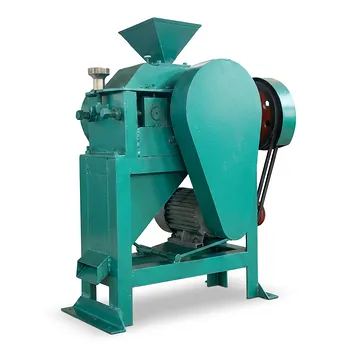
Laboratory Sealed Double Roll Crusher for Coal Ore Rock and Medium Hardness Materials Sample Preparation
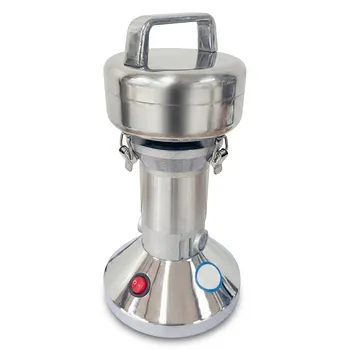
Small Trace Sample High Speed Pulverizer Grinder Laboratory Powder Mill
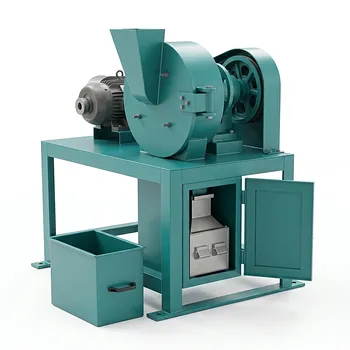
Sealed Disc Pulverizer Customized Model