Why is a hydraulic press used to prepare KBr pellets for FTIR analysis of nanocrystalline cellulose? Achieve High Clarity
Updated 4 months ago
A hydraulic press is essential for FTIR analysis because it subjects a mixture of nanocrystalline cellulose (NCC) and potassium bromide (KBr) to extreme pressure, creating a dense, optically transparent pellet. This high-pressure molding process eliminates air pockets and internal voids that would otherwise scatter infrared light. By transforming the powder into a uniform, thin disc, the press ensures that infrared radiation can effectively penetrate the sample to interact with the molecular bonds of the cellulose.
The primary purpose of a hydraulic press in this context is to achieve a state of "particle fusion" where the KBr matrix becomes transparent. This allows the infrared beam to pass through the sample without physical interference, resulting in a high signal-to-noise ratio and clear identification of chemical functional groups.
The Physical Transformation of the Sample
Eliminating Light Scattering
When NCC and KBr are in their raw powder form, the numerous interfaces between the air and the solid particles cause diffuse reflection and scattering of light. A hydraulic press applies several tons of stable pressure to exclude air between the powders, creating a smooth-surfaced pellet. This lack of internal boundaries ensures that the infrared beam travels through the sample rather than bouncing off particle surfaces.
Achieving High Transmittance
Infrared spectroscopy requires the sample to have high light transmission to yield accurate results. The press compresses the mixture into an ultra-thin disc, which is a physical prerequisite for the infrared beam to reach the detector with sufficient energy. High transparency is necessary to detect specific absorption peaks, such as the hydroxyl groups or glycosidic bonds inherent in nanocrystalline cellulose.
Ensuring Sample Uniformity
A hydraulic press, often used with precision molds, ensures the pellet has a consistent thickness and density. This uniformity is critical for detection repeatability and quantitative material analysis. Without the mechanical advantage of the press, it would be impossible to create a sample dense enough to provide a stable path for the infrared radiation.
Understanding the Trade-offs and Constraints
The Impact of Moisture Contamination
KBr is highly hygroscopic, meaning it rapidly absorbs moisture from the air, which can introduce unwanted O-H peaks into the cellulose spectrum. While the press creates a dense pellet, if the powder is not kept dry during the pressing process, the resulting data may be compromised by water vapor interference.
Potential for Pressure-Induced Alterations
While high pressure (often up to 5 t/cm²) is required for transparency, excessive or uneven pressure can lead to pellet cracking or cloudiness. If the pressure is released too quickly, the stored elastic energy can cause the pellet to shatter, forcing the user to restart the preparation process.
Sample Concentration Limits
There is a delicate balance between the amount of NCC and the KBr matrix; if the sample concentration is too high, the pellet will remain opaque regardless of the pressure applied. Achieving a high signal-to-noise ratio requires a trace amount of NCC dispersed thoroughly within the KBr powder before the pressing begins.
Making the Right Choice for Your Goal
To achieve the best results with your hydraulic press and FTIR setup, consider your specific analytical objectives:
- If your primary focus is qualitative identification of functional groups: Ensure you use a pressure of at least 7–8 gauge tons to achieve maximum transparency and peak clarity.
- If your primary focus is quantitative analysis of cellulose crystallinity: Prioritize a precision mold to ensure consistent pellet thickness, which is vital for comparing peak intensities across different samples.
- If your primary focus is minimizing spectral artifacts: Ensure both the KBr and the NCC samples are thoroughly dried in a vacuum oven before using the hydraulic press to prevent moisture-related interference.
By utilizing a hydraulic press to create a uniform, transparent medium, you ensure that the resulting infrared spectrum accurately reflects the internal molecular structure of the nanocrystalline cellulose.
Summary Table:
| Feature | Physical Benefit | Analytical Impact |
|---|---|---|
| Extreme Pressure | Eliminates air pockets and internal voids | Prevents light scattering; ensures clear spectra |
| High-Pressure Molding | Creates an optically transparent thin disc | Maximizes infrared light transmittance |
| Precision Compaction | Uniform pellet thickness and density | Ensures repeatable quantitative analysis |
| Mechanical Fusion | Stable particle-to-particle contact | High signal-to-noise ratio for peak detection |
Elevate Your Material Analysis with Precision Sample Prep
Achieving the perfect KBr pellet is critical for accurate FTIR results. At our core, we provide complete laboratory sample preparation solutions tailored for material science. Whether you are analyzing nanocrystalline cellulose or advanced polymers, our equipment is designed to ensure consistency and transparency.
Our extensive range of hydraulic presses includes:
- Standard Lab Presses & XRF Pellet Presses for routine spectroscopy.
- Cold/Warm Isostatic Presses (CIP/WIP) for uniform material compaction.
- Vacuum Hot Presses for advanced material synthesis.
Beyond pressing, we specialize in the entire powder processing workflow, offering planetary ball mills, jet mills, cryogenic grinders, and high-precision sieve shakers.
Contact us today to find the perfect press for your lab!
References
- Aida Safina Aridi, Yus Aniza Yusof. Effect of sodium hypochlorite concentration during pre-treatment on isolation of nanocrystalline cellulose from Leucaena leucocephala (Lam.) mature pods. DOI: 10.15376/biores.16.2.3137-3158
Mentioned Products
- Manual Tablet Press with Dual Scale Pressure Gauge for Pharmaceutical Food Chemical Laboratory Sample Preparation
- Small Hammer Crusher for Brittle Material Crushing in Mining Metallurgy and Lab Sample Preparation
- Laboratory Sealed Hammer Blade Crusher Divider for High Hardness Sample Preparation
- High Speed Small Laboratory Crusher for Dry Material Sample Preparation
- Laboratory Sealed Hammer Crusher for Coal and Mineral Sample Preparation
People Also Ask
- What is the function of a laboratory press in Cr-Ti alloy evaluation? Quantify Fracture Stress & Strength
- What is the function of a laboratory press in assessing the hydrophobic performance of modified vermiculite fillers?
- What is the core function of a laboratory press in the forming of ceramic filter element green bodies? Maximize Density.
- What is the function of a laboratory press in the preparation of ceramic feed rods? Master Density and Precision
- Why is vacuum sealing and flexible packaging necessary for Aluminum Titanate powders during CIP? Ensure Peak Density

Tech Team · PowderPreparation
Last updated on Jun 03, 2026
Related Products

Manual Tablet Press with Dual Scale Pressure Gauge for Pharmaceutical Food Chemical Laboratory Sample Preparation
Small Hammer Crusher for Brittle Material Crushing in Mining Metallurgy and Lab Sample Preparation
Laboratory Sealed Hammer Blade Crusher Divider for High Hardness Sample Preparation
High Speed Small Laboratory Crusher for Dry Material Sample Preparation
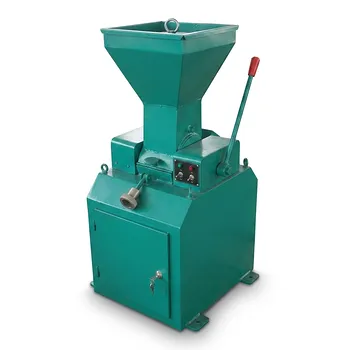
Laboratory Sealed Hammer Crusher for Coal and Mineral Sample Preparation
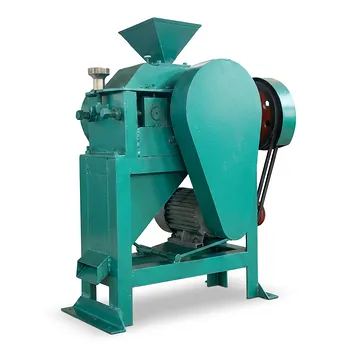
Laboratory Sealed Double Roll Crusher for Coal Ore Rock and Medium Hardness Materials Sample Preparation
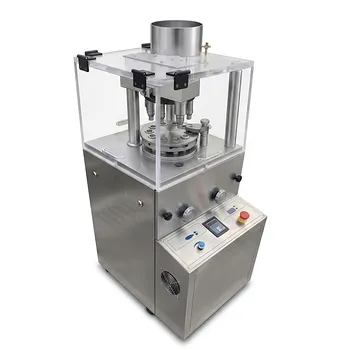
Enhanced 9 Punch Rotary Tablet Press for Powder Compaction
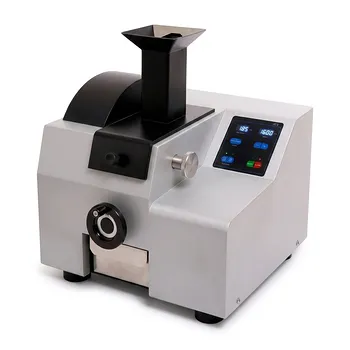
Laboratory Benchtop Jaw Crusher for Hard Brittle Materials Primary Size Reduction and Sample Preparation
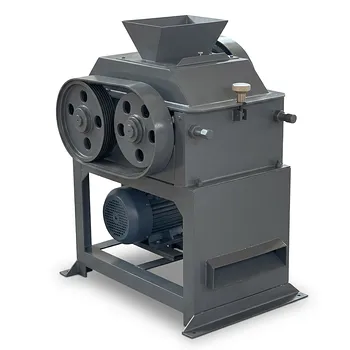
Sealed Laboratory Double Roll Crusher for Coal, Mineral, Ore Sample Preparation
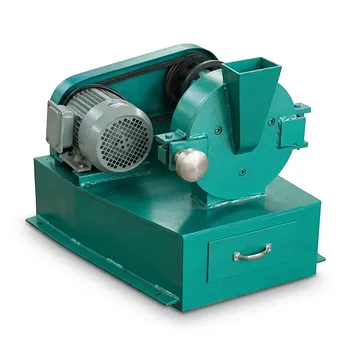
Medium Hardness Material Disc Pulverizer for Coal Ore Sample Preparation
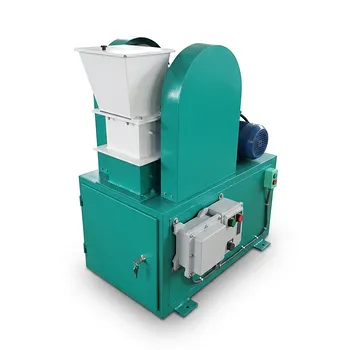
Custom Explosion-Proof Sealed Jaw Crusher for Laboratory and Industrial Sample Preparation