Why is a high-precision vibratory sieve shaker essential in the particle size screening process for microplastic granules?
Updated 5 months ago
Precision in particle size classification is the cornerstone of microplastic research. A high-precision vibratory sieve shaker is essential because it allows researchers to physically isolate specific size fractions—ranging from 25 μm to 100 μm or larger—using standardized mechanical power. This ensures the accuracy of exposure concentrations in toxicological experiments and allows for the controlled comparison of how different particle sizes impact biological organisms.
A high-precision vibratory sieve shaker transforms microplastic screening from a variable manual task into a standardized, repeatable mechanical process. By strictly controlling vibration amplitude and duration, it provides the precise particle size distribution data required for both scientific research and industrial process optimization.
Achieving Scientific Rigor in Particle Classification
Precision in Toxicological Exposure
High-precision shakers enable the classification of ground powders into predetermined particle size grades, such as 25 μm, 45 μm, and 63 μm. This level of detail is critical for ensuring that exposure concentrations in toxicological experiments are accurate and reproducible. Without this precision, researchers cannot reliably determine the dose-response relationship between microplastics and biological subjects.
Variable Control in Biological Studies
By isolating specific size ranges, such as 100–200 µm, the equipment allows for the study of differential impacts across various particle sizes. This physical screening eliminates interference from size variance, which could otherwise skew thermal analysis signal intensity and reproducibility. It ensures that the biological responses observed are truly a function of particle size rather than experimental noise.
Standardizing the Screening Methodology
Eliminating Manual Sorting Errors
Unlike manual sieving, which is prone to human error and inconsistency, a vibratory shaker provides constant amplitude and uniform processing time. This mechanization ensures that particles are repeatably classified based on their actual physical dimensions. Standardized mechanical power is vital for maintaining the integrity of the data across different laboratory settings.
Generating Accurate Distribution Curves
The equipment generates quantitative data to create mass-weighted particle size distribution curves (e.g., d10, d50, d90). These curves reflect the uniformity and sorting degree of the granules, which is essential for evaluating similarity in structural modeling. For millimeter-scale granules, this method often provides more accurate data than laser diffraction, which may have an insufficient range.
Enhancing Downstream Analytical Efficiency
Protecting Sample Integrity
Size grading using a vibratory shaker reduces the sample load in subsequent density separation steps. This prevents the loss of microplastics that can occur during excessive sedimentation in unrefined samples. By categorizing samples into fractions, researchers can more easily identify distribution patterns across various size classes in environmental sediments.
Optimizing Manufacturing Processes
In industrial settings, the vibratory sieve shaker provides data on how parameters like screw speed or agitation intensity impact the final product. It tracks the fine powder rate and the yield of acceptable granules versus oversized particles. This feedback loop is essential for optimizing the milling and granulation processes of polymer materials.
Critical Considerations and Trade-offs
The Risk of Material Degradation
While high-frequency vibration is necessary for separation, excessive sieving time or intensity can cause mechanical wear on fragile microplastic granules. Over-processing may lead to secondary fragmentation, where particles break down further during the test itself, leading to an overestimation of the "fine" fraction.
Handling Static and Aggregation
Fine microplastic particles, particularly those below 63 μm, are highly susceptible to electrostatic forces and moisture-induced clumping. While a vibratory shaker is highly effective, it may require anti-static measures or "wet sieving" configurations to prevent particles from adhering to the mesh or each other, which would otherwise result in inaccurate size grading.
How to Apply This to Your Project
When integrating a high-precision vibratory sieve shaker into your workflow, align your settings with your primary analytical objective:
- If your primary focus is toxicological research: Prioritize the use of stainless steel standard test sieves with apertures ranging from 25 μm to 100 μm to ensure precise exposure concentrations.
- If your primary focus is environmental sediment analysis: Use the shaker to separate sand-grade components from silt and clay (e.g., at the 0.063mm threshold) to reduce the load on subsequent density separation steps.
- If your primary focus is industrial process optimization: Monitor the d10, d50, and d90 values to adjust milling speed and agitation intensity for a higher yield of acceptable granules.
- If your primary focus is thermal analysis: Strictly control particle sizes within a narrow range (e.g., 100–200 µm) to eliminate signal interference and improve regression analysis accuracy.
The implementation of mechanized vibratory sieving is the only way to ensure the level of repeatability required for modern microplastic standardization.
Summary Table:
| Key Benefit | Functional Advantage | Impact on Research/Industry |
|---|---|---|
| Precision Sizing | Isolates fractions from 25 μm to 100 μm | Ensures accurate exposure in toxicological studies |
| Standardization | Constant amplitude and uniform processing | Eliminates manual errors for repeatable, rigorous data |
| Data Accuracy | Generates d10, d50, and d90 distribution curves | Optimizes milling and polymer granulation processes |
| Sample Integrity | Efficient grading reduces downstream load | Prevents microplastic loss during density separation |
Elevate Your Material Analysis with Precision Solutions
Achieve unmatched scientific rigor in your microplastic research and particle size classification. We provide complete laboratory sample preparation solutions for material science, specializing in high-performance powder processing and compaction equipment.
Our extensive product lines include:
- Screening & Sizing: High-precision vibratory and air-jet sieve shakers with various test sieves.
- Milling & Grinding: Planetary ball mills, jet mills, disc/rotor mills, and liquid nitrogen cryogenic grinders.
- Crushing & Mixing: Jaw/roll crushers, powder mixers, and defoaming mixers.
- Pressing & Compaction: A full spectrum of hydraulic presses, including Cold/Warm Isostatic Presses (CIP/WIP), XRF pellet presses, and vacuum hot presses.
Whether you are optimizing industrial polymer production or conducting sensitive environmental studies, our equipment ensures the repeatability and accuracy your project demands.
Contact our technical experts today to find your solution!
References
- Sang‐Ah Lee, Young‐Jun Kim. Assessing the acute differential toxicity of polystyrene microplastic particles and comparing the impacts of bead-shaped versus fragmented particles on Daphnia magna. DOI: 10.1186/s13765-025-01012-x
Mentioned Products
- Vibratory Sieve Shaker Electromagnetic 3D Motion Powder Particle Size Analyzer for Dry and Wet Sieving
- Small Laboratory Vibratory Sieve Shaker for Powder Gradation and Particle Size Analysis
- 三维电磁微量振动筛分仪
- Laboratory Vibratory Test Sieve Shaker for Precision Particle Size Analysis and Powder Grading
- Small Laboratory Vibrating Sieve Shaker for Precise Particle Size Analysis
People Also Ask
- How does a vibratory sieve shaker contribute to optimizing the performance of activated carbon? Enhance Adsorption Precision
- Why is a laboratory vibratory sieve shaker necessary for processing magnesium-based borate precursor powders? Boost Activity
- Why use a vibratory sieve shaker to verify coarse aggregate grading in rubberized concrete? Ensure Structural Integrity
- What function do vibratory sieve shakers and standard test sieves serve in the preparation of adsorbents? Key Guide
- What role does a vibratory sieve shaker play in the particle size analysis of ground corn products? Enhance QC Precision

Tech Team · PowderPreparation
Last updated on May 14, 2026
Related Products

Vibratory Sieve Shaker Electromagnetic 3D Motion Powder Particle Size Analyzer for Dry and Wet Sieving

Small Laboratory Vibratory Sieve Shaker for Powder Gradation and Particle Size Analysis

三维电磁微量振动筛分仪

Laboratory Vibratory Test Sieve Shaker for Precision Particle Size Analysis and Powder Grading

Small Laboratory Vibrating Sieve Shaker for Precise Particle Size Analysis
Laboratory Dry and Wet Three Dimensional Vibratory Sieve Shaker for Particle Analysis
Stainless Steel Laboratory Vibratory Test Sieve Shaker

Three Dimensional Rotary Vibrating Sieve

Heavy Duty Dry Three Dimensional Vibratory Sieve Shaker for Particle Separation

Dry Three Dimensional Vibratory Sieve Shaker
High Frequency Cabinet Type Three-Dimensional Rotary Vibrating Sieve Shaker for Dry Sieving and Particle Classification
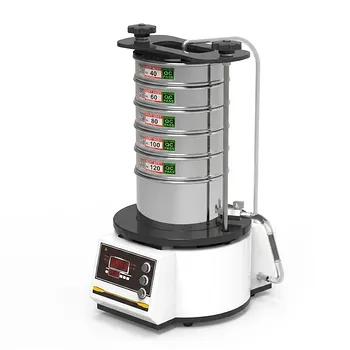
High Frequency Wet Three-Dimensional Vibrating Sieve Shaker for Dry and Wet Particle Size Analysis
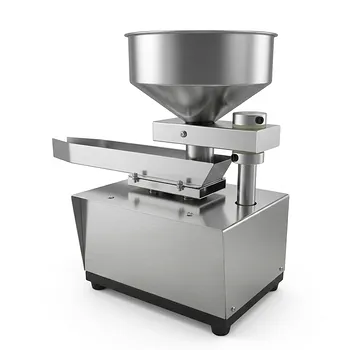
Automatic Vibrating Powder Feeder for Laboratory Material Processing Precision Vibratory Hopper Feeder for Granular and Powder Material Handling Industrial Grade Vibrating Tray Feeder for Consistent Material Sample Preparation

Tapping Oscillating Sieve Shaker for Dry and Wet Particle Size Analysis
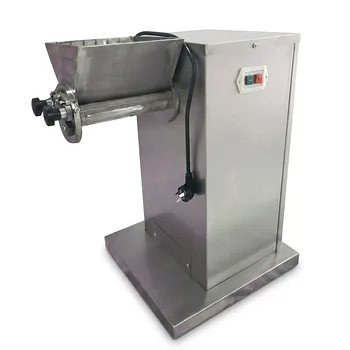
Small Laboratory Oscillating Granulator for Wet and Dry Granulation Processing
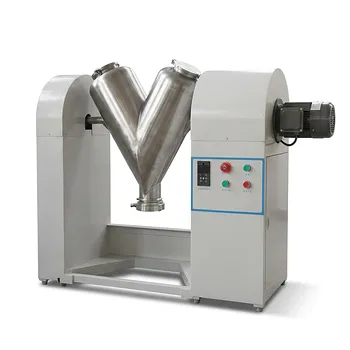
V-Type Powder Mixer for Uniform Blending of Dry Powders and Granules

Stainless Steel Rotary Vibrating Sieve High Precision Circular Vibratory Separator Industrial Powder Grading Machine Multi Layer Sifting Equipment
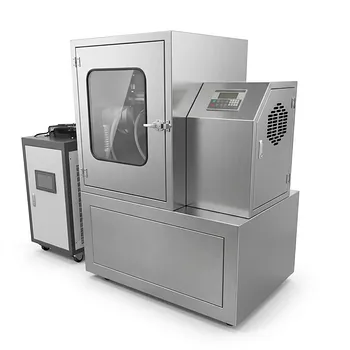
Vibratory Superfine Grinder for Ultra Fine Laboratory Powder Milling
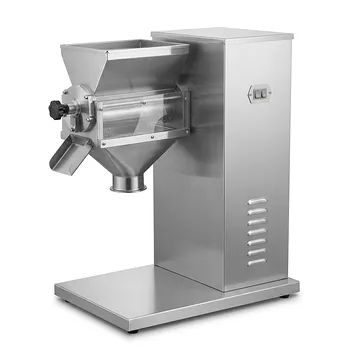
Small Swing Granulator Efficient Powder Granulation for Pharmaceutical Chemical Food Industries