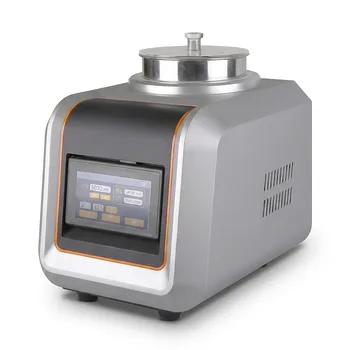
What is the core value of a vibratory sieve shaker in regulating the particle size of adsorbent materials?
Updated 3 months ago
The core value of a vibratory sieve shaker in regulating adsorbent particle size is its ability to standardize the material’s specific surface area and fluid dynamic behavior. By isolating a precise particle size range, such as 400 µm, the shaker ensures that the adsorption bed maintains stable porosity and uniform pressure drops. This physical consistency is essential for optimizing adsorption kinetics and ensuring that experimental data is reproducible and accurately reflects the material's chemical performance.
The vibratory sieve shaker serves as the foundation for experimental validity in adsorption science. It eliminates physical "noise"—such as varying diffusion rates and inconsistent contact areas—allowing researchers to isolate the chemical efficiency of the adsorbent itself.
Optimizing the Physical Environment of Adsorption
Maximizing Effective Specific Surface Area
Adsorption is a surface-bound phenomenon where the capacity of the material is directly linked to its available area. Vibratory sieving ensures a uniform size distribution, which prevents smaller "fines" from clogging the pores of larger particles or settling at the bottom. This uniformity maximizes the exposed specific surface area, allowing for predictable and optimized adsorption kinetics across the entire sample.
Stabilizing Fluid Dynamics and Bed Porosity
In gas breakthrough or liquid filtration experiments, the way fluid moves through the adsorbent "bed" is critical. A standardized particle size ensures stable porosity, which prevents the formation of "channels" where fluid might bypass the adsorbent entirely. By maintaining this physical balance, the shaker prevents uneven pressure drops that would otherwise invalidate flow-rate data.
Enhancing Dispersion and Sedimentation
For adsorbents used in aqueous environments, the particle size dictates how well the powder disperses or how quickly it settles. Precise grading allows for consistent dosage accuracy and predictable sedimentation characteristics. This is particularly vital in industrial treatment processes where the timing of powder recovery or filtration is based on known settling velocities.
Validating Mathematical and Analytical Models
Eliminating Diffusion Rate Variables
The rate at which a contaminant moves from the fluid into the center of an adsorbent particle—known as the diffusion path—is determined by the particle's radius. By isolating particles within a narrow range, researchers eliminate variations in internal diffusion rates. This standardization is mandatory for the repeatability of batch adsorption experiments and the accuracy of X-ray Fluorescence (XRF) elemental analysis.
Facilitating Accurate Kinetic Model Fitting
Mathematical models, such as pseudo-second-order kinetics and isotherm analysis, rely on the assumption that the adsorbent sample is physically homogeneous. If particle sizes vary wildly, the resulting data reflects an average of multiple different reaction rates, leading to poor model fit. Vibratory sieving provides the consistency required to produce high-fidelity data that can be used to scale up manufacturing processes.
Understanding the Trade-offs
Mechanical Degradation and "Fines" Generation
While the high-frequency motion of a vibratory shaker is effective for separation, it can be aggressive on friable materials like biochar or activated ash. Excessive sieving time can cause particle attrition, where the particles grind against each other and create new, smaller "fines" during the test itself. Researchers must calibrate vibration intensity and duration to reach a constant mass state without degrading the structural integrity of the adsorbent.
Influence of Particle Shape on Mesh Passing
Sieve shakers classify particles based on their minimum cross-sectional width, which can be misleading for needle-like or irregular granular materials. Elongated particles may pass through the mesh vertically, leading to a sample that is uniform in width but inconsistent in volume or mass. This means that while the shaker provides "precise grading," the geometrical orientation of the particles can still introduce minor variables in surface area calculations.
How to Apply This to Your Project
Making the Right Choice for Your Goal
- If your primary focus is kinetic modeling: Use the shaker to isolate a very narrow mesh range (e.g., 250–300 µm) to ensure diffusion paths are virtually identical across your sample.
- If your primary focus is industrial column design: Prioritize sieving to eliminate fines that cause high pressure drops, ensuring the bed remains permeable under high flow rates.
- If your primary focus is material characterization (XRF/SEM): Employ a standardized 5–10 minute vibration cycle to ensure the sample used for analysis is statistically representative of the entire batch.
By precisely controlling the physical dimensions of adsorbent materials, the vibratory sieve shaker transforms a raw ground product into a standardized technical component capable of producing reliable, scientific insights.
Summary Table:
| Key Feature | Impact on Adsorbent Performance | Scientific Benefit |
|---|---|---|
| Uniform Grading | Maximizes effective specific surface area | Optimized adsorption kinetics |
| Porosity Control | Prevents fluid channeling & uneven pressure | Stable fluid dynamic behavior |
| Size Isolation | Eliminates internal diffusion rate variables | Accurate kinetic model fitting |
| Standardization | Ensures consistent dosage & sedimentation | Reproducible experimental data |
Elevate Your Material Science Research with Precision Solutions
At our core, we provide complete laboratory sample preparation solutions designed to ensure the physical consistency your research demands. Specializing in powder processing and compaction equipment, we offer a comprehensive range of tools to optimize your adsorbent materials:
- Particle Size Regulation: High-precision vibratory and air-jet sieve shakers with a variety of test sieves for standardized grading.
- Advanced Milling: Planetary ball mills, jet mills, and cryogenic grinders for achieving ultra-fine powder consistency.
- Material Compaction: A full spectrum of hydraulic presses, including Cold/Warm Isostatic Presses (CIP/WIP), hot presses, and XRF pellet presses.
- Processing Excellence: Industrial-grade powder mixers, defoaming mixers, and specialized crushers.
Whether you are refining kinetic models or scaling up industrial adsorption beds, our equipment provides the reliability and performance you need. Contact our experts today to find the perfect solution for your laboratory needs.
References
- Hua Lun Zhu, Ye Shui Zhang. Study of H2S Removal Capability from Simulated Biogas by Using Waste-Derived Adsorbent Materials. DOI: 10.3390/pr8091030
Mentioned Products
- Vibratory Sieve Shaker Electromagnetic 3D Motion Powder Particle Size Analyzer for Dry and Wet Sieving
- Laboratory Dry and Wet Three Dimensional Vibratory Sieve Shaker for Particle Analysis
- Heavy Duty Dry Three Dimensional Vibratory Sieve Shaker for Particle Separation
- Stainless Steel Laboratory Vibratory Test Sieve Shaker
- Dry Three Dimensional Vibratory Sieve Shaker
People Also Ask
- How does a vibratory sieve shaker contribute to optimizing the performance of activated carbon? Enhance Adsorption Precision
- Why is a laboratory vibratory sieve shaker necessary for processing magnesium-based borate precursor powders? Boost Activity
- Why use a vibratory sieve shaker to verify coarse aggregate grading in rubberized concrete? Ensure Structural Integrity
- What function do vibratory sieve shakers and standard test sieves serve in the preparation of adsorbents? Key Guide
- What role does a vibratory sieve shaker play in the particle size analysis of ground corn products? Enhance QC Precision

Tech Team · PowderPreparation
Last updated on Jun 03, 2026
Related Products
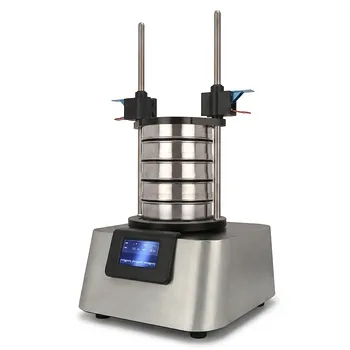
Vibratory Sieve Shaker Electromagnetic 3D Motion Powder Particle Size Analyzer for Dry and Wet Sieving
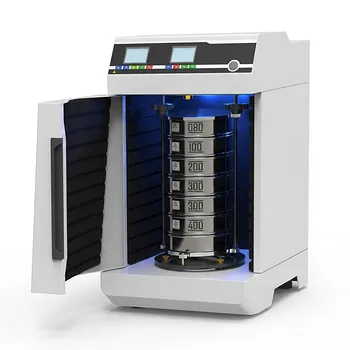
Laboratory Dry and Wet Three Dimensional Vibratory Sieve Shaker for Particle Analysis
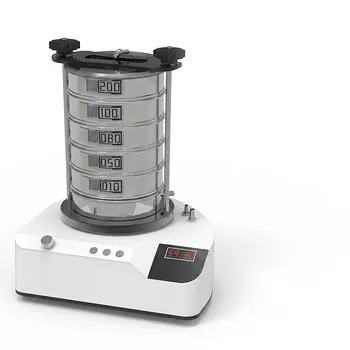
Heavy Duty Dry Three Dimensional Vibratory Sieve Shaker for Particle Separation
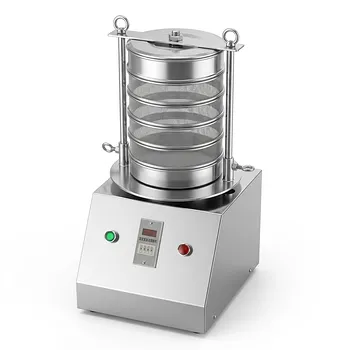
Stainless Steel Laboratory Vibratory Test Sieve Shaker
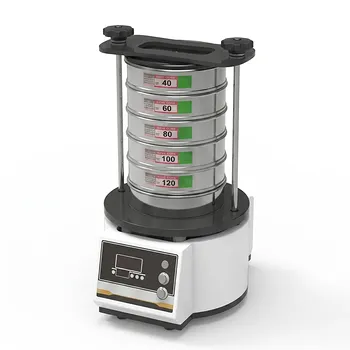
Dry Three Dimensional Vibratory Sieve Shaker
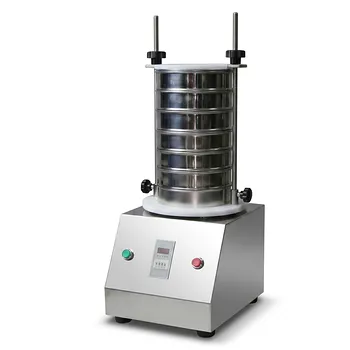
Small Laboratory Vibratory Sieve Shaker for Powder Gradation and Particle Size Analysis
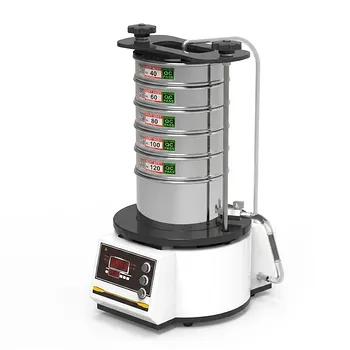
High Frequency Wet Three-Dimensional Vibrating Sieve Shaker for Dry and Wet Particle Size Analysis
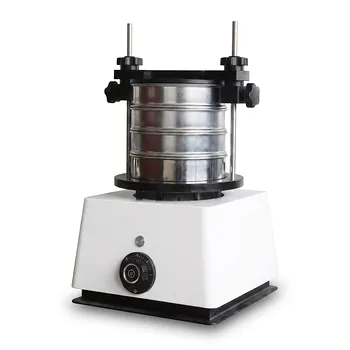
Small Laboratory Vibrating Sieve Shaker for Precise Particle Size Analysis
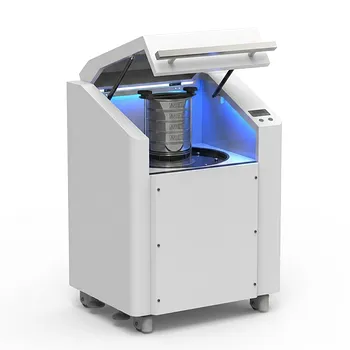
High Frequency Cabinet Type Three-Dimensional Rotary Vibrating Sieve Shaker for Dry Sieving and Particle Classification
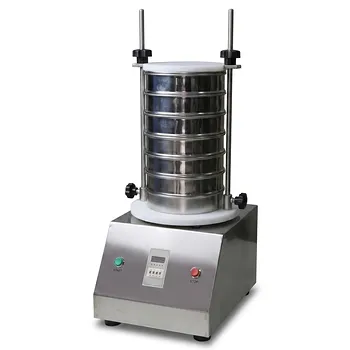
Laboratory Vibratory Test Sieve Shaker for Precision Particle Size Analysis and Powder Grading
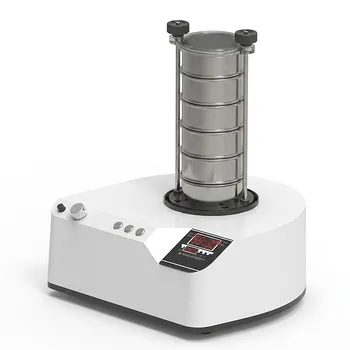
三维电磁微量振动筛分仪
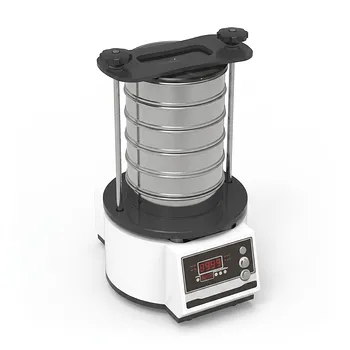
Tapping Oscillating Sieve Shaker for Dry and Wet Particle Size Analysis
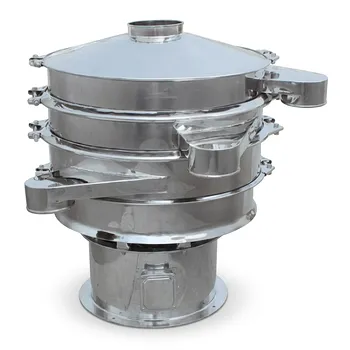
Stainless Steel Rotary Vibrating Sieve High Precision Circular Vibratory Separator Industrial Powder Grading Machine Multi Layer Sifting Equipment
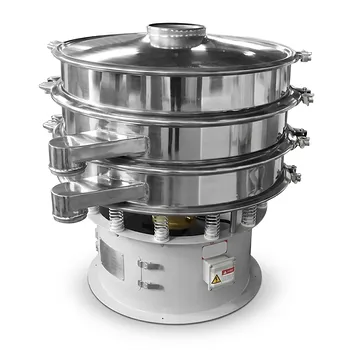
Three Dimensional Rotary Vibrating Sieve
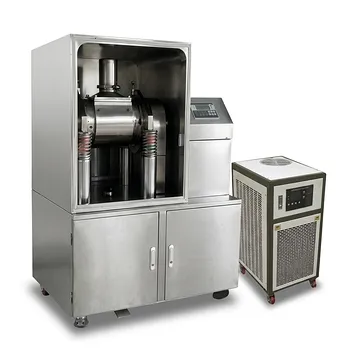
Small Vibrating Ultrafine Grinder for Traditional Chinese Medicine
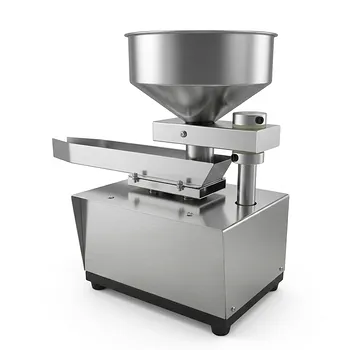
Automatic Vibrating Powder Feeder for Laboratory Material Processing Precision Vibratory Hopper Feeder for Granular and Powder Material Handling Industrial Grade Vibrating Tray Feeder for Consistent Material Sample Preparation
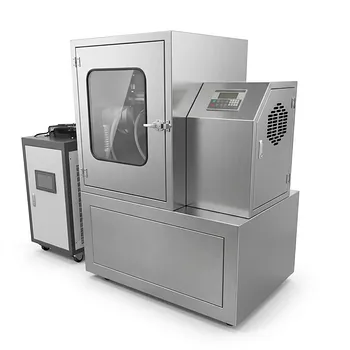
Vibratory Superfine Grinder for Ultra Fine Laboratory Powder Milling
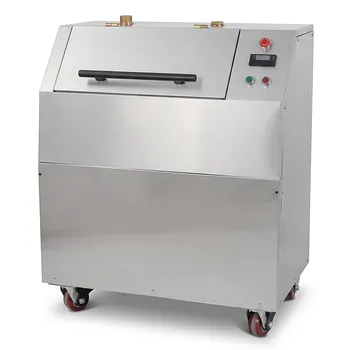
Vibratory Disc Mill for Rapid Fine Grinding and High Throughput Sample Preparation of Hard and Brittle Materials