What is the function of a vibratory sieve shaker and standard test sieves? Precise Lateritic Soil Grading Guide
Updated 5 months ago
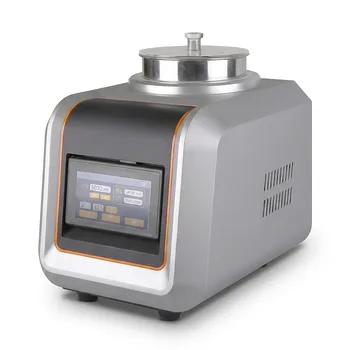
The vibratory sieve shaker and standard test sieves function as a standardized mechanical system to separate lateritic soil into distinct size fractions. This process quantifies the distribution of gravel, sand, and fine-grained particles by passing a sample through a vertical stack of mesh screens with decreasing aperture sizes. The resulting data is essential for soil classification and for designing effective stabilization strategies in engineering projects.
Particle size distribution analysis using vibratory sieving provides the empirical foundation for engineering lateritic soils. By accurately determining soil gradation, engineers can classify the material according to international standards and predict how it will respond to stabilization additives.
The Role of Mechanical Vibration in Particle Separation
Ensuring Thorough Particle Penetration
The vibratory shaker generates high-frequency mechanical vibrations with constant amplitude to drive the soil sample through a stack of sieves. This motion ensures that every soil particle has multiple opportunities to collide with and penetrate the mesh openings. This mechanical energy is far more effective than manual agitation at overcoming the friction between particles.
Eliminating Human Error and Increasing Efficiency
Automated shakers provide a standardized mechanical force over a fixed duration, typically 10 to 15 minutes. This consistency reduces the variables introduced by manual sieving and ensures repeatable results across different tests. The efficiency gained allows for a more rapid assessment of soil properties in high-volume laboratory environments.
Defining Soil Gradation and Engineering Suitability
Classification via Standardized Apertures
Standard test sieves feature precise apertures ranging from 20mm down to 75µm (No. 200 sieve). These intervals allow engineers to categorize lateritic soil into gravel, sand, and fine-grained portions. The percentage of material passing through the 75µm mesh is a critical metric for determining the soil's silt and clay content.
Quantifying Gradation Curves
Data from the sieving process is used to calculate cumulative passing percentages and plot a particle size distribution curve. This curve determines if the soil is well-graded or poorly graded by calculating the coefficients of uniformity and curvature. These values are a prerequisite for classifying soil under systems like AASHTO, which dictates its use in construction.
Impact on Stabilization and Construction Strategy
Determining Additive Requirements
Lateritic soils often require stabilization with additives such as cement, bamboo leaf ash, or urea to improve their load-bearing capacity. The grain size distribution provides the physical basis for these chemical strategies. Knowing the exact proportion of fines allows engineers to optimize the dosage of these stabilizers for maximum durability.
Assessing Roadbed Filler Performance
For transportation engineering, the sieving process determines the suitability of lateritic soil as a roadbed filler. Soil with the correct gradation offers better compaction and stability under heavy traffic loads. Accurate sieving ensures that the material meets the stringent physical property requirements of modern infrastructure.
Understanding Technical Limitations and Trade-offs
The 75µm Boundary
While sieving is highly effective for coarse particles, it cannot differentiate between the microscopic silt and clay particles that pass through the 75µm sieve. For lateritic soils with high fine content, sieving must be supplemented with hydrometer analysis. Relying solely on mechanical sieving may result in an incomplete understanding of the soil's plastic behavior.
Material Degradation Risks
Lateritic gravels can be relatively fragile and prone to mechanical breakdown during prolonged or excessively violent vibration. If the shaker settings are too aggressive, larger particles may fracture into smaller ones, leading to an inaccurate "fines" count. Engineers must calibrate vibration intensity and duration to balance thorough separation with material integrity.
Applying Gradation Data to Your Project
Successful soil analysis requires matching the testing rigor to the specific engineering goal. The particle size distribution data derived from vibratory sieving should be the starting point for all subsequent geotechnical decisions.
- If your primary focus is Roadbed Construction: Prioritize the calculation of the uniformity coefficient to ensure the laterite provides a stable, non-shifting foundation for pavement.
- If your primary focus is Chemical Stabilization: Focus on the percentage of material passing the 75µm sieve to determine the surface area available for reactions with cement or ash.
- If your primary focus is Engineering Classification: Use the full range of standard sieves to satisfy AASHTO requirements and ensure the material meets international regulatory standards.
By mastering the mechanics of the vibratory sieve shaker, you ensure the technical accuracy necessary for safe and efficient infrastructure development.
Summary Table:
| Component | Key Function | Impact on Analysis |
|---|---|---|
| Vibratory Shaker | High-frequency vibration | Ensures thorough penetration & eliminates manual agitation error. |
| Standard Test Sieves | Precise apertures (20mm-75µm) | Categorizes soil into gravel, sand, and fine-grained fractions. |
| Gradation Curves | Data calculation (Cu, Cc) | Determines soil engineering suitability & AASHTO classification. |
| Stabilization Data | Basis for additive dosage | Optimizes the use of cement or ash for maximum load-bearing. |
Precise soil analysis is the foundation of durable infrastructure. We provide complete laboratory sample preparation solutions for material science, specializing in advanced powder processing and compaction equipment. From high-performance vibratory sieve shakers and test sieves for accurate soil grading to crushers, planetary ball mills, and Cold/Warm Isostatic Presses (CIP/WIP), our extensive line ensures your materials meet the most stringent standards.
Whether you are designing stabilization strategies or testing roadbed fillers, our specialized equipment—including XRF pellet presses and vacuum hot presses—is engineered for reliability and repeatability. Contact us today to discover how our laboratory solutions can enhance your geotechnical analysis and material development!
References
- Olufunmilola Adetayo Obakin, J.B. Taiwo. Geotechnical Properties of Cement-Stabilized Lateritic Soil with Bamboo Leaf Ash in the Takie Area of Ogbomoso. DOI: 10.22624/aims/v9n4p2
Mentioned Products
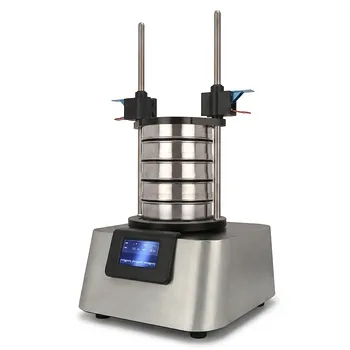
- Vibratory Sieve Shaker Electromagnetic 3D Motion Powder Particle Size Analyzer for Dry and Wet Sieving
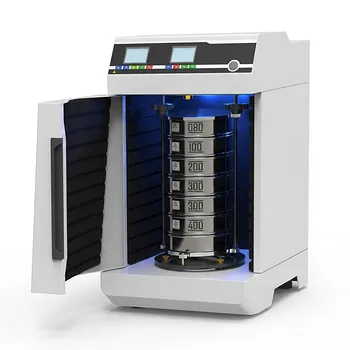
- Laboratory Dry and Wet Three Dimensional Vibratory Sieve Shaker for Particle Analysis
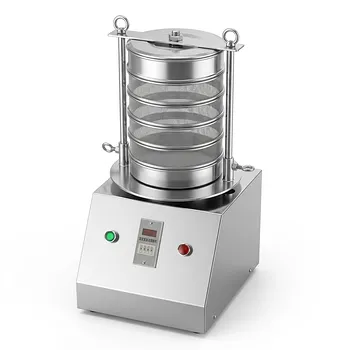
- Stainless Steel Laboratory Vibratory Test Sieve Shaker
- Heavy Duty Dry Three Dimensional Vibratory Sieve Shaker for Particle Separation
- Dry Three Dimensional Vibratory Sieve Shaker
People Also Ask
- How does a vibratory sieve shaker contribute to optimizing the performance of activated carbon? Enhance Adsorption Precision
- Why is a laboratory vibratory sieve shaker necessary for processing magnesium-based borate precursor powders? Boost Activity
- Why use a vibratory sieve shaker to verify coarse aggregate grading in rubberized concrete? Ensure Structural Integrity
- What function do vibratory sieve shakers and standard test sieves serve in the preparation of adsorbents? Key Guide
- What role does a vibratory sieve shaker play in the particle size analysis of ground corn products? Enhance QC Precision

Tech Team · PowderPreparation
Last updated on May 14, 2026
Related Products
Vibratory Sieve Shaker Electromagnetic 3D Motion Powder Particle Size Analyzer for Dry and Wet Sieving
Laboratory Dry and Wet Three Dimensional Vibratory Sieve Shaker for Particle Analysis
Stainless Steel Laboratory Vibratory Test Sieve Shaker
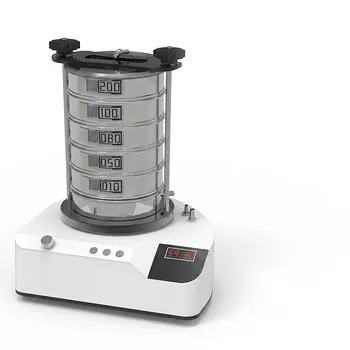
Heavy Duty Dry Three Dimensional Vibratory Sieve Shaker for Particle Separation
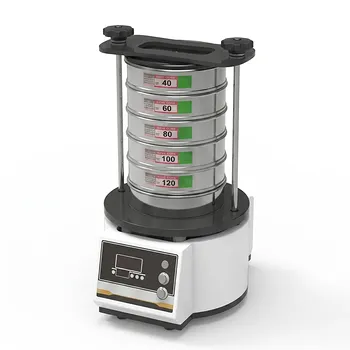
Dry Three Dimensional Vibratory Sieve Shaker
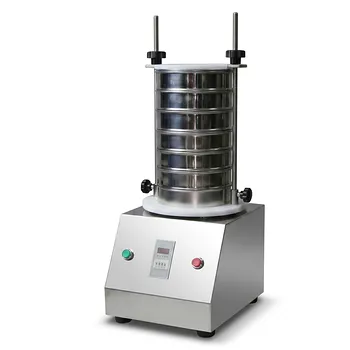
Small Laboratory Vibratory Sieve Shaker for Powder Gradation and Particle Size Analysis
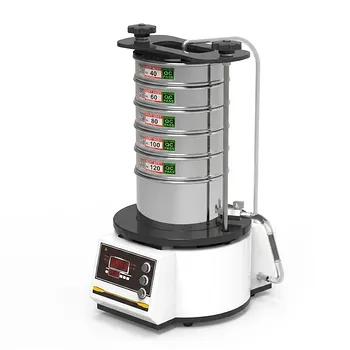
High Frequency Wet Three-Dimensional Vibrating Sieve Shaker for Dry and Wet Particle Size Analysis
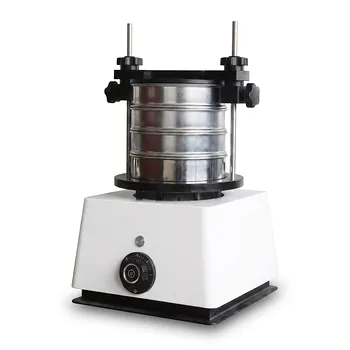
Small Laboratory Vibrating Sieve Shaker for Precise Particle Size Analysis
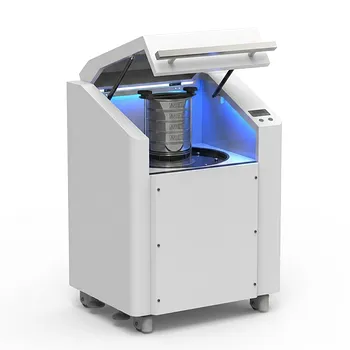
High Frequency Cabinet Type Three-Dimensional Rotary Vibrating Sieve Shaker for Dry Sieving and Particle Classification
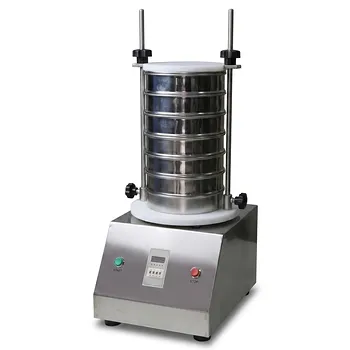
Laboratory Vibratory Test Sieve Shaker for Precision Particle Size Analysis and Powder Grading
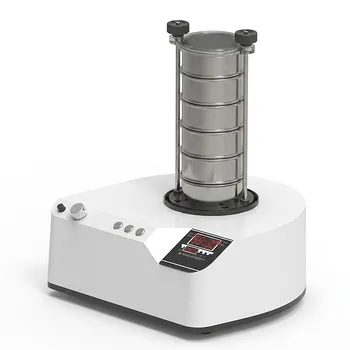
三维电磁微量振动筛分仪
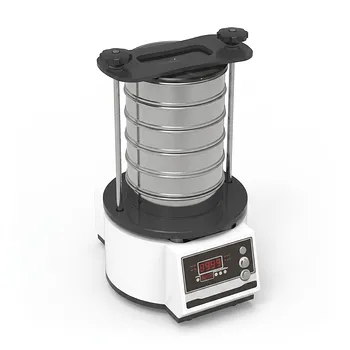
Tapping Oscillating Sieve Shaker for Dry and Wet Particle Size Analysis
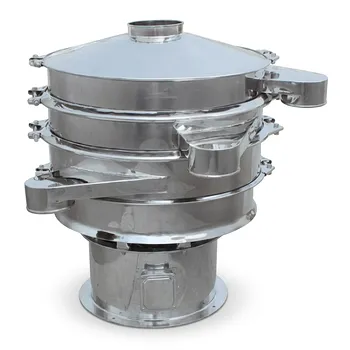
Stainless Steel Rotary Vibrating Sieve High Precision Circular Vibratory Separator Industrial Powder Grading Machine Multi Layer Sifting Equipment
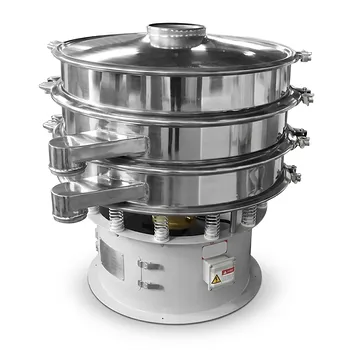
Three Dimensional Rotary Vibrating Sieve
Small Vibrating Ultrafine Grinder for Traditional Chinese Medicine
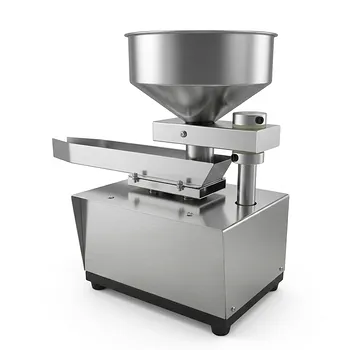
Automatic Vibrating Powder Feeder for Laboratory Material Processing Precision Vibratory Hopper Feeder for Granular and Powder Material Handling Industrial Grade Vibrating Tray Feeder for Consistent Material Sample Preparation
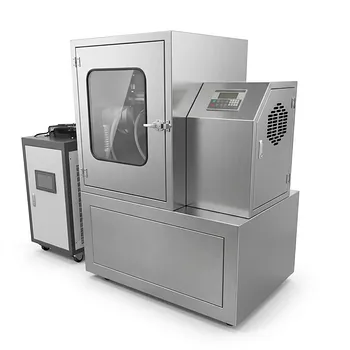
Vibratory Superfine Grinder for Ultra Fine Laboratory Powder Milling
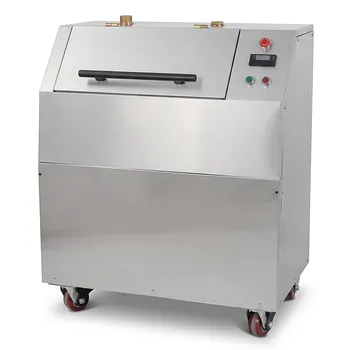
Vibratory Disc Mill for Rapid Fine Grinding and High Throughput Sample Preparation of Hard and Brittle Materials