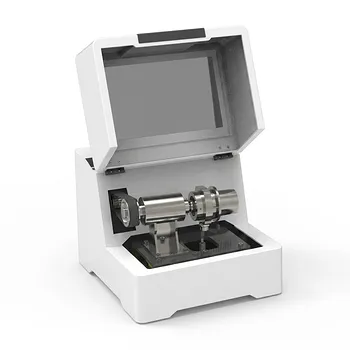
Why use planetary ball mills for HEA powders in laser fragmentation? Ensure Atomic Homogeneity
Updated 4 months ago
High-energy planetary ball milling is the essential precursor step for preparing High-Entropy Alloy (HEA) powders for laser fragmentation. This process utilizes intense impact and shear forces to reduce raw metal particles to a micron-scale size (typically below 20 microns) while simultaneously ensuring every individual particle has a uniform distribution of all constituent elements.
The planetary ball mill drives mechanical alloying through repeated fracturing and cold welding, overcoming the thermodynamic barriers that usually prevent immiscible elements from mixing. This creates a chemically homogeneous, high-surface-area precursor that is required for the laser to produce consistent, high-quality nanoparticles.
Engineering Particle Size for Laser Interaction
Achieving the Sub-20 Micron Threshold
High-energy planetary ball mills use a complex rotational movement of the main shaft and grinding jars. This motion causes grinding balls to strike the raw powders with massive kinetic energy. This intense impact effectively breaks down coarse metal particles into the micron-sized scales required for efficient laser fragmentation.
Increasing Surface Area and Activity
Refining the grain size to the micrometer or nanometer scale significantly increases the specific surface area of the powder. High surface area increases the surface activity and provides the necessary energy states for subsequent processing. This refinement ensures that the laser can interact with the material more effectively during the ablation or fragmentation stage.
Achieving Atomic Homogeneity through Mechanical Alloying
The Fracturing and Re-welding Cycle
The mill subjects a mixture of five or more pure metal powders to repeated cycles of cold welding, fracturing, and re-welding. This non-equilibrium processing method is driven by high-speed rotation and mechanical force. It forces the different metallic elements to combine into a single, unified structure at the atomic level.
Overcoming Thermodynamic Immiscibility
Many elements used in HEAs are thermodynamically immiscible and do not naturally blend. The high-energy impact and friction generate enough energy to overcome diffusion barriers in the solid state. This allows for atomic inter-penetration, preventing component segregation and ensuring a stable solid solution.
Creating High Defect Density
The mechanical alloying process results in powders characterized by high defect density and a nanocrystalline structure. These defects store mechanical energy within the powder. This stored energy, combined with the high configurational entropy, helps stabilize the alloy and facilitates better performance in downstream laser-based synthesis.
Understanding the Trade-offs and Pitfalls
The Risk of Media Contamination
The same intense forces that blend the powders also cause wear and tear on the grinding jars and balls. Small amounts of material from the stainless steel or ceramic grinding media can break off and contaminate the HEA powder. Users must carefully select grinding media that will not negatively impact the final application of the alloy.
Thermal Management and Oxidation
The high-frequency collisions generate significant localized heat during the milling process. If the temperature is not controlled, it can lead to unwanted phase transformations or oxidation of the metallic powders. Utilizing process control agents or milling in an inert gas environment is often necessary to maintain the integrity of the HEA.
How to Apply This to Your Project
When preparing HEA powders for laser fragmentation, your milling strategy should align with your specific material requirements and purity standards.
- If your primary focus is Chemical Homogeneity: Prioritize longer milling times and higher rotation speeds to ensure the repeated cold welding cycles achieve atomic-level mixing.
- If your primary focus is Minimizing Contamination: Use grinding jars and balls made of the same material as your primary alloy component or highly wear-resistant materials like tungsten carbide.
- If your primary focus is Particle Size Control: Use a higher ball-to-powder weight ratio and monitor the milling cycles closely to reach the sub-20 micron range without excessive over-milling.
By mastering the high-energy milling stage, you ensure that the subsequent laser fragmentation produces nanoparticles with the precise stoichiometry and performance characteristics required for advanced HEA applications.
Summary Table:
| Key Process | Technical Benefit | Impact on Laser Fragmentation |
|---|---|---|
| Size Reduction | Sub-20μm particle size | Increases laser-material interaction efficiency |
| Mechanical Alloying | Atomic homogeneity | Ensures uniform nanoparticle stoichiometry |
| High-Energy Impact | High defect density | Facilitates energy-driven phase stability |
| Closed Milling | Atmosphere control | Prevents oxidation of reactive metallic components |
Elevate Your Material Research with Precision Sample Preparation
Achieving the perfect micron-scale precursor is critical for high-entropy alloy innovation. [Your Brand Name] provides complete laboratory sample preparation solutions for material science, specializing in high-performance powder processing and compaction equipment.
Our extensive range includes:
- Advanced Milling: Planetary ball mills, jet mills, and cryogenic grinders to reach sub-20 micron thresholds.
- Size Analysis: Sieve shakers (vibratory/air-jet) and high-precision test sieves.
- Compaction & Synthesis: Cold/Warm Isostatic Presses (CIP/WIP), vacuum hot presses, and standard lab hydraulic presses for final material forming.
Whether you are a researcher needing atomic homogeneity or a distributor looking for reliable OEM/ODM support and certified quality, we are here to help.
Contact our technical experts today to find your solution!
References
- Robert Stuckert, Christoph Rehbock. Amorphization of laser-fabricated ignoble high-entropy alloy nanoparticles and its impact on surface composition and electrochemistry. DOI: 10.1039/d5fd00087d
Mentioned Products
- Vertical Production Planetary Ball Mill for High Throughput Powder Processing
- High Energy Omnidirectional Planetary Ball Mill 16L
- High Energy Planetary Ball Mill for Nano Scale Grinding and Mechanical Alloying
- High Energy Omnidirectional Planetary Ball Mill 20L
- High Energy Laboratory Planetary Ball Mill for Nano Grinding and Material Science Sample Preparation
People Also Ask
- What is the function of a high-performance planetary ball mill in AMZ laminates? Master Ceramic Homogenization.
- What is the role of a planetary ball mill in Al–Si3N4 nanocomposite prep? Achieve Uniform Homogenization
- What is the function of a planetary ball mill in lanthanum hexaaluminate synthesis? Master Micron-Level Homogenization
- What role does a planetary ball mill play in the synthesis of Er-doped PMN-PT ceramics? Enhancing Homogeneity & Purity
- What are the advantages of using a planetary ball mill for the fine grinding of barium silicate glass powder? Peak Results

Tech Team · PowderPreparation
Last updated on Jun 03, 2026
Related Products
Vertical Production Planetary Ball Mill for High Throughput Powder Processing
High Energy Omnidirectional Planetary Ball Mill 16L
High Energy Planetary Ball Mill for Nano Scale Grinding and Mechanical Alloying
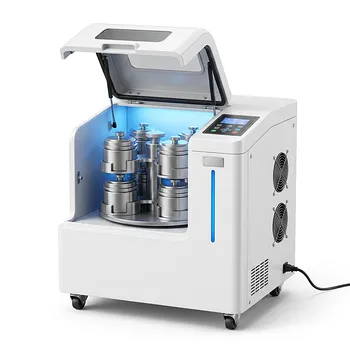
High Energy Omnidirectional Planetary Ball Mill 20L
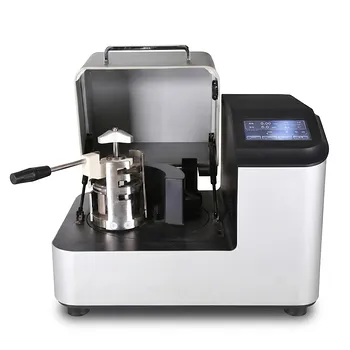
High Energy Laboratory Planetary Ball Mill for Nano Grinding and Material Science Sample Preparation
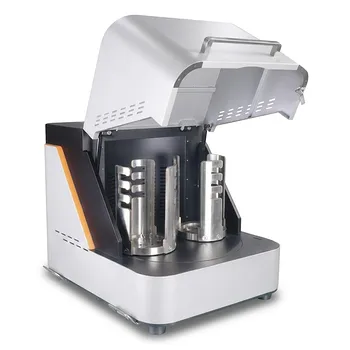
High Energy Laboratory Planetary Ball Mill for Nano Grinding and Colloidal Mixing of Hard and Brittle Materials

Vertical Square Planetary Ball Mill for Laboratory Sample Preparation and Nanoscale Grinding
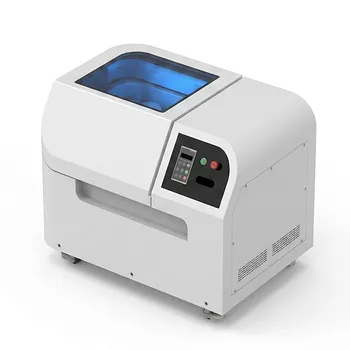
8L Planetary Ball Mill for Laboratory Grinding and Sample Preparation
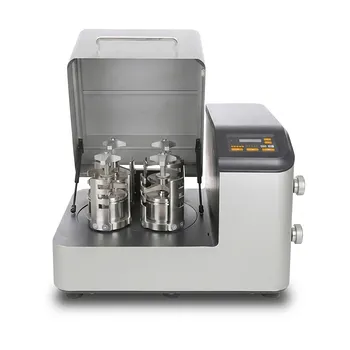
High Energy Planetary Ball Mill for Nano Scale Grinding and Colloidal Mixing in Material Science Research
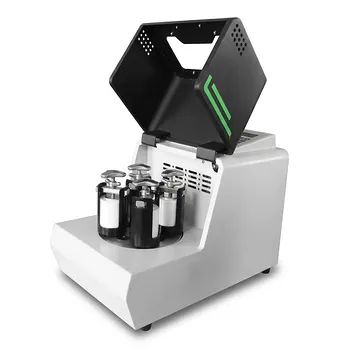
Miniature Planetary Ball Mill with Vacuum Grinding and High Efficiency for Laboratory Sample Preparation
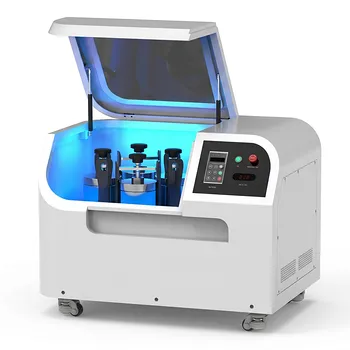
Planetary Ball Mill 12L
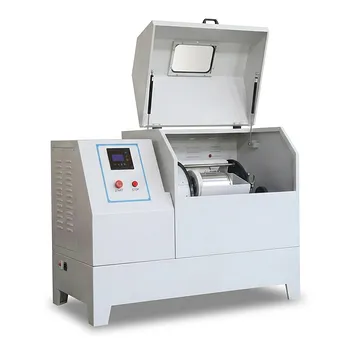
Heavy Duty Horizontal Planetary Ball Mill for Efficient Industrial Grinding and Sample Preparation
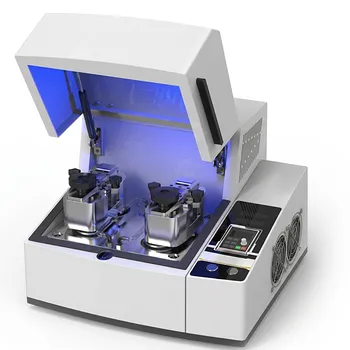
Laboratory Nano High Energy Ball Mill Ultrafine Grinding Mechanical Alloying
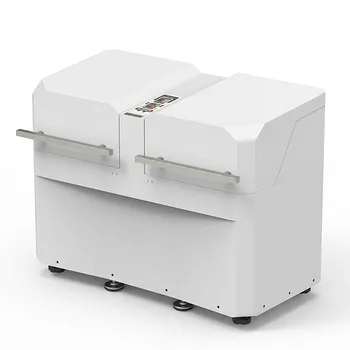
Dual Station Planetary Ball Mill 24L
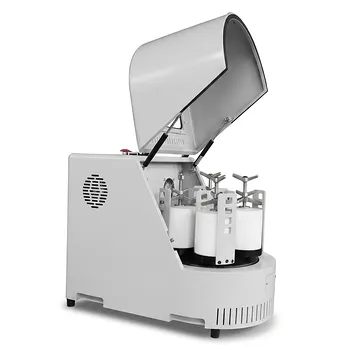
Vertical Semi Circular Planetary Ball Mill for Laboratory Precision Grinding
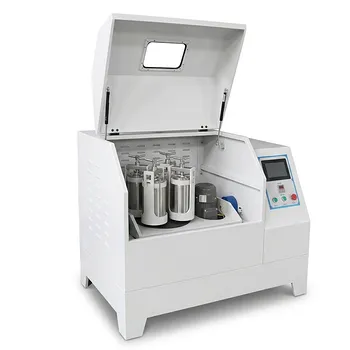
360° Rotating Omnidirectional Laboratory Planetary Ball Mill for Homogeneous Ultra-Fine Grinding and Mixing
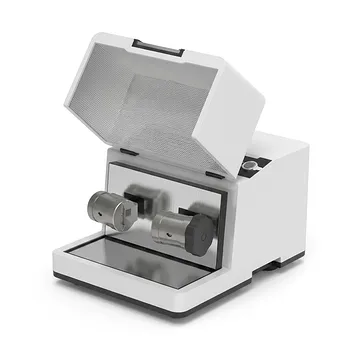
Heating Temperature Controlled High Energy Vibratory Ball Mill
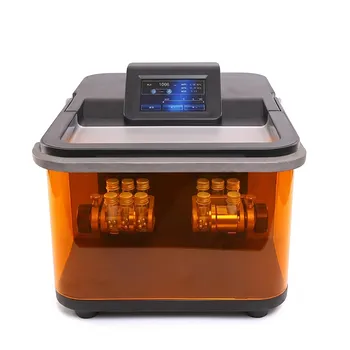
High Throughput Micro Ball Mill for Cryogenic Grinding and Laboratory Cell Disruption
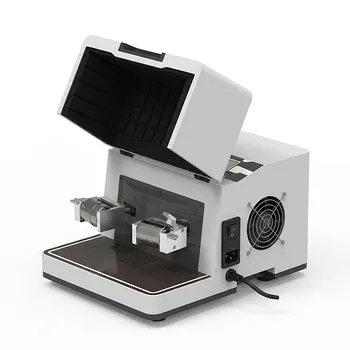
High Energy Hybrid Vibratory Ball Mill for Grinding Mixing and Cell Disruption