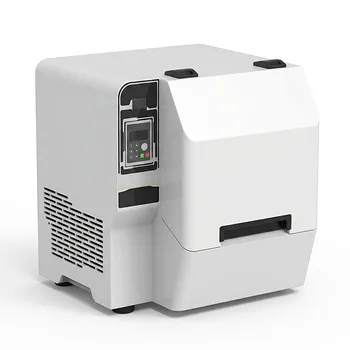
Why is a high-energy planetary ball mill used for mixing and grinding high-entropy rare earth zirconate ceramic precursors?
Updated 4 months ago
High-energy planetary ball milling is the essential precursor step for high-entropy rare earth zirconates because it forces multi-component oxides into a state of molecular-level uniformity and high surface energy. By utilizing intense centrifugal, impact, and shear forces, the mill refines coarse powders into sub-micron or nano-scale particles, ensuring that various rare earth cations are distributed with absolute homogeneity. This microscopic foundation is what allows the material to successfully transform into a stable, single-phase high-entropy structure during subsequent solid-state reactions.
Core Takeaway: A planetary ball mill is used to overcome the diffusion barriers of multi-component systems by maximizing particle contact and surface reactivity. Without this high-energy homogenization, the precursors cannot achieve the uniform cation distribution required to form a stable high-entropy phase.
Achieving Molecular-Level Homogenization
Overcoming the Complexity of High-Entropy Systems
High-entropy ceramics typically involve five or more rare earth components that must be perfectly integrated into a single crystal lattice. Traditional mixing methods are insufficient to prevent local concentration gradients that lead to undesirable secondary phases. High-energy milling ensures that these diverse chemical components are blended so thoroughly that they achieve uniformity at the molecular level.
The Role of Impact and Shear Forces
The planetary ball mill operates through high-speed rotation and revolution, creating a complex force field within the milling jar. Powerful centrifugal and impact forces collide the grinding media with the precursor powders, mechanically forcing the different oxides together. This intense energy input breaks down chemical aggregates, ensuring that yttrium, ytterbium, lutetium, and other cations are evenly dispersed throughout the zirconium dioxide matrix.
Enhancing Sintering Kinetics and Reactivity
Particle Size Refinement to Sub-Micron Scales
The mechanical energy of the mill rapidly reduces coarse raw materials to sub-micron or even nanometer scales. Reducing particle size dramatically increases the total surface area of the powder, which provides a higher driving force for the subsequent sintering process. Smaller particles also mean shorter diffusion paths, allowing atoms to move more easily and complete the solid-state reaction at lower temperatures.
Increasing Powder Surface Energy
The high-frequency impacts do more than just break particles; they introduce structural defects and strain into the crystal lattices. This increases the surface energy of the powder, making the precursors thermodynamically "eager" to react. This heightened energy state is critical for synthesizing complex high-entropy structures that might otherwise be kinetically hindered.
Maintaining Phase Purity and Integrity
Controlling Contamination with Specialized Media
To prevent the introduction of metallic impurities, high-hardness zirconia grinding balls are typically used. These balls offer extreme chemical stability and wear resistance, ensuring that the mechanical grinding process does not alter the stoichiometry of the rare earth zirconate. Maintaining this high level of purity is vital for achieving the specific mechanical and thermal properties expected of high-entropy ceramics.
The Benefit of Wet Milling Environments
The process is often conducted as wet mixing using liquid media such as ethanol or alcohol. The liquid medium helps to dissipate heat, prevents powder agglomeration, and further enhances the uniformity of the slurry. This results in a more stable and consistent precursor powder that is ready for high-temperature processing or thermal spraying.
Understanding Technical Trade-offs
Mechanical Wear and Impurity Risk
While zirconia media are stable, prolonged high-energy milling will eventually result in some "media loss." If the milling time is excessive, even trace amounts of media wear can shift the stoichiometric balance of the final ceramic. Engineers must balance the need for refinement with the risk of introducing impurities from the grinding jars and balls.
Energy Consumption and Heat Management
High-energy milling generates significant internal heat due to the friction of the balls and powder. If not managed through proper intervals or cooling media, this heat can cause premature reactions or unwanted phase changes in the precursor oxides. Process optimization is required to ensure the powder reaches the desired fineness without degrading its chemical reactivity.
How to Apply This to Your Project
Optimizing the Milling Process for High-Entropy Yields
To achieve the best results when preparing high-entropy ceramic precursors, the milling strategy should be tailored to your specific material goals.
- If your primary focus is phase purity: Use high-purity zirconia grinding media and an ethanol medium to prevent metallic contamination and ensure a clean solid-state reaction.
- If your primary focus is rapid sintering: Increase the milling time or speed to reach nanometer-scale refinement, which maximizes the surface energy and reduces the required reaction temperature.
- If your primary focus is coating density: Prioritize the uniformity of the particle size distribution to ensure the resulting powder flows well and melts consistently during thermal spraying.
By mastering the high-energy milling stage, you establish the precise chemical and physical environment necessary for the birth of high-performance high-entropy ceramics.
Summary Table:
| Feature | Benefit for High-Entropy Ceramics |
|---|---|
| Homogenization | Achieves molecular-level mixing of 5+ rare earth components |
| Particle Size | Refines powders to sub-micron scales for faster sintering |
| Surface Energy | Increases reactivity to overcome complex diffusion barriers |
| Phase Purity | Uses zirconia media to prevent metallic contamination |
Elevate Your Material Science Research with Precision Equipment
Achieving the perfect high-entropy structure requires more than just chemistry—it requires the right mechanical force. We provide complete laboratory sample preparation solutions tailored for advanced material science and powder processing.
Our extensive equipment line supports every stage of your workflow:
- Grinding & Milling: High-energy planetary ball mills, jet mills, and cryogenic grinders for nano-scale refinement.
- Powder Preparation: Sieve shakers, crushers, and specialized powder or defoaming mixers.
- Compaction & Forming: A full spectrum of hydraulic presses, including Cold/Warm Isostatic Presses (CIP/WIP), XRF pellet presses, and vacuum hot presses.
Whether you are synthesizing rare earth zirconates or developing next-generation alloys, our equipment ensures the homogeneity and purity your research demands. Contact our technical experts today to find the right solution for your lab!
References
- Jiahang Liu, Honglin Guo. A novel high-entropy (Sc0.2La0.2Sm0.2Er0.2Yb0.2)2Zr2O7 ceramics with excellent thermophysical properties designed by thermal properties tailoring theory. DOI: 10.2298/pac2504334l
Mentioned Products
- High Energy Planetary Ball Mill for Nano Scale Grinding and Mechanical Alloying
- High Energy Laboratory Planetary Ball Mill for Nano Grinding and Colloidal Mixing of Hard and Brittle Materials
- High Energy Omnidirectional Planetary Ball Mill 16L
- High Energy Planetary Ball Mill for Nano Scale Grinding and Colloidal Mixing in Material Science Research
- High Energy Laboratory Planetary Ball Mill for Nano Grinding and Material Science Sample Preparation
People Also Ask
- Why is a high-energy planetary ball mill used for nano-milling As4Se3? Achieve Expert Structural Transformation
- What role do high-energy planetary ball mills play in FDM composite filament preparation? Optimize Material Performance
- What is the role of a high-energy planetary ball mill in the exfoliation of modified WSe2? Achieve Nano-Precision
- What is the function of a planetary ball mill in glass-ceramic sintering? Optimize Reactivity and Uniformity
- What is the role of a high-energy planetary ball mill in the preparation of high-performance nano-ceramics? Key Guide

Tech Team · PowderPreparation
Last updated on Jun 03, 2026
Related Products
High Energy Planetary Ball Mill for Nano Scale Grinding and Mechanical Alloying
High Energy Laboratory Planetary Ball Mill for Nano Grinding and Colloidal Mixing of Hard and Brittle Materials
High Energy Omnidirectional Planetary Ball Mill 16L
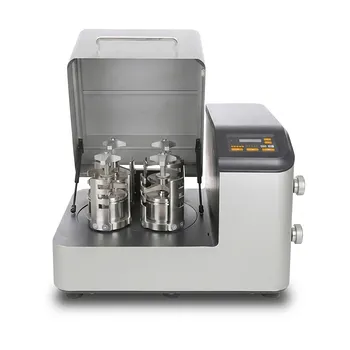
High Energy Planetary Ball Mill for Nano Scale Grinding and Colloidal Mixing in Material Science Research
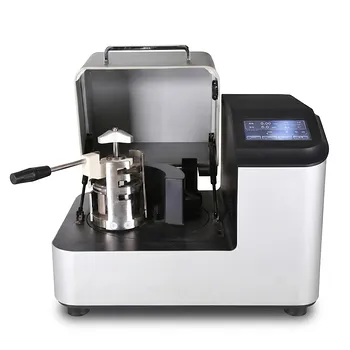
High Energy Laboratory Planetary Ball Mill for Nano Grinding and Material Science Sample Preparation
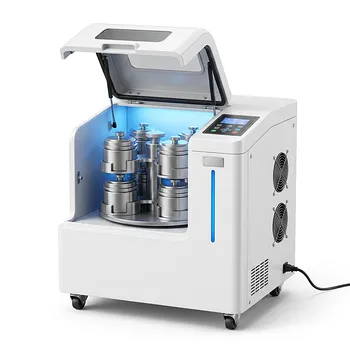
High Energy Omnidirectional Planetary Ball Mill 20L
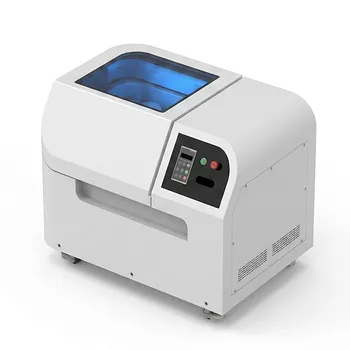
8L Planetary Ball Mill for Laboratory Grinding and Sample Preparation
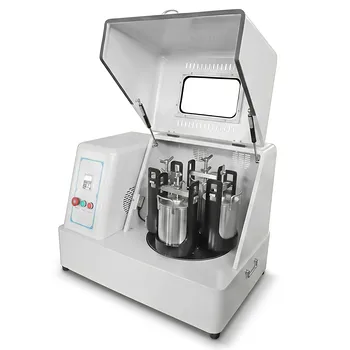
Vertical Square Planetary Ball Mill for Laboratory Sample Preparation and Nanoscale Grinding
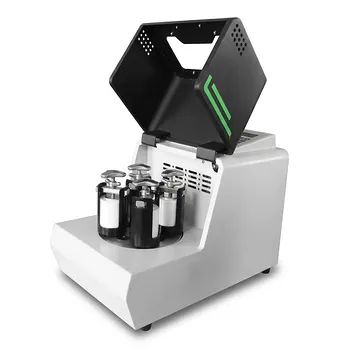
Miniature Planetary Ball Mill with Vacuum Grinding and High Efficiency for Laboratory Sample Preparation
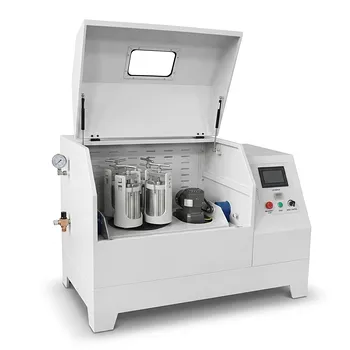
Vertical Production Planetary Ball Mill for High Throughput Powder Processing
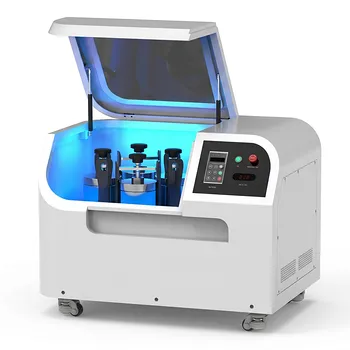
Planetary Ball Mill 12L
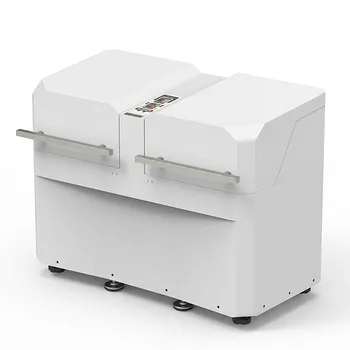
Dual Station Planetary Ball Mill 24L
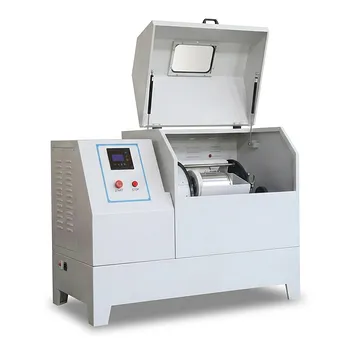
Heavy Duty Horizontal Planetary Ball Mill for Efficient Industrial Grinding and Sample Preparation
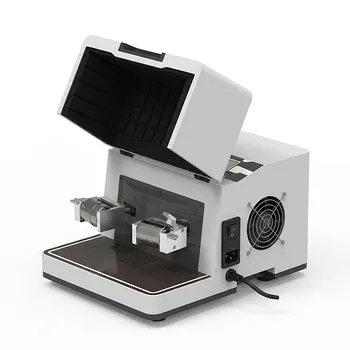
High Energy Hybrid Vibratory Ball Mill for Grinding Mixing and Cell Disruption
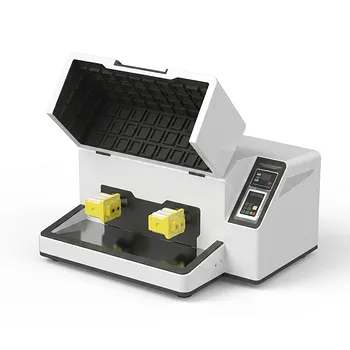
Multi-Platform Nanoscale High-Energy Vibratory Ball Mill

Nano High Energy Vibratory Ball Mill with Heating and Temperature Control
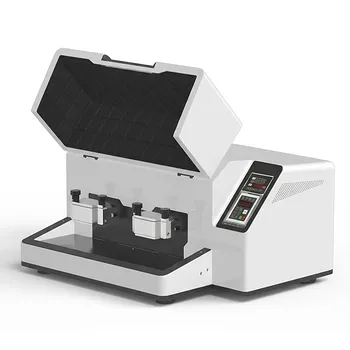
Nanoscale High-Energy Vibratory Ball Mill for Laboratory Sample Preparation, Mechanochemistry, and Mechanical Alloying
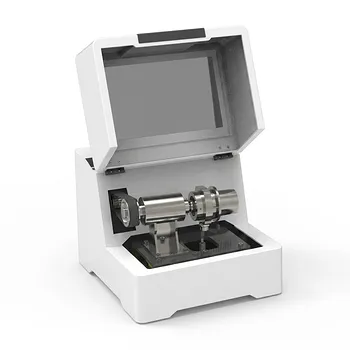
Single Tank High Energy Vibratory Ball Mill for Laboratory Grinding and Mixing
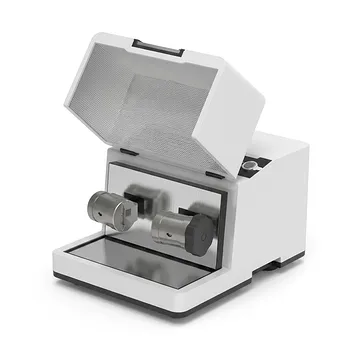
Heating Temperature Controlled High Energy Vibratory Ball Mill