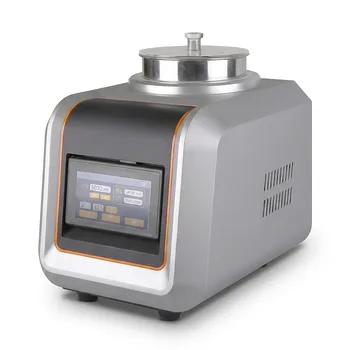
What role do vibratory sieve shakers and standard test sieves play in plastic co-pyrolysis? Ensure Uniform Reaction Data
Updated 5 months ago
Vibratory sieve shakers and standard test sieves serve as the primary tools for particle size classification in plastic co-pyrolysis. By isolating specific mesh fractions—typically within ranges like 104 to 150 μm—these tools ensure that all components in a mixed sample react uniformly. This physical standardization eliminates variables related to heat transfer and reaction kinetics, providing the necessary foundation for accurate, repeatable experimental data in subsequent micro-pyrolysis or fixed-bed reactor tests.
Sieve analysis removes physical interference from the co-pyrolysis process by ensuring a uniform particle size distribution. This allows researchers to isolate the chemical interactions between different materials, such as plastics and biomass, without the distorting effects of heat transfer gradients or mass transfer limitations.
Standardizing Thermal Behavior and Reaction Kinetics
Eliminating Heat Transfer Gradients
In co-pyrolysis, materials must be heated rapidly and uniformly to trigger specific chemical pathways. Vibratory sieve shakers allow researchers to select a narrow particle range, which ensures that heat penetrates to the core of every particle at the same rate. This prevents the "cold core" effect found in oversized particles, where the exterior carbonizes while the interior remains unreacted.
Synchronizing Reaction Kinetics
When mixing different feedstocks like plastic and biomass, their decomposition temperatures and rates vary. Using standard test sieves to match the particle sizes of both materials ensures that their surface-area-to-volume ratios are comparable. This synchronization is critical for observing how the two materials chemically interact during the volatile release phase.
Enhancing Thermal Analysis Signal Clarity
For analytical techniques like Thermogravimetric Analysis (TGA), consistency is paramount. By strictly controlling particle sizes (often within 100–200 µm), sieving eliminates signal noise caused by particle variance. This leads to more accurate response values and more reliable regression analysis when determining kinetic parameters.
Optimizing Reactor Performance and Product Yield
Preventing Reactor Pressure Drops
In fixed-bed reactors, the physical arrangement of the sample affects gas flow. Using a vibratory sieve shaker to remove "fines" or undersized particles prevents them from clogging the gaps between larger particles. This maintenance of bed porosity prevents excessive pressure drops and ensures stable yields throughout the duration of the experiment.
Maximizing Bio-oil and Volatile Quality
Particle size directly influences the release paths of pyrolysis volatiles. Research indicates that specific size ranges—such as 600 µm to 1.18 mm for certain biomass components—are optimal for maximizing bio-oil production. Precise sieving allows researchers to identify and utilize these "sweet spot" ranges for improved liquid yields.
Improving Mixed Material Dispersion
In co-pyrolysis involving wood-plastic composites (WPC), uniform dispersion of wood flour within the polymer matrix is essential. Precision sieving (targeting ranges like 36μm to 54μm) ensures that the additives are distributed evenly. This uniformity prevents stress concentration and ensures that the final pyrolysis char or composite product maintains consistent physical properties.
Understanding the Trade-offs and Limitations
The Risk of Sample Bias
While sieving creates uniformity, it can inadvertently introduce bias if certain components of a heterogeneous plastic waste stream are more brittle than others. The more brittle materials may disproportionately end up in the smaller mesh fractions. Researchers must ensure that the sieved fraction remains chemically representative of the original bulk material.
Screen Blinding and Maintenance
Plastic powders, especially those with low melting points or static charges, can "blind" or clog the apertures of standard test sieves. This reduces sieving efficiency and can lead to inaccurate size distributions. Regular cleaning with ultrasonic baths and the use of sieving aids (like ceramic balls or anti-static sprays) are often required to maintain accuracy.
Material Loss During Processing
The process of grinding and subsequent multi-stage sieving inevitably leads to material loss. For rare or expensive experimental catalysts and specialized polymers, the requirement for a narrow particle size range may necessitate a significantly larger initial sample size.
Applying Sieving Standards to Your Research Goals
How to Apply This to Your Project
To achieve the best results in plastic co-pyrolysis preparation, select your sieving strategy based on your specific analytical objectives.
- If your primary focus is Kinetic Modeling (TGA): Use high-precision stainless steel sieves to isolate a very narrow fraction (e.g., 100–125 μm) to minimize mass transfer limitations and signal noise.
- If your primary focus is Bio-oil Yield Optimization: Experiment with broader ranges (e.g., 0.5 mm to 1.5 mm) to determine the specific size that balances heat conduction with volatile residence time.
- If your primary focus is Reactor Stability: Prioritize the removal of "fines" (particles < 50 μm) to ensure consistent gas permeability and prevent pressure-induced shutdowns.
- If your primary focus is Product Morphology (Char): Use a full nest of sieves (10 mm down to 0.125 mm) after pyrolysis to accurately map the particle size distribution of the recovered solids.
The precise control of particle size via vibratory sieving is the bridge between raw waste materials and high-quality, reproducible chemical data.
Summary Table:
| Application Goal | Impact on Co-Pyrolysis | Recommended Tool/Action |
|---|---|---|
| Thermal Uniformity | Eliminates "cold core" effects and heat gradients. | Vibratory Sieve Shaker |
| Reaction Kinetics | Synchronizes decomposition rates of mixed feedstocks. | Standard Test Sieves (Mesh 100-200) |
| Reactor Stability | Prevents pressure drops by removing undersized fines. | Air-jet or Vibratory Shaker |
| Bio-oil Yield | Identifies "sweet spot" sizes for maximum volatiles. | Full Nest of Test Sieves |
| Signal Clarity | Reduces noise in TGA/kinetic parameter modeling. | Precision Stainless Steel Sieves |
Optimize Your Sample Preparation with Precision Equipment
Achieving repeatable and accurate data in plastic co-pyrolysis starts with superior sample uniformity. We provide complete laboratory sample preparation solutions for material science, specializing in high-performance powder processing and compaction equipment.
Our extensive product line is designed to meet the rigorous demands of research and industrial labs:
- Particle Size Classification: Vibratory and air-jet sieve shakers with a wide range of standard test sieves and meshes.
- Size Reduction: Jaw/roll crushers, liquid nitrogen cryogenic grinders, and specialized mills (planetary ball, jet, sand/bead, disc, rotor).
- Advanced Compaction: A full spectrum of hydraulic presses, including Cold/Warm Isostatic Presses (CIP/WIP), standard lab presses, and vacuum hot presses.
- Mixing Solutions: High-efficiency powder mixers and defoaming mixers for perfect material dispersion.
Whether you are a researcher focused on kinetic modeling or a distributor seeking reliable OEM/ODM support, we deliver the precision you need. Contact us today to find the perfect solution for your lab!
References
- Wakana Adachi, Toshiaki Yoshioka. Selective recovery of pyrolyzates of biodegradable (PLA, PHBH) and common plastics (HDPE, PP, PS) during co-pyrolysis under slow heating. DOI: 10.1038/s41598-024-67330-0
Mentioned Products
- Vibratory Sieve Shaker Electromagnetic 3D Motion Powder Particle Size Analyzer for Dry and Wet Sieving
- Laboratory Dry and Wet Three Dimensional Vibratory Sieve Shaker for Particle Analysis
- Stainless Steel Laboratory Vibratory Test Sieve Shaker
- Heavy Duty Dry Three Dimensional Vibratory Sieve Shaker for Particle Separation
- Dry Three Dimensional Vibratory Sieve Shaker
People Also Ask
- How does a vibratory sieve shaker contribute to optimizing the performance of activated carbon? Enhance Adsorption Precision
- Why is a laboratory vibratory sieve shaker necessary for processing magnesium-based borate precursor powders? Boost Activity
- Why use a vibratory sieve shaker to verify coarse aggregate grading in rubberized concrete? Ensure Structural Integrity
- What function do vibratory sieve shakers and standard test sieves serve in the preparation of adsorbents? Key Guide
- What role does a vibratory sieve shaker play in the particle size analysis of ground corn products? Enhance QC Precision

Tech Team · PowderPreparation
Last updated on May 14, 2026
Related Products
Vibratory Sieve Shaker Electromagnetic 3D Motion Powder Particle Size Analyzer for Dry and Wet Sieving
Laboratory Dry and Wet Three Dimensional Vibratory Sieve Shaker for Particle Analysis
Stainless Steel Laboratory Vibratory Test Sieve Shaker
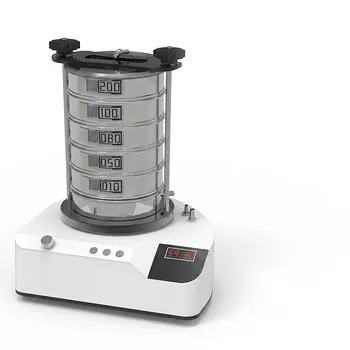
Heavy Duty Dry Three Dimensional Vibratory Sieve Shaker for Particle Separation
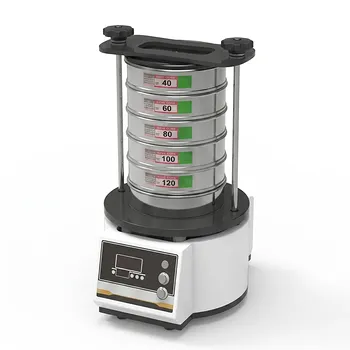
Dry Three Dimensional Vibratory Sieve Shaker
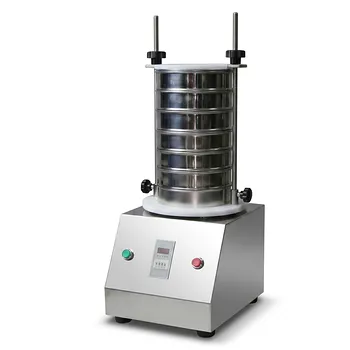
Small Laboratory Vibratory Sieve Shaker for Powder Gradation and Particle Size Analysis
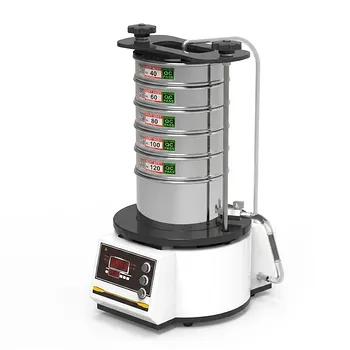
High Frequency Wet Three-Dimensional Vibrating Sieve Shaker for Dry and Wet Particle Size Analysis
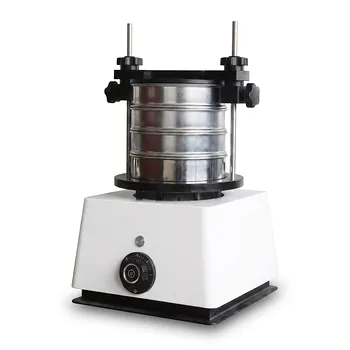
Small Laboratory Vibrating Sieve Shaker for Precise Particle Size Analysis
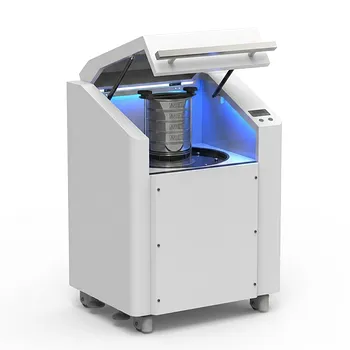
High Frequency Cabinet Type Three-Dimensional Rotary Vibrating Sieve Shaker for Dry Sieving and Particle Classification
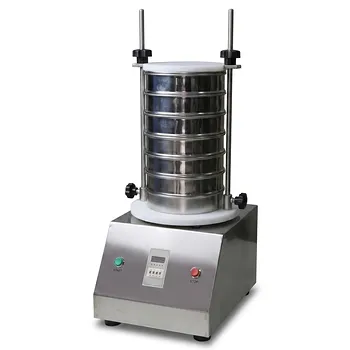
Laboratory Vibratory Test Sieve Shaker for Precision Particle Size Analysis and Powder Grading
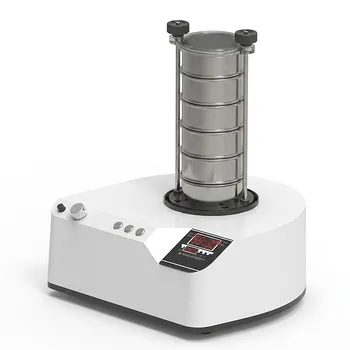
三维电磁微量振动筛分仪
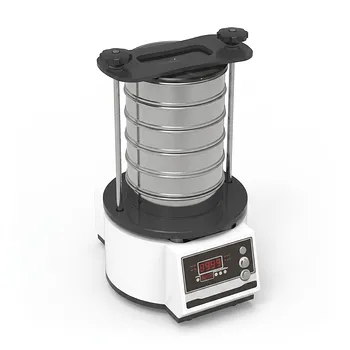
Tapping Oscillating Sieve Shaker for Dry and Wet Particle Size Analysis
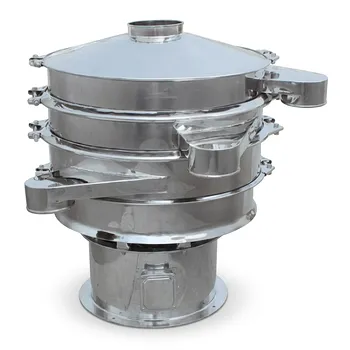
Stainless Steel Rotary Vibrating Sieve High Precision Circular Vibratory Separator Industrial Powder Grading Machine Multi Layer Sifting Equipment
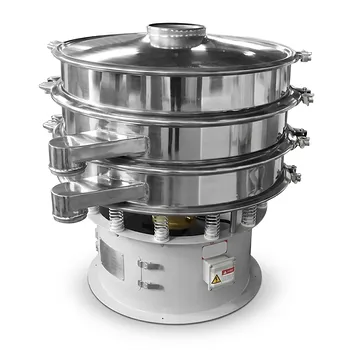
Three Dimensional Rotary Vibrating Sieve
Small Vibrating Ultrafine Grinder for Traditional Chinese Medicine
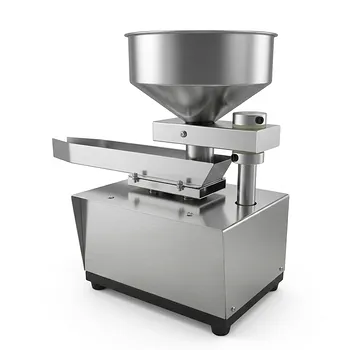
Automatic Vibrating Powder Feeder for Laboratory Material Processing Precision Vibratory Hopper Feeder for Granular and Powder Material Handling Industrial Grade Vibrating Tray Feeder for Consistent Material Sample Preparation
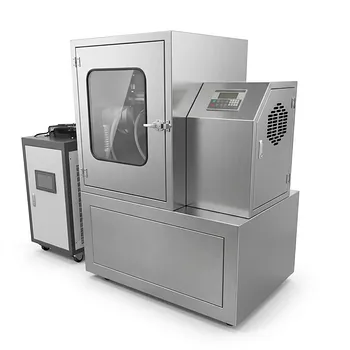
Vibratory Superfine Grinder for Ultra Fine Laboratory Powder Milling
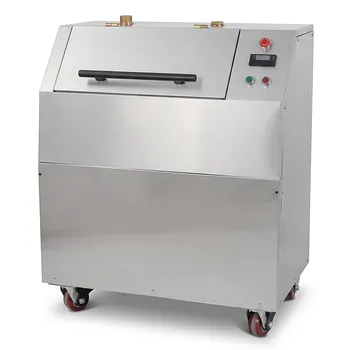
Vibratory Disc Mill for Rapid Fine Grinding and High Throughput Sample Preparation of Hard and Brittle Materials