What is the role of a vibratory sieve shaker and standard test sieves in the pretreatment of clam shells for hydroxyapatite synthesis? Top Roles.
Updated 5 months ago
The precise control of particle size is the fundamental role of vibratory sieve shakers. In the pretreatment of clam shells for hydroxyapatite synthesis, these tools ensure that ground powder is filtered to specific dimensions, typically below 300 micrometers, to maximize the surface area for chemical reactions. By providing a consistent particle size, the equipment guarantees uniform reaction rates and high precursor activity, which are essential for high-quality synthetic outcomes.
The use of vibratory sieve shakers and standard test sieves transforms raw clam shell waste into a standardized chemical precursor. This mechanical grading process is critical for ensuring chemical homogeneity, improving reaction kinetics, and eliminating structural defects in the final hydroxyapatite product.
Optimizing Chemical Reactivity and Reaction Kinetics
Maximizing Surface Area for Precursor Activity
Vibratory sieve shakers allow researchers to isolate powders with high surface-area-to-volume ratios. By restricting clam shell particles to specific sizes, such as 75 to 300 micrometers, the available contact area for chemical reagents is significantly increased.
This increased contact area directly accelerates the reaction rate during synthesis. It ensures that the calcium carbonate from the shells reacts thoroughly and predictably with phosphate sources to form hydroxyapatite.
Ensuring Chemical Homogeneity
A uniform particle size distribution prevents localized variations in reaction progress. When particles are consistent in size, the chemical transformation occurs at a synchronized pace across the entire sample.
This uniformity is vital for the "high activity" of precursors. It prevents the formation of unreacted cores within larger particles, which would otherwise compromise the purity of the final hydroxyapatite.
Enhancing Physical Integrity and Analytical Accuracy
Eliminating Structural Defects in Sintered Products
For applications involving hydroxyapatite disks or ceramics, sieving eliminates large particle impurities. These oversized fragments can act as stress concentrators during the compaction and sintering phases.
By using standard test sieves (such as 200 mesh), manufacturers provide a consistent physical basis for powder molding. This precision minimizes internal defects and cracks in the final sintered ceramic body.
Facilitating Precise Characterization
Standardized particle sizes are essential for accurate X-ray diffraction (XRD) phase analysis. Consistent grading ensures uniform sample packing density in the XRD holder, which is critical for obtaining reliable diffraction patterns.
Furthermore, precise classification helps eliminate the interference of particle size variations on reaction kinetics research. This allows scientists to isolate the effects of temperature or concentration without the "noise" of inconsistent raw materials.
Understanding the Trade-offs
The Balance of Particle Fineness
While finer particles (e.g., <75 micrometers) increase reactivity, they also increase the risk of powder agglomeration. Extremely fine powders may "blind" or clog the sieve mesh, requiring longer processing times or specialized ultrasonic cleaning.
Energy Consumption vs. Yield
Achieving a very narrow particle size range requires extended shaking times and may result in a lower material yield. You must balance the need for extreme precision against the energy costs and the volume of raw material wasted as "oversized" or "undersized" fractions.
Applying Sieving Standards to Your Synthesis Goal
To achieve the best results in your hydroxyapatite synthesis, your sieving protocol should align with your specific research or production requirements.
- If your primary focus is maximizing chemical reaction speed: Utilize a sieve shaker to isolate particles below 75 micrometers to ensure the highest possible surface area for precursor interaction.
- If your primary focus is producing high-strength ceramic disks: Focus on eliminating all particles above 150 micrometers to prevent structural voids and internal stresses during the sintering process.
- If your primary focus is analytical accuracy and XRD phase purity: Use a multi-layer sieve stack to obtain a very narrow "cut" (e.g., 75–125 micrometers) to ensure uniform packing and repeatable experimental results.
By integrating mechanized vibratory sieving into your pretreatment workflow, you ensure that raw clam shells are transformed from biological waste into a high-performance, standardized technical material.
Summary Table:
| Key Role | Impact on Synthesis | Optimization Goal |
|---|---|---|
| Particle Size Control | Ensures uniform reaction kinetics and precursor activity. | < 300 μm (typically) |
| Surface Area Maximization | Accelerates chemical transformation rates. | Isolate high surface-to-volume powders |
| Homogeneity Check | Prevents unreacted cores and chemical variations. | Synchronized chemical transformation |
| Structural Integrity | Eliminates large fragments to prevent sintering defects. | 200 Mesh / 75 μm filtration |
| Analytical Accuracy | Provides repeatable XRD patterns and sample packing. | Narrow size "cuts" (e.g., 75-125 μm) |
Elevate Your Material Research with Precision Sample Preparation
At [Your Brand Name], we provide complete laboratory sample preparation solutions tailored for material science. From transforming raw biological waste into high-performance precursors to final product compaction, our equipment ensures accuracy at every stage.
Our Specialized Product Lines Include:
- Size Reduction: Jaw/roll crushers, liquid nitrogen cryogenic grinders, and advanced mills (planetary ball, jet, sand/bead, disc, rotor).
- Classification & Mixing: Vibratory and air-jet sieve shakers with a full range of test sieves, plus high-efficiency powder and defoaming mixers.
- Compaction & Sintering: A full spectrum of hydraulic presses, including Cold/Warm Isostatic Presses (CIP/WIP), standard lab presses, XRF pellet presses, and vacuum hot presses.
Whether you are synthesizing hydroxyapatite or developing advanced ceramics, our expert solutions help you eliminate structural defects and achieve superior chemical homogeneity.
Contact our technical team today to optimize your workflow!
References
- C.K. Ng, U. Sutharsini. Characterization and Sintering Properties of Hydroxyapatite Bioceramics Synthesized From Clamshell Biowaste. DOI: 10.31436/iiumej.v23i2.2143
Mentioned Products
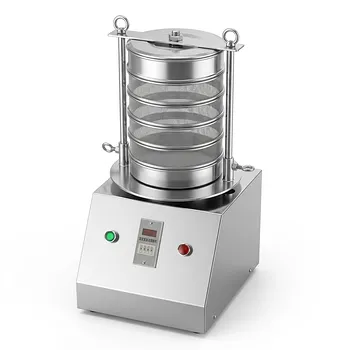
- Stainless Steel Laboratory Vibratory Test Sieve Shaker
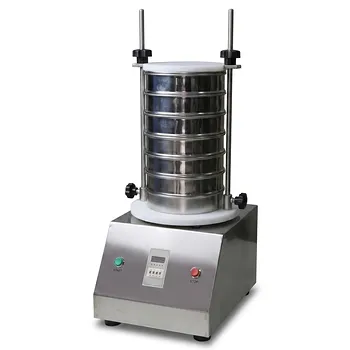
- Laboratory Vibratory Test Sieve Shaker for Precision Particle Size Analysis and Powder Grading
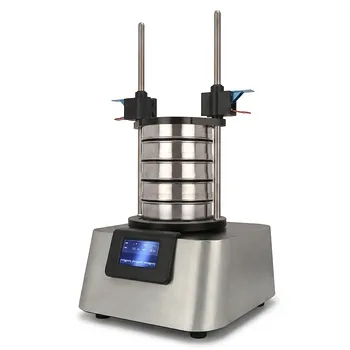
- Vibratory Sieve Shaker Electromagnetic 3D Motion Powder Particle Size Analyzer for Dry and Wet Sieving
- Small Laboratory Vibrating Sieve Shaker for Precise Particle Size Analysis
- Small Laboratory Vibratory Sieve Shaker for Powder Gradation and Particle Size Analysis
People Also Ask
- What function does a laboratory vibratory sieve shaker serve in the production process of metakaolin? Optimize Reactivity
- Why is a precision laboratory vibratory sieve shaker necessary for particle size control? Optimize Biomass Carbonization
- What is the function of a laboratory vibratory sieve shaker? Enhance Coal Particle Size Distribution (PSD) Analysis
- What role do laboratory vibratory sieve shakers and test sieves play before the molding of Nb-Cu composite powders?
- What is the primary function of a laboratory vibratory sieve shaker in the evaluation of sand liquefaction potential?

Tech Team · PowderPreparation
Last updated on May 14, 2026
Related Products
Stainless Steel Laboratory Vibratory Test Sieve Shaker
Laboratory Vibratory Test Sieve Shaker for Precision Particle Size Analysis and Powder Grading
Vibratory Sieve Shaker Electromagnetic 3D Motion Powder Particle Size Analyzer for Dry and Wet Sieving
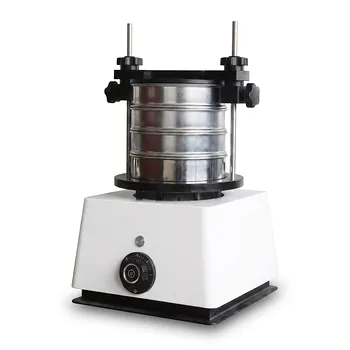
Small Laboratory Vibrating Sieve Shaker for Precise Particle Size Analysis
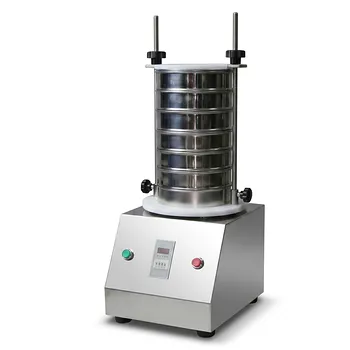
Small Laboratory Vibratory Sieve Shaker for Powder Gradation and Particle Size Analysis
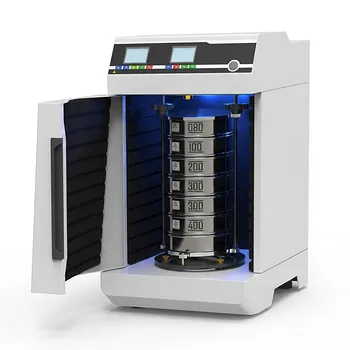
Laboratory Dry and Wet Three Dimensional Vibratory Sieve Shaker for Particle Analysis
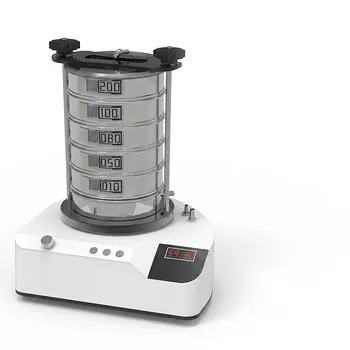
Heavy Duty Dry Three Dimensional Vibratory Sieve Shaker for Particle Separation
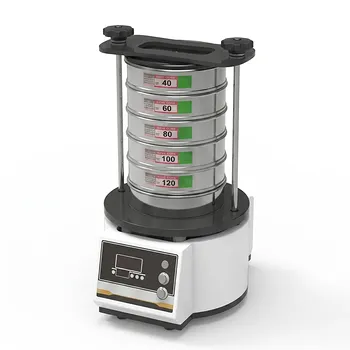
Dry Three Dimensional Vibratory Sieve Shaker
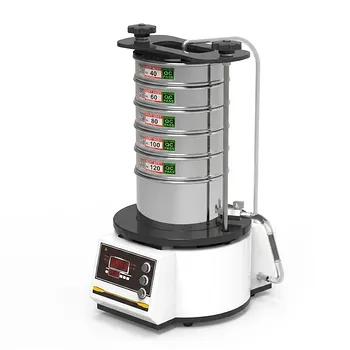
High Frequency Wet Three-Dimensional Vibrating Sieve Shaker for Dry and Wet Particle Size Analysis
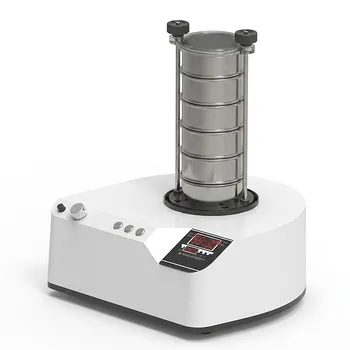
三维电磁微量振动筛分仪
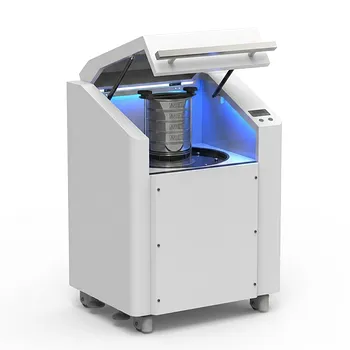
High Frequency Cabinet Type Three-Dimensional Rotary Vibrating Sieve Shaker for Dry Sieving and Particle Classification
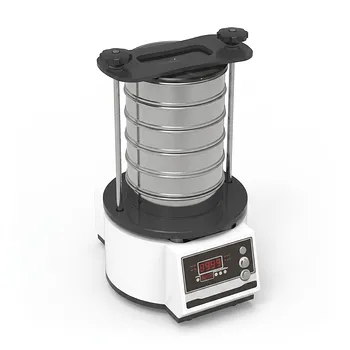
Tapping Oscillating Sieve Shaker for Dry and Wet Particle Size Analysis
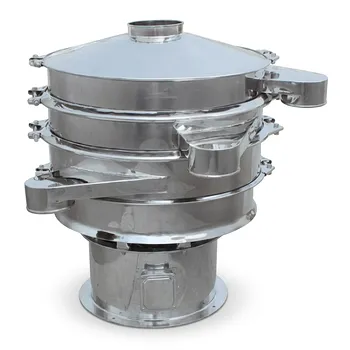
Stainless Steel Rotary Vibrating Sieve High Precision Circular Vibratory Separator Industrial Powder Grading Machine Multi Layer Sifting Equipment
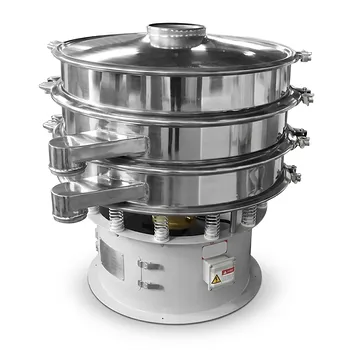
Three Dimensional Rotary Vibrating Sieve
Vibratory Superfine Grinder for Ultra Fine Laboratory Powder Milling
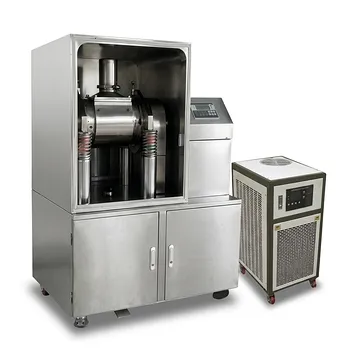
Small Vibrating Ultrafine Grinder for Traditional Chinese Medicine
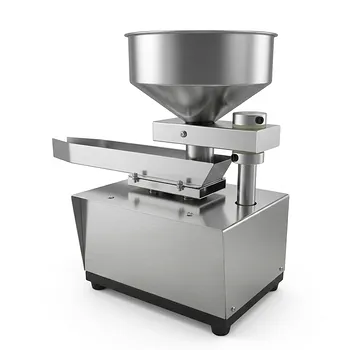
Automatic Vibrating Powder Feeder for Laboratory Material Processing Precision Vibratory Hopper Feeder for Granular and Powder Material Handling Industrial Grade Vibrating Tray Feeder for Consistent Material Sample Preparation
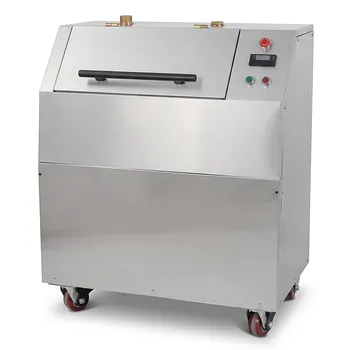
Vibratory Disc Mill for Rapid Fine Grinding and High Throughput Sample Preparation of Hard and Brittle Materials