Why are standard test sieves used for WPC wood particle grading? Optimize quality and mechanical performance.
Updated 4 months ago
Precise wood particle grading is the foundation of high-quality Wood Plastic Composite (WPC) engineering. Standard test sieves are utilized to categorize wood powder into specific size classifications—such as 10 mesh (2.0 mm) to 100 mesh (0.15 mm)—to ensure raw material uniformity. This rigorous grading allows manufacturers to quantitatively evaluate and optimize how particle dimensions influence the final composite’s density, water absorption, and mechanical integrity.
Grading wood particles through standard sieves is essential for achieving uniform fiber dispersion and predictable interfacial bonding within the polymer matrix. By controlling particle size and the resulting aspect ratio, manufacturers can eliminate processing variables and ensure the structural stability of the final product.
Enhancing Mechanical Performance and Interfacial Bonding
Achieving Uniform Fiber Dispersion
Standard test sieves ensure that reinforcement materials, such as mahogany or mango wood sawdust, possess a uniform particle size before they are mixed with polymers. Uniformity is critical for the consistent dispersion of fibers within the polymer matrix, which prevents weak spots in the material.
Optimizing the Aspect Ratio (AR)
Sieve analysis allows researchers to characterize the aspect ratio—the ratio of a particle's length to its diameter—of the wood fillers. This precise classification is vital for analyzing how wood dimensions contribute to the flexural modulus and overall strength of the composite.
Controlling Specific Surface Area
Using a vibratory sieve shaker to extract specific fiber fractions (typically between 150 and 710 micrometers) ensures consistency in the Specific Surface Area (SSA). A controlled SSA directly impacts the quality of the interfacial bonding between the wood fibers and the polypropylene matrix.
Standardizing Chemical and Thermal Analysis
Eliminating Heat and Mass Transfer Barriers
In laboratory settings, sieves like the 20-mesh screen are used to constrain particles to sizes below 0.841 mm for thermogravimetric analysis (TGA). Standardizing particle size ensures that heat and solvents penetrate the wood evenly, which is necessary for obtaining accurate kinetic data.
Improving Analytical Accuracy
Precise particle grading reduces inconsistencies in chemical reactions during industrial analyses of volatile matter, ash, and fixed carbon content. By removing oversized or undersized particles, manufacturers ensure that combustion reactions are uniform and data is reproducible.
Quantifying Extraction Efficiency
Grading wood chips into micron-to-millimeter ranges allows for the quantification of how physical morphology affects solvent diffusion. This is particularly important for the efficiency of hemicellulose extraction, where the path of the solvent is determined by the wood's particle size.
Optimizing Manufacturing and Flowability
Eliminating Powder Agglomerates
After processes like cryogenic ball milling, standard sieves are used to screen composite powders to remove agglomerates. Removing these clumps ensures excellent powder flowability, which is a requirement for stable and continuous feeding in industrial processes like cold spraying.
Predicting Water Absorption
By categorizing wood powder into precise size ranges, such as 0.5–1.0 mm, manufacturers can predict the rate of water absorption in the finished WPC. Smaller particles generally offer a different moisture profile than coarser chips, impacting the long-term durability of the material.
Understanding the Trade-offs
The Balance of Surface Area
While finer particles (higher mesh counts) increase the surface area for bonding, they can also significantly increase the viscosity of the melt during extrusion. This may require higher processing temperatures or increased energy consumption, which can potentially degrade the wood fibers.
Strength vs. Processability
Coarser particles may improve certain mechanical properties like impact resistance, but they often lead to poor surface finish and can act as stress concentrators if not properly bonded. Conversely, very fine powders are prone to agglomeration, which can lead to "clumping" and inconsistent material density.
How to Apply This to Your Project
Recommendations for Material Optimization
- If your primary focus is Maximum Mechanical Strength: Utilize a narrow range of mesh sizes to ensure a high and consistent aspect ratio, which optimizes the reinforcement capability of the fibers.
- If your primary focus is Chemical or Thermal Characterization: Use a 20-mesh or finer sieve to eliminate mass transfer limitations, ensuring that heat and solvents interact with the sample uniformly.
- If your primary focus is Manufacturing Throughput: Focus on removing agglomerates and fines through automated vibratory sieving to maintain high powder flowability and prevent feeder clogging.
- If your primary focus is Moisture Resistance: Select a specific particle size range that balances surface area with polymer encapsulation to minimize the exposure of raw wood surfaces.
By implementing rigorous sieve grading, you transform a variable raw material into a standardized industrial component capable of producing high-performance composites.
Summary Table:
| Grading Parameter | Purpose of Sieve Analysis | Impact on WPC Quality |
|---|---|---|
| Particle Uniformity | Ensure consistent fiber dispersion | Prevents weak spots and material failure |
| Aspect Ratio (AR) | Characterize length-to-diameter ratio | Optimizes flexural modulus and strength |
| Surface Area (SSA) | Control interfacial bonding | Enhances bonding between wood and polymer |
| Analytical Precision | Standardize thermal/chemical testing | Ensures reproducible mass and heat transfer |
| Agglomerate Removal | Improve powder flowability | Ensures stable feeding and process efficiency |
Elevate Your Material Research with Precise Sample Preparation
High-performance Wood Plastic Composites (WPC) depend on rigorous wood particle grading and specialized processing. Our Brand provides complete laboratory sample preparation solutions designed specifically for material science and powder processing.
We specialize in equipment that ensures your raw materials meet exact specifications for density, bonding, and durability:
- Sieving & Grading: Vibratory and air-jet sieve shakers with a full range of precision test sieves and meshes.
- Milling & Grinding: Liquid nitrogen cryogenic grinders, planetary ball mills, jet mills, and rotor mills for achieving perfect wood powder morphology.
- Size Reduction: High-durability jaw and roll crushers for initial material processing.
- Advanced Compaction: A full spectrum of hydraulic presses, including Cold/Warm Isostatic Presses (CIP/WIP), standard lab presses, and vacuum hot presses for composite forming.
Whether you are refining fiber dispersion or optimizing thermal characterization, our technical experts are ready to help you find the ideal equipment solution.
Contact us today to enhance your lab’s efficiency!
References
- Khandkar‐Siddikur Rahman, Md. Obaidullah Hannan. Properties of flat-pressed wood plastic composites as a function of particle size and mixing ratio. DOI: 10.1007/s10086-018-1702-3
Mentioned Products
- Laboratory Vibratory Test Sieve Shaker for Precision Particle Size Analysis and Powder Grading
- Small Laboratory Vibratory Sieve Shaker for Powder Gradation and Particle Size Analysis
- High Frequency Cabinet Type Three-Dimensional Rotary Vibrating Sieve Shaker for Dry Sieving and Particle Classification
- Small Laboratory Vibrating Sieve Shaker for Precise Particle Size Analysis
- Laboratory Air Jet Sieving Machine for Fine Powder Particle Size Analysis and Deagglomeration
People Also Ask
- What role does a laboratory sieve shaker play in determining PDI? Achieve Precision in Biomass Quality Testing
- What are the functions of sieve shakers for coconut shell powder? Achieve Precise Particle Size & Quality Control.
- What function does a laboratory sieve shaker perform in the PSD analysis of residual soil? Ensure Precise Grading
- What is the role of a laboratory sieve shaker in the preparation of plantain peel adsorbents? Standardize Particle Size
- What is the function of a laboratory vibratory sieve shaker? Enhance Coal Particle Size Distribution (PSD) Analysis

Tech Team · PowderPreparation
Last updated on Jun 03, 2026
Related Products
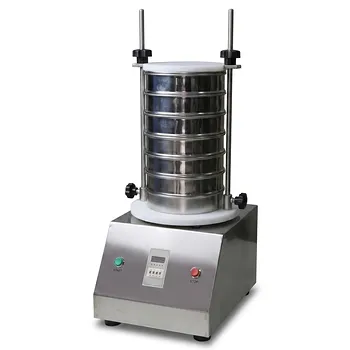
Laboratory Vibratory Test Sieve Shaker for Precision Particle Size Analysis and Powder Grading
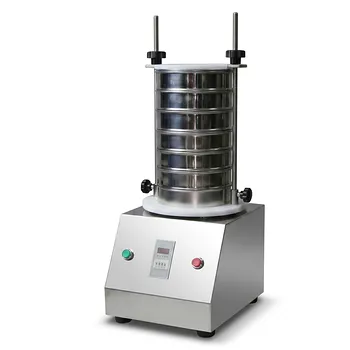
Small Laboratory Vibratory Sieve Shaker for Powder Gradation and Particle Size Analysis
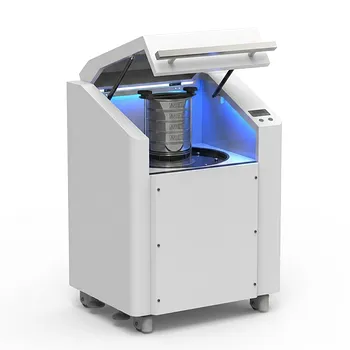
High Frequency Cabinet Type Three-Dimensional Rotary Vibrating Sieve Shaker for Dry Sieving and Particle Classification
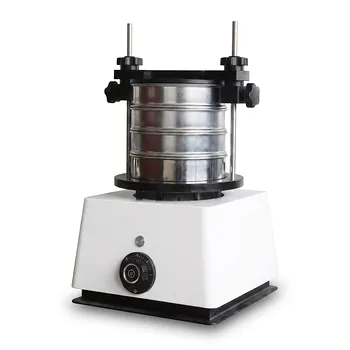
Small Laboratory Vibrating Sieve Shaker for Precise Particle Size Analysis
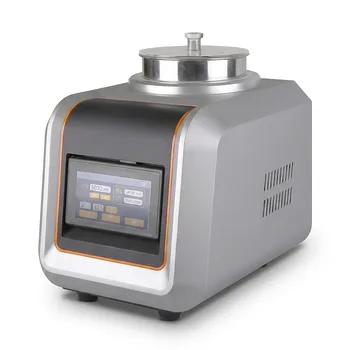
Laboratory Air Jet Sieving Machine for Fine Powder Particle Size Analysis and Deagglomeration
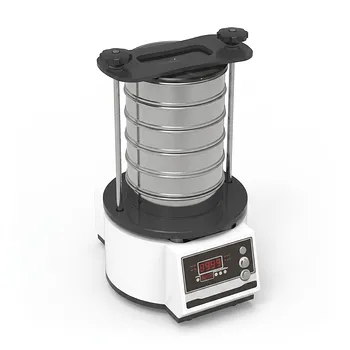
Tapping Oscillating Sieve Shaker for Dry and Wet Particle Size Analysis
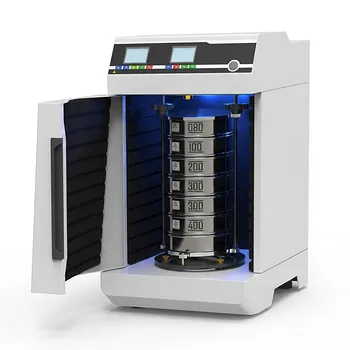
Laboratory Dry and Wet Three Dimensional Vibratory Sieve Shaker for Particle Analysis
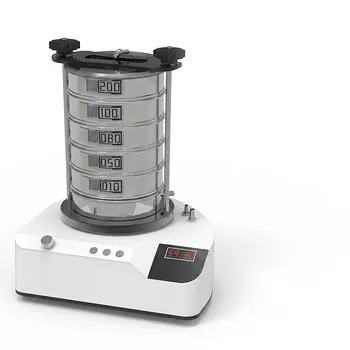
Heavy Duty Dry Three Dimensional Vibratory Sieve Shaker for Particle Separation
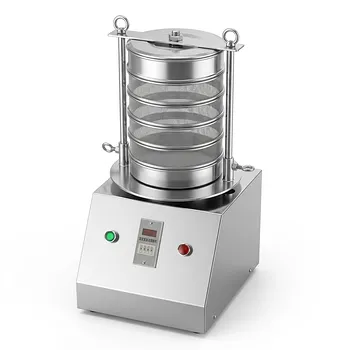
Stainless Steel Laboratory Vibratory Test Sieve Shaker
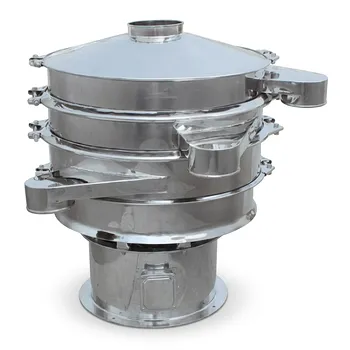
Stainless Steel Rotary Vibrating Sieve High Precision Circular Vibratory Separator Industrial Powder Grading Machine Multi Layer Sifting Equipment
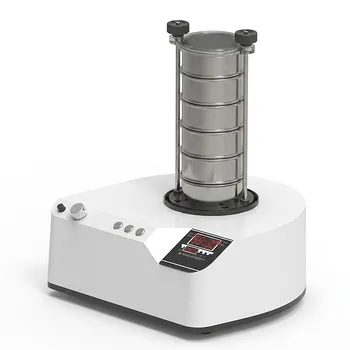
三维电磁微量振动筛分仪
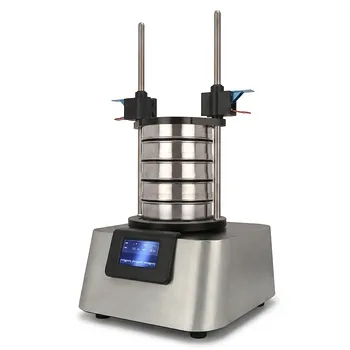
Vibratory Sieve Shaker Electromagnetic 3D Motion Powder Particle Size Analyzer for Dry and Wet Sieving
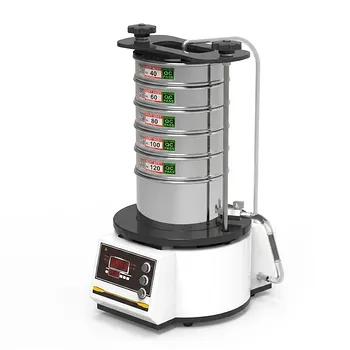
High Frequency Wet Three-Dimensional Vibrating Sieve Shaker for Dry and Wet Particle Size Analysis
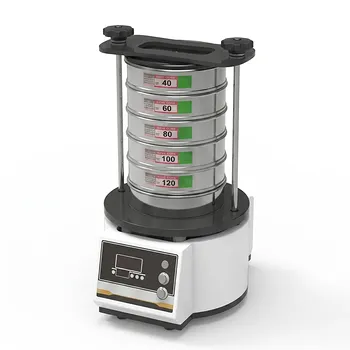
Dry Three Dimensional Vibratory Sieve Shaker
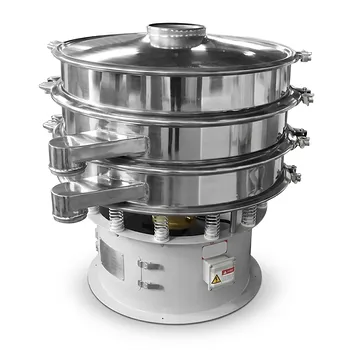
Three Dimensional Rotary Vibrating Sieve
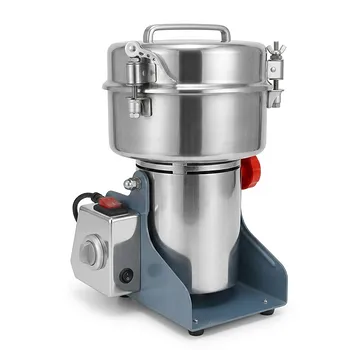
Small High-Speed Grinder for Efficient Laboratory Sample Preparation