What is the role of a laboratory sieve shaker in the preparation of plantain peel adsorbents? Standardize Particle Size
Updated 4 months ago
The laboratory sieve shaker is the primary tool for precise particle size classification during the preparation of plantain peel adsorbents. By utilizing mechanical vibration to pass pulverized biomass through a stack of standardized mesh screens, the equipment isolates specific particle fractions—commonly ranging from 300 to 1100 µm. This process ensures that the resulting adsorbent has a uniform specific surface area, which is a prerequisite for obtaining repeatable and scientifically valid results in adsorption kinetic experiments.
The core role of a sieve shaker is to eliminate particle size as a variable by standardizing the physical dimensions of the adsorbent. This control allows researchers to accurately correlate adsorption efficiency with the material's chemical properties rather than random physical fluctuations.
Standardizing the Specific Surface Area
Control of Adsorption Sites
Adsorption is a surface-mediated phenomenon where the specific surface area directly dictates the number of available binding sites. A sieve shaker ensures that the plantain peel particles fall within a narrow, predictable range, preventing smaller "fines" from disproportionately increasing the adsorption rate.
Optimization of Porosity
The equipment allows for the selection of specific size fractions that maintain uniform porosity across a sample batch. This uniformity is essential when moving from raw biomass to a molded or processed adsorbent, as it ensures consistent fluid flow and contact time during water treatment applications.
Elimination of Kinetic Fluctuations
In adsorption kinetic studies, the rate of contaminant uptake is highly sensitive to particle diameter. By using a vibratory sieve shaker to achieve a uniform particle size distribution, researchers eliminate adsorption rate fluctuations that would otherwise lead to unreliable or non-reproducible data.
Enhancing Experimental Repeatability
Consistency Across Multiple Batches
Preparing plantain peel adsorbents often involves grinding bulk organic material, which naturally produces a wide spectrum of sizes. The sieve shaker provides a mechanical grading process that ensures every experimental trial uses material with the same physical characteristics, regardless of the initial grinding conditions.
Quantitative Analysis of Size Impact
Researchers often use the shaker to separate ground material into discrete fractions, such as fine, medium, and coarse powders (e.g., <250 µm to >1200 µm). This allows for a comparative analysis to determine which particle size optimizes the balance between adsorption capacity and the ease of separation from the treated liquid.
Improving Dosage Accuracy
Consistent particle size ensures that a measured mass of adsorbent always contains a similar number of particles. This dosage accuracy is critical for maintaining the precision of treatment experiments and optimizing the dispersion and sedimentation characteristics of the powder in aqueous solutions.
Understanding the Trade-offs and Challenges
The Risk of Sieve Blinding
Plantain peel is a fibrous biomass that can cause sieve blinding, where particles become wedged in the mesh openings. This reduces the effective screening area and can lead to inaccurate grading if the equipment is not operated with the correct vibration amplitude or cleaning protocols.
Mechanical Degradation of Biomass
Prolonged vibration in a high-energy shaker can cause attrition, where the plantain peel particles rub against each other and break down into smaller fragments during the sieving process itself. This can result in a higher percentage of "fines" than intended, potentially skewing the final surface area measurements.
Limitations of Sieve Geometry
Standard test sieves measure the second smallest dimension of a particle. Because plantain peel fragments can be irregular or elongated, some particles may pass through the mesh end-first despite being longer than the nominal aperture size, leading to slight variations in the "uniformity" of the batch.
How to Apply This to Your Adsorbent Research
When integrating a sieve shaker into your preparation workflow, your approach should vary based on your specific research objectives.
- If your primary focus is Adsorption Kinetics: Use a vibratory shaker with a narrow mesh range (e.g., 300–500 µm) to minimize surface area variables and ensure high data reproducibility.
- If your primary focus is Industrial Scalability: Test a wider particle size distribution (e.g., <1100 µm) to determine the maximum size that still provides acceptable adsorption efficiency, as this reduces the energy costs associated with over-grinding.
- If your primary focus is Material Characterization: Utilize a full stack of sieves to map the complete particle size distribution (PSD) of your pulverized plantain peel, allowing you to optimize the grinding process for higher yields of the desired fraction.
By precisely controlling the physical dimensions of plantain peel biomass, the laboratory sieve shaker provides the foundational consistency required for rigorous environmental engineering and material science research.
Summary Table:
| Key Function | Core Benefit | Research Impact |
|---|---|---|
| Particle Grading | Standardizes specific surface area | Eliminates kinetic fluctuations |
| Batch Uniformity | Consistent binding site availability | High experimental repeatability |
| Fraction Isolation | Comparative size-performance analysis | Optimized dosage & scalability |
| Porosity Control | Uniform fluid flow in treatment | Precise water treatment modeling |
Elevate Your Adsorbent Research with Precision Equipment
Achieving repeatable results in material science starts with perfect sample preparation. We provide complete laboratory sample preparation solutions, specializing in high-performance powder processing and compaction equipment.
Whether you need to refine biomass with our vibratory or air-jet sieve shakers, pulverize raw materials using our planetary ball mills and jet mills, or create dense samples with our Cold/Warm Isostatic Presses (CIP/WIP) and vacuum hot presses, we have the expertise to support your workflow. Our extensive line also includes specialized crushers, powder mixers, and XRF pellet presses designed for rigorous research environments.
Ready to optimize your lab’s efficiency? Contact us today to find the ideal equipment for your specific material processing needs!
References
- Abiodun D. Aderibigbe, I. A. Amoo. Adsorption Studies of Pb2+ From Aqueous Solutions Using Unmodified and Citric Acid – Modified Plantain (Musa paradisiaca) Peels. DOI: 10.9790/5736-1002013039
Mentioned Products
- Laboratory Dry and Wet Three Dimensional Vibratory Sieve Shaker for Particle Analysis
- Stainless Steel Laboratory Vibratory Test Sieve Shaker
- Small Laboratory Vibrating Sieve Shaker for Precise Particle Size Analysis
- Laboratory Vibratory Test Sieve Shaker for Precision Particle Size Analysis and Powder Grading
- Small Laboratory Vibratory Sieve Shaker for Powder Gradation and Particle Size Analysis
People Also Ask
- What is the role of laboratory vibratory sieve shakers in waste PUR foam recycling? Optimize Particle Size and Density
- What is the primary function of a laboratory vibratory sieve shaker in the evaluation of sand liquefaction potential?
- What role do laboratory vibratory sieve shakers and test sieves play before the molding of Nb-Cu composite powders?
- What function does a laboratory vibratory sieve shaker serve in the production process of metakaolin? Optimize Reactivity
- Why is a precision laboratory vibratory sieve shaker necessary for particle size control? Optimize Biomass Carbonization

Tech Team · PowderPreparation
Last updated on Jun 03, 2026
Related Products
Laboratory Dry and Wet Three Dimensional Vibratory Sieve Shaker for Particle Analysis
Stainless Steel Laboratory Vibratory Test Sieve Shaker
Small Laboratory Vibrating Sieve Shaker for Precise Particle Size Analysis
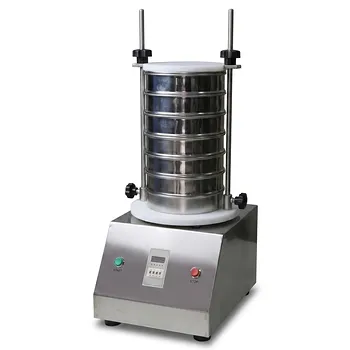
Laboratory Vibratory Test Sieve Shaker for Precision Particle Size Analysis and Powder Grading
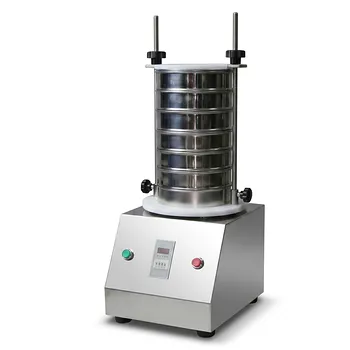
Small Laboratory Vibratory Sieve Shaker for Powder Gradation and Particle Size Analysis
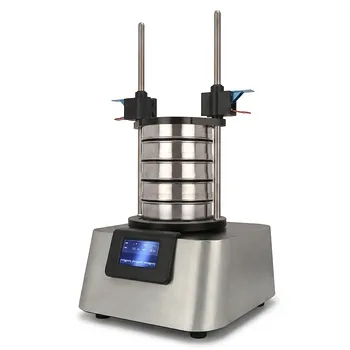
Vibratory Sieve Shaker Electromagnetic 3D Motion Powder Particle Size Analyzer for Dry and Wet Sieving
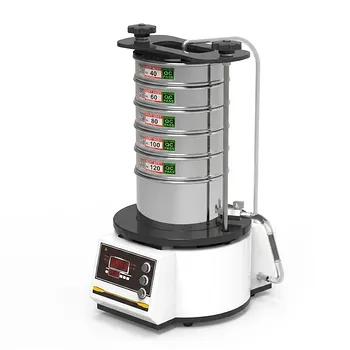
High Frequency Wet Three-Dimensional Vibrating Sieve Shaker for Dry and Wet Particle Size Analysis
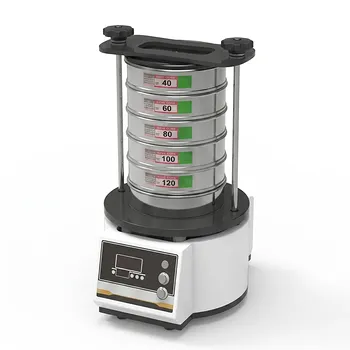
Dry Three Dimensional Vibratory Sieve Shaker
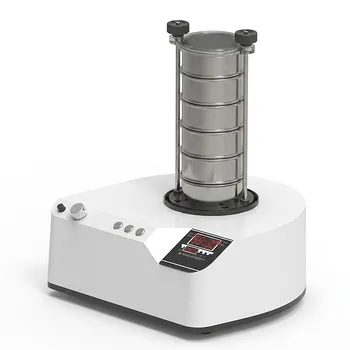
三维电磁微量振动筛分仪
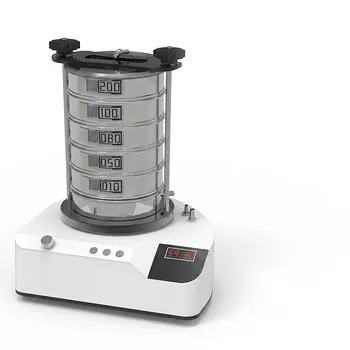
Heavy Duty Dry Three Dimensional Vibratory Sieve Shaker for Particle Separation
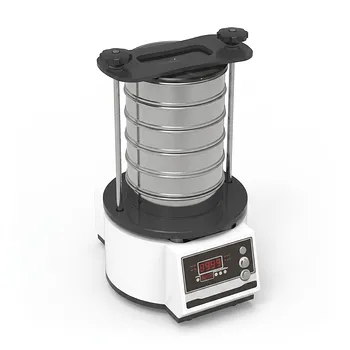
Tapping Oscillating Sieve Shaker for Dry and Wet Particle Size Analysis
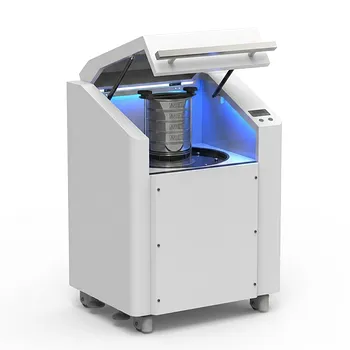
High Frequency Cabinet Type Three-Dimensional Rotary Vibrating Sieve Shaker for Dry Sieving and Particle Classification
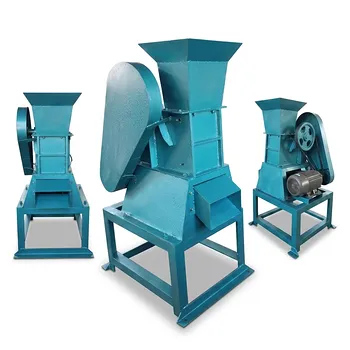
Custom Raised Height Laboratory Jaw Crusher for Precision Sample Preparation in Material Science
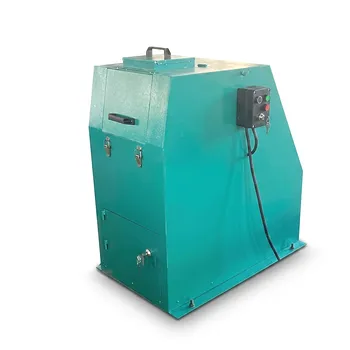
Environmentally Friendly Sealed Jaw Crusher for Laboratory Sample Preparation
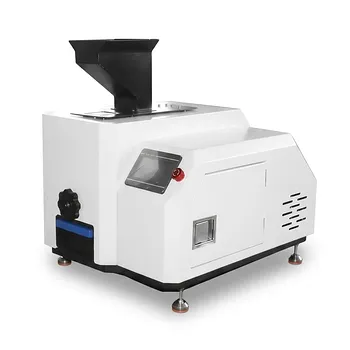
Laboratory Jaw Crusher 2025 Model for Ore and Brittle Material Crushing
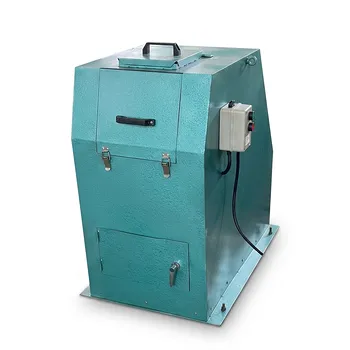
Environmentally Friendly Sealed Laboratory Jaw Crusher for Sample Preparation
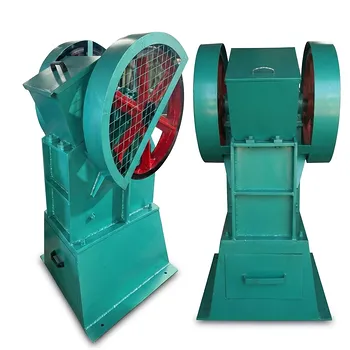
Sealed Jaw Crusher for Laboratory Material Crushing and Sample Preparation
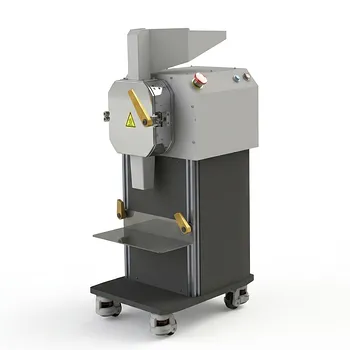
Small Laboratory Knife Crusher for Plastic Sample Preparation and Material Grinding
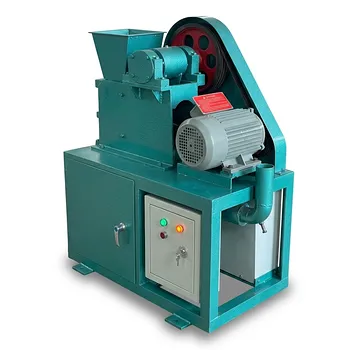
EP-B Type Sealed Jaw Crusher for Laboratory Sample Preparation