What role does a laboratory sieve shaker play in determining PDI? Achieve Precision in Biomass Quality Testing
Updated 4 months ago
A laboratory sieve shaker acts as the critical mechanism for both simulating mechanical stress and quantifying the degradation of biomass pellets. It subjects samples to controlled friction and impact—often at a standardized 50 rpm—to mimic the rigors of transport and handling. Crucially, the device performs the dual role of inducing wear and then precisely separating the resulting fines from intact pellets to allow for an accurate PDI calculation.
The sieve shaker provides a repeatable, standardized environment that converts mechanical resistance into a measurable percentage. By isolating "fines" from "intact pellets," it enables producers to verify if their product meets international durability standards.
Simulating Real-World Mechanical Stress
Standardized Friction and Collisions
To determine durability, pellets must encounter a controlled version of the abuse they face in the supply chain. The laboratory sieve shaker operates at fixed speeds and durations to simulate the friction and collisions inherent in bulk handling. This mechanical agitation forces pellets to interact with each other and the sieve walls, testing the strength of their internal bonds.
Replicating Transport Conditions
By maintaining a consistent motion (such as 50 rpm), the shaker ensures that every test batch is subjected to the same mechanical stress environment. This consistency is vital for benchmarking different batches or raw material formulations. Without this standardized agitation, durability measurements would be subjective and impossible to compare across the industry.
Quantifying Durability through Precision Separation
Segregating Fines from Intact Pellets
The primary function of the sieve after the "stress phase" is the physical classification of the material. The shaker uses specific aperture sizes to allow dust and small fragments (fines) to pass through while retaining the surviving pellets. This separation is the final step before weighing the remaining mass to calculate the wear and breakage ratios.
Establishing the Pellet Durability Index (PDI)
The PDI is the mass percentage of the pellets that remain intact after the screening process. A sieve shaker allows researchers to calculate this by providing the precise mass of post-test pellets. This quantitative data is then compared against international commercial fuel standards, which often require a durability rating greater than 97.5%.
The Impact of Raw Material Grading
Controlling Particle Size Distribution (PSD)
A sieve shaker's role begins even before the pellet is formed, by grading the pulverized biomass (such as sawdust or crushed fruit stones). Accurate particle size distribution is essential because it influences the mechanical interlocking strength within the pellet. Finer particles can enhance densification, while inconsistent sizes can lead to structural weak points.
Optimizing Mechanical Interlocking
By using vibratory sieving to remove excessive dust or oversized fibers, manufacturers ensure a scientific particle size grading. This precision prevents "loose" structures in the final product. A well-graded raw material, verified by sieve analysis, directly results in a higher PDI because the particles bond more effectively during the compression stage.
Understanding the Trade-offs and Pitfalls
Mechanical Stress vs. Material Fragility
While the sieve shaker provides a standardized test, it is a simulation, not a perfect replica of every handling system. Excessive shaking time or incorrect speeds can lead to over-testing, where pellets are destroyed far beyond what they would encounter in reality. Conversely, using a shaker with a low-intensity vibration might mask underlying structural weaknesses, leading to an artificially high PDI.
Sieve Aperture Accuracy
The accuracy of the PDI is entirely dependent on the integrity of the sieve mesh. If the apertures are worn or blinded by pitch and resin, they will not accurately separate the fines. This results in "intact" mass measurements that include small debris, leading to a false sense of product quality and potential failure during large-scale industrial pneumatic conveying.
Applying Sieve Analysis to Your Quality Control
Strategic Recommendations
To ensure your durability testing provides actionable data, consider your primary operational goal:
- If your primary focus is meeting international export standards: Prioritize a shaker that can strictly adhere to the 50 rpm standard for a fixed duration to ensure your PDI calculations are globally compliant.
- If your primary focus is reducing production energy costs: Use the sieve shaker to grade raw materials into finer fractions (0.1 mm to 2 mm) to achieve better densification under lower pressure.
- If your primary focus is product consistency across batches: Implement a rigorous "re-screening" protocol after stress testing to ensure the mass of intact pellets is measured with sub-gram precision.
By mastering the mechanical and analytical functions of the laboratory sieve shaker, you transform a simple vibration tool into a definitive benchmark for biomass quality and structural integrity.
Summary Table:
| Process Stage | Function of Sieve Shaker | Impact on PDI & Quality |
|---|---|---|
| Pre-Pelletizing | Grading particle size distribution (PSD) | Optimizes mechanical interlocking strength |
| Stress Phase | Standardized 50 rpm mechanical agitation | Replicates transport and handling wear |
| Classification | Precision separation of fines and fragments | Enables accurate mass-based PDI calculation |
| Standardization | Repeatable screening environments | Ensures compliance with international fuel standards |
Elevate Your Biomass Quality Control with [Your Company Name]
At [Your Company Name], we provide complete laboratory sample preparation solutions tailored for material science and energy research. Whether you are conducting precise PDI analysis with our vibratory and air-jet sieve shakers or developing high-performance biomass formulations using our Cold/Warm Isostatic Presses (CIP/WIP) and vacuum hot presses, our equipment is engineered for durability and precision.
Our extensive range covers the entire sample preparation workflow, including:
- Size Reduction: Jaw/roll crushers, cryogenic grinders, and planetary ball/jet mills.
- Sieving & Mixing: Precision test sieves, powder mixers, and defoaming mixers.
- Compaction: Standard lab presses, XRF pellet presses, and advanced hot presses.
Ready to optimize your pellet durability and production efficiency? Contact our experts today to find the perfect solution for your laboratory needs!
References
- Ras Izzati Ismail, Norawanis Abdul Razak. The Effect of Different Waste Material Binders in Relation to Khaya Senegalensis Solid Fuel Pellet Quality. DOI: 10.37934/araset.32.3.151164
Mentioned Products
- Laboratory Dry and Wet Three Dimensional Vibratory Sieve Shaker for Particle Analysis
- Stainless Steel Laboratory Vibratory Test Sieve Shaker
- Small Laboratory Vibrating Sieve Shaker for Precise Particle Size Analysis
- Laboratory Vibratory Test Sieve Shaker for Precision Particle Size Analysis and Powder Grading
- Small Laboratory Vibratory Sieve Shaker for Powder Gradation and Particle Size Analysis
People Also Ask
- What is the role of laboratory vibratory sieve shakers in waste PUR foam recycling? Optimize Particle Size and Density
- What is the primary function of a laboratory vibratory sieve shaker in the evaluation of sand liquefaction potential?
- What role do laboratory vibratory sieve shakers and test sieves play before the molding of Nb-Cu composite powders?
- What function does a laboratory vibratory sieve shaker serve in the production process of metakaolin? Optimize Reactivity
- Why is a precision laboratory vibratory sieve shaker necessary for particle size control? Optimize Biomass Carbonization

Tech Team · PowderPreparation
Last updated on Jun 03, 2026
Related Products

Laboratory Dry and Wet Three Dimensional Vibratory Sieve Shaker for Particle Analysis

Stainless Steel Laboratory Vibratory Test Sieve Shaker

Small Laboratory Vibrating Sieve Shaker for Precise Particle Size Analysis

Laboratory Vibratory Test Sieve Shaker for Precision Particle Size Analysis and Powder Grading

Small Laboratory Vibratory Sieve Shaker for Powder Gradation and Particle Size Analysis

Vibratory Sieve Shaker Electromagnetic 3D Motion Powder Particle Size Analyzer for Dry and Wet Sieving

High Frequency Wet Three-Dimensional Vibrating Sieve Shaker for Dry and Wet Particle Size Analysis

Dry Three Dimensional Vibratory Sieve Shaker

三维电磁微量振动筛分仪

Heavy Duty Dry Three Dimensional Vibratory Sieve Shaker for Particle Separation

Tapping Oscillating Sieve Shaker for Dry and Wet Particle Size Analysis

High Frequency Cabinet Type Three-Dimensional Rotary Vibrating Sieve Shaker for Dry Sieving and Particle Classification
Custom Raised Height Laboratory Jaw Crusher for Precision Sample Preparation in Material Science
Environmentally Friendly Sealed Jaw Crusher for Laboratory Sample Preparation
Laboratory Jaw Crusher 2025 Model for Ore and Brittle Material Crushing
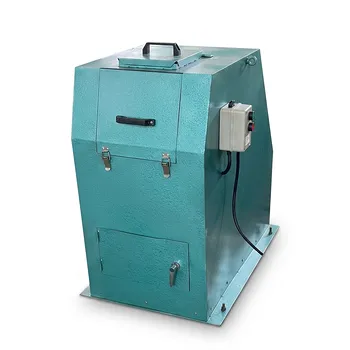
Environmentally Friendly Sealed Laboratory Jaw Crusher for Sample Preparation
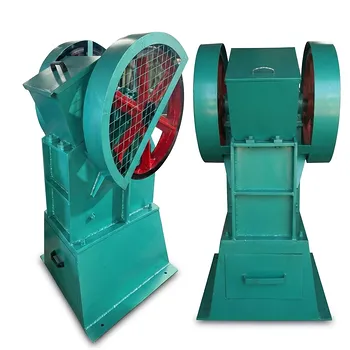
Sealed Jaw Crusher for Laboratory Material Crushing and Sample Preparation
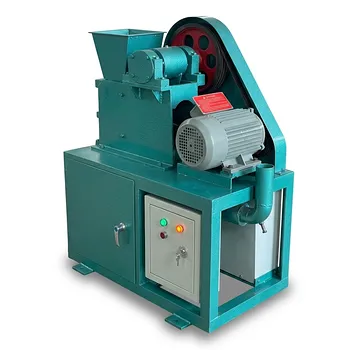
EP-B Type Sealed Jaw Crusher for Laboratory Sample Preparation
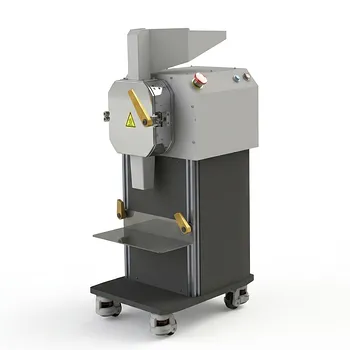
Small Laboratory Knife Crusher for Plastic Sample Preparation and Material Grinding