What is the purpose of using 0.038 mm sieves in magnetite grinding? Quantify Kinetics and Boost Grinding Efficiency
Updated 4 months ago
Standard laboratory fine-aperture sieves are primarily used to quantify the rate of ultra-fine particle generation to evaluate grinding efficiency. By measuring the mass of magnetite passing through a 0.038 mm (38-micron) mesh over specific time intervals, researchers can establish zero-order production equations. This mathematical framework allows for the determination of the fine powder generation rate constant, a critical metric for optimizing energy consumption and mill performance.
Core Takeaway: The 0.038 mm sieve serves as a precision diagnostic tool that translates physical grinding results into mathematical models, enabling researchers to optimize mineral liberation and prevent the detrimental effects of ultra-fine "slimes" on downstream processing.
Quantifying Grinding Kinetics and Efficiency
Establishing Production Equations
The 0.038 mm sieve allows researchers to track the accumulation of ultra-fine material as a function of time. This data is essential for developing zero-order production equations, which simplify complex breakage behaviors into a manageable rate constant.
Benchmarking Grinding Efficiency
By calculating how much sub-38-micron material is produced per unit of energy or time, engineers can compare different grinding media or mill speeds. This ensures the grinding process is optimized to produce the maximum amount of "qualified" product with minimal energy waste.
Simulating Industrial Closed-Circuit Grinding
In cycle grinding experiments, these sieves act as a mechanical classifier to simulate a closed-loop production process. Material that passes the sieve is removed as a finished product, while oversize material is returned for further grinding until the grindability factor (G) stabilizes.
Optimizing Mineral Liberation and Separation
Ensuring Effective Magnetic Separation
Magnetite must be separated from non-magnetic gangue minerals, a process that requires the physical detachment (liberation) of these components. Achieving the correct Particle Size Distribution (PSD) through sieve analysis ensures that the magnetite is fine enough to be pure, but not so fine that it becomes difficult to recover.
Facilitating Population Balance Modeling (PBM)
Fine-aperture sieves allow for the classification of magnetite into narrow-range size fractions. This precision is a prerequisite for PBM research, which studies how specific size classes break down into smaller ones, defined by breakage rate and cumulative breakage distribution functions.
Improving Flotation Kinetics
Particles smaller than 38 microns are often classified as "slimes," which can negatively impact flotation by "armor coating" larger mineral particles. Using a 0.038 mm sieve to identify and manage these fines prevents the non-selective consumption of chemical collectors and frothers, significantly improving mineral recovery rates.
Understanding the Trade-offs and Limitations
The Challenge of Sieve Blinding
At the 0.038 mm scale, moisture and static electricity can cause particles to clog the mesh openings, a phenomenon known as blinding. This requires the use of ultrasonic cleaners or specialized wet-sieving techniques to ensure the data remains accurate and the mesh stays functional.
Fragility of Fine Meshes
Fine-aperture sieves are delicate and susceptible to mechanical deformation. Even slight damage to the mesh geometry can lead to "oversize" particles passing through, which invalidates the rate constant calculations and leads to overestimating grinding efficiency.
Limitations of Dry Sieving
While dry sieving is faster, it is often inadequate for 38-micron apertures because ultra-fine magnetite particles tend to agglomerate. Wet sieving is frequently required to achieve true separation, adding complexity and time to the experimental workflow.
How to Apply These Findings to Your Project
Recommendations Based on Your Objectives
- If your primary focus is energy optimization: Prioritize the calculation of the fine powder generation rate constant using 0.038 mm sieves to identify the point of diminishing returns in your grinding cycle.
- If your primary focus is mineral purity: Use the sieve to determine the optimal liberation size where magnetite and gangue are fully detached, avoiding over-grinding which wastes energy and complicates separation.
- If your primary focus is downstream flotation: Use 38-micron sieving as a diagnostic step to measure "slime" content, as high concentrations will require adjustments to your collector and frother dosages.
By integrating 0.038 mm sieve analysis into your grinding experiments, you transform raw physical data into a strategic roadmap for maximizing mineral recovery and operational efficiency.
Summary Table:
| Application | Key Function | Operational Benefit |
|---|---|---|
| Grinding Kinetics | Establish zero-order production equations | Optimized energy & mill performance |
| Mineral Liberation | Detach magnetite from gangue minerals | Higher purity & mineral recovery |
| Process Simulation | Mechanical classification (Closed-loop) | Stable grindability factors (G) |
| Flotation Control | Manage "slime" (sub-38µm) production | Reduced chemical waste & better froth |
Achieve Precision in Your Mineral Research with Our Advanced Lab Solutions
Optimizing magnetite grinding requires more than just high-quality sieves; it demands a comprehensive approach to sample preparation. We provide complete laboratory solutions for material science, specializing in high-performance powder processing and compaction equipment.
Why Choose Our Solutions?
- Precision Sieving: We offer vibratory and air-jet sieve shakers with a wide range of test sieves, including 0.038 mm fine-aperture meshes, ensuring accurate particle size distribution (PSD) analysis.
- Superior Grinding: From planetary ball mills and jet mills to disc and rotor mills, our equipment is designed for efficient ultra-fine particle generation.
- Complete Sample Prep: Our lines include jaw/roll crushers, liquid nitrogen cryogenic grinders, and a full spectrum of hydraulic presses—Cold/Warm Isostatic Presses (CIP/WIP), XRF pellet presses, and vacuum hot presses.
Whether you are a researcher focused on energy optimization or a distributor looking for reliable OEM/ODM support and certified supply chains, we deliver the tools necessary for excellence in mineral processing.
Contact us today to enhance your lab's efficiency!
References
- Chengfang Yuan, Jingkun Tian. Ceramic Grinding Kinetics of Fine Magnetite Ores in the Batch Ball Mill. DOI: 10.3390/min13091188
Mentioned Products
- Laboratory Air Jet Sieving Machine for Fine Powder Particle Size Analysis and Deagglomeration
- Three Dimensional Rotary Vibrating Sieve
- Heavy Duty Dry Three Dimensional Vibratory Sieve Shaker for Particle Separation
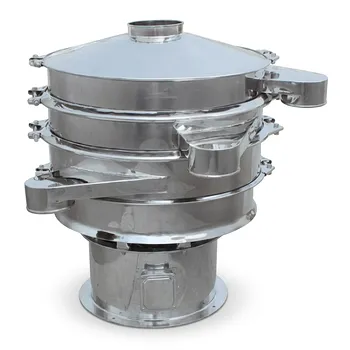
- Stainless Steel Rotary Vibrating Sieve High Precision Circular Vibratory Separator Industrial Powder Grading Machine Multi Layer Sifting Equipment
- Dry Three Dimensional Vibratory Sieve Shaker
People Also Ask
- What role do laboratory test sieves play in the nanocrystallization process of iron powder? Ensure Uniform Refinement
- What is the function of a laboratory test sieve in the river sediment sample preparation process? Ensure Precise Data
- How do laboratory test sieves contribute to the analysis of soil texture composition? Optimize Particle Grading Accuracy
- Why is a 0.08mm standard sieve required for testing the fineness of cement? Optimize Recycled Pervious Concrete Quality
- How does an air-jet mill enhance the performance of Mo2N when used as an electrocatalyst? Optimize Electrode Efficiency

Tech Team · PowderPreparation
Last updated on Jun 03, 2026
Related Products
Laboratory Air Jet Sieving Machine for Fine Powder Particle Size Analysis and Deagglomeration
Three Dimensional Rotary Vibrating Sieve
Heavy Duty Dry Three Dimensional Vibratory Sieve Shaker for Particle Separation
Stainless Steel Rotary Vibrating Sieve High Precision Circular Vibratory Separator Industrial Powder Grading Machine Multi Layer Sifting Equipment

Dry Three Dimensional Vibratory Sieve Shaker
Versatile Industrial Crusher for Laboratory Crushing and Material Processing
Nano Laboratory Bead Mill Desktop Sub Micron Sand Mill Screenless Seal Less Powder Grinder

Laboratory Vibratory Test Sieve Shaker for Precision Particle Size Analysis and Powder Grading
三维电磁微量振动筛分仪
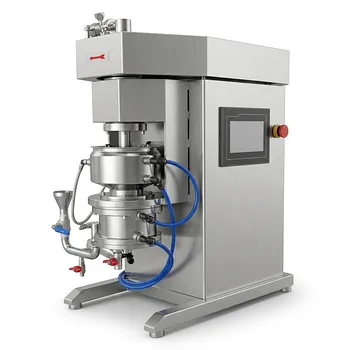
Small Ceramic Structure Laboratory Sand Mill Nanoscale Grinding Dispersion Equipment Seal-less Screen-less Design
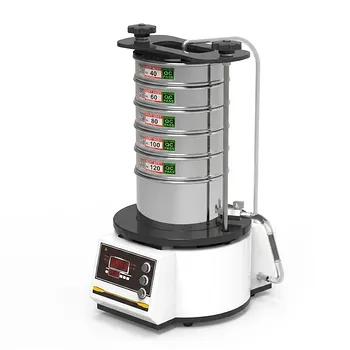
High Frequency Wet Three-Dimensional Vibrating Sieve Shaker for Dry and Wet Particle Size Analysis
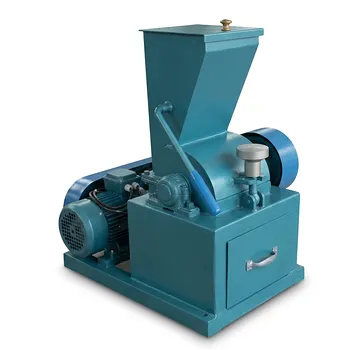
Small Hammer Crusher for Brittle Material Crushing in Mining Metallurgy and Lab Sample Preparation
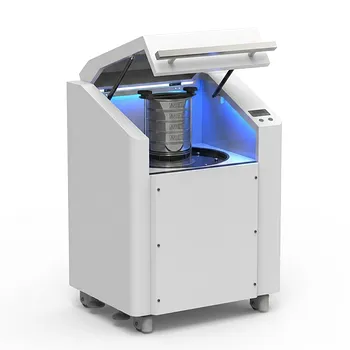
High Frequency Cabinet Type Three-Dimensional Rotary Vibrating Sieve Shaker for Dry Sieving and Particle Classification
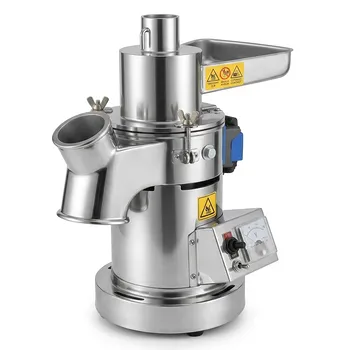
Continuous Feeding Grinder High Efficiency Pulverizer for Lab Sample Preparation
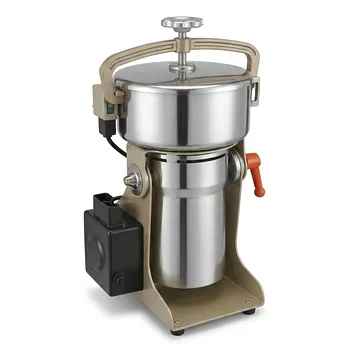
Multifunctional High Efficiency High Speed Laboratory Grinder

Small Laboratory Vibrating Sieve Shaker for Precise Particle Size Analysis
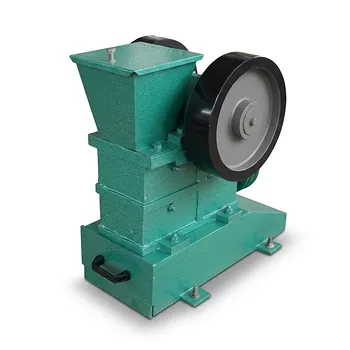
Laboratory Small Jaw Crusher 100x60mm
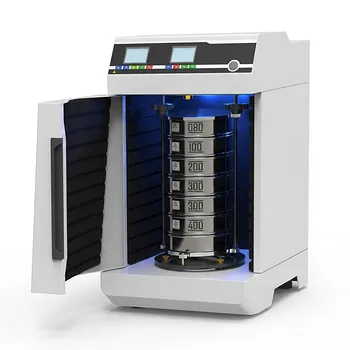
Laboratory Dry and Wet Three Dimensional Vibratory Sieve Shaker for Particle Analysis
Small Laboratory Jaw Crusher 125x100mm Feed Opening for Sample Preparation