How do laboratory test sieves contribute to the analysis of soil texture composition? Optimize Particle Grading Accuracy
Updated 4 months ago
Laboratory test sieves provide the primary physical mechanism for grading soil particles by diameter, allowing technicians to quantify the proportions of sand, silt, and clay within a sample. By utilizing a stack of precision-engineered apertures in conjunction with mechanical vibration, these tools determine the soil texture type, which is the decisive factor in understanding moisture retention, pore formation, and structural stability.
Core Takeaway: Laboratory test sieves are the essential hardware for dry particle size distribution (PSD) analysis, serving as the physical benchmark to distinguish between coarse and fine-grained soils and directly informing geotechnical and agricultural classifications.
The Mechanism of Physical Particle Grading
Precision Apertures and Mechanical Interception
Laboratory test sieves utilize a series of precision-defined wire mesh apertures to physically intercept soil particles. As a sample passes through the stack, each sieve layer retains particles larger than its specific opening while allowing smaller grains to pass through to the next level.
The Role of Mechanical Vibration
The use of a vibratory sieve shaker is critical for ensuring that particles are physically dispersed and have multiple opportunities to present their smallest dimension to the mesh. This mechanical agitation prevents "blinding" or clogging of the apertures and ensures a precise separation based on actual particle diameter rather than chance orientation.
Standardized Sieve Stacking
Technicians stack sieves from the largest aperture at the top to the smallest at the bottom, typically ranging from 75mm down to 0.075mm (No. 200 mesh). This hierarchical arrangement allows for the quantitative weighing of each fraction, which is necessary to calculate the cumulative percentage of the soil's composition.
Characterizing Soil Texture and Type
Defining the Coarse-Fine Boundary
The 0.075 mm (No. 200) sieve serves as the critical technical benchmark in soil analysis. The percentage of material passing through this specific mesh determines whether a soil is classified as coarse-grained (sand and gravel) or fine-grained (silt and clay), which dictates how the soil will respond to vertical confinement and pressure.
Identifying Texture for Agricultural Use
In agricultural contexts, sieving classifies particles such as sand (typically larger than 0.05 mm) to determine if a soil is a loam, sandy loam, or clay. This classification is fundamental for managing the rhizospheric zone, as texture dictates root zone aeration and the leaching characteristics of mineral elements.
Geotechnical and Engineering Classification
For engineering projects, sieving ensures that soil samples used in compaction tests comply with strict technical specifications. Accurate grading helps predict how a foundation will handle drainage capabilities and overall stability, ensuring that laboratory simulations align with real-world engineering requirements.
Functional Implications of Sieve Analysis
Impact on Moisture Retention and Pore Formation
The distribution of particle sizes directly influences pore formation within the soil matrix. A well-graded soil with specific proportions of fine and coarse particles will have a unique moisture retention capacity, affecting both irrigation needs in agriculture and hydrogeological behavior in environmental science.
Environmental Pollutant Infiltration
The precision of sieve analysis allows researchers to understand how pore distribution affects the movement of fluids, such as the infiltration of oil pollutants. By characterizing the loose materials through sieving, analysts can predict the speed and depth of contaminant spread through different soil strata.
Understanding the Trade-offs and Limitations
Dry vs. Wet Sieving Requirements
While dry sieving is standard for many soils, it can be ineffective for cohesive soils or those with high clay content where particles clump together. In these instances, the physical interception of a dry sieve may provide an inaccurate reading of the true particle size distribution unless the soil is properly dispersed or wet-sieving methods are employed.
Sensitivity to Particle Shape
Sieve analysis assumes particles are spherical, but soil grains are often elongated or irregular. This can lead to shape-induced errors where a long, thin particle passes through a mesh that would have retained a spherical particle of the same mass, potentially skewing the texture analysis toward a finer classification.
Limitations of the Lower Limit
Standard sieving is generally limited to particles larger than 0.075 mm. For the analysis of extremely fine silts and clays that pass through the No. 200 sieve, mechanical sieving must be supplemented by hydrometer analysis or laser diffraction to achieve a complete textural profile.
How to Apply This to Your Project
Choosing the Right Methodology
- If your primary focus is agricultural productivity: Utilize sieve sets that highlight the 0.05 mm to 2.0 mm range to accurately categorize sand fractions and predict water holding capacity for irrigation planning.
- If your primary focus is foundation engineering: Prioritize the No. 200 (0.075 mm) sieve as your primary benchmark to distinguish between stable coarse-grained fills and potentially unstable high-plasticity clays.
- If your primary focus is environmental remediation: Use a full stack of precision sieves to map the pore distribution, which will allow for more accurate modeling of pollutant migration through the soil.
By masterfully applying laboratory test sieves, you gain the technical clarity required to predict the mechanical, hydraulic, and biological behavior of any soil profile.
Summary Table:
| Component/Process | Function in Soil Analysis | Key Practical Impact |
|---|---|---|
| Precision Apertures | Physically intercepts particles by diameter | Determines sand, silt, and clay proportions |
| Vibratory Sieve Shaker | Ensures dispersion and proper orientation | Prevents mesh blinding for accurate grading |
| No. 200 (0.075mm) Sieve | Sets the coarse-grained vs. fine-grained boundary | Critical for geotechnical & engineering safety |
| Standardized Stacking | Enables quantitative fractional weighing | Required for Cumulative PSD & soil classification |
Optimize Your Material Characterization with Precision Lab Solutions
Accurate soil texture analysis begins with high-performance equipment. At [Brand Name], we provide complete laboratory sample preparation solutions specifically designed for material science and geotechnical research. Whether you are classifying agricultural soil or testing engineering foundations, our technology ensures repeatable and precise results.
Our extensive product line includes:
- Sieving Excellence: Vibratory and air-jet sieve shakers with a wide range of precision test sieves and meshes.
- Powder Processing: Advanced crushers (jaw/roll), liquid nitrogen cryogenic grinders, and various mills (planetary ball, jet, sand/bead, disc, rotor).
- Compaction & Pressing: A full spectrum of hydraulic presses, including Cold/Warm Isostatic Presses (CIP/WIP), XRF pellet presses, and vacuum hot presses.
- Mixing & Dispersion: High-efficiency powder mixers and vacuum defoaming mixers.
Ready to enhance your lab's efficiency and accuracy? Contact our technical experts today to find the perfect equipment configuration for your specific material science requirements.
References
- Mykola Kochiieru, Simona Pranaitienė. Long-term contrasting tillage in Cambisol: effect on water-stable aggregates, macropore network and soil chemical properties. DOI: 10.31545/intagr/156632
Mentioned Products
- Laboratory Vibratory Test Sieve Shaker for Precision Particle Size Analysis and Powder Grading
- Stainless Steel Laboratory Vibratory Test Sieve Shaker
- Small Laboratory Vibrating Sieve Shaker for Precise Particle Size Analysis
- Laboratory Dry and Wet Three Dimensional Vibratory Sieve Shaker for Particle Analysis
- Small Laboratory Vibratory Sieve Shaker for Powder Gradation and Particle Size Analysis
People Also Ask
- What role does a laboratory sieve shaker play in determining PDI? Achieve Precision in Biomass Quality Testing
- What are the functions of sieve shakers for coconut shell powder? Achieve Precise Particle Size & Quality Control.
- What function does a laboratory sieve shaker perform in the PSD analysis of residual soil? Ensure Precise Grading
- What is the role of a laboratory sieve shaker in the preparation of plantain peel adsorbents? Standardize Particle Size
- What is the function of a laboratory vibratory sieve shaker? Enhance Coal Particle Size Distribution (PSD) Analysis

Tech Team · PowderPreparation
Last updated on Jun 03, 2026
Related Products

Laboratory Vibratory Test Sieve Shaker for Precision Particle Size Analysis and Powder Grading
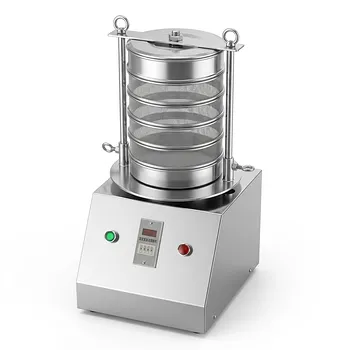
Stainless Steel Laboratory Vibratory Test Sieve Shaker

Small Laboratory Vibrating Sieve Shaker for Precise Particle Size Analysis
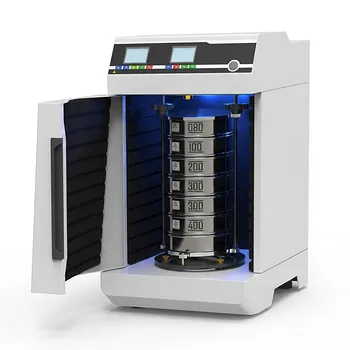
Laboratory Dry and Wet Three Dimensional Vibratory Sieve Shaker for Particle Analysis
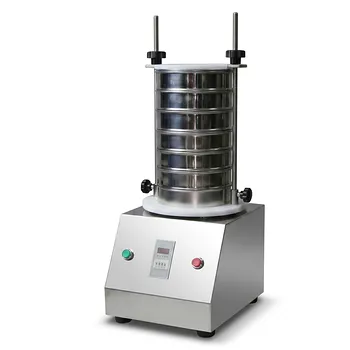
Small Laboratory Vibratory Sieve Shaker for Powder Gradation and Particle Size Analysis
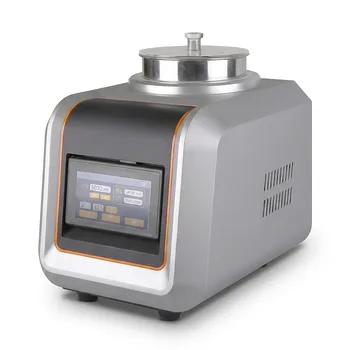
Laboratory Air Jet Sieving Machine for Fine Powder Particle Size Analysis and Deagglomeration
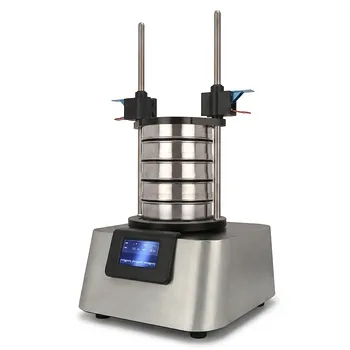
Vibratory Sieve Shaker Electromagnetic 3D Motion Powder Particle Size Analyzer for Dry and Wet Sieving
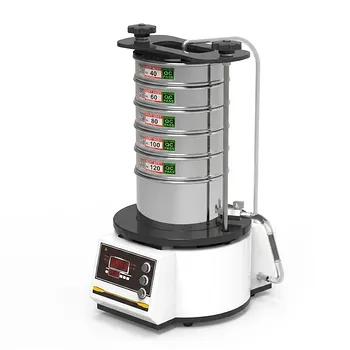
High Frequency Wet Three-Dimensional Vibrating Sieve Shaker for Dry and Wet Particle Size Analysis
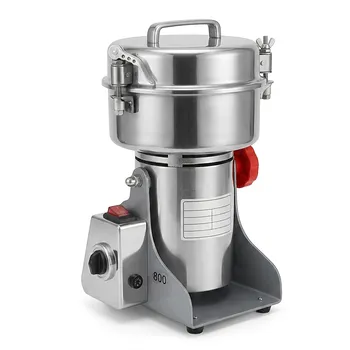
Small High-Speed Laboratory Grinder for Rapid Sample Preparation
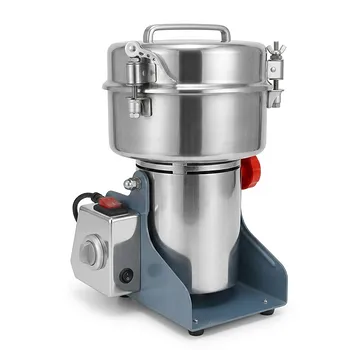
Small High-Speed Grinder for Efficient Laboratory Sample Preparation
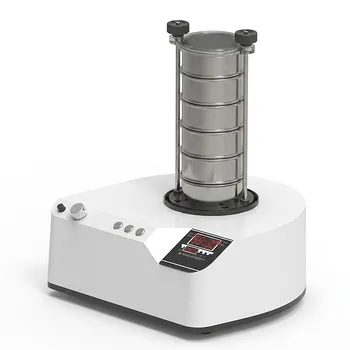
三维电磁微量振动筛分仪

Three Dimensional Rotary Vibrating Sieve
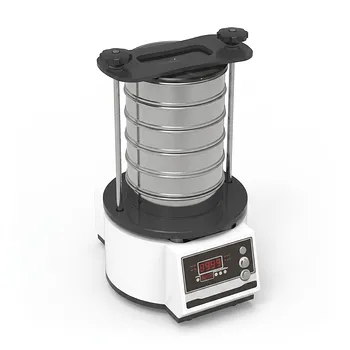
Tapping Oscillating Sieve Shaker for Dry and Wet Particle Size Analysis
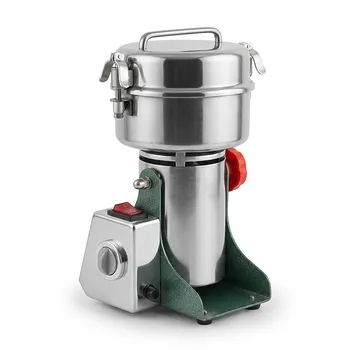
Small High-Speed Swing Grinder for Laboratory Sample Preparation
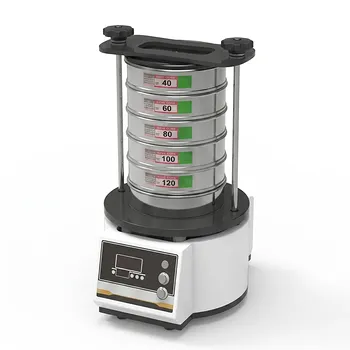
Dry Three Dimensional Vibratory Sieve Shaker
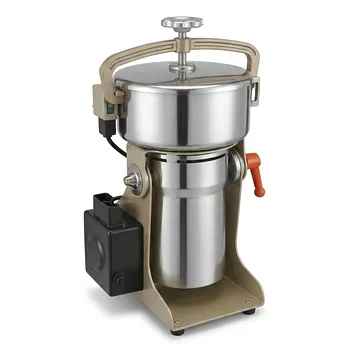
Multifunctional High Efficiency High Speed Laboratory Grinder
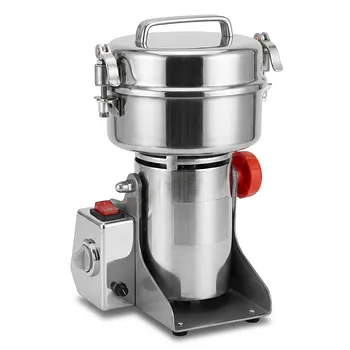
High Speed Laboratory Powder Grinder Small Batch Sample Preparation Mill

Heavy Duty Dry Three Dimensional Vibratory Sieve Shaker for Particle Separation
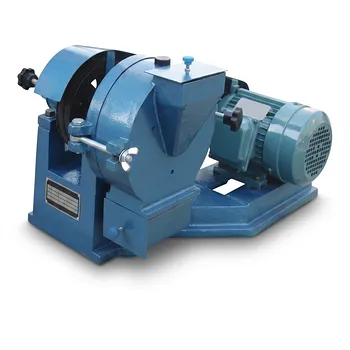
Laboratory Disc Mill for Ore and Mineral Sample Preparation