What role do laboratory test sieves play in the nanocrystallization process of iron powder? Ensure Uniform Refinement
Updated 4 months ago
Precision particle size classification is the foundation of successful nanocrystallization. Laboratory test sieves ensure that iron powder feedstock is physically uniform and free of impurities before it enters high-energy ball milling. This pre-processing step is critical because any inconsistency in the initial particle size will lead to a non-uniform distribution of nanostructures in the final product.
Core Takeaway: Laboratory test sieves act as the primary quality control mechanism in nanocrystallization by standardizing the raw iron powder, ensuring that the energy applied during milling results in a predictable and uniform nanometer-scale grain refinement.
Ensuring Feedstock Uniformity for High-Energy Milling
The Critical Role of Physical Consistency
High-energy ball milling relies on the predictable transfer of kinetic energy to the iron powder to induce nanocrystallization.
If the feedstock contains a wide range of particle sizes, the milling energy is distributed unevenly, resulting in a mixture of nanocrystalline and coarse-grained structures.
Laboratory test sieves eliminate this risk by isolating a specific micron-level fraction, ensuring every particle responds similarly to the mechanical strain.
Removal of Coarse Particles and Impurities
During the initial grinding of iron ore or powder, some particles inevitably remain insufficiently ground.
Using multi-stage sieving allows researchers to strip away these coarse outliers and external contaminants that could act as "seeds" for structural defects.
By removing these elements, the powder entering the next stage maintains a high degree of physical purity, which is essential for achieving a stable nanostructure.
Analytical Control and Process Optimization
Establishing the P80 Baseline
Engineers use laboratory vibratory sieve shakers to generate cumulative passing percentage curves, specifically looking for the P80 value.
This value represents the aperture size through which 80% of the powder passes, serving as a scientific benchmark for crushing efficiency.
Determining the P80 allows for the precise calibration of industrial-scale screening machines, ensuring the laboratory-scale results can be replicated in mass production.
Analyzing Mineral Liberation
In the context of iron powder derived from ore, sieves help analyze the degree of mineral liberation at different micron ranges (typically 180μm to 32μm).
By identifying the specific size at which iron is most effectively separated from the host rock, researchers can determine the optimal feed size.
This ensures that the material being nanocrystallized is not just the right size, but also the right composition for the desired metallurgical properties.
Understanding the Trade-offs
The Limitations of Mechanical Sieving
While test sieves are highly effective for micron-level classification, they face physical limits as particle sizes approach the sub-32μm range.
Mesh blinding, where fine particles clog the sieve apertures, can lead to inaccurate data and poor separation if not managed with vibratory shakers or ultrasonic cleaners.
Furthermore, over-sieving can lead to particle attrition, where the mechanical action of the sieve shaker itself begins to break down the particles, skewing the size distribution analysis.
How to Apply This to Your Process
To achieve the highest quality nanocrystalline iron powder, your sieving strategy must be integrated into the broader production workflow rather than treated as a standalone step.
- If your primary focus is uniform grain size: Utilize multi-stage standard test sieves to isolate a narrow micron-range fraction before beginning the high-energy ball milling process.
- If your primary focus is process scalability: Generate P80 curves using high-precision vibratory shakers to determine the exact aperture requirements for your industrial-scale screening equipment.
- If your primary focus is material purity: Implement a strict sieving protocol to remove coarse unground particles and external impurities early in the pre-processing phase.
By mastering the classification of the raw powder today, you ensure the structural integrity of the nanocrystalline materials of tomorrow.
Summary Table:
| Process Phase | Role of Laboratory Test Sieves | Impact on Nanocrystallization |
|---|---|---|
| Pre-Processing | Isolating specific micron-level fractions | Ensures uniform energy distribution during milling |
| Quality Control | Removal of coarse particles and impurities | Prevents structural defects and "seed" contamination |
| Optimization | Establishing P80 baseline & Passing Curves | Calibrates industrial scale-up and milling efficiency |
| Characterization | Analyzing mineral liberation (180μm to 32μm) | Determines optimal feed size for metallurgical purity |
Achieve Unmatched Precision in Your Nanomaterial Research
At [Company Name], we provide complete laboratory sample preparation solutions tailored for material science. Understanding that successful nanocrystallization begins with perfect feedstock, we offer a specialized range of equipment to manage every stage of your powder processing workflow.
- Crushing & Grinding: High-performance jaw/roll crushers and an extensive line of mills, including planetary ball mills, jet mills, and liquid nitrogen cryogenic grinders for superior grain refinement.
- Classification: Precision vibratory and air-jet sieve shakers with a full range of test sieves to ensure absolute particle size uniformity and P80 accuracy.
- Mixing & Compaction: Advanced powder mixers and a full spectrum of hydraulic presses, including Cold/Warm Isostatic Presses (CIP/WIP), vacuum hot presses, and XRF pellet presses for final sample preparation.
Ready to eliminate inconsistency and scale your research from lab to production? Contact our technical experts today to find the ideal solution for your material processing challenges!
References
- Luh Ayu Melinia, Masno Ginting. Analisa Pasir Besi Alam dari Sungai Musi Sumatera Selatan. DOI: 10.56064/jps.v24i3.716
Mentioned Products
- Laboratory Vibratory Test Sieve Shaker for Precision Particle Size Analysis and Powder Grading
- Stainless Steel Laboratory Vibratory Test Sieve Shaker
- Small Laboratory Vibrating Sieve Shaker for Precise Particle Size Analysis
- Laboratory Dry and Wet Three Dimensional Vibratory Sieve Shaker for Particle Analysis
- Small Laboratory Vibratory Sieve Shaker for Powder Gradation and Particle Size Analysis
People Also Ask
- What role does a laboratory sieve shaker play in determining PDI? Achieve Precision in Biomass Quality Testing
- What are the functions of sieve shakers for coconut shell powder? Achieve Precise Particle Size & Quality Control.
- What function does a laboratory sieve shaker perform in the PSD analysis of residual soil? Ensure Precise Grading
- What is the role of a laboratory sieve shaker in the preparation of plantain peel adsorbents? Standardize Particle Size
- What is the function of a laboratory vibratory sieve shaker? Enhance Coal Particle Size Distribution (PSD) Analysis

Tech Team · PowderPreparation
Last updated on Jun 03, 2026
Related Products

Laboratory Vibratory Test Sieve Shaker for Precision Particle Size Analysis and Powder Grading
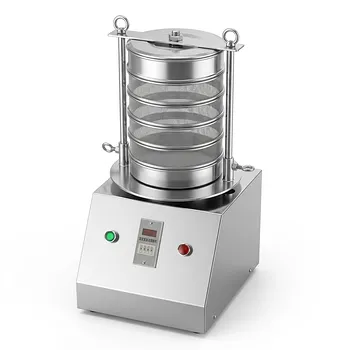
Stainless Steel Laboratory Vibratory Test Sieve Shaker

Small Laboratory Vibrating Sieve Shaker for Precise Particle Size Analysis

Laboratory Dry and Wet Three Dimensional Vibratory Sieve Shaker for Particle Analysis

Small Laboratory Vibratory Sieve Shaker for Powder Gradation and Particle Size Analysis
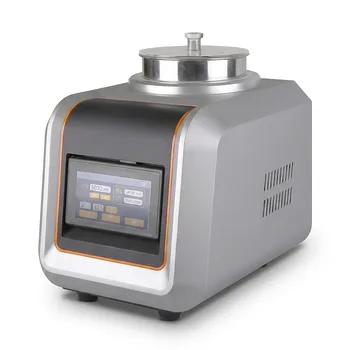
Laboratory Air Jet Sieving Machine for Fine Powder Particle Size Analysis and Deagglomeration
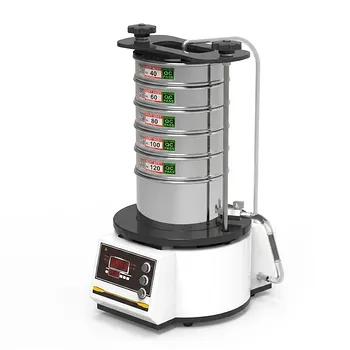
High Frequency Wet Three-Dimensional Vibrating Sieve Shaker for Dry and Wet Particle Size Analysis
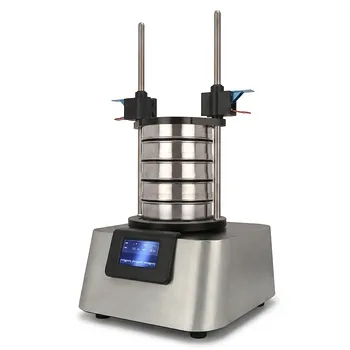
Vibratory Sieve Shaker Electromagnetic 3D Motion Powder Particle Size Analyzer for Dry and Wet Sieving

三维电磁微量振动筛分仪
Small High-Speed Laboratory Grinder for Rapid Sample Preparation
Small High-Speed Grinder for Efficient Laboratory Sample Preparation

Tapping Oscillating Sieve Shaker for Dry and Wet Particle Size Analysis
Portable Cutting Mill for Laboratory Sample Preparation and RoHS WEEE Compliance Testing

Heavy Duty Dry Three Dimensional Vibratory Sieve Shaker for Particle Separation

Dry Three Dimensional Vibratory Sieve Shaker
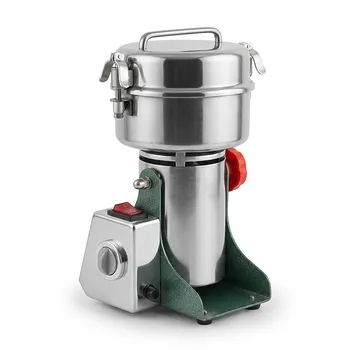
Small High-Speed Swing Grinder for Laboratory Sample Preparation

Three Dimensional Rotary Vibrating Sieve
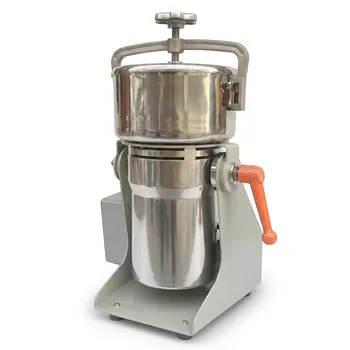
High Speed Laboratory Grinder Efficient Stainless Steel Powder Pulverizer Universal Material Science Mill for Sample Preparation
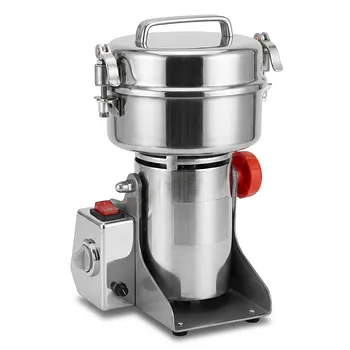
High Speed Laboratory Powder Grinder Small Batch Sample Preparation Mill