Why are porcelain balls (10-20 mm) used for MWCNT milling? Optimize Size Grading for Superior Dispersion
Updated 3 months ago
The use of porcelain balls with varying diameters (10–20 mm) is a strategic approach to optimize the size grading of grinding media. This specific range allows the milling process to simultaneously provide high-impact force to break down large multi-walled carbon nanotube (MWCNT) aggregates and high-surface-area shearing to achieve microscopic dispersion uniformity within the composite resin.
Central Takeaway: Effective MWCNT dispersion relies on a dual-action mechanism where larger media provide the kinetic energy to crush physical aggregates, while smaller media maximize contact points to refine the mixture and establish a robust conductive network.
The Mechanics of Size Grading in Ball Milling
The Role of Impact Force and Inter-particle Pressure
Larger porcelain balls within the 10–20 mm range are responsible for generating the impact force necessary to disrupt large MWCNT clusters. These nanotubes naturally tend to form dense, entangled aggregates that require significant kinetic energy to break apart.
Maximizing Specific Surface Area for Shearing
Smaller balls in the mix provide a higher specific surface area, which increases the number of contact points between the media and the material. This creates a fine shearing effect that is essential for detangling individual nanotubes and distributing them evenly throughout a viscous medium like epoxy resin.
Optimizing Filling Rate and Kinetic Efficiency
Mixing different diameters improves the filling rate within the mill, as smaller balls occupy the interstitial spaces between larger ones. This denser packing increases the overall collision frequency per unit volume, making the grinding process more energy-efficient and thorough.
Achieving Microscopic Dispersion for Conductive Networks
Overcoming Resin Viscosity
MWCNTs are often dispersed into viscous epoxy resins, which resist movement and uniform mixing. The combination of 10 mm and 20 mm media ensures that the shear forces are strong enough to overcome this viscosity, forcing the nanotubes into a homogenous state.
Constructing the Conductive Path
The ultimate goal of ball milling in this context is the construction of an effective conductive network. By ensuring microscopic uniformity, the media allows nanotubes to be positioned closely enough to facilitate electron transfer across the composite material.
Refining Particle Size Distribution
Utilizing a range of diameters ensures a more uniform particle size distribution within the final batch. This prevents "dead zones" in the composite where nanotubes might remain clumped, which would otherwise lead to mechanical weak points or electrical insulation.
Understanding the Trade-offs and Limitations
Material Hardness and Media Wear
While porcelain is effective for many applications, it possesses lower density and hardness compared to materials like zirconia (ZrO2). In high-energy or long-duration milling, porcelain media may experience higher wear rates, potentially introducing trace impurities into the MWCNT composite.
Impact Energy vs. Material Degradation
There is a delicate balance between providing enough impact energy to break aggregates and providing too much, which could damage or shorten the nanotubes. Using a size-graded mix of 10–20 mm balls helps mitigate this by distributing energy more predictably than using large-diameter media alone.
Complexity of Media Separation
While a varied size distribution optimizes the milling physics, it can make the post-processing separation of the media from the viscous slurry more complex. The user must weigh the benefits of superior dispersion against the logistical effort of cleaning and recovering multi-sized media.
How to Apply This to Your Milling Project
Guidelines for Media Selection
- If your primary focus is maximizing electrical conductivity: Use a graded mix of 10–20 mm media to ensure the nanotubes are fully detangled and distributed to form a seamless internal network.
- If your primary focus is minimizing processing time: Increase the proportion of larger (20 mm) balls to maximize impact energy, provided the nanotubes can withstand the higher forces without structural damage.
- If your primary focus is high purity and low contamination: Consider upgrading from porcelain to zirconia media, which offers superior wear resistance and chemical stability during high-energy collisions.
By strategically balancing impact energy and shearing surface area through size grading, you can transform entangled carbon nanotube clusters into a highly functional, conductive composite material.
Summary Table:
| Media Feature | Primary Mechanism | Benefit for MWCNT Composites |
|---|---|---|
| Large Balls (20mm) | High Impact Force | Breaks down dense nanotube aggregates |
| Small Balls (10mm) | High Surface Area | Enhances shearing for microscopic uniformity |
| Size Grading | Improved Filling Rate | Increases collision frequency and milling efficiency |
| Dual-Action | Balanced Energy | Overcomes resin viscosity to build conductive networks |
Optimize Your Material Science Workflow with Precision Equipment
Achieving perfect dispersion in MWCNT composites requires more than just the right media—it requires high-performance equipment. At Our Company, we provide complete laboratory sample preparation solutions designed to transform your powder processing results.
Our extensive product line supports every stage of your research:
- Advanced Milling & Grinding: Achieve microscopic uniformity with our planetary ball mills, jet mills, disc mills, and liquid nitrogen cryogenic grinders.
- Powder Processing: Ensure consistency using our jaw/roll crushers, sieve shakers, and high-efficiency powder or defoaming mixers.
- Precision Compaction: Manufacture high-quality samples with our full spectrum of hydraulic presses, including Cold/Warm Isostatic Presses (CIP/WIP), vacuum hot presses, and XRF pellet presses.
Ready to enhance your lab's efficiency and material performance? Contact our experts today for a tailored solution that meets your specific sample preparation needs!
References
- Bien Che Dong, Nieu Huu Nguyen. The impact of different multi-walled carbon nanotubes on the X-band microwave absorption of their epoxy nanocomposites. DOI: 10.1186/s13065-015-0087-2
Mentioned Products
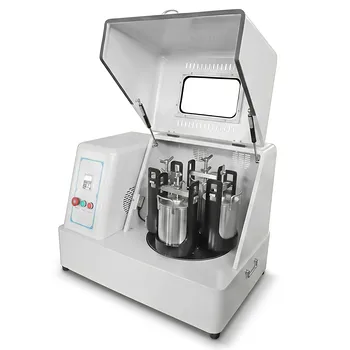
- Vertical Square Planetary Ball Mill for Laboratory Sample Preparation and Nanoscale Grinding
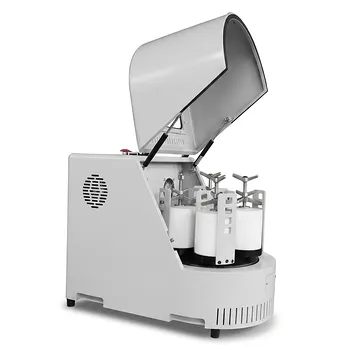
- Vertical Semi Circular Planetary Ball Mill for Laboratory Precision Grinding
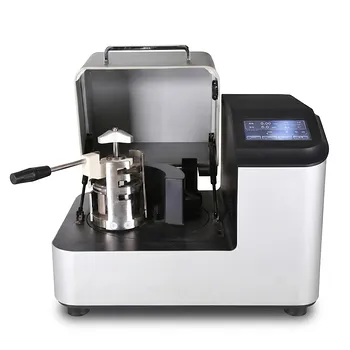
- High Energy Laboratory Planetary Ball Mill for Nano Grinding and Material Science Sample Preparation
- Heavy Duty Horizontal Planetary Ball Mill for Efficient Industrial Grinding and Sample Preparation
- High Energy Hybrid Vibratory Ball Mill for Grinding Mixing and Cell Disruption
People Also Ask
- How does a planetary ball mill contribute to the homogenization of trace elements? Achieve Sub-Micron Uniformity
- What is the function of a planetary ball mill in wollastonite ceramic prep? Achieve Molecular Homogenization & Reactivity
- Why grind lime-pozzolan specimens for TG/DTA for 3 mins? Master sample prep for high-precision thermal analysis.
- What role does a planetary ball mill play in KNTO ceramic refinement? Optimize Homogeneity & Reactivity
- What is the primary purpose of using a planetary ball mill during the raw material mixing stage of cerium-doped bioactive glass? - Goal

Tech Team · PowderPreparation
Last updated on May 14, 2026
Related Products
Vertical Square Planetary Ball Mill for Laboratory Sample Preparation and Nanoscale Grinding
Vertical Semi Circular Planetary Ball Mill for Laboratory Precision Grinding
High Energy Laboratory Planetary Ball Mill for Nano Grinding and Material Science Sample Preparation
Heavy Duty Horizontal Planetary Ball Mill for Efficient Industrial Grinding and Sample Preparation
High Energy Hybrid Vibratory Ball Mill for Grinding Mixing and Cell Disruption
Miniature Planetary Ball Mill with Vacuum Grinding and High Efficiency for Laboratory Sample Preparation
8L Planetary Ball Mill for Laboratory Grinding and Sample Preparation
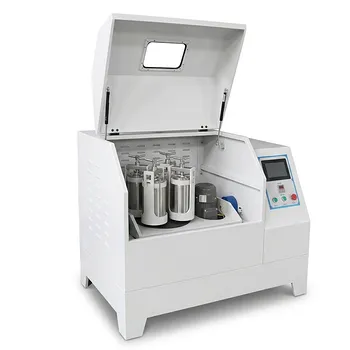
360° Rotating Omnidirectional Laboratory Planetary Ball Mill for Homogeneous Ultra-Fine Grinding and Mixing
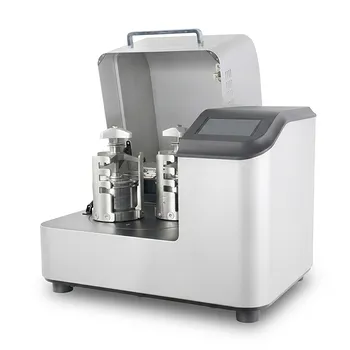
High Energy Planetary Ball Mill for Nano Scale Grinding and Mechanical Alloying

High Throughput Micro Ball Mill for Cryogenic Grinding and Laboratory Cell Disruption
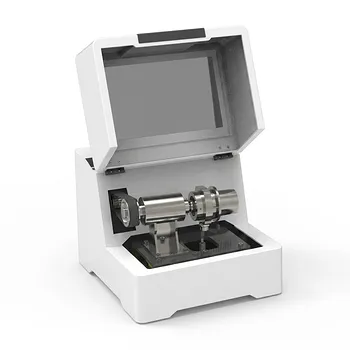
Single Tank High Energy Vibratory Ball Mill for Laboratory Grinding and Mixing
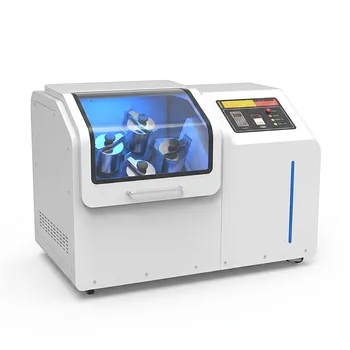
High Energy Omnidirectional Planetary Ball Mill 16L
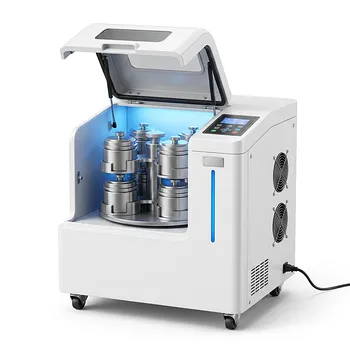
High Energy Omnidirectional Planetary Ball Mill 20L
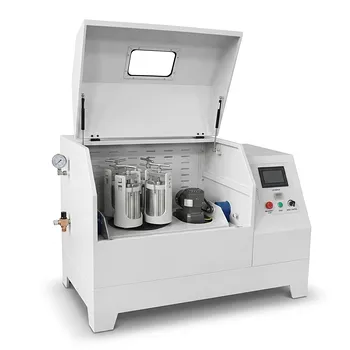
Vertical Production Planetary Ball Mill for High Throughput Powder Processing
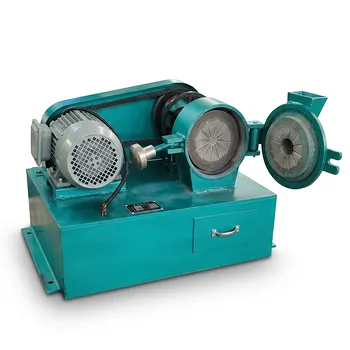
Laboratory Disc Mill Medium Hard Material Grinding Coal Coke Ore Pulverizer

Multi-Platform Nanoscale High-Energy Vibratory Ball Mill
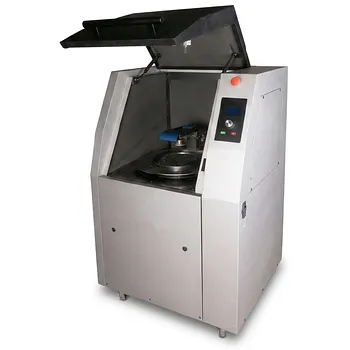
High Speed Vibratory Disc Mill for Spectral Analysis Sample Preparation and Rapid Powder Grinding
Laboratory Basket Sand Mill for Wet Grinding and Dispersion of Viscous Slurries
Heating Temperature Controlled High Energy Vibratory Ball Mill