Why are multi-stage vibratory sieve shakers and standard test sieves necessary for bentonite? Ensure API Compliance
Updated 4 months ago
Precise particle size classification is the foundation of bentonite performance. Multi-stage vibratory sieve shakers and standard test sieves are necessary because they provide the mechanical precision required to isolate ultra-fine powders—typically ranging from 500 microns down to 75 microns—which are essential for ensuring the stability and rheological properties of industrial fluids.
Core Takeaway: Multi-stage vibratory sieving ensures that bentonite meets strict API standards and achieves the uniform particle distribution necessary for stable fluid suspension, effective wall-building, and the protection of downstream drilling machinery.
Enhancing Drilling Fluid Performance
Achieving Suspension Stability
Bentonite must be finely ground to ensure it remains in suspension when mixed into drilling fluids. A vibratory shaker allows for the isolation of ultra-fine particles that reduce sedimentation, ensuring the fluid maintains its structural integrity during operations.
Optimizing Wall-Building Performance
The ability of bentonite to form a "filter cake" on the walls of a borehole is directly linked to its particle size distribution. Precise sieving ensures the powder is fine enough to create a low-permeability barrier, which prevents fluid loss into the surrounding formation.
Accuracy in Rheological Testing
To accurately measure the flow behavior (rheology) of bentonite-based muds, the sample must be free of oversized contaminants. Standardized sieving provides a consistent material base, ensuring that test results reflect the true chemical potential of the bentonite rather than physical irregularities.
Meeting Regulatory and Industry Standards
Compliance with API Benchmarks
The American Petroleum Institute (API) sets rigorous standards for bentonite used in the energy sector, specifically requiring a high percentage of the powder to pass through a 200 mesh (75 micron) sieve. Multi-stage shakers allow operators to quantitatively verify that their material meets these global quality requirements.
Eliminating Kinetic Variability
Consistent particle size distribution eliminates differences in how bentonite reacts chemically during processing. By using a standardized stack of sieves, technicians ensure that every batch of material will disperse and hydrate at a predictable rate, which is critical for large-scale industrial applications.
Filtering Coarse Impurities
Bentonite often contains abrasive impurities or oversized grains that can cause significant wear and tear on pumps and drilling hardware. Multi-stage sieving acts as a critical quality control gate, removing these coarse particles before they can damage expensive infrastructure.
The Mechanical Advantage of Vibratory Shakers
Consistency and Repeatability
Unlike manual sieving, a vibratory sieve shaker provides constant amplitude and uniform processing time. This mechanical consistency ensures that the data gathered is repeatable and not subject to human error or variations in technique.
High-Frequency Particle Stratification
Vibratory shakers generate high-frequency mechanical vibrations that cause particles to tumble and reorient themselves across the mesh surface. This movement ensures that every particle has multiple opportunities to pass through the apertures, leading to a much more accurate classification of the material's physical dimensions.
Efficiency of Multi-Stage Stacks
By using a "multi-stage" approach—stacking multiple sieves with decreasing aperture sizes—operators can separate a single sample into various size fractions simultaneously. This provides a comprehensive view of the particle size distribution (PSD) in a single operation, rather than just a pass/fail result.
Common Pitfalls and Trade-offs
The Risk of Mesh Blinding
Ultra-fine bentonite powder is prone to "blinding," where particles become wedged in the sieve openings or stick to the wires due to moisture. This can lead to false results and requires the use of specialized cleaning aids or anti-blinding balls within the sieve stack.
Overloading the Sieve Surface
Placing too much material on the top sieve can dampen the vibration and prevent smaller particles from reaching the mesh. This "near-size" interference often results in inaccurate grading, making it essential to adhere to recommended sample weights for specific sieve diameters.
Maintenance and Calibration
Sieves are high-precision instruments that degrade over time; wires can stretch or wear down, altering the aperture size. Without regular calibration and inspection, the "standard" test sieve may no longer provide data that aligns with industry benchmarks.
How to Apply This to Your Project
Recommendations for Implementation
- If your primary focus is API Certification: Use a high-precision vibratory shaker with a certified 200 mesh (75 micron) standard sieve to ensure your material meets the minimum fineness requirements for drilling muds.
- If your primary focus is Equipment Longevity: Implement a multi-stage sieving protocol that identifies and removes particles larger than 500 microns to prevent abrasive wear on mechanical seals and pump components.
- If your primary focus is Fluid Rheology: Focus on achieving a narrow and uniform particle size distribution (PSD) between 75 and 200 microns to maximize the suspension stability and filter-cake performance of your fluids.
By utilizing standardized vibratory sieving, you transform bentonite from a raw mineral into a high-performance, predictable industrial additive.
Summary Table:
| Key Factor | Impact on Bentonite Performance |
|---|---|
| API Compliance | Ensures material passes 200 mesh (75μm) for drilling standards. |
| Suspension Stability | Isolates ultra-fine particles to prevent fluid sedimentation. |
| Wall-Building | Optimizes particle size for low-permeability borehole filter cakes. |
| Mechanical Precision | High-frequency vibration eliminates human error and kinetic variability. |
| Equipment Safety | Filters out abrasive coarse impurities to protect downstream pumps. |
Optimize Your Bentonite Classification with Professional Solutions
Achieving precise particle size distribution is critical for high-performance industrial minerals. We provide complete laboratory sample preparation solutions for material science, specializing in advanced powder processing and compaction equipment.
Our extensive product line includes high-precision vibratory and air-jet sieve shakers, test sieves, and mills (planetary ball, jet, rotor) to help you meet strict API benchmarks. From initial crushing with our jaw and roll crushers to final sample preparation using our hydraulic presses (CIP/WIP/Hot Press) and powder mixers, we offer the tools you need for consistent, repeatable results.
Ready to enhance your lab's efficiency? Contact us today to find the perfect equipment for your material testing needs!
References
- Ameloko Anthony Aduojo, Babalola Aisosa Oni. Assessment of clay materials for suitability in drilling mud formulation from part of Ondo State, South-West Nigeria. DOI: 10.1007/s13202-020-00947-9
Mentioned Products
- Dry Three Dimensional Vibratory Sieve Shaker
- Vibratory Sieve Shaker Electromagnetic 3D Motion Powder Particle Size Analyzer for Dry and Wet Sieving
- Laboratory Dry and Wet Three Dimensional Vibratory Sieve Shaker for Particle Analysis
- Heavy Duty Dry Three Dimensional Vibratory Sieve Shaker for Particle Separation
- High Frequency Cabinet Type Three-Dimensional Rotary Vibrating Sieve Shaker for Dry Sieving and Particle Classification
People Also Ask
- How does a vibratory sieve shaker contribute to optimizing the performance of activated carbon? Enhance Adsorption Precision
- What is the specific role of a vibratory sieve shaker in ZnO membrane ceramic support pretreatment? Ensure Uniformity.
- Why is a laboratory-grade vibratory sieve shaker critical for characterizing recycled PVC powder? Ensure Precise PSD
- Why is a high-precision vibratory sieve shaker essential for analyzing recycled inorganic sand? Ensure Consistent PSD
- What is the significance of using standard test sieves and shakers? Enhance Slow-Release Pellet Precision & Yield

Tech Team · PowderPreparation
Last updated on Jun 03, 2026
Related Products
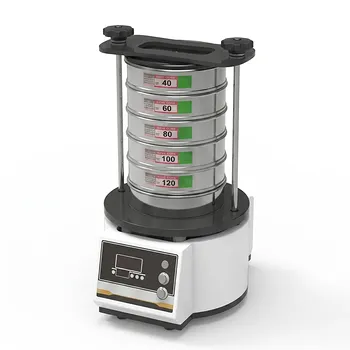
Dry Three Dimensional Vibratory Sieve Shaker
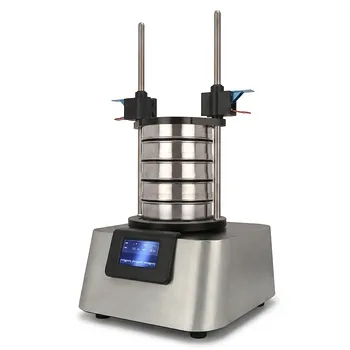
Vibratory Sieve Shaker Electromagnetic 3D Motion Powder Particle Size Analyzer for Dry and Wet Sieving
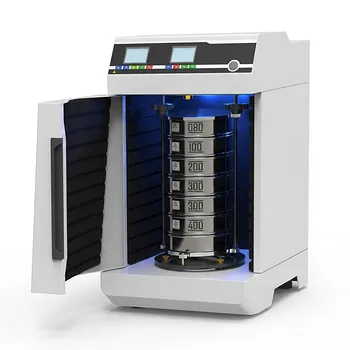
Laboratory Dry and Wet Three Dimensional Vibratory Sieve Shaker for Particle Analysis
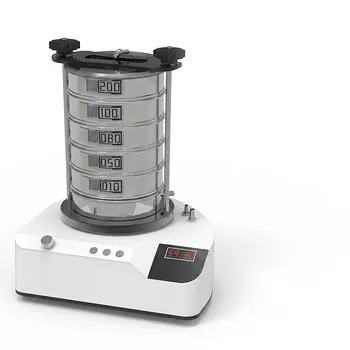
Heavy Duty Dry Three Dimensional Vibratory Sieve Shaker for Particle Separation
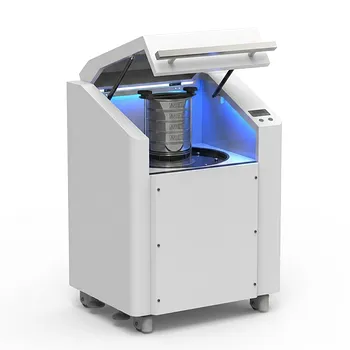
High Frequency Cabinet Type Three-Dimensional Rotary Vibrating Sieve Shaker for Dry Sieving and Particle Classification
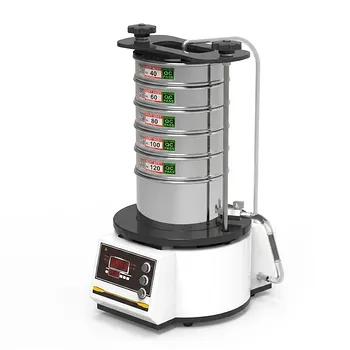
High Frequency Wet Three-Dimensional Vibrating Sieve Shaker for Dry and Wet Particle Size Analysis
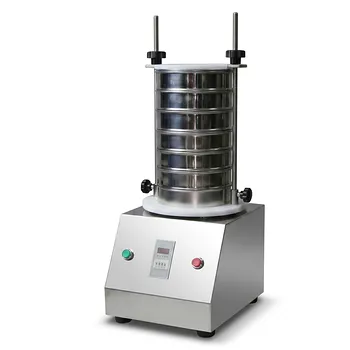
Small Laboratory Vibratory Sieve Shaker for Powder Gradation and Particle Size Analysis
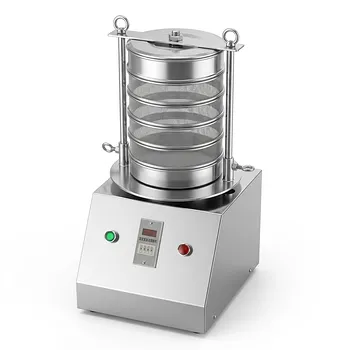
Stainless Steel Laboratory Vibratory Test Sieve Shaker
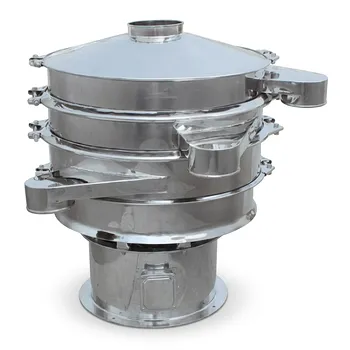
Stainless Steel Rotary Vibrating Sieve High Precision Circular Vibratory Separator Industrial Powder Grading Machine Multi Layer Sifting Equipment
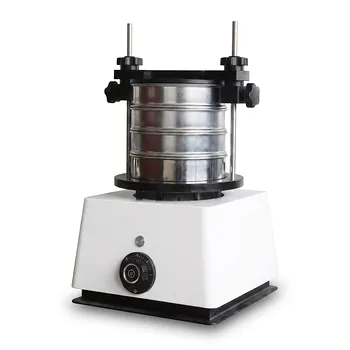
Small Laboratory Vibrating Sieve Shaker for Precise Particle Size Analysis
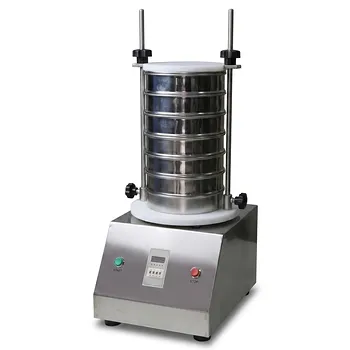
Laboratory Vibratory Test Sieve Shaker for Precision Particle Size Analysis and Powder Grading
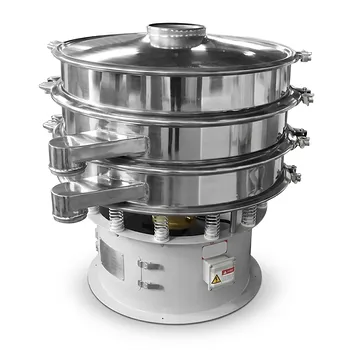
Three Dimensional Rotary Vibrating Sieve
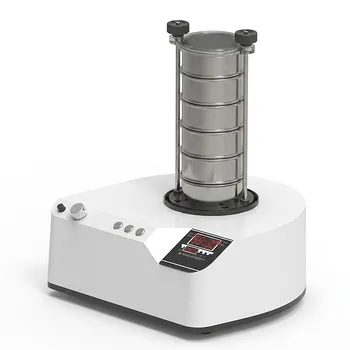
三维电磁微量振动筛分仪
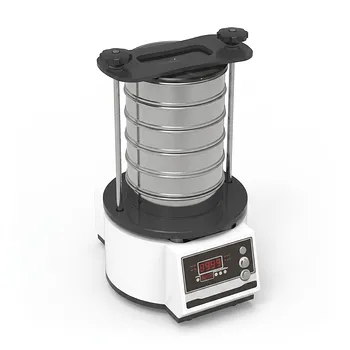
Tapping Oscillating Sieve Shaker for Dry and Wet Particle Size Analysis
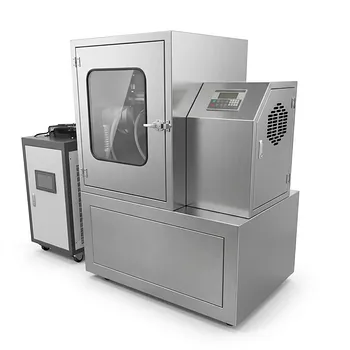
Vibratory Superfine Grinder for Ultra Fine Laboratory Powder Milling
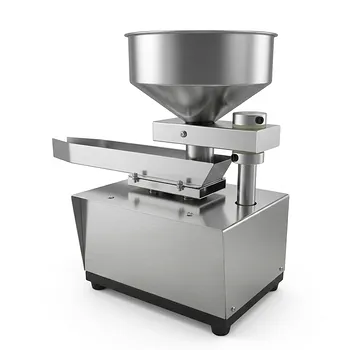
Automatic Vibrating Powder Feeder for Laboratory Material Processing Precision Vibratory Hopper Feeder for Granular and Powder Material Handling Industrial Grade Vibrating Tray Feeder for Consistent Material Sample Preparation
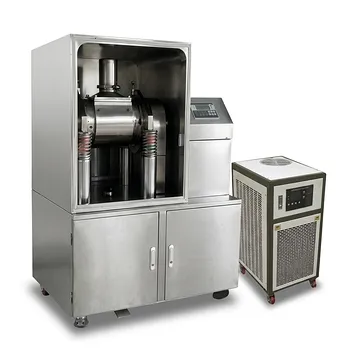
Small Vibrating Ultrafine Grinder for Traditional Chinese Medicine
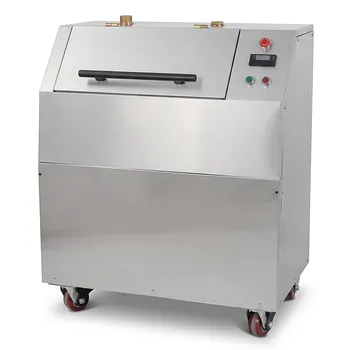
Vibratory Disc Mill for Rapid Fine Grinding and High Throughput Sample Preparation of Hard and Brittle Materials