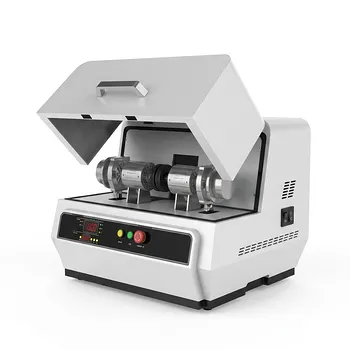
What unique value does the mechanochemical effect of a planetary ball mill provide? Boost Reaction & Process Efficiency
Updated 4 months ago
In concurrent processing, the mechanochemical effect acts as a powerful catalyst. By integrating grinding and chemical reactions into a single step, the planetary ball mill uses instantaneous collision energy to lower activation energy and continuously expose fresh reactive surfaces. This synergy enables carbonation rates exceeding 70% at ambient temperature and low pressure, results that are physically impossible in traditional sequential workflows.
The fundamental advantage of concurrent processing lies in its ability to harness kinetic energy for immediate chemical transformation, bypassing the thermodynamic barriers of traditional sequential methods and significantly reducing overall processing time.
Bridging Physics and Chemistry Through Synergy
Lowering the Activation Energy Barrier
In a concurrent mode, the instantaneous energy produced by high-energy grinding collisions is applied directly to the chemical site.
This mechanical "pumping" of energy provides the necessary jump-start for reactions to occur without the need for external heat sources.
As a result, the activation energy required for the reaction is significantly lowered, allowing chemistry to happen under much milder conditions.
The Power of Continuous Surface Renewal
Traditional sequential processing often suffers from "passivation," where a reacted layer forms on the particle surface and blocks further reaction.
Concurrent milling solves this by continuously grinding away the reacted crust, exposing the unreacted core of the particle to the reagents.
This constant renewal ensures that the chemical reaction remains in a state of high driving force, maintaining a rapid pace until the material is fully converted.
Redefining Efficiency in Ambient Conditions
Achieving High Yields at Low Pressure
One of the most significant breakthroughs of concurrent mechanochemistry is its performance at ambient temperature and low pressure.
While sequential processes typically require extreme environments to achieve high conversion, the planetary ball mill reaches over 70 percent of the theoretical maximum carbonation rate in standard lab conditions.
This capability makes the technology a primary candidate for energy-efficient carbon capture and mineral processing.
Dramatic Reduction in Processing Time
By merging the preparation and reaction phases, the system eliminates the "dead time" associated with transporting or transferring materials between steps.
The simultaneous action of particle size reduction and chemical bonding creates a shortcut in the total treatment timeline.
The result is a streamlined workflow that is both faster and more resource-efficient than any multi-stage alternative.
Understanding the Trade-offs and Constraints
Heat Management and Friction
While the process works at ambient external temperatures, the localized friction between milling media and the sample can generate internal heat.
If your chemical product is highly heat-sensitive, this internal "micro-heating" must be managed through cooling intervals or controlled milling speeds.
Equipment Wear and Media Contamination
The high-energy environment required to trigger mechanochemical effects increases the wear and tear on vials and grinding balls.
Over extended processing times, microscopic fragments of the milling media (such as zirconia or steel) may enter the sample, potentially impacting high-purity requirements.
How to Apply This to Your Project
Making the Right Choice for Your Goal
- If your primary focus is maximizing reaction speed: Utilize concurrent processing to bypass the slow diffusion limits found in sequential methods.
- If your primary focus is reducing energy overhead: Choose concurrent milling to achieve high carbonation or synthesis rates without relying on high-pressure reactors or furnaces.
- If your primary focus is material purity: Be cautious with concurrent modes and select abrasion-resistant milling media to minimize contamination during the intense reaction phase.
By leveraging the synergistic relationship between mechanical force and chemical reactivity, you can unlock processing efficiencies that were previously considered theoretically impossible.
Summary Table:
| Feature | Sequential Processing | Concurrent (Mechanochemical) |
|---|---|---|
| Activation Energy | High (Requires external heat) | Lowered (Via mechanical impact) |
| Surface State | Passivation (Reaction layers block core) | Continuous renewal (Fresh surfaces exposed) |
| Operating Conditions | High pressure/High temperature | Ambient temperature/Low pressure |
| Processing Speed | Slow (Diffusion-limited) | Rapid (Synergistic grinding & reaction) |
| Energy Efficiency | Lower (Multi-stage losses) | Higher (Integrated single-step process) |
Elevate Your Material Synthesis with Expert Solutions
Are you looking to harness the power of mechanochemistry for your research? At [Company Name], we provide complete laboratory sample preparation solutions for material science, specializing in high-performance powder processing and compaction equipment.
Whether you need to lower activation energy with our advanced Planetary Ball Mills, achieve ultra-fine particle sizes with jet mills and cryogenic grinders, or produce high-density samples using our Cold/Warm Isostatic Presses (CIP/WIP) and vacuum hot presses, we have the expertise to support your workflow. From initial crushing to final pelletizing, our extensive line of equipment—including sieve shakers, mixers, and hydraulic presses—is designed to deliver precision and reliability.
Ready to optimize your lab's efficiency? Contact our technical team today to find the ideal equipment for your specific material science applications!
References
- Luka Ceyssens, Tom Van Gerven. Mechanochemical activation of argon oxygen decarburization slags for improved mineral carbonation. DOI: 10.5937/imprc25413c
Mentioned Products
- Vertical Semi Circular Planetary Ball Mill for Laboratory Precision Grinding
- High Energy Planetary Ball Mill for Nano Scale Grinding and Mechanical Alloying
- Heavy Duty Horizontal Planetary Ball Mill for Efficient Industrial Grinding and Sample Preparation
- Vertical Production Planetary Ball Mill for High Throughput Powder Processing
- 360° Rotating Omnidirectional Laboratory Planetary Ball Mill for Homogeneous Ultra-Fine Grinding and Mixing
People Also Ask
- What role does a planetary ball mill play in the synthesis of Li6PS5Cl (LPSCl)? Unlock High Ionic Conductivity
- Why is a planetary ball mill essential for SiBCN-rGO wet-spinning? Achieve Superior Dispersion and Spinnability
- Why is an intermittent grinding process required for perovskites in a planetary ball mill? Ensure Stability & Purity
- Why is a planetary ball mill required for PET micronization? Ensure Accurate Chemical Analysis of Reprocessed PET
- How does mechanized planetary ball milling compare to manual agate grinding? Optimize sulfide standard material precision.

Tech Team · PowderPreparation
Last updated on Jun 03, 2026
Related Products
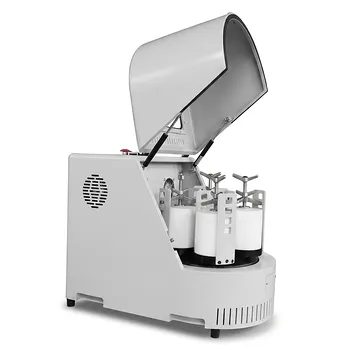
Vertical Semi Circular Planetary Ball Mill for Laboratory Precision Grinding
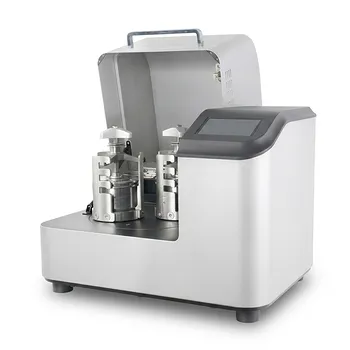
High Energy Planetary Ball Mill for Nano Scale Grinding and Mechanical Alloying
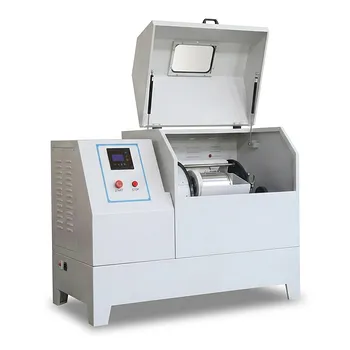
Heavy Duty Horizontal Planetary Ball Mill for Efficient Industrial Grinding and Sample Preparation
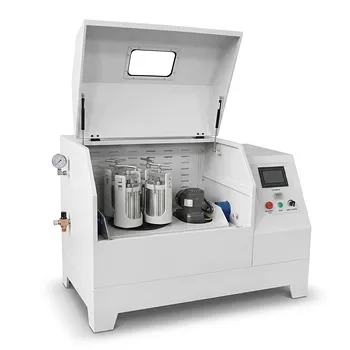
Vertical Production Planetary Ball Mill for High Throughput Powder Processing
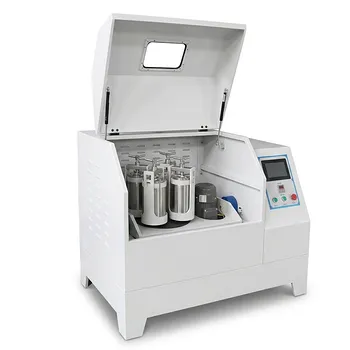
360° Rotating Omnidirectional Laboratory Planetary Ball Mill for Homogeneous Ultra-Fine Grinding and Mixing
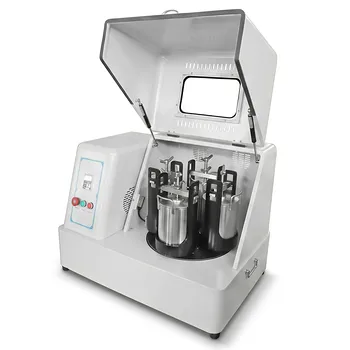
Vertical Square Planetary Ball Mill for Laboratory Sample Preparation and Nanoscale Grinding
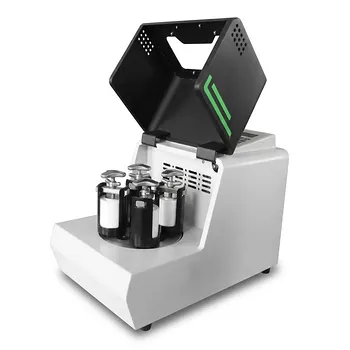
Miniature Planetary Ball Mill with Vacuum Grinding and High Efficiency for Laboratory Sample Preparation
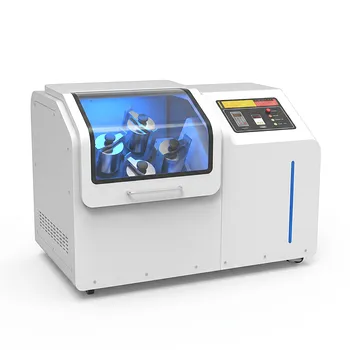
High Energy Omnidirectional Planetary Ball Mill 16L
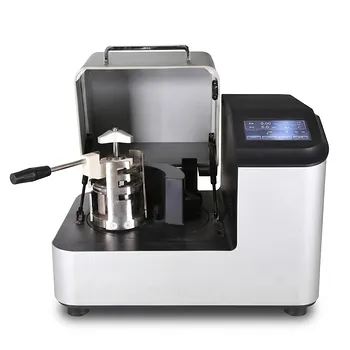
High Energy Laboratory Planetary Ball Mill for Nano Grinding and Material Science Sample Preparation
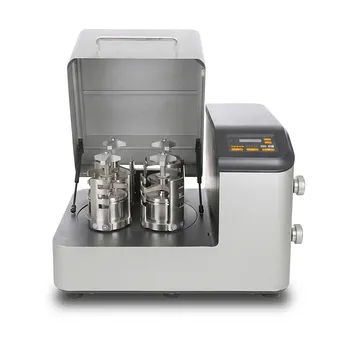
High Energy Planetary Ball Mill for Nano Scale Grinding and Colloidal Mixing in Material Science Research
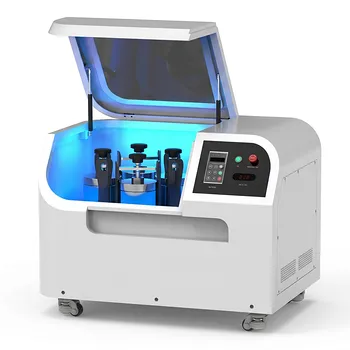
Planetary Ball Mill 12L
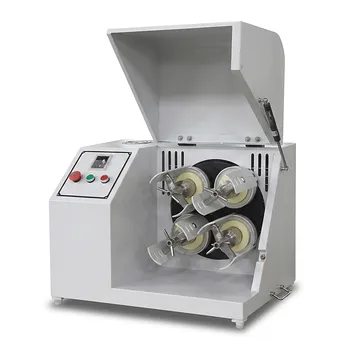
Horizontal Light Duty Planetary Ball Mill for Laboratory Sample Preparation
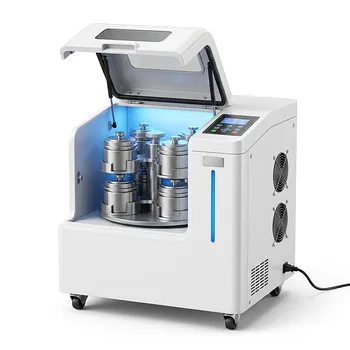
High Energy Omnidirectional Planetary Ball Mill 20L
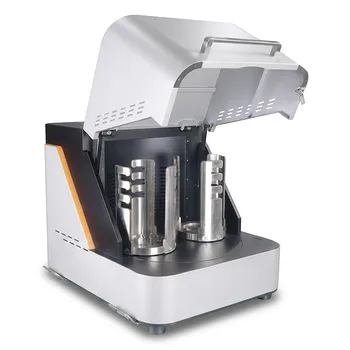
High Energy Laboratory Planetary Ball Mill for Nano Grinding and Colloidal Mixing of Hard and Brittle Materials

8L Planetary Ball Mill for Laboratory Grinding and Sample Preparation
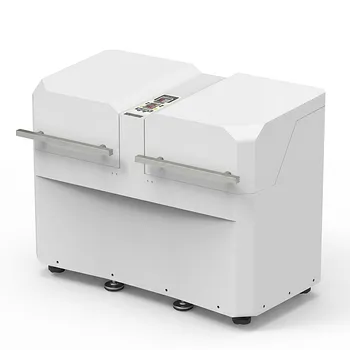
Dual Station Planetary Ball Mill 24L
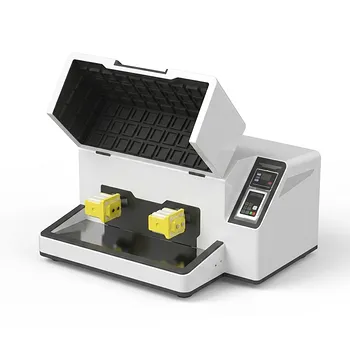
Multi-Platform Nanoscale High-Energy Vibratory Ball Mill

Nano High Energy Vibratory Ball Mill for Laboratory Sample Preparation
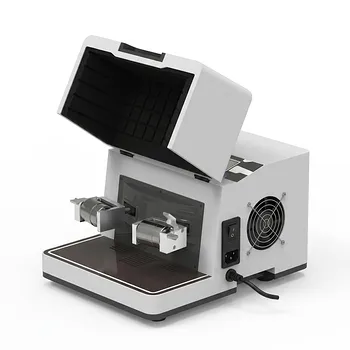
High Energy Hybrid Vibratory Ball Mill for Grinding Mixing and Cell Disruption