What unique advantages do industrial cold isostatic presses (CIP) offer? Superior Uniformity for Large Ceramic Pistons
Updated 4 months ago
Cold isostatic pressing (CIP) provides the critical uniformity required for large ceramic pistons by applying equal pressure from all directions through a fluid medium. This method eliminates the internal density gradients and mold wall friction inherent in traditional unidirectional dry pressing. For large-scale components, this results in superior structural integrity, uniform shrinkage during sintering, and a significant reduction in cracking or deformation.
Core Takeaway: Industrial CIP overcomes the mechanical limitations of rigid-die pressing by using a liquid medium to ensure isotropic compaction. This produces a green body with consistent microstructure and density, which is essential for the reliability of large-scale, high-performance ceramic parts.
The Mechanics of Isotropic Compaction
Eliminating Mold Wall Friction
In traditional unidirectional pressing, friction between the ceramic powder and the rigid steel mold walls creates significant pressure drops. This results in "density gradients," where the top of the piston is denser than the center or base. CIP utilizes a flexible elastomer mold submerged in liquid, ensuring that every surface of the piston receives identical pressure (often exceeding 1000 bar or 200 MPa).
Achieving Superior Microstructural Uniformity
Because the pressure is applied omnidirectionally, the powder particles are packed with extreme consistency across the entire volume of the component. This isotropic compression environment minimizes internal stresses that typically lead to delamination in large-scale parts. The resulting green bodies often achieve a relative density exceeding 99% before they even enter the kiln.
Capability for Complex and Large Geometries
Unidirectional pressing is generally limited to simple, shallow shapes due to the physics of vertical force distribution. CIP allows for the formation of large-diameter pistons (such as those exceeding 56 mm) and more complex geometries that would otherwise suffer from structural weak points. The fluid medium ensures that even intricate features receive the full compaction force required for stability.
Impact on Sintering and Performance
Preventing Deformation and Cracking
The most significant challenge in ceramic manufacturing is the shrinkage that occurs during high-temperature sintering. If a piston has uneven density, different areas will shrink at different rates, leading to warping or catastrophic cracking. Uniform density distributions ensure consistent shrinkage, allowing the piston to maintain its intended dimensions and structural shape throughout the heating process.
Enhancing Mechanical Reliability
By eliminating stress concentrations and density unevenness, CIP significantly improves the reliability of the finished product. This is particularly vital for ceramic refractories and pistons used in harsh thermal shock or rapid cooling environments. A uniform microstructure ensures that the material properties—such as hardness and thermal expansion—are consistent throughout the entire component.
Reducing Sintering Deformation Rates
Components produced via CIP experience a much lower rate of sintering defects compared to those made via uniaxial pressing. This high degree of precision reduces the need for extensive post-sintering diamond grinding, which is both time-consuming and expensive. The stability of the performance data ensures that each piston meets the rigorous standards required for industrial applications.
Understanding the Trade-offs
Cycle Time and Throughput
While CIP offers superior quality, it is generally a slower process than unidirectional dry pressing. Uniaxial presses can operate at high speeds for mass production, whereas CIP requires a "dwell time" (such as 3 minutes at peak pressure) and a manual or semi-automated loading cycle. This makes it a specialized solution rather than a high-speed commodity process.
Tooling and Equipment Complexity
CIP requires flexible elastomer molds and high-pressure liquid containment systems, which differ significantly from standard rigid dies. The initial setup for isostatic pressing can be more complex, and the flexible molds must be carefully maintained to prevent contamination from the liquid medium. However, for large pistons where failure rates must be near zero, this complexity is an essential investment.
Making the Right Choice for Your Goal
When deciding between pressing methods for ceramic components, consider the specific performance requirements of your application:
- If your primary focus is maximum structural integrity for large parts: CIP is the definitive choice as it eliminates the internal gradients that cause large-scale failure.
- If your primary focus is high-volume production of simple shapes: Traditional unidirectional dry pressing may be more cost-effective due to its higher throughput.
- If your primary focus is minimizing post-sintering machining: Use CIP to ensure uniform shrinkage, which keeps the piston closer to its near-net-shape dimensions.
- If your primary focus is extreme durability in thermal shock environments: The uniform microstructure provided by CIP is necessary to prevent internal stress fractures.
Industrial cold isostatic pressing is the foundational technology for producing high-reliability ceramic pistons that can withstand the rigors of modern industrial environments.
Summary Table:
| Feature | Unidirectional Dry Pressing | Cold Isostatic Pressing (CIP) |
|---|---|---|
| Pressure Direction | Single or dual axis (vertical) | Omnidirectional (liquid medium) |
| Density Uniformity | Low (internal density gradients) | High (isotropic compaction) |
| Wall Friction | Significant (causes pressure drops) | Eliminated (flexible elastomer mold) |
| Sintering Result | Potential warping/cracking | Uniform shrinkage & high stability |
| Ideal Geometry | Simple, shallow shapes | Large, complex, or long components |
| Throughput | High speed, mass production | Slower, batch processing |
Elevate Your Material Integrity with Professional Compaction Solutions
Achieving perfect structural consistency in large ceramic components requires precision engineering. At [Company Name], we provide complete laboratory sample preparation solutions for material science, specializing in advanced powder processing and compaction equipment.
Whether you are tackling density gradients in large-scale pistons or refining fine powders, our extensive product lines are designed to meet the most rigorous industrial standards:
- Isostatic Pressing: Cold/Warm Isostatic Presses (CIP/WIP) for isotropic density.
- Hydraulic Presses: Standard lab presses, XRF pellet presses, hot presses, and vacuum hot presses.
- Milling & Grinding: Planetary ball mills, jet mills, and liquid nitrogen cryogenic grinders.
- Sample Preparation: Jaw/roll crushers, sieve shakers, and high-efficiency powder mixers.
Ready to eliminate sintering defects and optimize your production workflow? Contact our technical experts today to find the ideal equipment solution tailored to your specific material requirements.
References
- Viktor Gerlei, Miklós Jakab. Manufacturing of Large and Polished Ceramic Pistons by Cold Isostatic Pressing. DOI: 10.33927/hjic-2023-05
Mentioned Products
- 5 Ton Single Punch Tablet Press Laboratory Small Batch Production
- 6 Ton Variable Frequency Single Punch Tablet Press
- 6-Ton Small Single-Punch Tablet Press — Laboratory Powder & Granule Tableting Equipment / Tablet Forming Machine
- Vertical Production Planetary Ball Mill for High Throughput Powder Processing
- Manual Tablet Press with Dual Scale Pressure Gauge for Pharmaceutical Food Chemical Laboratory Sample Preparation
People Also Ask
- What is the function of a laboratory press in assessing the hydrophobic performance of modified vermiculite fillers?
- What is the core function of a laboratory press in the forming of ceramic filter element green bodies? Maximize Density.
- What is the function of a laboratory press in Cr-Ti alloy evaluation? Quantify Fracture Stress & Strength
- Why is vacuum sealing and flexible packaging necessary for Aluminum Titanate powders during CIP? Ensure Peak Density
- Why is a laboratory hydraulic press required for FT-IR KBr pellets? Achieve Precise Sample Clarity for ZrC–SiC Analysis

Tech Team · PowderPreparation
Last updated on Jun 03, 2026
Related Products
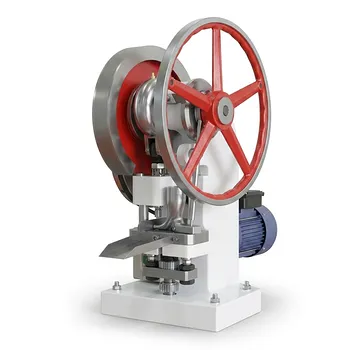
5 Ton Single Punch Tablet Press Laboratory Small Batch Production
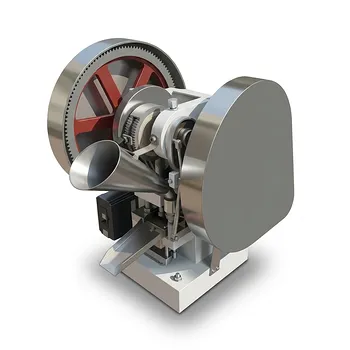
6 Ton Variable Frequency Single Punch Tablet Press
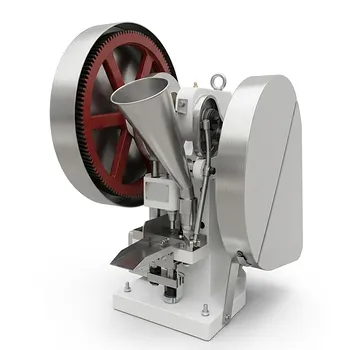
6-Ton Small Single-Punch Tablet Press — Laboratory Powder & Granule Tableting Equipment / Tablet Forming Machine
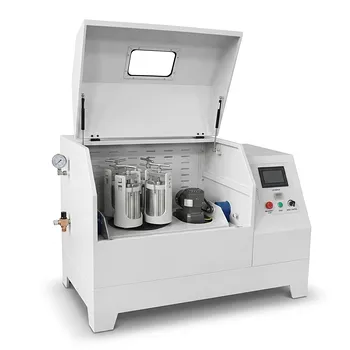
Vertical Production Planetary Ball Mill for High Throughput Powder Processing
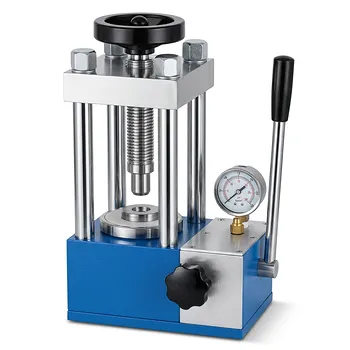
Manual Tablet Press with Dual Scale Pressure Gauge for Pharmaceutical Food Chemical Laboratory Sample Preparation
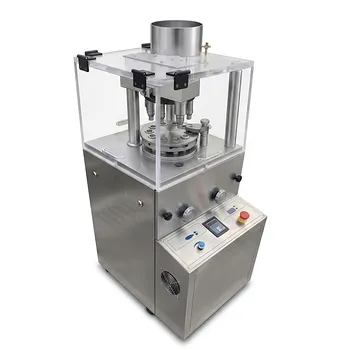
Enhanced 9 Punch Rotary Tablet Press for Powder Compaction
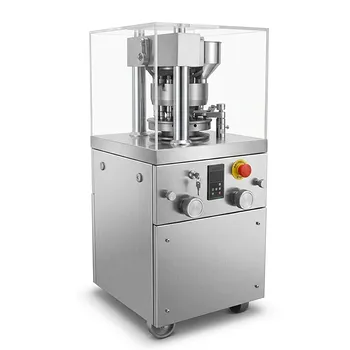
Ordinary Type Rotary Tablet Press for Pharmaceutical Chemical Food Electronic Industries
Laboratory Liquid Nitrogen Cryogenic Grinder Polymer Sample Preparation Pulverizer
Heating Temperature Controlled High Energy Vibratory Ball Mill
Water Cooled Pulse Jet Ultrafine Grinder
Small Ceramic Structure Laboratory Sand Mill Nanoscale Grinding Dispersion Equipment Seal-less Screen-less Design
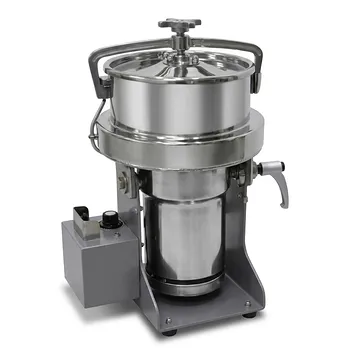
500g Capacity Water Cooled Low Temperature Grinder with Variable Speed and Safety Cover
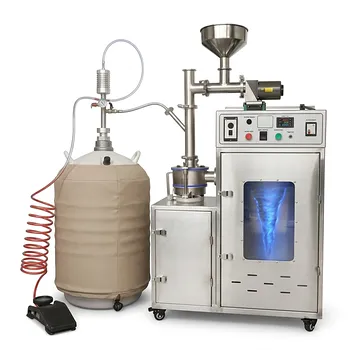
Small Liquid Nitrogen Cryogenic Grinder for Ultrafine Grinding of Heat-Sensitive Materials in Laboratories
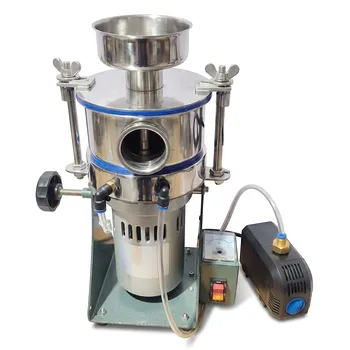
Water Cooled Airflow Ultra Fine Grinder for Low Temperature Material Processing
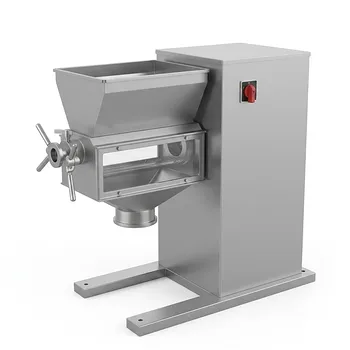
Industrial Swing Granulator for Powder Processing in Pharma Food and Chemical Industries
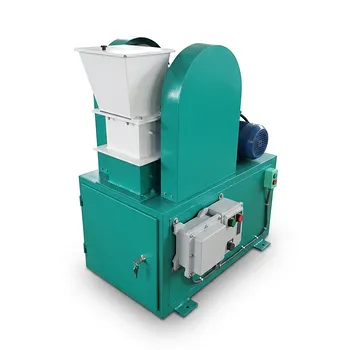
Custom Explosion-Proof Sealed Jaw Crusher for Laboratory and Industrial Sample Preparation
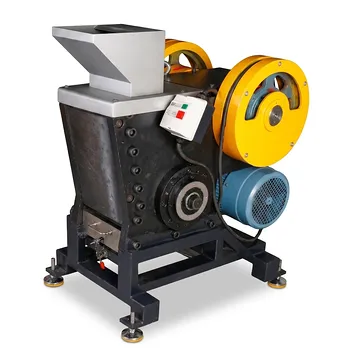
Heavy Duty Industrial Jaw Crusher for Primary Ore Crushing and High Capacity Mineral Material Size Reduction
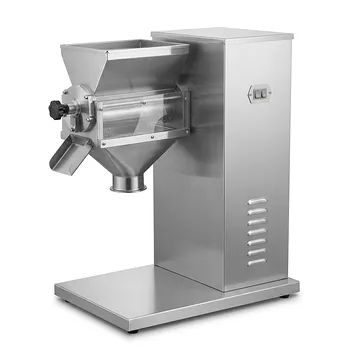
Small Swing Granulator Efficient Powder Granulation for Pharmaceutical Chemical Food Industries
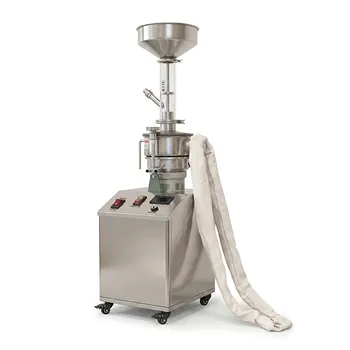
Small Liquid Nitrogen Cryogenic Grinder for Plastic and Heat-Sensitive Material Sample Preparation