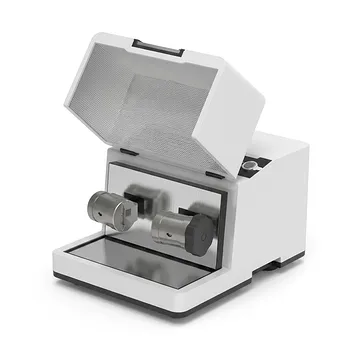
What technical advantages does a planetary ball mill offer for the refinement of bamboo fibers? Achieve 99.9% Breakage
Updated 5 months ago
The technical advantage of a planetary ball mill lies in its ability to generate high-energy impact and shear forces through simultaneous rotation and revolution. This specific motion allows it to break down the resilient lignocellulosic structure of bamboo into ultrafine powder within a fraction of the time required by standard grinding equipment—often in as little as three hours.
The planetary ball mill utilizes high energy density to transform coarse bamboo into a high-activity reinforcement phase. By maximizing particle uniformity and surface area, it enables the creation of superior biocomposites that are difficult to achieve with conventional milling.
The Mechanics of High-Energy Grinding
Coupled Rotation and Revolution
Unlike standard mills that rely on simple gravity or rotation, a planetary ball mill uses a sun wheel to rotate grinding jars in the opposite direction of their revolution. This "planetary" motion creates powerful multi-directional centrifugal forces that accelerate grinding media to much higher velocities than traditional equipment.
Superior Energy Density
This complex movement results in a significantly higher energy density, which is the amount of mechanical energy transferred to the material per unit of time. High energy density is essential for overcoming the lattice energy and tough physical bonds found in natural fibers.
Rapid Refinement Timeframes
Because of this intense energy transfer, the mill can reduce coarsely crushed bamboo to ultrafine powder very quickly. In many industrial and laboratory applications, this refinement process is completed in just three hours, providing a massive efficiency boost over standard grinding methods.
Impact on Bamboo Fiber Structure
Breaking the Lignocellulosic Barrier
Bamboo is characterized by a tough lignocellulosic structure that resists mechanical breakdown. The high-energy impact and shear forces of a planetary ball mill are uniquely suited to "shattering" these structural barriers, converting the fiber into a high-activity powder.
Achieving Ultra-High Cell Wall Breakage
Standard equipment often leaves cell walls intact, trapping active components and limiting the fiber's usefulness. Planetary milling can achieve a cell wall breakage rate of over 99.9%, fully exposing the internal structure and increasing the bioavailability and reactivity of the material.
Precise Particle Size Control
The equipment allows for the production of controlled micron-level powders by adjusting the grinding duration and media size. This precision ensures that the resulting bamboo powder can pass through specific mesh sieves for high-quality integration into concrete or plastic matrices.
Performance Gains in Biocomposites
Enhanced Surface Area and Reactivity
By grinding materials into the sub-micron or nanometer scale, the mill significantly increases the specific surface area of the bamboo powder. This increased surface area improves the chemical bonding between the bamboo "reinforcement phase" and the surrounding composite matrix.
Eliminating Agglomeration for Uniformity
A common failure in standard grinding is the "clumping" or agglomeration of fine particles. Planetary ball mills use high-frequency collisions to forcibly eliminate these clumps, ensuring microscopic mixing uniformity throughout the composite material.
Prevention of Secondary Phases
Uniform mixing is critical to prevent local compositional deviations that can weaken a material. Consistent refinement ensures that the bamboo particles are distributed evenly, avoiding the precipitation of secondary phases that could compromise the integrity of the biocomposite.
Understanding the Trade-offs
Heat Generation and Thermal Degradation
The extreme mechanical energy generated by planetary motion produces significant internal heat. For organic materials like bamboo, excessive heat can lead to thermal degradation or charring if the milling cycles are not properly managed with cooling intervals.
Grinding Media Contamination
The high-intensity collisions cause gradual wear on the grinding jars and balls. Depending on the material used (e.g., stainless steel, zirconia), trace contaminants from the media can be introduced into the bamboo powder, which may affect the purity of the final biocomposite.
Operational Complexity and Cost
Planetary ball mills are significantly more complex and expensive to maintain than simple hammer mills or rotary grinders. They require precise balancing of the jars and have lower batch capacities, making them better suited for high-value refinement rather than bulk, low-grade processing.
How to Apply This to Your Project
Making the Right Choice for Your Goal
- If your primary focus is maximizing composite strength: Use planetary milling to achieve the highest possible specific surface area, ensuring a more robust bond between the bamboo and the polymer matrix.
- If your primary focus is rapid prototyping: Leverage the high energy density to reduce your material preparation time to a 3-hour window, accelerating your overall R&D cycle.
- If your primary focus is cost-sensitive bulk production: Consider standard grinding for initial breakdown and reserve the planetary ball mill only for the final "polishing" stage to minimize operational costs.
- If your primary focus is chemical reactivity: Prioritize the high cell wall breakage rate (99.9%) of the planetary mill to ensure internal bamboo components are fully exposed for chemical treatment.
Ultimately, the planetary ball mill is the definitive tool for transitioning from simple fiber fillers to high-performance, nanostructured bamboo reinforcements.
Summary Table:
| Feature | Planetary Ball Mill | Standard Grinding Equipment |
|---|---|---|
| Motion Type | Coupled Rotation & Revolution | Simple Gravity or Single Rotation |
| Energy Density | High (Multi-directional forces) | Low to Moderate |
| Processing Time | Rapid (~3 hours) | Long / Multiple passes |
| Cell Wall Breakage | > 99.9% | Low / Incomplete |
| Particle Size | Ultrafine (Sub-micron/Nano) | Coarse to Micron-level |
| Resulting Structure | High-activity reinforcement phase | Low-reactivity fiber filler |
Optimize Your Material Prep with Advanced Powder Solutions
Are you aiming to transform resilient natural fibers into high-performance biocomposites? Our complete laboratory sample preparation solutions are designed specifically for material science innovation. We specialize in high-precision powder processing and compaction equipment that ensures your research transitions from the lab to high-value applications seamlessly.
How we add value to your workflow:
- Comprehensive Milling & Grinding: From high-energy planetary ball mills and jet mills to liquid nitrogen cryogenic grinders, we achieve the exact particle size and surface area your project demands.
- Preparation & Sizing: Ensure consistency with our jaw/roll crushers and vibratory/air-jet sieve shakers for precise mesh control.
- Advanced Compaction: Transform your powders into structural samples with our full spectrum of hydraulic presses, including Cold/Warm Isostatic Presses (CIP/WIP), vacuum hot presses, and XRF pellet presses.
- Uniform Mixing: Achieve microscopic homogeneity with our specialized powder and defoaming mixers.
Whether you are a researcher focusing on chemical reactivity or a manufacturer seeking superior structural integrity, our equipment provides the reliability and precision you need.
Contact our technical experts today to find your solution!
References
- Nurrul Amilin Zainal Abidin, Nor Nabilah Che Abd Rahim. Physical and mechanical properties of bamboo-silicone biocomposites (BaSiCs). DOI: 10.15376/biores.17.3.4432-4443
Mentioned Products
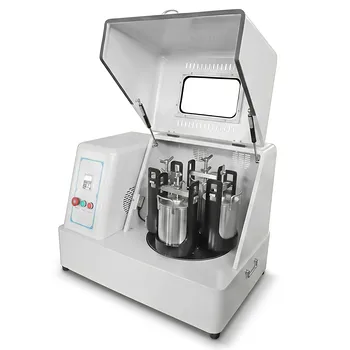
- Vertical Square Planetary Ball Mill for Laboratory Sample Preparation and Nanoscale Grinding
- 8L Planetary Ball Mill for Laboratory Grinding and Sample Preparation
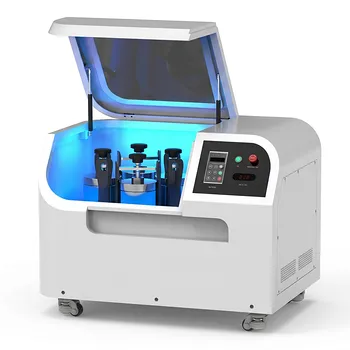
- Planetary Ball Mill 12L
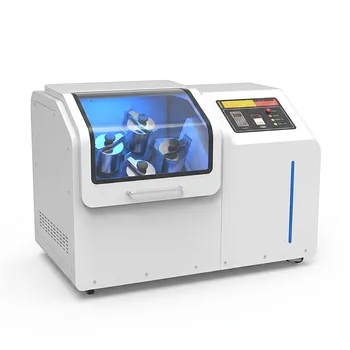
- High Energy Omnidirectional Planetary Ball Mill 16L
- Vertical Semi Circular Planetary Ball Mill for Laboratory Precision Grinding
People Also Ask
- What is the function of a planetary ball mill in wollastonite ceramic prep? Achieve Molecular Homogenization & Reactivity
- How does a planetary ball mill contribute to the homogenization of trace elements? Achieve Sub-Micron Uniformity
- Why grind lime-pozzolan specimens for TG/DTA for 3 mins? Master sample prep for high-precision thermal analysis.
- What role does a planetary ball mill play in the synthesis of Li6PS5Cl (LPSCl)? Unlock High Ionic Conductivity
- What role does a planetary ball mill play in KNTO ceramic refinement? Optimize Homogeneity & Reactivity

Tech Team · PowderPreparation
Last updated on May 14, 2026
Related Products
Vertical Square Planetary Ball Mill for Laboratory Sample Preparation and Nanoscale Grinding

8L Planetary Ball Mill for Laboratory Grinding and Sample Preparation
Planetary Ball Mill 12L
High Energy Omnidirectional Planetary Ball Mill 16L
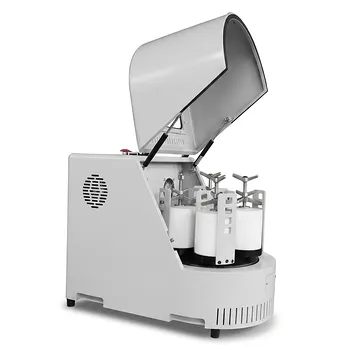
Vertical Semi Circular Planetary Ball Mill for Laboratory Precision Grinding
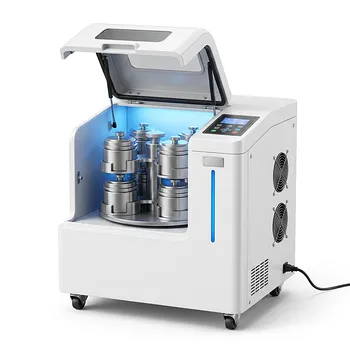
High Energy Omnidirectional Planetary Ball Mill 20L
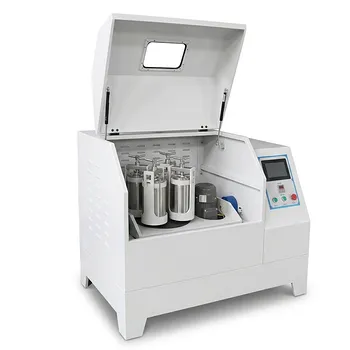
360° Rotating Omnidirectional Laboratory Planetary Ball Mill for Homogeneous Ultra-Fine Grinding and Mixing
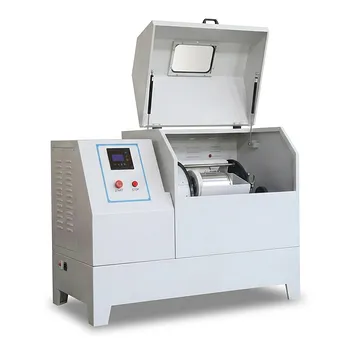
Heavy Duty Horizontal Planetary Ball Mill for Efficient Industrial Grinding and Sample Preparation
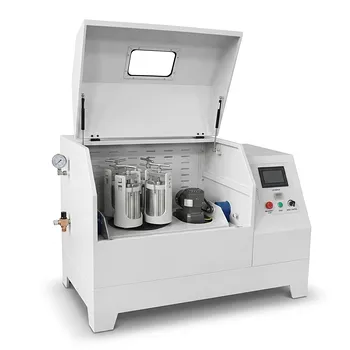
Vertical Production Planetary Ball Mill for High Throughput Powder Processing
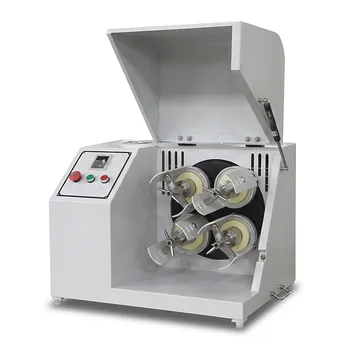
Horizontal Light Duty Planetary Ball Mill for Laboratory Sample Preparation
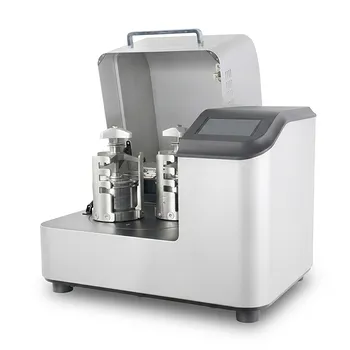
High Energy Planetary Ball Mill for Nano Scale Grinding and Mechanical Alloying
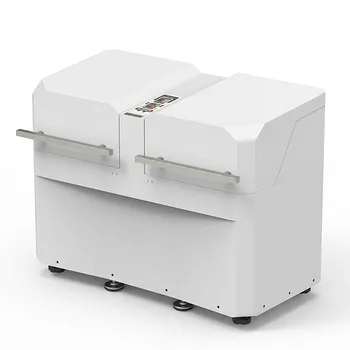
Dual Station Planetary Ball Mill 24L
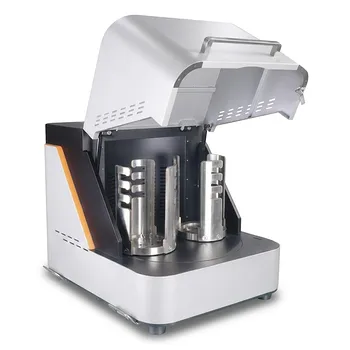
High Energy Laboratory Planetary Ball Mill for Nano Grinding and Colloidal Mixing of Hard and Brittle Materials
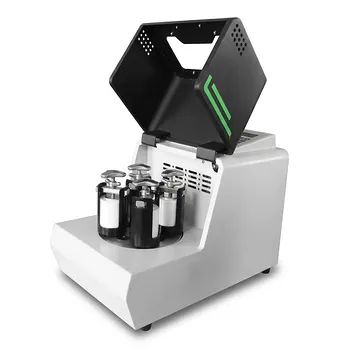
Miniature Planetary Ball Mill with Vacuum Grinding and High Efficiency for Laboratory Sample Preparation
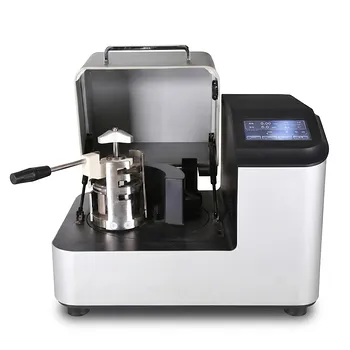
High Energy Laboratory Planetary Ball Mill for Nano Grinding and Material Science Sample Preparation
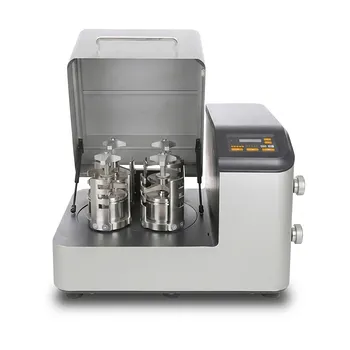
High Energy Planetary Ball Mill for Nano Scale Grinding and Colloidal Mixing in Material Science Research
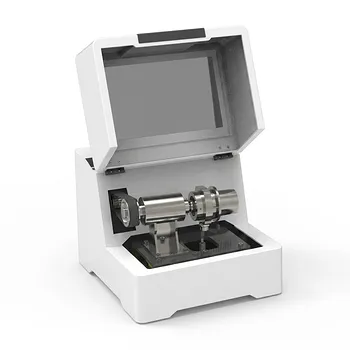
Single Tank High Energy Vibratory Ball Mill for Laboratory Grinding and Mixing

High Energy Hybrid Vibratory Ball Mill for Grinding Mixing and Cell Disruption

Multi-Platform Nanoscale High-Energy Vibratory Ball Mill