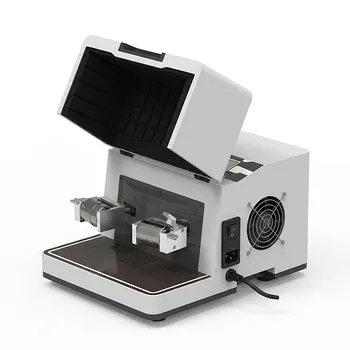
What Role Does a Planetary Ball Mill & Ethanol Play in Cr2O3/Fe2O3/Glass Mixing? Enhance Composite Uniformity
Updated 3 months ago
The primary role of a planetary ball mill when mixing $\text{Cr}_2\text{O}_3$/$\text{Fe}_2\text{O}_3$/glass composites is to provide high-energy mechanical force for deep homogenization and particle refinement. When used with ethanol as a medium, the process ensures a uniform micro-scale distribution of components while preventing powder agglomeration and thermal oxidation. This combined approach creates a highly reactive, fluid slurry that is essential for successful subsequent solid-state reactions.
A planetary ball mill serves as a high-energy processor that transforms raw powders into a homogenized, micron-sized precursor. By using ethanol as a liquid medium, the system stabilizes the powder's surface energy and prevents defects like clustering, which is critical for achieving chemical uniformity in the final composite.
Mechanical Energy and Particle Refinement
Generating High-Impact Forces
The planetary ball mill operates through simultaneous rotation and revolution of grinding jars, creating intense centrifugal and shear forces. These forces drive high-speed collisions between grinding balls and the composite powders, delivering the mechanical energy required to break down coarse particles.
Achieving Micron-Scale Pulverization
For glass-based composites, the mill is essential for pulverizing quenched glass fragments into a uniform fine powder, often reaching sizes under 75 μm. This reduction in size significantly increases the specific surface area of the particles, which is a prerequisite for efficient interfacial chemical reactions.
Enhancing Surface Reactivity
The mechanical energy does more than just break particles; it increases the surface energy of the powders. This "activation" of the $\text{Cr}_2\text{O}_3$, $\text{Fe}_2\text{O}_3$, and glass powders ensures they are ready for high-density sintering and rapid densification in later stages.
The Critical Functions of Ethanol
Prevention of Powder Agglomeration
In dry grinding, ultrafine powders frequently "clump" together due to static or van der Waals forces. 100% ethanol acts as a dispersant, coating the particles to prevent this severe agglomeration and ensuring each component remains distinct and accessible.
Mitigation of Thermal Oxidation
High-energy milling generates significant localized heat which can lead to unwanted thermal oxidation of the powders. Ethanol serves as a coolant for heat dissipation, protecting the chemical integrity of the $\text{Cr}_2\text{O}_3$ and $\text{Fe}_2\text{O}_3$ during the refinement process.
Creation of a Fluid Slurry
Utilizing ethanol transforms the mixture into a slurry with high fluidity. This liquid state is more conducive to obtaining a uniform particle size distribution than dry methods, as it allows the powder components to circulate more freely within the grinding jar.
Achieving Deep Homogenization
Uniform Distribution of Oxides
The mill ensures that the chromium oxide and iron oxide are not just mixed, but deeply homogenized within the lead-silicate glass matrix. This micro-scale distribution is vital for the chemical homogeneity of the ceramic composite, preventing "hot spots" or weak zones during sintering.
Preparing for Solid-State Reactions
By achieving a high level of mixing uniformity at the micron or nanometer scale, the ball mill prepares the material for solid-state reactions. This ensures that the components react predictably and completely when heat is applied in the final manufacturing steps.
Understanding the Trade-offs
Post-Processing Requirements
While wet milling with ethanol provides superior uniformity, it requires an additional drying step to remove the solvent. If the ethanol is not removed completely or if the drying process is too aggressive, it can re-introduce agglomeration or cause contamination.
Solvent Costs and Safety
Using anhydrous (100%) ethanol increases the operational cost compared to dry milling. Furthermore, the high-speed rotation of the mill combined with a flammable solvent requires strict adherence to safety protocols to prevent pressure buildup or ignition from frictional heat.
Applying This Process to Your Project
Recommendations for Implementation
- If your primary focus is Maximum Homogeneity: Use a high ball-to-powder ratio and 100% anhydrous ethanol to ensure the oxides are perfectly dispersed within the glass matrix.
- If your primary focus is High Reactivity for Sintering: Extend the milling time to maximize the specific surface area and mechanical activation of the particles.
- If your primary focus is Preventing Component Degradation: Ensure the mill's cooling cycles are active and use ethanol as a thermal buffer to prevent oxidation of sensitive metal oxides.
The integration of planetary ball milling and ethanol media is the most reliable method for producing the high-quality, chemically uniform powders required for advanced ceramic composites.
Summary Table:
| Feature | Role in Mixing Composite | Key Advantage |
|---|---|---|
| Mechanical Force | High-energy impact & shear | Pulverization to micron-scale (<75 μm) |
| Ethanol Medium | Dispersant & cooling agent | Prevents agglomeration & thermal oxidation |
| Homogenization | Micro-scale oxide distribution | Eliminates "hot spots" during sintering |
| Slurry Creation | High fluidity environment | Ensures uniform particle size distribution |
Elevate Your Material Research with Precision Powder Processing
Achieving perfect chemical homogeneity in ceramic composites like Cr2O3/Fe2O3/glass requires expert-grade equipment. We provide complete laboratory sample preparation solutions tailored for material science, specializing in high-performance powder processing and compaction.
Our specialized lineup includes:
- Advanced Grinding & Milling: Planetary ball mills, jet mills, and cryogenic grinders for ultra-fine particle refinement.
- Compaction Excellence: A full spectrum of hydraulic presses, including Cold/Warm Isostatic Presses (CIP/WIP), standard lab presses, and vacuum hot presses for high-density sintering.
- Sieving & Mixing: Precision sieve shakers and high-efficiency powder/defoaming mixers.
Whether you are a researcher aiming for micron-scale uniformity or a distributor seeking reliable OEM/ODM support, our solutions ensure superior surface reactivity and reliable results. Contact our technical experts today to find the ideal equipment for your laboratory needs!
References
- Dina H.A. Besisa, Amira M.M. Amin. Synthesis of new Cr2O3/Fe2O3/glass composites from industrial wastes; from undesired to advanced optical products. DOI: 10.1007/s11356-022-21694-w
Mentioned Products
- Vertical Semi Circular Planetary Ball Mill for Laboratory Precision Grinding
- High Energy Planetary Ball Mill for Nano Scale Grinding and Mechanical Alloying
- Heavy Duty Horizontal Planetary Ball Mill for Efficient Industrial Grinding and Sample Preparation
- Vertical Production Planetary Ball Mill for High Throughput Powder Processing
- 360° Rotating Omnidirectional Laboratory Planetary Ball Mill for Homogeneous Ultra-Fine Grinding and Mixing
People Also Ask
- What role does a planetary ball mill play in the synthesis of Li6PS5Cl (LPSCl)? Unlock High Ionic Conductivity
- Why is a planetary ball mill essential for SiBCN-rGO wet-spinning? Achieve Superior Dispersion and Spinnability
- Why is an intermittent grinding process required for perovskites in a planetary ball mill? Ensure Stability & Purity
- Why is a planetary ball mill required for PET micronization? Ensure Accurate Chemical Analysis of Reprocessed PET
- How does mechanized planetary ball milling compare to manual agate grinding? Optimize sulfide standard material precision.

Tech Team · PowderPreparation
Last updated on Jun 03, 2026
Related Products
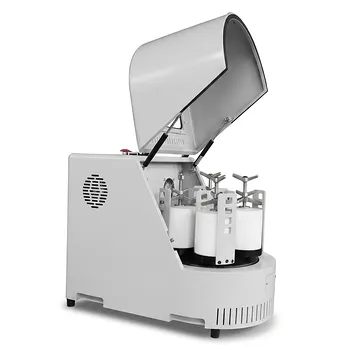
Vertical Semi Circular Planetary Ball Mill for Laboratory Precision Grinding

High Energy Planetary Ball Mill for Nano Scale Grinding and Mechanical Alloying
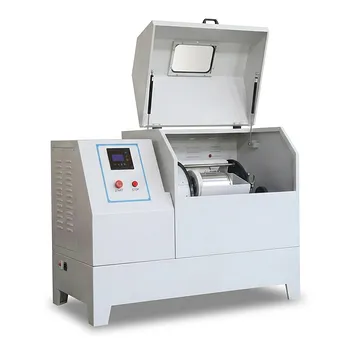
Heavy Duty Horizontal Planetary Ball Mill for Efficient Industrial Grinding and Sample Preparation
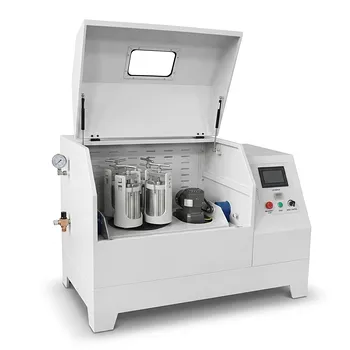
Vertical Production Planetary Ball Mill for High Throughput Powder Processing
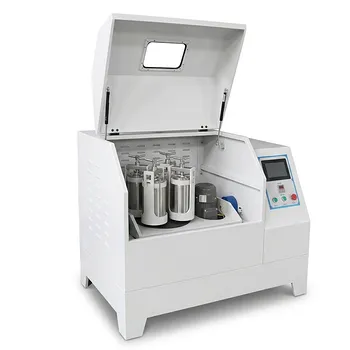
360° Rotating Omnidirectional Laboratory Planetary Ball Mill for Homogeneous Ultra-Fine Grinding and Mixing

Vertical Square Planetary Ball Mill for Laboratory Sample Preparation and Nanoscale Grinding

Miniature Planetary Ball Mill with Vacuum Grinding and High Efficiency for Laboratory Sample Preparation
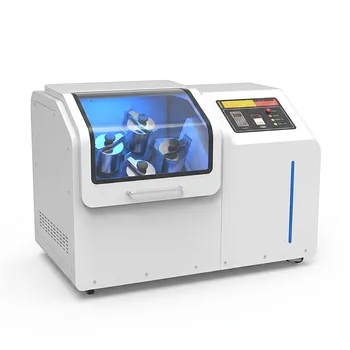
High Energy Omnidirectional Planetary Ball Mill 16L

High Energy Laboratory Planetary Ball Mill for Nano Grinding and Material Science Sample Preparation
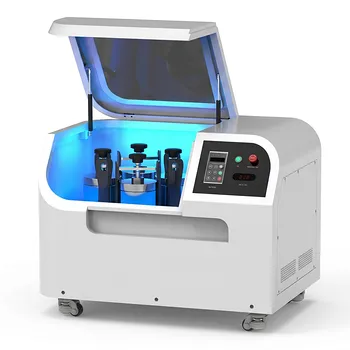
Planetary Ball Mill 12L
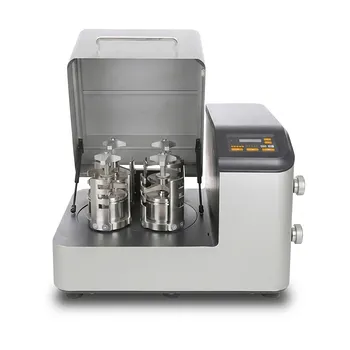
High Energy Planetary Ball Mill for Nano Scale Grinding and Colloidal Mixing in Material Science Research
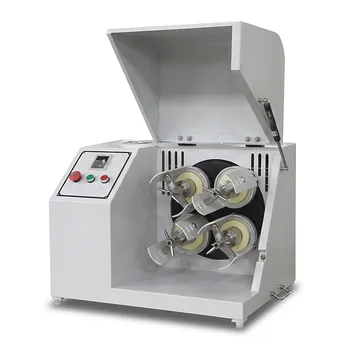
Horizontal Light Duty Planetary Ball Mill for Laboratory Sample Preparation
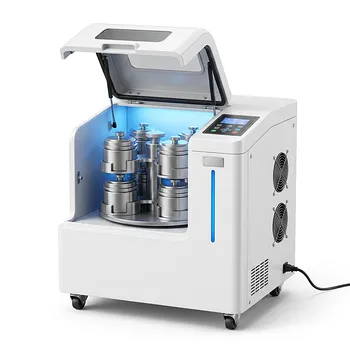
High Energy Omnidirectional Planetary Ball Mill 20L
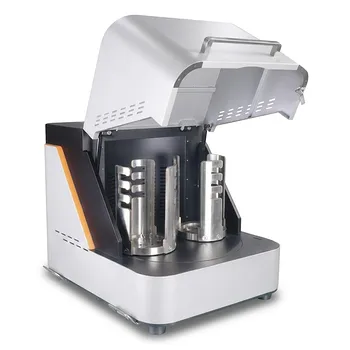
High Energy Laboratory Planetary Ball Mill for Nano Grinding and Colloidal Mixing of Hard and Brittle Materials
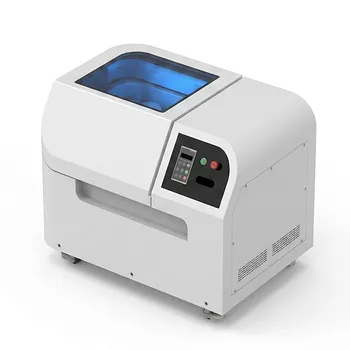
8L Planetary Ball Mill for Laboratory Grinding and Sample Preparation
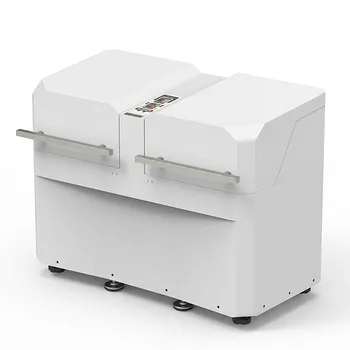
Dual Station Planetary Ball Mill 24L
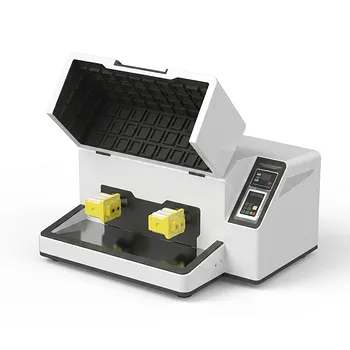
Multi-Platform Nanoscale High-Energy Vibratory Ball Mill

Nano High Energy Vibratory Ball Mill for Laboratory Sample Preparation
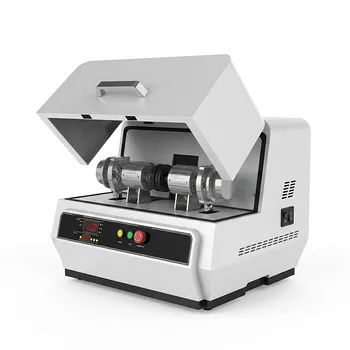
Dual Jar High Energy Vibratory Ball Mill