What role does a planetary ball mill play in Co-Al compounds? Master Microscopic Homogenization & Pore Uniformity
Updated 5 months ago
The planetary ball mill is the critical engine for microscopic homogenization in Co-Al synthesis. It utilizes high-frequency impact and shear forces to achieve deep, long-term mixing of cobalt (Co) and aluminum (Al) powders. This process ensures that these metal components, which possess significantly different melting points, are uniformly distributed at the microscopic scale to facilitate stable phase formation.
The planetary ball mill acts as the foundational processing step that dictates the eventual quality of the porous structure. By ensuring a uniform distribution of reactants, it prevents localized inconsistencies that would otherwise lead to defective pore structures or impure phase formations during the subsequent thermal explosion reaction.
The Mechanics of Microscopic Uniformity
High-Frequency Impact and Shear Forces
The planetary ball mill operates through high-speed rotation, generating intense mechanical impact and frictional forces. These forces are essential for breaking down particle agglomerates that naturally form in raw metallic powders.
Deep Mixing of Disparate Metals
Cobalt and aluminum have vastly different physical properties, particularly their melting points. The milling process forces these disparate particles into a state of deep, long-term mixing that cannot be achieved through simple blending.
De-agglomeration and Particle Refinement
By subjecting the powders to high-energy conditions, the mill effectively dissociates inorganic particles. This refinement increases the contact surface area between Co and Al, which is a prerequisite for high reactivity in later stages.
Securing the Stability of the Pore Structure
Foundations for Thermal Explosion
The primary goal of this stage is to prepare the mixture for a thermal explosion reaction. If the powders are not perfectly distributed, the reaction will proceed unevenly, leading to a collapsed or inconsistent pore network.
Uniformity of Phase Formation
Consistent chemical composition at the microscopic level ensures that the resulting intermetallic compounds are homogenous. This uniformity is what allows the material to maintain its structural integrity while remaining porous.
Promoting Close Component Contact
High-efficiency mechanical milling promotes atom-level contact between the raw materials. This close proximity is vital for the solid-phase reactions that define the final microstructure of the Co-Al compound.
Understanding the Trade-offs
Risk of Media Contamination
The intense energy required for deep mixing can cause wear on the milling balls and jars. This introduces a risk of impurities from the milling media leaching into the Co-Al mixture, which may alter the final material properties.
Managing Thermal Energy
High-speed rotation generates significant heat, which can lead to unwanted cold welding of the ductile aluminum powder. If the temperature is not controlled, the powders may clump together rather than dispersing, defeating the purpose of the milling process.
Processing Time vs. Material Integrity
While long-term mixing is necessary for uniformity, excessive milling can lead to over-refinement. This may increase the oxygen sensitivity of the powder, potentially leading to oxidation issues during the subsequent thermal processing.
Making the Right Choice for Your Goal
To achieve the best results with porous Co-Al intermetallic compounds, align your milling parameters with your specific structural requirements:
- If your primary focus is Maximum Pore Uniformity: Prioritize longer milling durations at moderate speeds to ensure the most consistent microscopic distribution of Co and Al.
- If your primary focus is High Phase Purity: Use high-hardness milling media (such as zirconia or tungsten carbide) and cooling intervals to minimize contamination and heat-induced clumping.
- If your primary focus is Rapid Reaction Kinetics: Increase the rotation speed to maximize particle refinement and surface area contact, which promotes a faster thermal explosion.
Effective planetary ball milling transforms raw metallic powders into a highly reactive, homogenous precursor, ensuring the structural and functional success of the final porous compound.
Summary Table:
| Milling Function | Key Benefit for Co-Al Synthesis | Optimization Strategy |
|---|---|---|
| Microscopic Homogenization | Prevents localized defects & phase impurity | Moderate speed with extended duration |
| Particle Refinement | Increases surface area for thermal explosion | High-speed rotation for high reactivity |
| De-agglomeration | Ensures uniform metal distribution | High-energy impact and shear forces |
| Temperature Control | Prevents cold welding of ductile Aluminum | Programmed cooling intervals during milling |
| Contamination Control | Maintains high phase purity | Use zirconia or tungsten carbide media |
Elevate Your Material Research with Precision Powder Solutions
Achieving the perfect porous structure in Co-Al intermetallic compounds requires more than just mixing—it requires precise control over particle energy and homogeneity. At our core, we provide complete laboratory sample preparation solutions designed for the rigorous demands of material science.
Whether you are refining metallic powders or preparing advanced ceramics, our extensive equipment line supports every stage of your workflow:
- Advanced Milling: High-performance planetary ball mills, jet mills, and cryogenic grinders for ultra-fine particle refinement.
- Superior Compaction: A full spectrum of hydraulic presses, including Cold/Warm Isostatic Presses (CIP/WIP) and vacuum hot presses for dense, high-quality pellets.
- Material Processing: From jaw crushers and sieve shakers to high-efficiency vacuum defoaming mixers.
Ready to optimize your powder processing results? Contact our technical experts today to find the ideal equipment configuration for your lab and ensure consistent, high-purity outcomes for your research.
References
- Junhua Zhang, Xueqin Kang. Microstructure and antioxidation performance of porous Co–Al intermetallics synthesized by thermal explosion reaction under 1 °C/min heating rate. DOI: 10.1038/s41598-025-07525-1
Mentioned Products
- Vertical Semi Circular Planetary Ball Mill for Laboratory Precision Grinding
- High Energy Planetary Ball Mill for Nano Scale Grinding and Mechanical Alloying
- Heavy Duty Horizontal Planetary Ball Mill for Efficient Industrial Grinding and Sample Preparation
- Vertical Production Planetary Ball Mill for High Throughput Powder Processing
- 360° Rotating Omnidirectional Laboratory Planetary Ball Mill for Homogeneous Ultra-Fine Grinding and Mixing
People Also Ask
- What role does a planetary ball mill play in the synthesis of Li6PS5Cl (LPSCl)? Unlock High Ionic Conductivity
- Why is a planetary ball mill essential for SiBCN-rGO wet-spinning? Achieve Superior Dispersion and Spinnability
- Why is an intermittent grinding process required for perovskites in a planetary ball mill? Ensure Stability & Purity
- Why is a planetary ball mill required for PET micronization? Ensure Accurate Chemical Analysis of Reprocessed PET
- How does mechanized planetary ball milling compare to manual agate grinding? Optimize sulfide standard material precision.

Tech Team · PowderPreparation
Last updated on May 14, 2026
Related Products
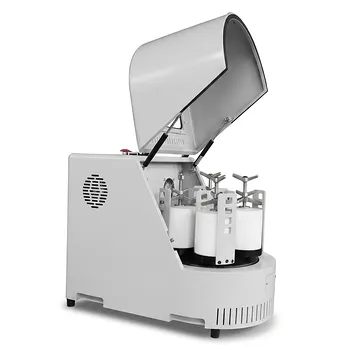
Vertical Semi Circular Planetary Ball Mill for Laboratory Precision Grinding

High Energy Planetary Ball Mill for Nano Scale Grinding and Mechanical Alloying

Heavy Duty Horizontal Planetary Ball Mill for Efficient Industrial Grinding and Sample Preparation

Vertical Production Planetary Ball Mill for High Throughput Powder Processing

360° Rotating Omnidirectional Laboratory Planetary Ball Mill for Homogeneous Ultra-Fine Grinding and Mixing

Vertical Square Planetary Ball Mill for Laboratory Sample Preparation and Nanoscale Grinding

Miniature Planetary Ball Mill with Vacuum Grinding and High Efficiency for Laboratory Sample Preparation

High Energy Omnidirectional Planetary Ball Mill 16L

High Energy Laboratory Planetary Ball Mill for Nano Grinding and Material Science Sample Preparation
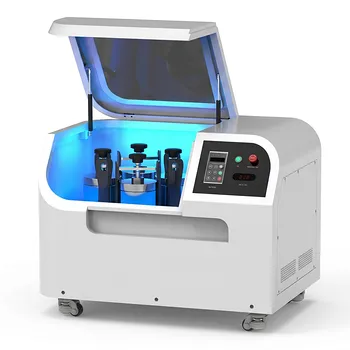
Planetary Ball Mill 12L
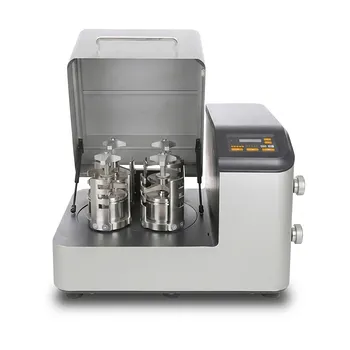
High Energy Planetary Ball Mill for Nano Scale Grinding and Colloidal Mixing in Material Science Research
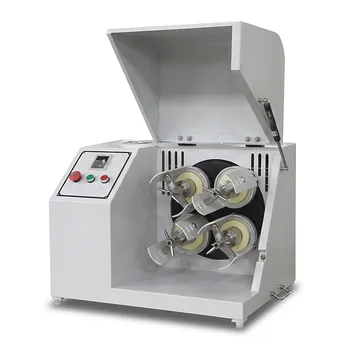
Horizontal Light Duty Planetary Ball Mill for Laboratory Sample Preparation
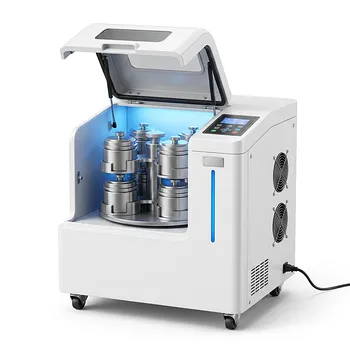
High Energy Omnidirectional Planetary Ball Mill 20L
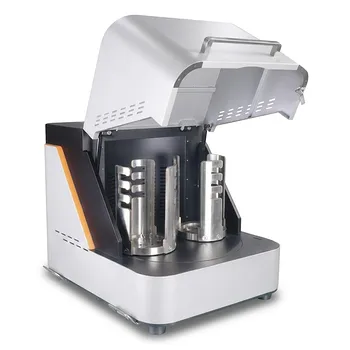
High Energy Laboratory Planetary Ball Mill for Nano Grinding and Colloidal Mixing of Hard and Brittle Materials

8L Planetary Ball Mill for Laboratory Grinding and Sample Preparation
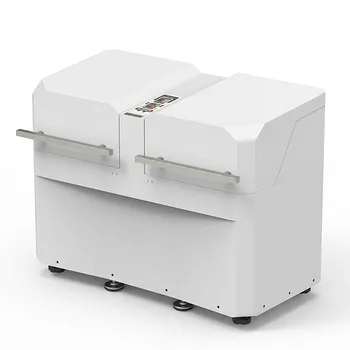
Dual Station Planetary Ball Mill 24L

Multi-Platform Nanoscale High-Energy Vibratory Ball Mill

Nano High Energy Vibratory Ball Mill for Laboratory Sample Preparation
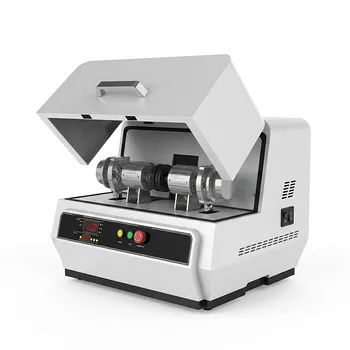
Dual Jar High Energy Vibratory Ball Mill