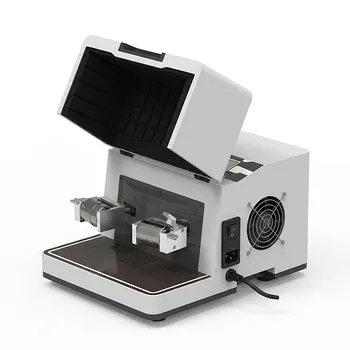
What is the primary function of a planetary ball mill in SCM preparation? Unlock Mechanochemical Activation
Updated 4 months ago
The planetary ball mill serves as the primary instrument for mechanochemical activation (MCA) of iron tailings. By utilizing high-speed rotation to generate intense impact and shear forces, the mill reduces iron tailings to micron-level fineness while simultaneously inducing deep amorphization of crystalline mineral phases. This structural disruption breaks internal chemical bonds, effectively transforming inert mineral waste into a reactive supplementary cementitious material (SCM) with high pozzolanic activity.
Core Takeaway: A planetary ball mill facilitates the transition of iron tailings from passive waste to active SCM by combining physical particle refinement with the chemical destabilization of mineral structures through high-energy mechanical forces.
The Mechanism of Mechanochemical Activation (MCA)
High-Energy Impact and Shear Forces
The planetary ball mill operates through a complex motion of revolution and rotation, creating high centrifugal forces. These forces drive grinding media to strike the iron tailings with significant energy, providing the mechanical work necessary to alter the material's properties.
Breaking Internal Chemical Bonds
Beyond mere grinding, the high-energy environment facilitates the breaking of stable chemical bonds within the minerals. This process moves the material from a stable crystalline state to a high-energy, metastable amorphous state, which is essential for subsequent chemical reactions in cement hydration.
Releasing Latent Pozzolanic Activity
Iron tailings are often naturally inert due to their stable mineral structures, such as feldspar and tremolite. The planetary ball mill "unlocks" these materials by creating structural defects and micro-cracks, allowing them to react with calcium hydroxide to form stable hydration products like C-S-H gels.
Physical and Structural Transformations
Particle Refinement and Surface Area
The mill rapidly reduces bulk iron tailings to micron-level particles, significantly increasing the specific surface area. This increased surface area provides more contact points for chemical reactions, accelerating the rate of the solid-state reactions required for cementitious bonding.
Amorphization of Crystalline Phases
The intense mechanical action triggers the deep amorphization of major crystalline phases, including phlogopite and feldspar. As the crystalline lattice collapses into a disordered amorphous structure, the material becomes significantly more reactive when mixed with water and cement clinker.
Homogenization of Multi-Component Blends
In cases where iron tailings are mixed with other additives, the planetary ball mill ensures uniform distribution at the microscopic scale. This homogeneity is critical for maintaining accurate stoichiometry and consistent performance across the final cementitious product.
Understanding the Trade-offs and Limitations
Energy Consumption vs. Reactivity
While higher speeds and longer grinding times increase the reactivity of the SCM, they also lead to exponentially higher energy consumption. Technical advisors must balance the degree of activation required against the economic costs of the milling process.
Heat Generation and Material Agglomeration
The intense friction and impact within the mill generate significant heat, which can lead to particle agglomeration if not managed. When particles begin to fuse or stick together, the effective specific surface area may actually decrease, negating the benefits of the fine grinding.
Control of Grinding Parameters
Achieving a consistent SCM requires precise control over the ball-to-powder ratio, rotation speed, and duration. Variations in these parameters can lead to inconsistent amorphization levels, resulting in unpredictable performance in the final concrete or mortar mix.
How to Apply This to Your SCM Production
To optimize the use of a planetary ball mill for iron tailings processing, consider your primary objective:
- If your primary focus is Maximum Chemical Reactivity: Prioritize longer milling durations at high speeds to ensure the complete amorphization of crystalline phases like feldspar.
- If your primary focus is Energy Efficiency: Optimize the ball-to-powder ratio and target a specific micron-level fineness rather than total structural amorphization.
- If your primary focus is Research Consistency: Use precise speed and time controls to eliminate physical fineness as a variable when comparing the chemical reactivity of different tailing compositions.
By strategically leveraging the mechanochemical power of the planetary ball mill, you can successfully upcycle industrial iron waste into high-value, high-performance construction materials.
Summary Table:
| Feature | Impact on Iron Tailings Processing |
|---|---|
| Primary Mechanism | Mechanochemical Activation (MCA) via impact and shear forces |
| Physical Change | Micron-level particle refinement and increased surface area |
| Structural Change | Amorphization of crystalline phases (e.g., feldspar, tremolite) |
| Chemical Result | Breaking of internal bonds to release latent pozzolanic activity |
| Outcome | Conversion of inert industrial waste into high-reactive SCM |
Optimize Your Material Research with Precision Laboratory Solutions
Are you looking to transform industrial waste into high-performance construction materials? At [Brand Name], we provide complete laboratory sample preparation solutions tailored for material science. Our expertise in powder processing and compaction equipment ensures you achieve the exact mechanochemical activation required for your research.
Our extensive product line includes:
- Advanced Milling: High-energy planetary ball mills, jet mills, and cryogenic grinders for superior amorphization.
- Preparation & Sizing: Jaw/roll crushers and vibratory sieve shakers for precise particle control.
- Mixing & Homogenization: Powder and defoaming mixers for consistent multi-component blends.
- Advanced Compaction: A full spectrum of hydraulic presses, including Cold/Warm Isostatic Presses (CIP/WIP), vacuum hot presses, and XRF pellet presses.
Whether you are a researcher focusing on chemical reactivity or a distributor seeking reliable OEM/ODM support and certified supply chains, we offer the technical excellence to drive your success.
Ready to elevate your powder processing workflow? Contact our experts today for a customized solution!
References
- Ilda Tole, Andrzej Ćwirzeń. Revalorization of Swedish Iron Ore Mine Tailings as Supplementary Cementitious Material through Mechanochemical Activation. DOI: 10.1061/jmcee7.mteng-19878
Mentioned Products
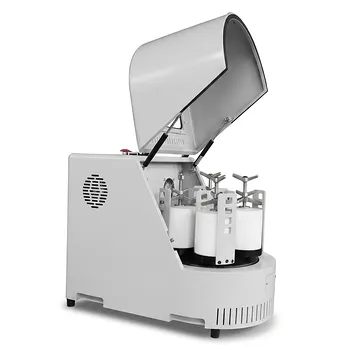
- Vertical Semi Circular Planetary Ball Mill for Laboratory Precision Grinding
- High Energy Planetary Ball Mill for Nano Scale Grinding and Mechanical Alloying
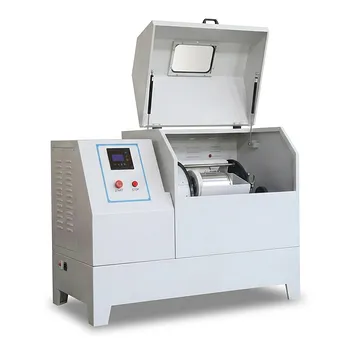
- Heavy Duty Horizontal Planetary Ball Mill for Efficient Industrial Grinding and Sample Preparation
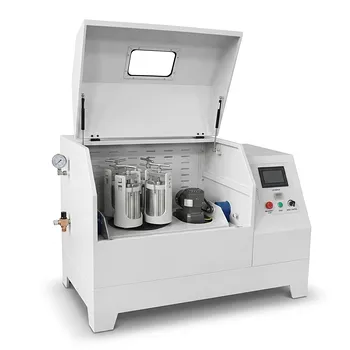
- Vertical Production Planetary Ball Mill for High Throughput Powder Processing
- 360° Rotating Omnidirectional Laboratory Planetary Ball Mill for Homogeneous Ultra-Fine Grinding and Mixing
People Also Ask
- What role does a planetary ball mill play in the synthesis of Li6PS5Cl (LPSCl)? Unlock High Ionic Conductivity
- Why is a planetary ball mill essential for SiBCN-rGO wet-spinning? Achieve Superior Dispersion and Spinnability
- Why is an intermittent grinding process required for perovskites in a planetary ball mill? Ensure Stability & Purity
- Why is a planetary ball mill required for PET micronization? Ensure Accurate Chemical Analysis of Reprocessed PET
- How does mechanized planetary ball milling compare to manual agate grinding? Optimize sulfide standard material precision.

Tech Team · PowderPreparation
Last updated on Jun 03, 2026
Related Products
Vertical Semi Circular Planetary Ball Mill for Laboratory Precision Grinding

High Energy Planetary Ball Mill for Nano Scale Grinding and Mechanical Alloying
Heavy Duty Horizontal Planetary Ball Mill for Efficient Industrial Grinding and Sample Preparation
Vertical Production Planetary Ball Mill for High Throughput Powder Processing
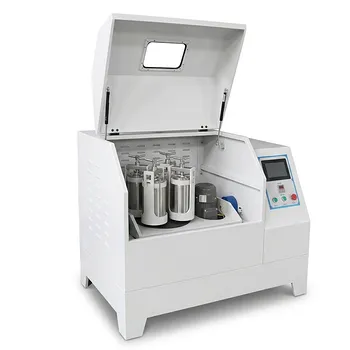
360° Rotating Omnidirectional Laboratory Planetary Ball Mill for Homogeneous Ultra-Fine Grinding and Mixing

Vertical Square Planetary Ball Mill for Laboratory Sample Preparation and Nanoscale Grinding

Miniature Planetary Ball Mill with Vacuum Grinding and High Efficiency for Laboratory Sample Preparation
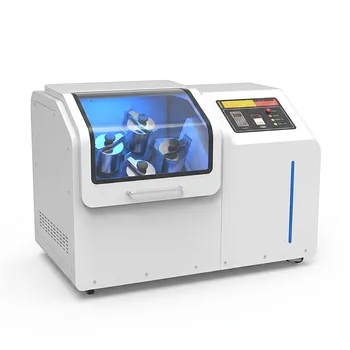
High Energy Omnidirectional Planetary Ball Mill 16L

High Energy Laboratory Planetary Ball Mill for Nano Grinding and Material Science Sample Preparation
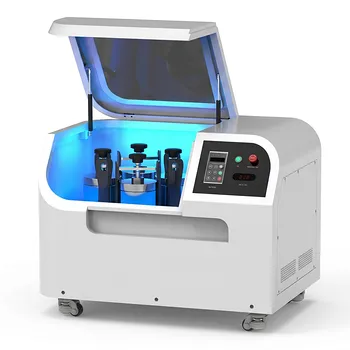
Planetary Ball Mill 12L
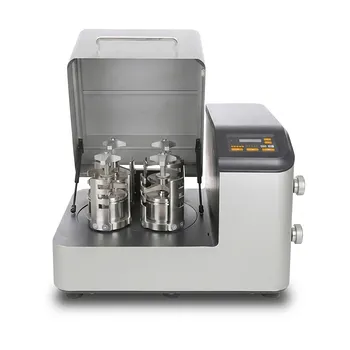
High Energy Planetary Ball Mill for Nano Scale Grinding and Colloidal Mixing in Material Science Research
Horizontal Light Duty Planetary Ball Mill for Laboratory Sample Preparation
High Energy Omnidirectional Planetary Ball Mill 20L
High Energy Laboratory Planetary Ball Mill for Nano Grinding and Colloidal Mixing of Hard and Brittle Materials

8L Planetary Ball Mill for Laboratory Grinding and Sample Preparation
Dual Station Planetary Ball Mill 24L
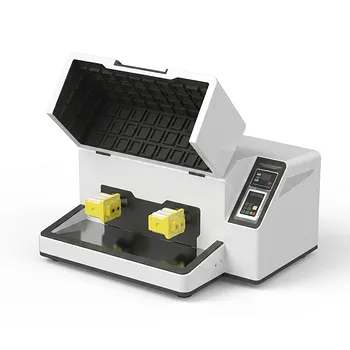
Multi-Platform Nanoscale High-Energy Vibratory Ball Mill

Nano High Energy Vibratory Ball Mill for Laboratory Sample Preparation
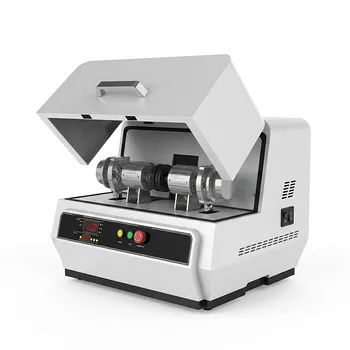
Dual Jar High Energy Vibratory Ball Mill