What role does a planetary ball mill play in the preparation of raw anti-rutile Mo2N powders? Optimize Your Synthesis.
Updated 5 months ago
The planetary ball mill acts as the primary driver for high-energy mechanical alloying in the synthesis of anti-rutile Mo2N. It facilitates the forced uniform mixing and microscopic refinement of molybdenum and nitrogen source powders. This high-energy process specifically lowers the activation energy required for synthesis, allowing researchers to overcome significant energy barriers and produce nanocrystalline precursor powders with a highly uniform composition.
In the production of anti-rutile Mo2N, the planetary ball mill serves as a critical pre-treatment tool that utilizes mechanical energy to convert raw powders into highly reactive nanocrystalline precursors. This ensures atomic-level homogeneity and enables chemical reactions that would otherwise be thermodynamically or kinetically difficult to initiate.
Achieving Microscopic Homogeneity and Refinement
Forced Uniform Mixing of Mo and N Sources
The planetary ball mill uses high-speed rotation to induce intense collisions and friction between the grinding media and the raw materials. In the context of anti-rutile Mo2N, this ensures that the molybdenum and nitrogen source powders are microscopically integrated. This level of mixing is far superior to manual blending, as it forces the components into contact at the molecular level.
Formation of Nanocrystalline Precursors
The high-energy impact and shear forces effectively reduce the particle size of the raw materials to the nanoscale. By creating nanocrystalline precursor powders, the milling process increases the number of grain boundaries and the overall surface area. This refinement is essential for ensuring that the final Mo2N product possesses a fine, uniform microstructure.
Overcoming Kinetic and Thermodynamic Barriers
Lowering Synthesis Activation Energy
One of the primary roles of high-energy ball milling is the mechanical activation of the powder. The intense energy input creates lattice distortions and defects within the crystal structure of the molybdenum and nitrogen sources. These structural changes store energy within the powder, significantly reducing the external heat required to trigger the subsequent synthesis reaction.
Enhancing Reaction Activity
By increasing the specific surface area and promoting atomic diffusion in the solid state, the planetary ball mill enhances the overall reactivity of the mixture. This is particularly important for refractory materials or complex phases like anti-rutile Mo2N, where standard solid-state reactions might be sluggish. The ball mill ensures that the components are in a high-energy state, ready for single-phase formation during heat treatment.
Understanding the Trade-offs and Limitations
Risk of Material Contamination
The high-energy nature of the planetary ball mill can lead to the wear of grinding jars and balls. This often introduces impurities from the grinding media (such as alumina, zirconia, or steel) into the Mo2N precursor. Selecting high-hardness media and optimizing milling time is necessary to maintain the chemical purity of the final product.
Temperature Control Challenges
Prolonged, high-speed milling generates significant frictional heat within the grinding jars. If not properly managed through cooling cycles or interval milling, this heat can cause premature reactions or undesired phase transformations. Excessive temperature can also lead to powder agglomeration, which counteracts the refinement goals of the process.
How to Apply This to Your Synthesis Project
When utilizing a planetary ball mill for anti-rutile Mo2N preparation, your technical approach should vary based on your specific requirements for the final powder.
- If your primary focus is phase purity: Utilize high-hardness grinding media (such as tungsten carbide) and perform milling in an inert atmosphere to prevent oxidation and contamination.
- If your primary focus is rapid reaction kinetics: Increase the rotation speed and milling duration to maximize lattice distortion and specific surface area, effectively lowering the required sintering temperature.
- If your primary focus is preventing agglomeration: Opt for wet ball milling using a suitable organic dispersant to keep the nanocrystalline particles separated and ensure a more uniform size distribution.
High-energy mechanical alloying through a planetary ball mill is the definitive method for transforming raw molybdenum and nitrogen sources into the highly reactive, uniform nanocrystalline precursors required for successful Mo2N synthesis.
Summary Table:
| Key Milling Role | Impact on Mo2N Synthesis |
|---|---|
| High-Energy Impact | Reduces particle size to nanoscale, creating reactive precursors. |
| Mechanical Alloying | Ensures atomic-level homogeneity of Mo and N source powders. |
| Lattice Distortion | Lowers activation energy by storing energy in the crystal structure. |
| Surface Area Increase | Accelerates solid-state diffusion and reaction kinetics. |
| Energy Integration | Overcomes thermodynamic barriers for difficult-to-synthesize phases. |
Elevate Your Material Research with Expert Sample Prep Solutions
Are you looking to overcome kinetic barriers in your material synthesis? We provide complete laboratory sample preparation solutions tailored for advanced material science. Whether you are developing anti-rutile Mo2N or processing complex refractory alloys, our specialized equipment ensures precision at every step.
Our Industry-Leading Product Lines Include:
- Precision Milling: Planetary ball mills, jet mills, liquid nitrogen cryogenic grinders, and rotor mills for achieving nanocrystalline refinement.
- Powder Processing: High-performance crushers (jaw/roll), powder mixers, and vibratory/air-jet sieve shakers.
- Advanced Compaction: A full spectrum of hydraulic presses, including Cold/Warm Isostatic Presses (CIP/WIP), vacuum hot presses, and XRF pellet presses for high-density samples.
At our core, we help researchers and manufacturers achieve superior homogeneity and particle control. Contact us today to discover how our powder processing and compaction expertise can optimize your laboratory results!
References
- Lauren N. Walters, James M. Rondinelli. Metallicity and chemical bonding in anti-anatase Mo<sub>2</sub>N. DOI: 10.1039/d3cp05054h
Mentioned Products
- Vertical Semi Circular Planetary Ball Mill for Laboratory Precision Grinding
- High Energy Planetary Ball Mill for Nano Scale Grinding and Mechanical Alloying
- Heavy Duty Horizontal Planetary Ball Mill for Efficient Industrial Grinding and Sample Preparation
- Vertical Production Planetary Ball Mill for High Throughput Powder Processing
- 360° Rotating Omnidirectional Laboratory Planetary Ball Mill for Homogeneous Ultra-Fine Grinding and Mixing
People Also Ask
- What role does a planetary ball mill play in the synthesis of Li6PS5Cl (LPSCl)? Unlock High Ionic Conductivity
- Why is a planetary ball mill essential for SiBCN-rGO wet-spinning? Achieve Superior Dispersion and Spinnability
- Why is an intermittent grinding process required for perovskites in a planetary ball mill? Ensure Stability & Purity
- Why is a planetary ball mill required for PET micronization? Ensure Accurate Chemical Analysis of Reprocessed PET
- How does mechanized planetary ball milling compare to manual agate grinding? Optimize sulfide standard material precision.

Tech Team · PowderPreparation
Last updated on May 14, 2026
Related Products
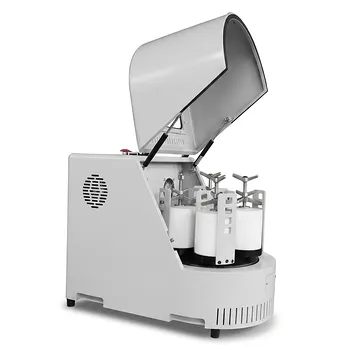
Vertical Semi Circular Planetary Ball Mill for Laboratory Precision Grinding

High Energy Planetary Ball Mill for Nano Scale Grinding and Mechanical Alloying
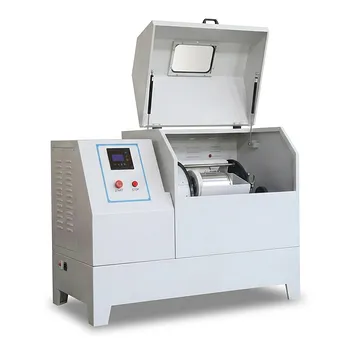
Heavy Duty Horizontal Planetary Ball Mill for Efficient Industrial Grinding and Sample Preparation

Vertical Production Planetary Ball Mill for High Throughput Powder Processing
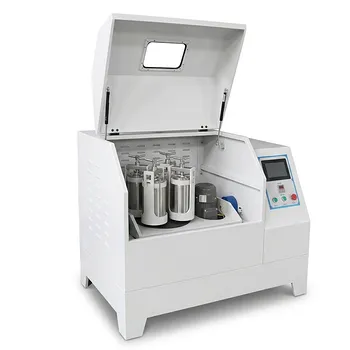
360° Rotating Omnidirectional Laboratory Planetary Ball Mill for Homogeneous Ultra-Fine Grinding and Mixing

Vertical Square Planetary Ball Mill for Laboratory Sample Preparation and Nanoscale Grinding

Miniature Planetary Ball Mill with Vacuum Grinding and High Efficiency for Laboratory Sample Preparation

High Energy Omnidirectional Planetary Ball Mill 16L

High Energy Laboratory Planetary Ball Mill for Nano Grinding and Material Science Sample Preparation
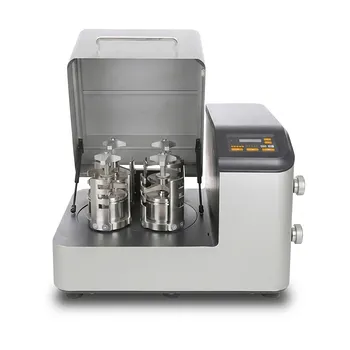
High Energy Planetary Ball Mill for Nano Scale Grinding and Colloidal Mixing in Material Science Research
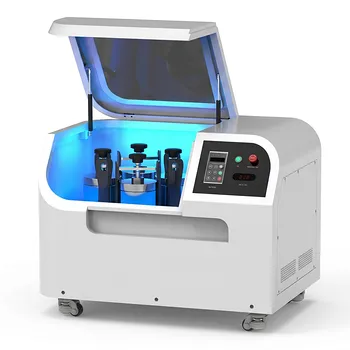
Planetary Ball Mill 12L
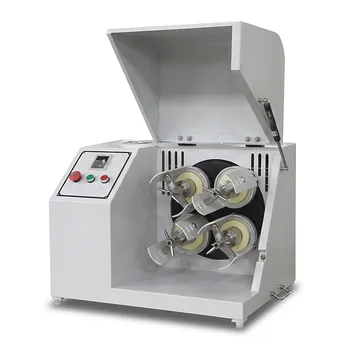
Horizontal Light Duty Planetary Ball Mill for Laboratory Sample Preparation

High Energy Omnidirectional Planetary Ball Mill 20L
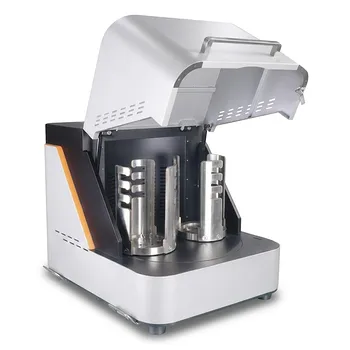
High Energy Laboratory Planetary Ball Mill for Nano Grinding and Colloidal Mixing of Hard and Brittle Materials

8L Planetary Ball Mill for Laboratory Grinding and Sample Preparation
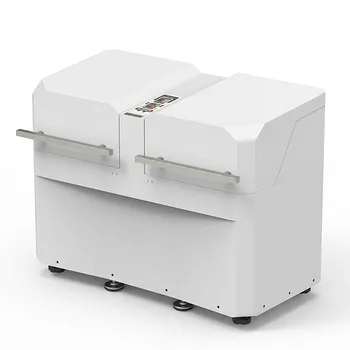
Dual Station Planetary Ball Mill 24L

Multi-Platform Nanoscale High-Energy Vibratory Ball Mill

Nano High Energy Vibratory Ball Mill for Laboratory Sample Preparation
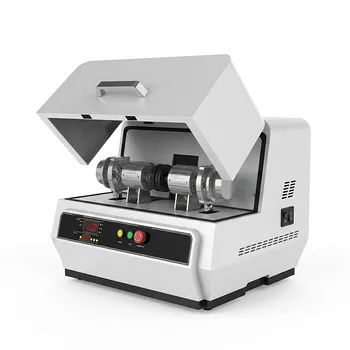
Dual Jar High Energy Vibratory Ball Mill