What role does a planetary ball mill play in the preparation of precursors for silicon/carbon composite materials?
Updated 4 months ago
A planetary ball mill serves as a high-energy mechanochemical reactor that transforms raw silicon and carbon sources into a highly homogenized precursor. By applying intense impact and shear forces, it ensures a molecular-level uniform distribution of components, which is the fundamental requirement for creating high-performance silicon/carbon (Si/C) nanocomposites.
The planetary ball mill is essential for achieving the structural homogeneity and particle refinement necessary to prevent agglomeration and ensure consistent electrochemical performance during subsequent thermal processing.
Achieving Molecular-Level Homogeneity
Uniform Distribution of Precursor Components
In the preparation of Si/C composites, the mill is used to mix materials like silicon monoxide (SiO), phenolic resin, and metal acetates. The high-speed rotation generates forces that blend these components far more effectively than standard stirring.
This process ensures that the carbon-forming precursors (like phenolic resin) are distributed evenly around the silicon source. This molecular-level intimacy is critical for the formation of a stable composite structure during later heat treatments.
Consistent Performance Post-Thermal Treatment
Because the precursor is perfectly homogenized, the resulting nanocomposite maintains a uniform structure. This prevents "hot spots" of activity or structural weaknesses that could lead to material failure.
Without this level of mixing, the silicon and carbon phases would segregate. This segregation often results in poor cycling stability and inconsistent performance in the final application.
Particle Refinement and Surface Activation
Breaking Down Powder Agglomerates
Raw silicon and carbon powders naturally tend to clump together into large clusters. The planetary ball mill utilizes high-energy grinding to break these agglomerates apart, reducing particles to sub-micron or even nanometer scales.
This refinement increases the specific surface area of the particles. A higher surface area allows for better contact between the silicon and the carbon matrix, enhancing the overall conductivity of the material.
Increasing Chemical Reactivity
The mechanical energy transferred during milling does more than just resize particles; it induces mechanical activation. This increases the reactivity of the powder surfaces.
Heightened reactivity facilitates faster and more complete reactions during the subsequent sintering or carbonization stages. This is particularly beneficial when using soluble additives, as it allows them to integrate more deeply into the matrix.
Optimizing Material Physical Properties
Controlling Slurry Fluidity and Density
In many manufacturing workflows, the precursor must be turned into a slurry. The ball mill adjusts the particle size distribution to ensure the mixture maintains excellent fluidity.
Consistent particle sizes prevent "clogging" and allow the mixture to fully penetrate dense structural frameworks. This leads to a final material with fewer internal defects and a higher overall density.
Integration of Reinforcement Phases
When composites require secondary phases—such as metal binders or sintering aids—the mill ensures these are deeply embedded. This is crucial for creating a "plastic" phase between hard particles.
Proper embedding ensures that the different phases bond effectively under pressure or heat. This structural integrity is what allows the composite to withstand the volume expansion typically seen in silicon-based materials.
Understanding the Trade-offs
Risk of Media Contamination
The intense energy required for milling can cause the grinding media (balls) and vial walls to wear down. This wear introduces impurities, such as zirconia or stainless steel, into the precursor.
These contaminants can negatively impact the purity and electrochemical properties of the Si/C composite. Choosing high-purity, wear-resistant media is necessary but increases the operational cost.
Heat Generation and Material Degradation
The friction and impact within the mill generate significant thermal energy. If the temperature is not managed, it can cause the premature polymerization of resins or the oxidation of silicon.
To mitigate this, processes often require intermittent milling or external cooling systems. This extends the processing time and increases the complexity of the manufacturing cycle.
Making the Right Choice for Your Goal
How to Apply This to Your Project
Depending on your specific production requirements, your approach to planetary ball milling will vary:
- If your primary focus is maximize electrochemical stability: Utilize longer milling times at moderate speeds to ensure the absolute highest level of molecular distribution between the silicon and carbon phases.
- If your primary focus is high-throughput manufacturing: Prioritize high-speed impact settings to quickly break down agglomerates, while monitoring for potential contamination from the grinding media.
- If your primary focus is structural density and low defects: Focus on optimizing the particle size distribution to ensure the precursor maintains the fluidity needed for subsequent casting or 3D printing.
The planetary ball mill is not just a mixer, but a foundational tool that dictates the structural integrity and ultimate efficiency of silicon/carbon composite materials.
Summary Table:
| Key Function | Mechanism | Impact on Si/C Composites |
|---|---|---|
| Homogenization | Molecular-level distribution of Si and C sources | Prevents phase segregation and ensures cycling stability. |
| Particle Refinement | High-energy grinding to sub-micron/nano scales | Increases surface area and improves electrical conductivity. |
| Mechanical Activation | Increases powder surface reactivity via energy transfer | Facilitates faster and more complete carbonization reactions. |
| Physical Optimization | Controlling particle size distribution | Enhances slurry fluidity and reduces internal material defects. |
Elevate Your Material Research with Precision Sample Preparation
Achieving the perfect silicon/carbon composite requires more than just a recipe—it requires the right equipment to ensure molecular-level homogeneity and structural integrity. At [Brand Name], we provide complete laboratory sample preparation solutions tailored for material science professionals.
Our expertise in powder processing and compaction equipment allows us to support your entire workflow:
- Advanced Milling & Grinding: High-energy planetary ball mills, jet mills, and cryogenic grinders for superior particle refinement.
- Sieving & Mixing: Precision vibratory sieve shakers and high-efficiency powder/defoaming mixers for consistent material quality.
- Advanced Compaction: A full spectrum of hydraulic presses, including Cold/Warm Isostatic Presses (CIP/WIP), vacuum hot presses, and XRF pellet presses to achieve maximum density.
Ready to optimize your Si/C composite production and eliminate material failure? Contact our technical experts today to find the ideal equipment solution for your laboratory’s unique requirements.
References
- Mariia Galaburda, Anna Deryło‐Marczewska. Effect of Metal Additives on the Structure, Morphology, and Adsorption Characteristics of the Composites: Silicon Monoxide/Phenol–Formaldehyde-Derived Carbon. DOI: 10.3390/ijms26104770
Mentioned Products
- Vertical Semi Circular Planetary Ball Mill for Laboratory Precision Grinding
- High Energy Planetary Ball Mill for Nano Scale Grinding and Mechanical Alloying
- Heavy Duty Horizontal Planetary Ball Mill for Efficient Industrial Grinding and Sample Preparation
- Vertical Production Planetary Ball Mill for High Throughput Powder Processing
- 360° Rotating Omnidirectional Laboratory Planetary Ball Mill for Homogeneous Ultra-Fine Grinding and Mixing
People Also Ask
- What role does a planetary ball mill play in the synthesis of Li6PS5Cl (LPSCl)? Unlock High Ionic Conductivity
- Why is a planetary ball mill essential for SiBCN-rGO wet-spinning? Achieve Superior Dispersion and Spinnability
- Why is an intermittent grinding process required for perovskites in a planetary ball mill? Ensure Stability & Purity
- Why is a planetary ball mill required for PET micronization? Ensure Accurate Chemical Analysis of Reprocessed PET
- How does mechanized planetary ball milling compare to manual agate grinding? Optimize sulfide standard material precision.

Tech Team · PowderPreparation
Last updated on Jun 03, 2026
Related Products
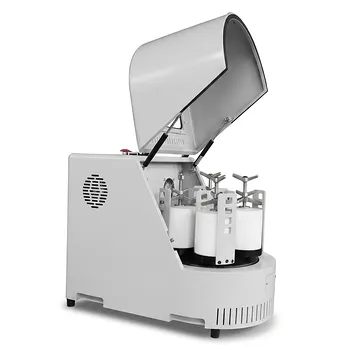
Vertical Semi Circular Planetary Ball Mill for Laboratory Precision Grinding
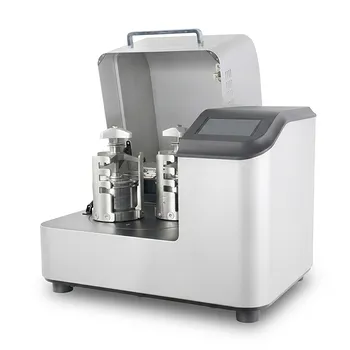
High Energy Planetary Ball Mill for Nano Scale Grinding and Mechanical Alloying
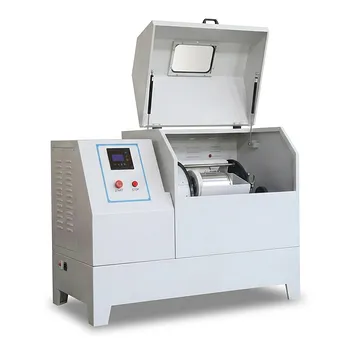
Heavy Duty Horizontal Planetary Ball Mill for Efficient Industrial Grinding and Sample Preparation
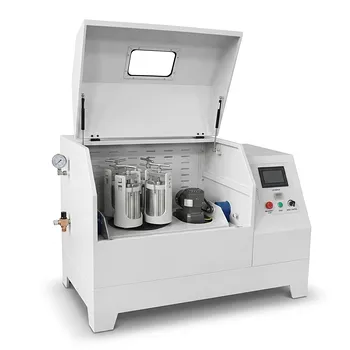
Vertical Production Planetary Ball Mill for High Throughput Powder Processing
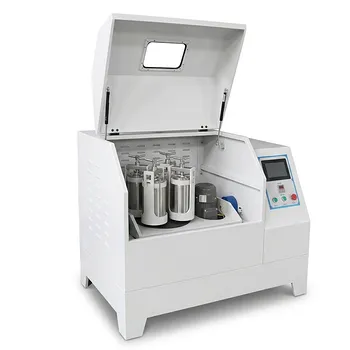
360° Rotating Omnidirectional Laboratory Planetary Ball Mill for Homogeneous Ultra-Fine Grinding and Mixing
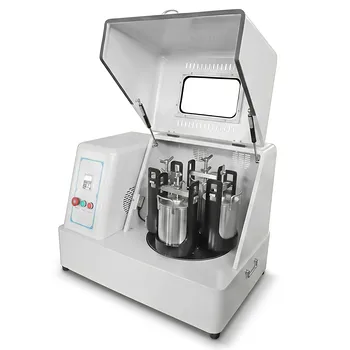
Vertical Square Planetary Ball Mill for Laboratory Sample Preparation and Nanoscale Grinding
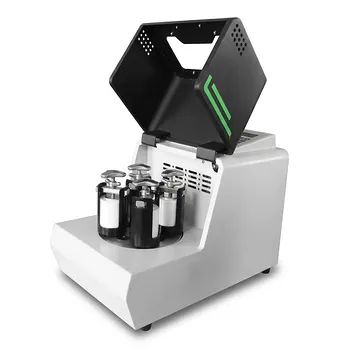
Miniature Planetary Ball Mill with Vacuum Grinding and High Efficiency for Laboratory Sample Preparation
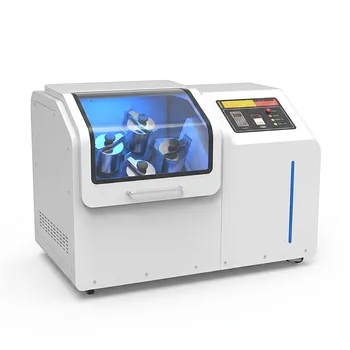
High Energy Omnidirectional Planetary Ball Mill 16L
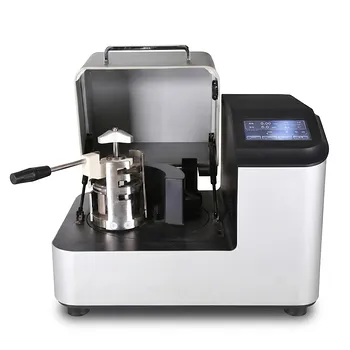
High Energy Laboratory Planetary Ball Mill for Nano Grinding and Material Science Sample Preparation
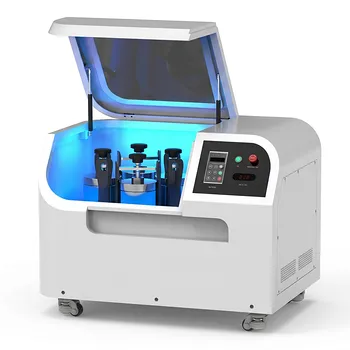
Planetary Ball Mill 12L
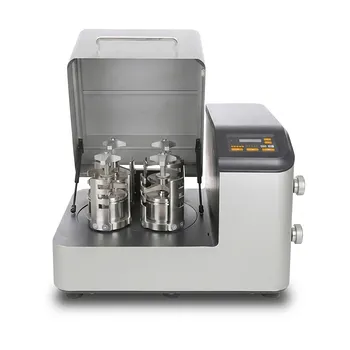
High Energy Planetary Ball Mill for Nano Scale Grinding and Colloidal Mixing in Material Science Research
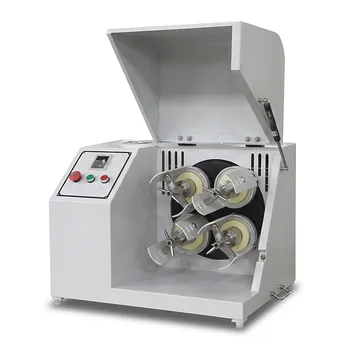
Horizontal Light Duty Planetary Ball Mill for Laboratory Sample Preparation
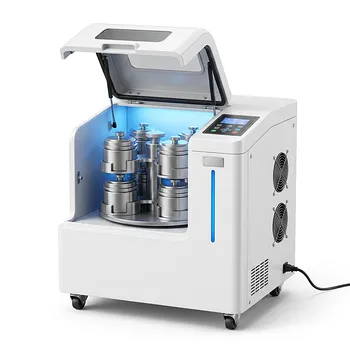
High Energy Omnidirectional Planetary Ball Mill 20L
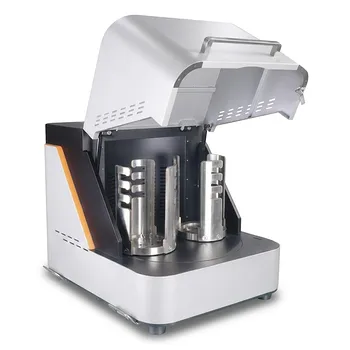
High Energy Laboratory Planetary Ball Mill for Nano Grinding and Colloidal Mixing of Hard and Brittle Materials

8L Planetary Ball Mill for Laboratory Grinding and Sample Preparation
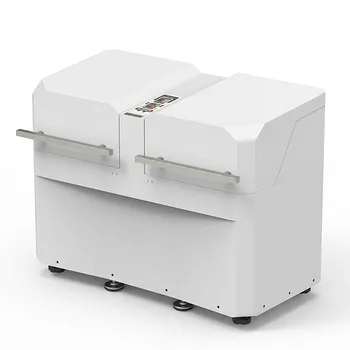
Dual Station Planetary Ball Mill 24L

Multi-Platform Nanoscale High-Energy Vibratory Ball Mill

Nano High Energy Vibratory Ball Mill for Laboratory Sample Preparation
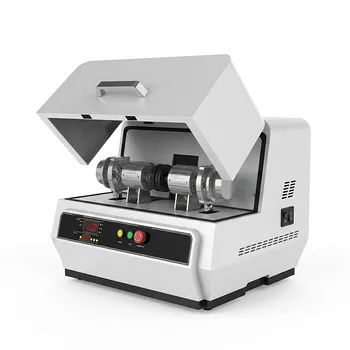
Dual Jar High Energy Vibratory Ball Mill